


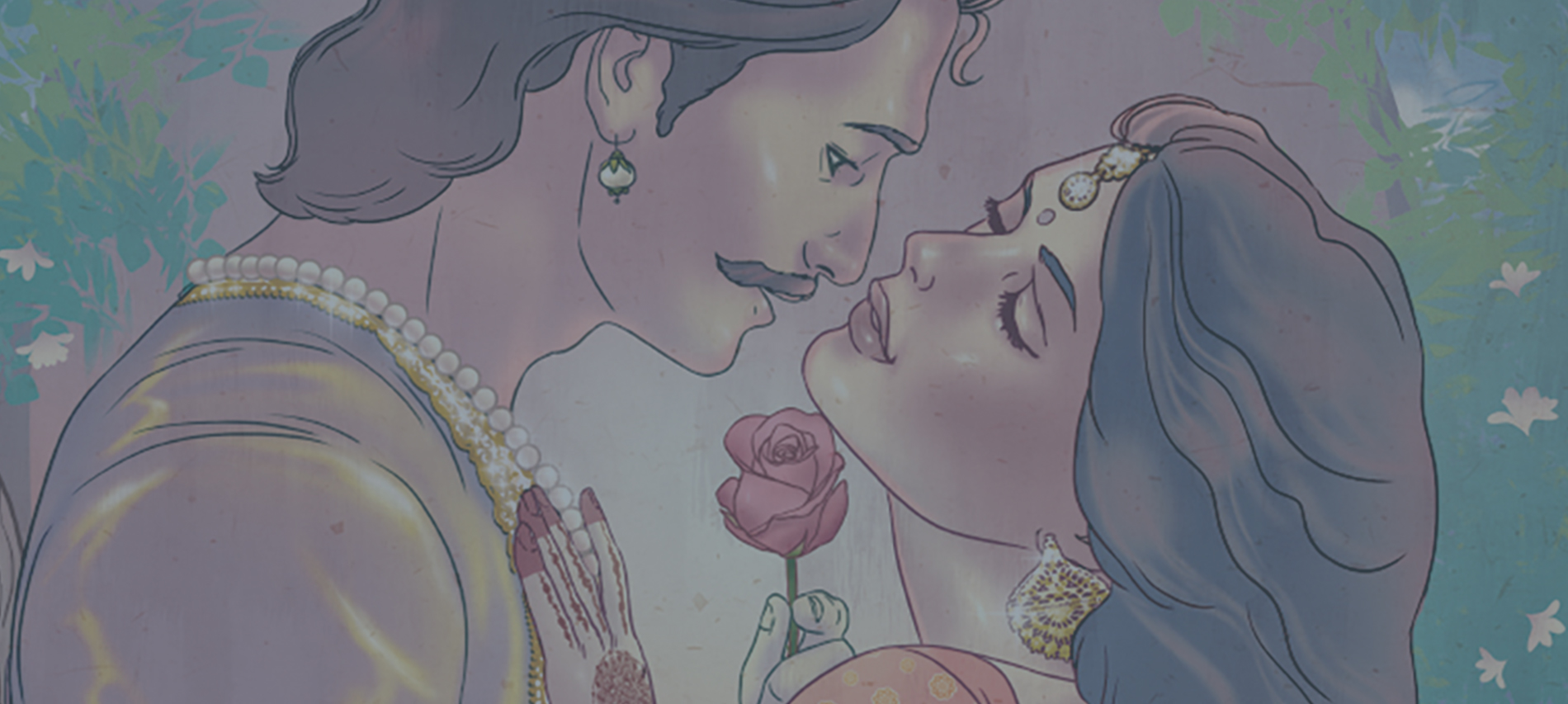
Usha Narayanan, author of Prem Purana, has donned many hats, before becoming a successful full-time author. In her glorious career, she has dabbled with genres like thriller and romance, before turning to mythology. Her works Pradyumna: Son of Krishna and The Secret of God’s Son have been praised as ‘Indian mythology at its fiercest and finest’.
Her latest book, Prem Purana is about stories of love and extraordinary devotion found in Hindu mythology. On the launch of the book we asked her what about the mythological stories attracted her to write about them.
Here’s what she had to say.
The idea of writing mythological love stories was born during a conversation with my editor Vaishali Mathur at the Jaipur Literature Festival when she suggested that I should combine my strengths in writing mythology and romance. At that point, I was busy with The Secret of God’s Son and it was only after it was completed that I could think seriously think about this. I knew that our epics and Puranas focused more on the battle between good and evil, with heroic gods and fearsome demons confronting one another. Only a few love stories were widely known, such as the one of Kama shooting his arrow of love at ascetic Shiva, or of Arjuna winning Draupadi’s hand at her swayamvara.
I began my quest by re-reading all the ancient lore with an eye to discovering tales of the heart. As always, when writing mythological fiction, I wished to focus on untold stories, using my imagination to bring alive minor characters or lesser-known aspects of major ones. The first character who caught my eye was Ganesha. We think of him as the lovable elephant-headed god with a fondness for modakas. But who did he marry? People in the south of India swear that he is single, but others state vociferously that he is married. The images in temples show him either alone or with a wife or two. What are their names? Some say Siddhi and Riddhi, while others think their names are Siddhi and Buddhi. That was enough intrigue to stimulate my mind!
Another interesting layer to the story is the idea that Buddhi, Siddhi and Riddhi represent intellect, spiritual power and prosperity. As their names are merely mentioned in passing in most Puranas, I could give full rein to my imagination in portraying them. I endowed the three with distinct characteristics and showed Ganesha wooing them in different ways, according to their particular likes and dislikes. My Riddhi is sprightly, Buddhi is silent and deep, and Siddhi is fierce and opposed to the very idea of marriage! Their stories span three realms and four yugas, shedding light on many engaging aspects of Ganesha, the first among the gods. To add to the appeal, I discovered that in Bengal, during Durga Puja, Ganesha even has a banana bride!
I think readers will enjoy seeing Gajamukha in a refreshing new light in Ganesha’s Brides, the first of the three stories in Prem Purana.
“Siddhi watched as more and more arrows struck Ganesha, causing blood to flow like a flood. Was he ready to meet death rather than forsake his promise to her? Would he sacrifice everything for the sake of his love?”
**
For the second story, Mandodari, my inspiration came from the Ramayana. Ravana was Brahma’s great grandson on his father’s side and an asura prince on his mother’s. Choosing to follow the asura path, he pillaged heaven and earth, ravished women and abducted Rama’s wife Sita. What I found of interest was not his war with Rama, but his relationship with his wife Mandodari. How did she react to all this? Did she protest or did she submit silently to his actions? What was her background? Did the rakshasa love her? And the most exciting question of all―did Mandodari come face to face with Sita, the woman she regarded as the instrument of doom that would bring down Lanka?
I found no answers in the commonly available texts where Mandodari features in a mere two or three scenes. Fortunately, however, there are many Ramayana versions available. I followed the uncommon trails, used my imagination and fleshed out the queen’s character, placing her emotions at the centre of the narrative. The story also reveals startling new facets of Ravana’s character and motivations. I think Mandodari, with all its twists and turns, will be riveting and revelatory to readers.
“‘Snatching a woman by force or stealth is not an act of valour, Ravana. She is not an object of lust or a means to settle scores with your enemy,’ said Mandodari, her voice loud and clear. She would speak the truth regardless of consequences. It was a risk she had to take for Ravana and her people.”
**
After delving into the lives of a merry god and a dire rakshasa, it was time to move to the human plane, with the story of King Nala and Princess Damayanti. She turned down the gods who courted her at her swayamvara and chose Nala as her husband. Though she chose love over immortality, Nala was driven by his own demons and abandoned her in a dangerous forest. Damayanti struggled to survive the perils that confronted her at every turn, but forged forward regardless. She did not give up hope and devised various stratagems to reclaim her happiness.
I was fascinated by her strength and also by the magical swan that plays a key role as the messenger of love. I named the swan Gagana, meaning sky or heaven, and created a charming and audacious companion to Damayanti. The Kali demon, who plays a major role in my previous books, Pradyumna: Son of Krishna and The Secret of God’s Son, is the enemy that Nala and his queen must confront. How can a mortal pair combat the power of the demon who reigns over a dark yuga that signals the end of the world? Love, loss, hope and despair form the chequered background of this poetic tale.
“‘Majestic Ashoka, whose name signifies one who destroys grief . . . Free me from pain and unite me once more with my Nala!’ cried Damayanti, sinking to her knees under a soaring Ashoka tree. Alas, the tree made no answer and all she could hear was the wind rustling among the leaves.”
**
A major part of my excitement in writing these stories came from the opportunity to focus attention on the women in our epics who are often sidelined. We often find that a woman is regarded as a prize to be won, someone who is forced to watch quietly while her husband makes disastrous decisions. However, the heroines in Prem Purana are central to the action. They are strong, independent thinkers who inspire the males in their lives―god, asura or king―to do the right thing and live up to their responsibilities.
I hope readers enjoy reading these tales which provide a good mix of fervour and fury, heroism and heartbreak, set against a spectacular backdrop spanning heaven and earth.

Tag: romance
Orhan Pamuk’s ‘A Red-Haired Woman’: An Excerpt

Nobel laureate Orhan Pamuk’s tenth book ‘The Red-Haired Woman’ is a mysterious story of a well-digger and his protégé near Istanbul, excavating stretches of barren earth only to find an unusual oasis in the form of a red-haired woman, who ultimately becomes the cause of their estrangement.
Here is an excerpt from the novel:
I had wanted to be a writer. But after the events I am about to describe, I studied engineering geology and became a building contractor. Even so, readers shouldn’t conclude from my telling the story now that it is over, that I’ve put it all behind me. The more I remember, the deeper I fall into it. Perhaps you, too, will follow, lured by the enigma of fathers and sons.
In 1984, we lived in a small apartment deep in Beşiktaş, near the nineteenth- century Ottoman Ihlamur Palace. My father had a little pharmacy called Hayat, meaning “Life.” Once a week, it stayed open all night, and my father took the late shift. On those evenings, I’d bring him his dinner. I liked to spend time there, breathing in the medicinal smells while my father, a tall, slim, handsome figure, had his meal by the cash register. Almost thirty years have passed, but even at forty-five I still love the smell of those old pharmacies lined with wooden drawers and cupboards.
The Life Pharmacy wasn’t particularly busy. My father would while away the nights with one of those small portable television sets so popular back then. Sometimes his leftist friends would stop by, and I would arrive to find them talking in low tones. They always changed the subject at the sight of me, remarking how I was just as handsome and charming as he was, asking what year was I in, whether I liked school, what I wanted to be when I grew up.
My father was obviously uncomfortable when I ran into his political friends, so I never stayed too long when they dropped by. At the first chance, I’d take his empty dinner box and walk back home under the plane trees and the pale streetlights. I learned never to tell my mother about seeing Father’s leftist friends at the shop. That would only get her angry at the lot of them and worried that my father might be getting into trouble and about to disappear once again.
But my parents’ quarrels were not all about politics. They used to go through long periods when they barely said a word to each other. Perhaps they didn’t love each other. I suspected that my father was attracted to other women, and that many other women were attracted to him. Sometimes my mother hinted openly at the existence of a mistress, so that even I understood. My parents’ squabbles were so upsetting that I willed myself not to remember or think about them.
It was an ordinary autumn evening the last time I brought my father his dinner at the pharmacy. I had just started high school. I found him watching the news on TV. While he ate at the counter, I served a customer who needed aspirin, and another who bought vitamin- C tablets and antibiotics. I put the money in the old- fashioned till, whose drawer shut with a pleasant tinkling sound. After he’d eaten, on the way out, I took one last glance back at my father; he smiled and waved at me, standing in the doorway.
He never came home the next morning. My mother told me when I got back from school that afternoon, her eyes still puffy from crying. Had my father been picked up at the pharmacy and taken to the Political Affairs Bureau? They’d have tortured him there with bastinado and electric shocks. It wouldn’t have been the first time.
Years ago, soldiers had first come for him the night after the military coup. My mother was devastated. She told me that my father was a hero, that I should be proud of him; and until his release, she took over the night shifts, together with his assistant Macit. Sometimes I’d wear Macit’s white coat myself— though at the time I was of course planning to be a scientist when I grew up, as my father had wanted, not some pharmacist’s assistant.
When my father again disappeared seven or eight years after that, it was different. Upon his return, after almost two years, my mother seemed not to care that he had been taken away, interrogated, and tortured. She was furious at him. “What did he expect?” she said.
So, too, after my father’s final disappearance, my mother seemed resigned, made no mention of Macit, or of what was to become of the pharmacy. That’s what made me think that my father didn’t always disappear for the same reason. But what is this thing we call thinking, anyway?
By then I’d already learned that thoughts sometimes come to us in words, and sometimes in images. There were some thoughts— such as a memory of running under the pouring rain, and how it felt— that I couldn’t even begin to put into words . . . Yet their image was clear in my mind. And there were other things that I could describe in words but were otherwise impossible to visualize: black light, my mother’s death, infinity.
Perhaps I was still a child, and so able to dispel unwanted thoughts. But sometimes it was the other way around, and I would find myself with an image or a word that I could not get out of my head.
My father didn’t contact us for a long time. There were moments when I couldn’t remember what he looked like. It felt as if the lights had gone out and everything around me had vanished. One night, I walked alone toward the Ihlamur Palace. The Life Pharmacy was bolted shut with a heavy black padlock, as if closed forever. A mist drifted out from the gardens of the palace.
Grab your copy of ‘The Red-Haired Woman’ here today.

Forever Is A Lie: An Excerpt

Novoneel Chakraborty is the bestselling author of nine romance thrillers and he is back with another beguiling dark romance thriller. The first of a two-part series, Forever Is a Lie is about an eighteen year old girl who falls in love with a man, almost double her age. But what she doesn’t know is that whoever the man loves, dies.
Here is an excerpt from the book.
This was her profile information on Facebook. Ditto on Tinder, a dating app. With moist eyes, she checked the about me section on the app, which she had just filled up:
I’m here to hook up for a night. Anyone who wants anything that goes beyond a night, please swipe left.
Prisha forced herself not to think as she started browsing through men’s profiles on the app. Tinder was recommended to her by Zinnia, her roommate. Two years her senior in college, Zinnia was from the same neighbourhood as Prisha in Faridabad. She had shifted to Bengaluru to pursue media management from Cross University.
Prisha had followed in her footsteps and shifted to Bengaluru a month ago and had taken admission at the same university. She had enrolled herself as a BA student, with a major in mass communication. Zinnia and Prisha stayed together in a rented apartment on BTM Layout.
It was Zinnia who had first described Tinder as a saviour of singles in the city. But Prisha hadn’t made an account on the dating site because she was single, but because she had been feeling emotionally violated for a few months now.
Anyone remotely good-looking and Prisha would swipe right. In fact, looks didn’t matter at all for what she had in mind. She had heard about Tinder earlier from a number of friends but had never imagined using it one day. Why would she? She had been in a committed relationship since she had turned thirteen—until two months ago when she had stepped into her penultimate teenage year. In all these years there had been only one boy she was doggedly, single-mindedly and with utmost sincerity committed to.
Utkarsh Arora had wooed her for an entire summer vacation before she had finally said yes. She was in Class VII and he was in Class X. (Love, then, was an alien feeling. It slowly turned real as they gave it time). And just when Prisha had started believing that there could be no one better than Utkarsh, he let her down.
She had invited him to a family function. It was a dream to see her boyfriend enjoy with her family and cousins; everyone had approved of him. Three weeks later, she had noticed that Utkarsh’s Facebook relationship status had changed from: in a relationship with Prisha Srivastav to in a relationship with Shelly Srivastav. Shelly was her cousin and two years older than her. Prisha demanded an explanation but all Utkarsh said was that he was now in love with Shelly. Now? Is love a prisoner of time? Not only did Utkarsh not give her any plausible explanation, but he repeatedly dodged her calls and then blocked her on social media and on his phone. When she turned to Shelly for an answer, she simply said, ‘He loves me, not you.’
At eighteen, when one’s world collapses, it also brings down with it the beliefs one has grown up on. You stop trusting in truths altogether. You start believing that a truth is nothing but an illusion. Some call it the loss of innocence. It is then that people start giving in to the collective lies that makes everyone sorted adults. Prisha’s attempt at creating a Tinder profile was proof enough that she had given in to it as well.
Love, Prisha concluded within a month of her break-up, was a fallacy. Lust was real; the body was real. And henceforth, she would get real too. Even if it meant living a life she didn’t believe in.
Seven hours after she had made her Tinder profile, there were thirteen matches. When Zinnia came back from college, Prisha gave the phone to her.
‘I think this dude looks cute. What do you think?’ Zinnia said, looking at the fifth match. Prisha couldn’t care less. Zinnia chatted with the guy on Prisha’s behalf and in no time fixed a date later in the night at Harry’s in Koramangala. Zinnia knew Prisha’s story, but she wasn’t the one who had given her the idea of a one-night stand. It was something Prisha had inquired herself when Zinnia kept ranting about some guy who went by the name the ‘Mean Monster’ in the Bangalore party circuit. Mean because he was infamous for his edging technique—a method by which orgasm could be delayed, pushing the body to feel pleasure like never before. And monster because what he carried between his legs was two inches more than that of an average Indian’s. Zinnia was more than excited when she was finally able to trace the elusive guy and pin him down for a date, coincidentally on the same night that Prisha was supposed to meet her Tinder date.
‘You’ll have to come with me, Zin,’ Prisha said as soon as Zinnia had fixed the place for her to meet the Tinder guy.
‘Of course! But I too have a date, sweets,’ she said. Prisha noticed that Zinnia was blushing slightly, which was very unlike her.
‘What?’ Prisha asked, surprised.
‘Finally I’m going to meet him tonight.’
‘Who?’
‘The Mean Monster.’

Forever Is A Lie: Prologue
On the Eve of His Twenty-Eighth Birthday
9 November 2010
He looks at the arrangement on the terrace of a forty-floor high-rise in Mumbai. A cosy mattress, a transparent tent and five love candles around it. He heaves a sigh of satisfaction. He recently bought the terrace and the floor below it without telling her about it. Tonight he will turn one of her fantasies into reality. They will make love under the stars. Tonight he will also realize his five-year-old dream. He will ask her to marry him the moment the clock strikes twelve—on the eve of his twenty-eighth birthday. He has never been happier.
She is attending a corporate training programme, which is due to end in an hour, at a resort in Lonavla. She has checked her watch at least ten times in the last five minutes. Time seems not to be at its usual pace today. She does a quick mental math for the umpteenth time. Five more minutes for the training session to get over, two minutes to greet everyone, say goodbye, another two minutes to hit the highway and then a couple of hours to reach Mumbai if there’s no untoward traffic. She has already asked her friend, an expert at baking, to make his favourite: blueberry cheesecake. She will make a detour after she reaches Mumbai to collect the cake, which will not take more than half an hour. She will reach his place by 10 p.m. Good, she tells herself and checks her watch yet another time.
The tent is right in the middle of the terrace. He places the smooth white mattress inside and puts a soft blanket over it. The air has just the right amount of chill, which makes him crave for her. For a moment, he can almost see the two of them becoming one inside the tent. He snaps out of the tempting reverie and readjusts the position of the candles. Tonight should be the perfect night, the kind lovers fantasize about, or so he has in mind. He places a sixth candle, a fake one, right above the mattress, where they will place their heads. It is actually a candle-shaped box and has a diamond ring inside.
She feels elated to hear the final ‘thank you for being such a nice batch’ from the trainer. The session is officially over for the day. She rushes out, greeting whomever she meets on her way. Almost everyone asks her if she wants to accompany them to Lion’s Point, a famous mountaintop, but she politely says no and calls her driver.
Satisfied with the preparation on the terrace, he makes his way to the flat and heads straight into the kitchen. He had googled and written down the recipe of sun-dried tomato risotto, her favourite, on a
Post-it note. He has also arranged for Montoya Cabernet Sauvignon—one of the best red wines in the world—as the perfect accompaniment. Suddenly he wants to hear her voice and decides to call her.
She is in the car now. She picks up her phone to call him and finds him calling her. This is how synchronized they are in their relationship. Be it matters of the heart or the mind, they are always on the same page. And it’s this very perfect timing that has gently pushed them into seeking a forever together every day. She says a soft hello into the phone.
He talks to her for some time and then lies that he has some important official work to complete. He has never been the kind who would surprise anybody, but this time he wants everything to be special, a memory that would last forever. She believes his lie. He cuts the call and wears an apron.
She hums her favourite romantic song while checking the photo gallery of her phone. Her car climbs the treacherous roads of Lonavla, with hills on one side and a gorge on the other. A boulder is displaced a few feet above the road that her car is on. Tearing the safety net around the boulders, placed to stop them from sliding down abruptly, it falls exactly on top of her car. It crushes the vehicle out of shape and the driver and her out of recognition. Her heartbeat stops almost immediately.
He keeps waiting to surprise her.
Samah Visaria on Millennials, Marriage and More

Samah Visaria is a marketing professional by qualification, but a storyteller by passion. She is a keen enthusiast of fashion, food, and films, and wants to trot around the world. She lives in Mumbai with her best friend who also happens to be her husband.
I grew up on a heavy diet of Hindi films – Bollywood of the 90’s and after. Love, romance and marriage were concepts I got well-acquainted with at a young age. On idle afternoons I would ransack my grandmother’s cupboard, rummage through her makeup, decorate myself like actresses and admire my dressing up skills. Playing bride (remember ghar ghar?) was my favourite game and I conducted my fictitious wedding every third day. There was no need for a boy in these enactments; he seemed to have a supporting role anyway. For the parts that he was needed I would do a double role or better still imagine him. So I alone was enough to conduct, participate in and be audience to my wedding. If only it was that simple in reality!
As a teenager I found the idea of marriage highly exciting. I was the quintessential Geet from Jab We Met – with an undying shauk for shaadi. I could spend days imagining my wedding, the jewellery, the makeup, THE CLOTHES! I could hardly wait to have a wedding. But did I want a marriage? Did I even know what marriage really meant beyond the shyness of a bride and machismo of a groom? Maybe not.
As the years went by my obsession with weddings only grew, but the idea of marriage made me wonder. It seemed a bit extreme, idealistic. If it worked it could be amazing, but what if it didn’t? Could I know the outcome before trying? After how many years would it become divorce-proof? There were no answers to my questions. There was only the hope of a crazy romance that would culminate into marriage and children and a happily ever after – the usual fare.
People would ask ‘Do you want to have an arranged marriage or love marriage?’ I found it a weird question. Movies had taught me that all the romance was in the former, but reality was proof that either is a gamble. Rationally speaking love marriage was a safer bet (a known enemy is better than an unknown friend). But was the choice really in my hands? Can anyone decide in advance what type of a marriage they will have? I don’t think so. If you fall in love you have a love marriage, if you don’t your marriage is arranged. The only constant factor is marriage.
India today is a phenomenally changed place from it used to be. The Millennials are constantly innovating. They are reinventing traditions if not omitting them completely. And this has landed us in being an absolutely confused generation. We want the virtuousness that surrounds tradition but we want to break stereotypes and bask in the glory of our bounded freedom. While a section of society is fighting for the dark skinned another is hiding behind filters. Everybody wants to support the imperfect but nobody can handle being imperfect.
Live-ins, same sex marriages, lifelong singlehood, unconventional marriages (I heard someone married a railway platform. What?????) are making the ‘love marriage v/s arranged marriage’ debacle redundant. Yes, it still holds a place, no doubt but there is major overlapping in territories landing either concept in the grey shade, the intersection between ‘love’ and ‘arranged’. I call this Arranged Love wherein parents support their child’s choice for a partner at the onset of a relationship so long as their criteria is met, and men and women are ready to marry someone of their parents’ choice so long as they feel they can fall in love with them first.
So while we are making efforts to move out of Blind Arranged Marriages (where you meet your partner for the second time on your wedding day), another phenomenon has made a grand entry into the market – The Wedding itself.
The Big Fat Indian Wedding is at its Fattest. While India at large was against love affairs at one point it is having a roaring affair with weddings today. With social media on its way to take over our world completely weddings are trending like never before. The marriage market is gutted with all sorts of vendors. A new career is born every wedding season. An article by Business Insider in 2016 stated that the wedding industry in India is valued at over Rs. 1,00,000 crore and is growing at almost 30% annually. On an average, a person spends one fifth of the wealth accumulated in a lifetime on a wedding ceremony.
The trend of Destination Weddings has a big hand in the evolution of weddings. Even before deciding who they will marry people now decide where they will marry. Having the perfect wedding has become more important than having the perfect marriage. Arranging a wedding is no less than a business deal. While dowry may be illegal there’s no stopping the recently modernized orthodox from calling middlemen with their wedding budget to find a party with a similar package to pay for the ceremonies. I know someone who knows someone whose parents talk in numbers when approaching parties for their daughter’s wedding (marriage).The rest is secondary information. The preliminary scanning is the wedding budget.
Wedding planners have flooded the market. Halls and venues need to be blocked 9 months to 1 year in advance because of the rush in peak season (November to February). Makeup artists give their dates like movie stars. Gone are the days when the photo lab around the corner was hired to shoot the people eating at your wedding. Professionals have given up full time jobs (and the financial security that comes with it) to become wedding photographers. They come with their own set of conditions and contracts and give you the footage in a Trailer + Movie format.
Personalisation is everything. The modern Indian has taken every tradition and given it a twist, made it personal. From wedding T-shirts to portrait mehendi, from extravagant cakes to intricate lehengas that tell the couple’s story, the flamboyant Indian is ready to pay obscene amounts to creative heads to get more creative. The wedding is not just an event anymore. For the period it is being planned it is treated as a separate entity, having its own name, app and website! At this rate it won’t be long before potential marriages don’t work out because the bride’s and groom’s names don’t form a witty enough hashtag!
It’s this rapid shift in society that I witnessed over the years that prompted me to write a story about a fat girl’s experience in a crazy, perfectly imperfect world. Ours has become a world in which finding love could take just one click. And despite the ease with which we can reach one another today and the constant existence of others in our lives (thanks to the internet) people constantly complain of loneliness. Finding true love and happiness could be as difficult as it seems easy.
I wanted to write a simple story, relevant to the generation of today; in sync with the way everything is around us. The idea of a fat girl’s brush with arranged marriage was something that resonated with my idea of a contemporary story. What must finding love be like for a person who does not conform to the Photoshop-savvy generation of society? How would a person who is sandwiched between the Shaadi.com and the Tinder varieties adapt to manage with both? In a time of acrylic nails and eyelash extensions how would stretch marks and pimples survive? These thoughts sowed the seed of a plot in my mind and eventually gave birth to Encounters of a Fat Bride.
Although the story is a light and breezy, comical read it has a strong message that tackles various underlying issues like dowry, arranged marriages, inequality, body shaming, social media pressure, social anxiety, social physique anxiety (the pressures placed on young men and women to portray an ideal physique).
A good-humoured and light-hearted tale based on a heavy subject, the book tries to capture what it’s like to be flawed in this day and age. It shows that our perception of flaws is flawed within itself. It exemplifies that we are unhappy with what we find because we are looking for the wrong things in the first place. It simplifies life.
Madhurima Pandey is twenty-five, single, and gradually coming to terms with the annoying ‘you’re next’ nudges from family and friends. But soon they realise that chances of finding a groom for her are slim, mainly because she’s not. At 93 kilos she knows she isn’t the ideal weight for marriage, even if her family believes she’s the ideal age.
Despite her reservations, a hunt begins, and so does a spree of rejections – until Harsh comes along. Madhu cannot believe that a boy with no obvious flaws has agreed to marry her. Low self-esteem makes her suspect he’s either impotent or homosexual, but she doesn’t turn down the proposal immediately. A negligible period of courtship and a hurried engagement follow. But does Madhu really find her happily ever after? Or are there more surprises in store?
Jovial, witty and unapologetically honest, Madhurima Pandey’s story of struggle and survival in the run-up to her D-day gives you a refreshingly new take on the big fat Indian wedding.

6 Times Erich Segal Made Us Fall In Love With His Words

Professor, author, screenwriter, Erich Segal’s words were known for winning hearts. While he taught us about the beauty and magic of true love, he also articulated the pain of heartbreak and loss like no one else could. His books are time travelling machines, taking you on journeys into strangers’ lives, helping you figuring out your own.
On his birthday, here are six times he taught us about love, life and everything in between:
When he reminded us that true love cannot be lost.

When he defined the complications of life so easily.

The time we learnt that no one is perfect.

When he taught us the simple trick of true love.

When he perfectly captured the world around us in one simple sentence.

When he dared to show us the sad reality.

His words never fail to make us feel alive and fall in love, over and over again. If you haven’t yet read any of his books, just pick your favourite quote and start with that book! So, which magical world are you going to travel to today?
6 Times Everything Everything Warmed Our Hearts

Do you remember your first teenage love? Nicola Yoon’s debut novel Everything Everything is here to remind you of your first love, when anything seems possible and no problem is insurmountable. A gripping tale of love, relationships and world as we know it, Everything Everything has everything to make you laugh, cry and feel everything in between.
Here are six times the book warmed our hearts.
Oh! The feeling when your crush calls!

When Maddy’s clay astronaut is at a dining centre but can’t eat!

When mom cooks something you hate!

The disease at least one teenage girl has every 30 seconds.

The “Out of the World” feeling!

The sickness we don’t mind!

Taking you to the world of young innocent love that knows no bounds, Everything Everything will leave you with a warm, fuzzy feeling in your heart, wanting for more!

Taking the Hating Out of Dating
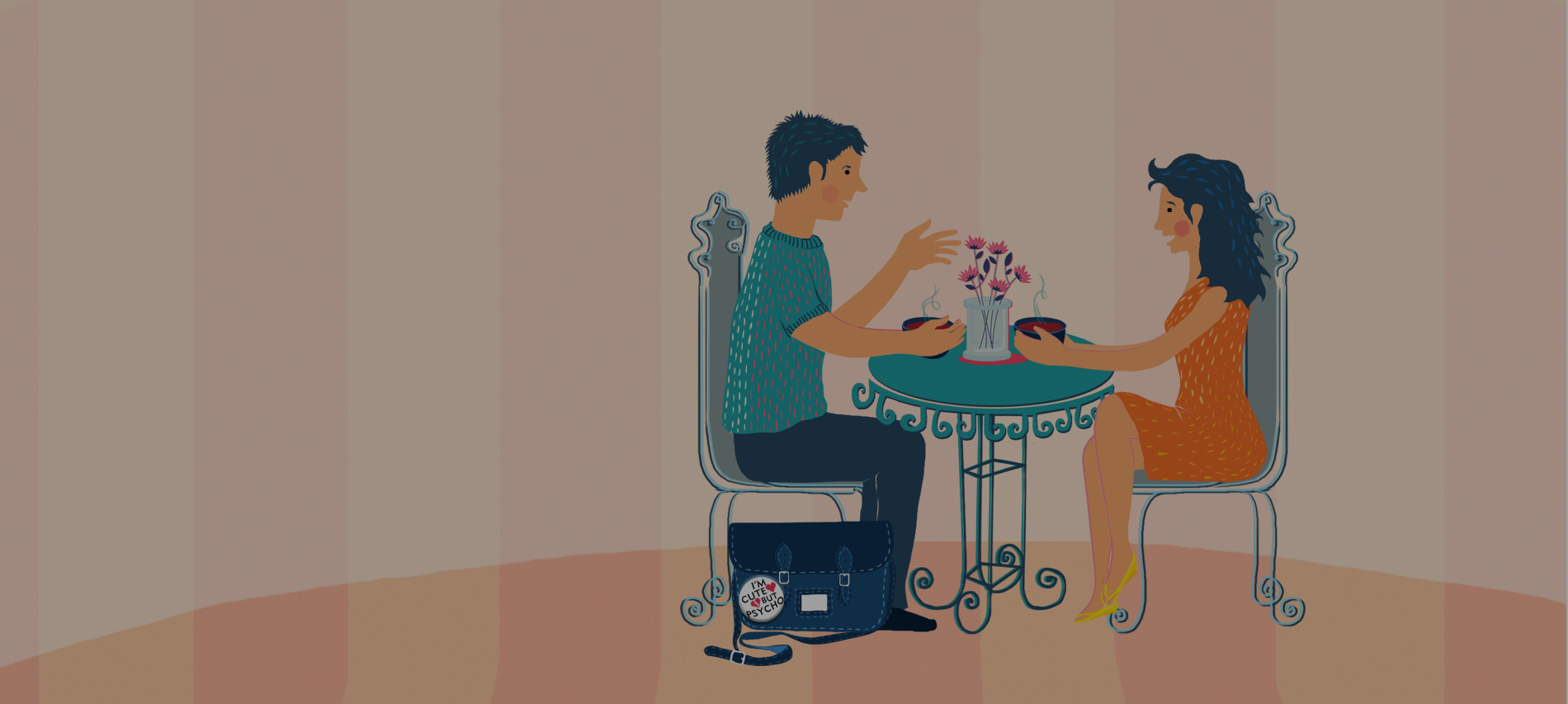
Some take to fishing. Some don’t. It’s as simple as that.
Likewise, with arranged-dating (modern dating expressly for the purpose of finding a spouse). Some thrive on the anticipation of a good catch, while for some (my personal guess is for many) the uncertainty, the awkwardness of a ‘catch and release’ and of course returning empty-handed (again), can be nothing short of a mild coronary.
While my friends and acquaintances invariably fell in the latter anxiety-stricken category they often spoke with wistful resentment of a creature I dubbed as the Overly Enthusiastic Dater [OED].
An effervescent giant ball of sunshine and an energy drink, OEDs apparently don’t exhibit the slightest tremor. In fact they are enthused at the prospect of sharing their hobbies, family composition, occupation, job history and of course the much contentious dietary habits (Veg? Non-veg? Egg? Fish? Wine? Whisky? Smoke?!?) with strangers… again and again and again.
Nerves of steel? Adrenalin junkies? Extreme Extroverts? How do OEDs survive this minefield, not only unscathed but also brimming with enthusiasm?
A few leisurely cuppas and they were spilling the beans. I’m not sure if these ‘skills’ were innate or evolved to protect their tickers, but they do explain the OED’s joie de vivre.
- Date Martyr
Competition is fierce when it comes to far-out dating stories and every girl wants her slice of sympathy as she narrates the cuckoo-capades to a bunch of wide-eyed happily-married couples. Which is why this OED no longer cringes and prays for Potter’s invisibility cloak but rubs her hands in glee (mentally of course) when she encounters a delusional dude.
Delusional Dude 1: “Hi there, Prepare to be amazed and astounded by me”
OED: Beams like a cat that got the cream
Delusional Dude 2: “I’m into crystal gazing which is why I know there are limited fate portals in the next few years. Yes, yes, we just met but we must marry before the portal shuts”
OED: Beams like a cat that got more cream
- Truffle Hunter
This OED won’t waste time researching her date. Instead she scours through a dozen food guides and reviews before she selects the date venue. Tried the Burmese café last time, what next? Isn’t there a new Caramelised Melon Cappuccino in town? How about an experiment in non-judgement at the new ‘dine-in–the-dark’ cafe? Don’t see chappie, don’t judge chappie. He’s not roasted and her taste buds are singing. It’s a win-win.
Dating in the dark doesn’t scare this OED, running out of new eateries does.
- Errand-dater
This OED is an efficiency machine. She lives by the phrase ‘Location, location, location’. She first browses through her pantry, then through her closet, then her medicine cabinet and finally through the now yellowed piece of paper that was once her to-do list. Flour will run out by Monday? Lycra tops have inexplicably shrunk? Great. Now she plans a weekend date at a café in the mall where she can shop for these.
Some say bumping into your date in the hosiery check-out line right before the date is embarrassing, but she says it’s a chance to practise your poker face and strengthen your peripheral vision (as you surreptitiously glance into his shopping basket).
- Date Mate:
The last and final OED (that I know of) is nothing but a social butterfly and a chatterbox at heart. Despite the obvious incompatibility she can’t resist buddying up with her fellow date.
“Maybe the problem is you are address women as ‘yo! hot mamma’. If you don’t mind my asking what’s your relationship with your mum like?”
“I must fix you up with Vina. She too adoooores Justin Bieber.”
“….and that’s why I decided to walk away. What’s your perspective as a guy?”
“Where did you buy this black lace shirt? Stitched? Really? What was the cost per metre?”
Having met OEDs in person was quite revealing. They weren’t super women or the other extreme – oddballs. They were simply women who saw beyond ‘Mission Groom’.
Every coffee date wasn’t a do or die situation, a sword hanging over their heads; in fact there was always an upside – be it a good meal, scratching errands off a list or finding a new buddy.


The Boy Who Loved — An Exclusive Excerpt

1 January 1999
Hey Raghu Ganguly (that’s me),
I am finally putting pen to paper. The scrunch of the sheets against the fanged nib, the slow absorption of the ink, seeing these unusually curved letters, is definitely satisfying; I’m not sure if writing journal entries to myself like a schizophrenic is the answer I’m looking for. But I have got to try. My head’s dizzy from riding on the sinusoidal wave that has been my life for the last two years. On most days I look for ways to die—the highest building around my house, the sharpest knife in the kitchen, the nearest railway station, a chemist shop that would unquestioningly sell twenty or more sleeping pills to a sixteen-year-old, a packet of rat poison—and on some days I just want to be scolded by Maa–Baba for not acing the mathematics exam, tell Dada how I will beat his IIT score by a mile, or be laughed at for forgetting to take the change from the bania’s shop.
I’m Raghu and I have been lying to myself and everyone around me for precisely two years now. Two years since my best friend of four years died, one whose friendship I thought would outlive the two of us, engraved forever in the space– time continuum. But, as I have realized, nothing lasts forever. Now lying to others is fine, everyone does that and it’s healthy and advisable—how else are you going to survive the suffering in this cruel, cruel world? But lying to yourself? That shit’s hard, that will change you, and that’s why I made the resolution to start writing a journal on the first of this month, what with the start of a new year and all, the last of this century.
I must admit I have been dilly-dallying for a while now and not without reason. It’s hard to hide things in this house with Maa’s sensitive nose never failing to sniff out anything Dada, Baba or I have tried to keep from her. If I were one of those kids who live in palatial houses with staircases and driveways I would have plenty of places to hide this journal, but since I am not, it will have to rest in the loft behind the broken toaster, the defunct Singer sewing machine and the empty suitcases.
So Raghu, let’s not lie to ourselves any longer, shall we? Let’s say the truth, the cold, hard truth and nothing else, and see if that helps us to survive the darkness. If this doesn’t work and I lose, checking out of this life is not hard. It’s just a seven-storey drop from the roof top, a quick slice of the wrist, a slip on the railway track, a playful ingestion of pills or the accidental consumption of rat poison away. But let’s try and focus on the good.
Durga. Durga.
12 January 1999
Today was my first day at the new school, just two months before the start of the tenth-standard board exams. Why Maa– Baba chose to change my school in what’s said to be one of the most crucial year in anyone’s academic life is amusing to say the least—my friendlessness.
‘If you don’t make friends now, then when will you?’ Maa said. They thought the lack of friends in my life was my school’s problem and had nothing to do with the fact that my friend had been mysteriously found dead, his body floating in the still waters of the school swimming pool. He was last seen with me. At least that’s what my classmates believe and say. Only I know the truth.
When Dada woke me up this morning, hair parted and sculpted to perfection with Brylcreem, teeth sparkling, talcum splotches on his neck, he was grinning from ear to ear. Unlike me he doesn’t have to pretend to be happy. Isn’t smiling too much a sign of madness? He had shown the first symptoms when he picked a private-sector software job over a government position in a Public Sector. Undertaking which would have guaranteed a lifetime of unaccountability. Dada may be an IITian but he’s not the smarter one of us.
‘Are you excited about the new school, Raghu? New uniform, new people, new everything? Of course you’re excited! I never quite liked your old school. You will make new friends here,’ said Dada with a sense of happiness I didn’t feel. ‘Sure. If they don’t smell the stench of death on me.’ ‘Oh, stop it. It’s been what? Over two years? You know how upset Maa–Baba get,’ said Dada. ‘Trust me, you will love your new school! And don’t talk about Sami at the breakfast table.’ ‘I was joking, Dada. Of course I am excited!’ I said, mimicking his happiness.
Dada falls for these lies easily because he wants to believe them. Like I believed Maa–Baba when they once told me, ‘We really liked Sami. He’s a nice boy.’ Sami, the dead boy, was never liked by Maa–Baba. For Baba it was enough that his parents had chosen to give the boy a Muslim name. Maa had more valid concerns like his poor academic performance, him getting caught with cigarettes in his bag, and Sami’s brother being a school dropout. Despite all the love they showered on me in the first few months after Sami’s death, I thought I saw what could only be described as relief that Sami, the bad influence, was no longer around. Now they use his name to their advantage. ‘Sami would want you to make new friends,’ they would say. I let Maa feed me in the morning. It started a few days after Sami’s death and has stuck ever since.
Maa’s love for me on any given day is easily discernible from the size of the morsels she shoves into my mouth. Today the rice balls and mashed potatoes were humungous. She watched me chew like I was living art. And I ate because I believe the easiest way to fool anyone into not looking inside and finding that throbbing mass of sadness is to ingest food. A person who eats well is not truly sad. While we ate, Baba lamented the pathetic fielding placement of the Indian team and India’s questionable foreign policy simultaneously.
‘These bloody Musalmans, these filthy Pakistanis! They shoot our soldiers…

The Woman Jinnah Fell in Love With
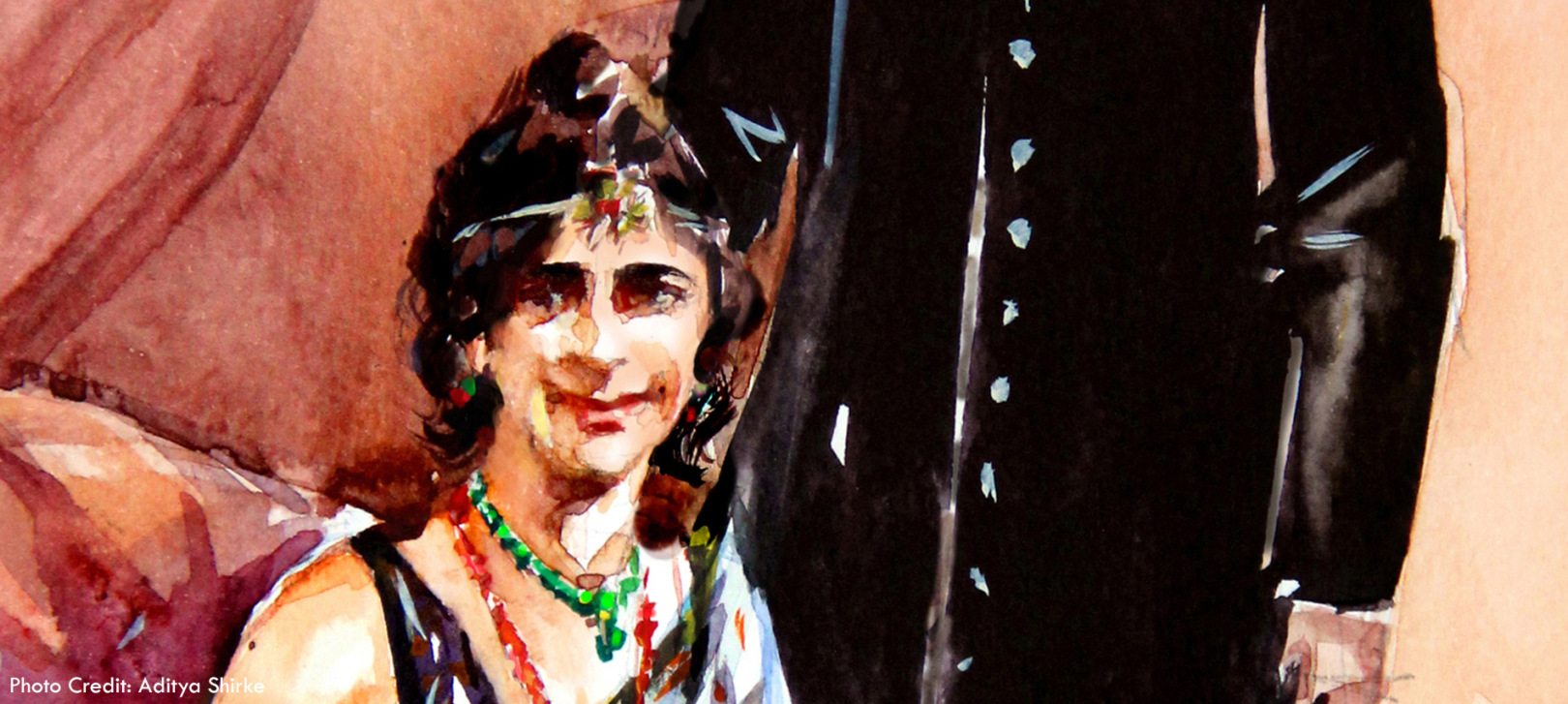
The news of Mohammad Ali Jinnah’s marriage to Ruttie Petit in 1918 shook pre-partitioned India. Everyone wondered about this woman who had made the serene yet strait-laced national leader fall in love with her.
Sheela Reddy in her exhaustive Mr. and Mrs. Jinnah paints an interesting portrait of the enchanting Ruttie Petit Jinnah.
Wasn’t she enigmatic? Tell us how you perceive Ruttie Jinnah.