
Publish with Us

Follow Penguin

Follow Penguinsters

Follow Penguin Swadesh

Mayawati: Goddess of Justice, the Lioness of UP or the Iron Lady?

On the eve of a landmark general election, Ruchir Sharma offers an unrivalled portrait of how India and its democracy work, drawn from his two decades on the road chasing election campaigns across every major state, travelling the equivalent of a lap around the earth. Democracy on the Road takes readers on a rollicking ride with Ruchir and his merry band of fellow writers as they talk to farmers, shopkeepers and CEOs from Rajasthan to Tamil Nadu, and interview leaders from Narendra Modi to Rahul Gandhi.

Excerpted here is the author’s encounters with Mayawati as well as her journey in politics.


All of his rivals were accusing Mulayam of running a deeply corrupt administration that was lining the pockets of his fellow Yadavs. Into this breach stepped Mayawati, who aimed to build a winning plurality with the support of castes alienated by Mulayam’s Yadav centric administration. To build on her rock-solid base among Dalits, Mayawati decided on a bold strategy, reaching out to Brahmins, who are politically powerful everywhere but at 10 per cent of the population, double the India average, are particularly important in this critical state. Accustomed to a position of great power, the Brahmins felt marginalized by the Yadav government, but drawing them in to support Mayawati would not be easy: no one had forgotten her party’s old call on Dalits to ‘beat all the upper castes with shoes’. Mayawati appealed to Brahmins with an offer of power, not aid or job reservations. In fact, she didn’t campaign actively, appearing at one or two rallies a day—rather than the usual eight or nine typical of any state leader around election time. Instead, she focused her attention on a detailed and well-researched effort to find candidates—including Brahmin ones—who had the best chance to win in each constituency.

At this point in her career, Mayawati was becoming more and more dictatorial in her leadership of the BSP. It had no number two, no succession plan, no plan to make one. Reports from her camp said that Mayawati was subject to increasingly violent mood swings, that staff cowered in her presence, and that she single-handedly collected and managed the party’s funds. On her birthday, supporters came to her home and placed cash donations directly in her hands.

Mayawati personally picked BSP candidates and assigned them to constituencies. She was also said to be turning inward, increasingly shielding herself from the press and the outside world, and speaking only to her party lackeys.

When the results came in, Mayawati won more comfortably than we expected. She took a chunk of Brahmin and other upper caste voters disillusioned with the BJP. Coupled with her usual Dalit support, that was enough to propel Mayawati to power. With a little more than 30 per cent of the total vote, her BSP won 208 of the 400 seats in the UP assembly. It was the first time a Dalit party had ever won an absolute majority in an Indian state election.

***

In the five years since we had seen Mayawati rise to become chief minister of Uttar Pradesh, she had grown more and more regal. Other chief ministers had encouraged a cult of personality but none on the same scale as Mayawati, who was building towering statues of herself and her party symbol, the elephant, all over the state and its capital. When she came to power, Lucknow was building the ambitious new Ambedkar Park, and she had added as its centerpiece a monument to herself and other Dalit leaders, surrounded by elephants. In 2007, Mayawati had won by courting Brahmin voters and became the first important Dalit leader to draw significant upper-caste votes. But the taboo-shattering alliance soon unravelled.

Many of her Dalit supporters were angry at Mayawati for giving top posts to Brahmins, and by 2012, Mayawati had not only dumped the Brahmins as allies, she was blaming them for the corruption in her government.

We attended a Mayawati rally in Ghatampur, just outside the city of Kanpur, where the warm-up songs praised her as the Goddess of Justice, the Lioness of UP and the Iron Lady. Around 60,000 people poured into the rally grounds, most of them Dalits, waving the blue flag of the BSP and listening raptly to Mayawati’s every word, despite the fact that she was reading from a prepared text, barely making eye contact. Mayawati allowed very few other leaders on her stage, leaving the impression that she was accompanied mainly by a large fan that blew only on her. To the Dalits of UP, Mayawati was more a hero than ever, and few if any begrudged her regal airs. To the rest, she was running a government mired ever more deeply in corruption and favouritism for her own community. Stories abounded about how she personally dispensed all her party’s campaign funds, and distributed nominations to the highest bidders.

***

…Mayawati would ride her bicycle around town, talking to voters, breaking bread with them in their homes. These bonds helped propel Mayawati into the Lok Sabha seat representing Bijnor in 1989, but that was then. As her name and fame grew and Mayawati moved on to the chief minister’s office in Lucknow, her Bijnor supporters had come to see her more as the national hero of the Dalits, less as one of their own. Indian politics had, if anything, grown more intensely local.

Mayawati had long since abandoned her 2007 promise to run a government in ‘everyone’s interests’, and seemed to be retreating back into her caste comfort zone. A founding slogan of her party was a rallying cry to Dalits and a threat to Brahmins: ‘Vote Hamara, Raj Tumhara, Nahin Chalega, Nahin Chalega.’ The vote is ours but the power is yours, this can’t go on. Now, she was telling Dalits at her rallies: ‘Satta ki chabi hum isse jaane nahin denge.’ We got hold of the key to power and we cannot let it go.

Indian elections are lost by the incumbent more often than they are won by the challenger, and this was a prime example: Mayawati was toppled by her own self-infatuation, her statues and her failure to fix run-down schools with absentee teachers. With so many parties competing in winner-take-all system, a small swing in the vote is enough to oust a government. Between 2007 and 2012 about 5 per cent of the vote swung from Mayawati’s party to the Yadav’s, and that was enough to dethrone Mayawati and put the Samajwadi Party in power with a solid majority in the state assembly.

When Mayawati’s helicopter landed, three hours late, they were waiting and eager, shouting, ‘Behenji tum sangharsh karo, hum tumhare saath hain.’ Sister you keep fighting, we are with you. They spoke of Mayawati as a hero who had refused to marry so that she could devote herself to fighting for the Dalits, and no one in the crowd begrudged for a second her increasingly regal ways. Let other politicians dress humbly, all in white to appear ascetic and close to the masses, Mayawati dressed up, hair dyed black, carrying a designer handbag, wearing diamond earrings and a fancy white shawl in the 38-degree heat.

Mayawati called the BJP a party of tainted candidates, criminals and defectors from other parties, and ridiculed it as the ‘Jumla Party’, the party of empty gimmicks. She accused the BJP of stashing its own cash away in safe havens before Modi withdrew all the big bills from circulation, of doing nothing to check rising attacks against Dalits, and of plotting to abolish the system that reserves a share of government posts for the backward castes. But there was also a strong caste tension between Mayawati and Akhilesh. Her vote base is the lowest castes who work as landless labourers in rural areas, while his Yadav vote base, one rung up the caste ladder, often works as supervisors overseeing Dalits and are thus often seen as their most direct oppressors. This clash was magnified by the general stereotype, which Mayawati played on relentlessly, of Yadavs as aggressive bullies. She promised to end the Yadavs’ lawless ‘jungle raj’, and put Samajwadi Party crooks behind bars. For all the cultural differences between south and north, Jayalalithaa shared much with regional leaders like Mayawati in UP or Mamata Banerjee of West Bengal, whom we would see in action on later trips. They were ‘supremos’, big party bosses who ruled their parties with unquestioned authority. Many supremos are men, like the Yadavs of both Bihar and UP, and a growing number are, like Modi, single. What bound the three leading female supremos together was that they were all single, and had risen in the man’s world of politics by sheer force of will.


On the eve of a landmark general election, Ruchir Sharma, in Democracy on the Road, offers an unrivalled portrait of how India and its democracy work, drawn from his two decades on the road chasing election campaigns across every major state, travelling the equivalent of a lap around the earth.

Of Marxists and Mamata – an excerpt from Ruchir Sharma’s ‘Democracy on the Road’

On the eve of a landmark general election, Ruchir Sharma offers an unrivalled portrait of how India and its democracy work, drawn from his two decades on the road chasing election campaigns across every major state, travelling the equivalent of a lap around the earth.

Here is an excerpt from Ruchir Sharma’s book, Democracy on the Road that talks about the power packed campaign led by Mamata Banerjee in May 2011.


Leading the opposition charge was Mamata Banerjee, a Bengali Brahmin who split from the Congress to form her own party in 1998 and had been railing against Marxist ‘tyranny’ for years, mostly to no avail. The Tata conflict, and a second deadly government attempt to acquire agricultural land in and around Nandigram in the district of Purba Medinipur, had given Mamata’s campaign against Marxist rule new momentum and credibility.

We saw Mamata for the first time at a rally in Kolkata, where she sprang out of the helicopter and race-walked past party supporters, a big boss in a diminutive frame, dressed austerely in a white sari with a blue border. Her bearing broadcast immediately that she had no time for the usual campaign greetings; she was a one-woman dynamo running a lifelong crusade, eager to topple communism yesterday.

A poet herself, Mamata promised not only to restore English instruction but also to bring back the poetry of Bengal greats such as Rabindranath Tagore and Kazi Nazrul Islam, and the stories of Bengal heroes like ‘Binoy, Badal and Dinesh’, which the Marxists had expunged as too bourgeois, and replaced with party-approved literature. While English is an aspirational language all over India, perhaps only in Bengal could a politician campaign on promises to restore local poetry to the school curriculum.

She promised that under her All India Trinamool Congress (TMC)—the ‘party of the marginalized’—things would be different. Bengal would have modern schools, colleges and health clinics, with no proof of party loyalty required for access. Non-party members would no longer have to travel out of state for medical treatment. Her campaign slogan promised ‘poriborton’, the Bengali spin on ‘parivartan’ or change. As interesting as what Mamata said was what she didn’t say. Neither the Congress nor the BJP had cracked 7 per cent of the vote in recent Bengal elections, and they hardly bore mention in Mamata’s speech. The caste and religious undercurrents that drive much of Indian politics barely surfaced either, since Bengal was divided mainly between Marxist party members and everyone else. Tapping popular frustration with thirty-four years of Marxist rule, Mamata’s party won in resounding fashion, taking 184 of the 294 state assembly seats, and she became the new chief minister. The Marxists finished a distant second….

Economic growth had picked up at least moderately since the communists departed. Infant mortality was falling. Construction was booming all over the capital, spilling into the outskirts. Amit Mitra, state finance minister under Mamata, told us investment was flowing into cement and fertilizer plants, small- and medium-size companies were growing rapidly and that Tata had begun to expand again in the state.

When Mamata came to power in 2011, she had fired police officials who did not toe her party line, and harassed critics who posted mocking cartoons of her on social media. She was seen as erratic, volatile, an autocrat who brooked no challenge within her own party. Mamata’s writ still ran large, but she was settling down and opening up, as the Marxists fell into disarray. During the last campaign, Mamata had refused to meet us because some of our companions had ties to leading Marxists in Delhi, but this time she called them up to the stage before a Kolkata rally and greeted them warmly.

As Mamata went on the offensive there were flashes of the old paranoia, and over the course of the campaign she would attack everyone from Modi and the media to the Election Commission and the security apparatus for conspiring against her. Her crowds lapped it up. As soon as her Kolkata rally ended and Mamata made it past her security cordon, she was mobbed by supporters, young and old, who wanted to kiss her hand, touch her feet, or receive her blessings.

Over this five-week campaign, Mamata would claim to walk 1000 kilometres in the sweltering heat of April and May to address more than 160 meetings, and while the numbers were implausible, her energy and her centrality to the TMC were not in question. The joke in Kolkata was that ‘there is only one post in the TMC and Mamata holds it. Everyone else is a lamppost.’ She was running a highly centralized government in which her word was the only one that really mattered, yet she was delivering enough to ordinary people to win them over. Many said Mamata had executed on her promises to improve roads and electricity. She had offered subsidies to bring down the price of wheat, vegetables and rice, which were selling for a few rupees per kilo. She had also given free bicycles to girls as an incentive and means to get to school, and offered wedding subsidies to young women.

In the end the TMC won easily. After five straight terms under Marxist party leaders, Bengal may simply not have been ready to throw out Mamata after one. Her personal charisma prevailed over the imploding Marxists and their opportunistic alliance with the Congress. She had mellowed, growing open enough to industry to win business support, remaining generous enough with the public purse to win votes from the poor.

Mamata was also riding the growing wave of voter support for single leaders, whose unmarried status seemed to confirm their claims of all-in devotion to public service. Among India’s twenty one most populous states, there were no unmarried chief ministers in 1988, but by 2016 there were seven, including Mamata, seemingly lifted by growing voter distaste for nepotism inside political parties, and the corruption that flows naturally from running parties as a family business. Mamata had in fact remained far more ascetic in her personal tastes than many other supremos. Even as chief minister she lived in her small ancestral home in the Kolkata neighbourhood of Kalighat. Passing by the home we were stunned to see it in a state of decay with a dilapidated grey tiled roof and rotting bamboo shafts—a stark contrast to the sandstone palaces Mayawati had built for herself in UP. Mamata’s image as a single leader with no taste for diamonds had made her largely impervious to the corruption charges that so often topple Indian governments, and helped her secure this second term.


Democracy on the Road takes readers on a rollicking ride with Ruchir and his merry band of fellow writers as they talk to farmers, shopkeepers and CEOs from Rajasthan to Tamil Nadu, and interview leaders from Narendra Modi to Rahul Gandhi.

The Great Disappointment of the ‘Modifesto’: Ten Facts Proving that ‘Achche Din’ Remain a Distant Dream

As the National Democratic Alliance (NDA) government completes its current term ahead of the General Elections 2019, it is time to evaluate its performance, specifically in terms of its management of the economy.

Salman Anees Soz—international development expert, economic and political commentator and consultant at the World Bank, conducts a critical assessment of five years of the brand of economics Prime Minister Narendra Modi has championed, often referred to as ‘Modinomics’. The Great Disappointment takes a look at the rhetoric of the 2014 ‘Modifesto’ that actively denied the achievements of previous governments and announced that a government led by Narendra Modi would match their cumulative performance within its first term.

Brought into power with the biggest political mandate in almost three decades, did the NDA government succeed in gainfully transforming India’s economic trajectory or did it squander a once-in-a-generation opportunity?

A realistic look at GDP growth under Modinomics is not very promising

The 2016–17 survey notes that ‘GDP growth slipped from 7.7 per cent in the first half of 2016–17 to 6.5 per cent in the second half. Quarterly real GDP growth also shows a deceleration in the third and fourth quarters relative to the first two quarters. The slowdown in these indicators predated demonetization but intensified in the post-demonetization period.’ What that survey could not have predicted is that in the following quarter, economic activity slowed and the growth rate slumped to 5.7 per cent, the slowest pace in three years.

The much-touted tax reform failed to hold up structurally

Early on, the GST’s technology infrastructure could not keep up with the volume of transactions, and the government once again seemed unprepared for the scale of reform. It was demonetization redux and gave another major opportunity to the government’s critics to paint it as incompetent. Yashwant Sinha said that the GST ‘would make a fine Harvard University case study of everything that was wrong with the rollout of a tax reform’.

The agricultural crisis worsened in the last five years

Agricultural exports declined from US$42 billion in 2013– 14 to US$38 billion in 2017–18. They were lower in the intervening period. Agricultural imports went up by about 50 per cent during this time Interestingly, investment in agriculture (measured by gross capital formation as a share of agricultural GDP) fell from 17.7 per cent in 2013–14 to 15.5 per cent in 2016–17.

While the decline in global crude oil prices caused a reduction in fiscal deficit, oil prices for consumers in India are higher than ever

An analysis by the Mint newspaper showed that ‘almost the entire reduction of about 0.6% of the gross domestic product (GDP) in India’s fiscal deficit between FY14 and FY16 could be attributed to the sharp fall in crude prices’.  The current account balance improved. The government liberalized diesel prices sooner than anticipated on account of this sharp decline. However, instead of passing on the benefits of lower crude prices to consumers, the government retained much of the gain through progressively higher excise duties on petroleum products.

In many cases, the Modi government allegedly simply renamed its predecessor’s schemes

According to an analysis by the Quint, an online news site, the Modi government renamed nineteen out of twenty three schemes started by its predecessor, the UPA government. For example, the famous Jan Dhan Yojana is the new name of an existing scheme Basic Savings Bank Deposit Account (BSBDA). Swachh Bharat Abhiyan was originally Nirmal Bharat Abhiyan while the RGGVY (rural electrification) became DDUGJY.

One of the most touted ‘benefits’ of demonetization has evidently not materialized

There is no concrete evidence to indicate that demonetization led to a significant decline in terrorism. In fact, Prasenjit Bose, an economist, found that ‘total fatalities in terrorism-related violence in India have hardly seen any significant decline in 2017 (data till August 2017) compared to the two previous years, with violence in Jammu and Kashmir actually witnessing an escalation’.

Demonetisation has not shown a drastic increase in either direct tax collection or in the number of taxpayers

 Wilson quotes CBDT (Central Board of Direct Taxes) data to show that ‘there was an 11.6% growth in the number of income taxpayers in 2013–14, without any demonetisation. It then fell to 8.3% and 7.5% in next two years but increased to 12.7% in 2016–17 but again fell to 6.9% in 2017–18. So, the trend shows that there was no dramatic increase in the number of taxpayers.’ Wilson also notes that growth in direct taxes was much higher during the UPA’s ten years (average 20.2 per cent) as opposed to the Modi government’s four-year average growth of only 12 per cent.

Modi’s pitch to India’s youth was clear—if they voted for him, he would get them a job. Unfortunately, ground realities present a depressing picture

Total employment fell from 48.04 crores in 2013–14 to 46.76 crore in 2015–16. The failure to create jobs is becoming the biggest political challenge for the Modi government. There are constant reports in the media about the challenging jobs situation in India. The government’s response has been to latch on to questionable data on job creation to argue that India does not have an employment problem.

 The Pradhan Mantri Kaushal Vikas Yojana (PMKVY) scheme, the centrepiece of Skill India, has had negative reviews

The Sharada Prasad Committee, set up by the skill development ministry to review the performance of various sector skill councils, came out with negative reviews of the PMKVY. The committee noted that ‘no evaluation was conducted of PMKVY 2015 to find out the outcomes of the scheme and whether it was serving the twin purpose of providing employment to youth and meeting the skill needs of the industry before launching such an ambitious scheme’. In various stakeholder consultations, the committee reported that ‘all of them said in one voice that the targets allocated to them were very high and without regard to any sectoral requirement. Everybody was chasing numbers without providing employment to the youth or meeting sectoral industry needs.’

 The figures used to tout India’s GDP growth have come under the scanner after a suspicious change in methodology

India’s GDP data has been under the scanner ever since the CSO changed the methodology for calculating economic output in 2014–15. Most analysts were surprised after the publication of the new GDP series. Even the government’s chief economic adviser, Arvind Subramanian, and the then Governor of the RBI, Raghuram Rajan, cast doubt on the new CSO data. According to the Economist, investors  ‘roundly disbelieve India’s growth figures’.


Grab your copy of The Great Disappointment today!


Eight Things you need to know about the Delusional Politics of Brexit and its Aftermath

Hardeep Singh  Puri’s forty years of professional life as a senior diplomat, India’s permanent representative to the UN and Union Minister of State for Housing and Urban Affairs in New Delhi has given him a unique vantage point to see the fault-lines in political narratives and the ‘delusional’ idiosyncrasies of politicians.

Many democratically elected leaders of the twenty-first century have displayed streaks of recklessness, megalomania, bizarre self-obsession and political views that are difficult to characterize.

Delusional Politics studies the actions of these contemporary political leaders with the example of one of the most momentous events our times-Brexit-exposing the self-serving, poorly calculated behavior at the heart of significant governing decisions.

It traces the rise of the right-wing anti-immigration paranioa in Britain, pitted against a Prime Minister who despite his intentions failed as a leader of the Remain campaign. Puri describes Brexit as three supreme examples of delusional thinking and politics. One, calling a referendum that was not required. Two, allowing the referendum’s outcome to be shaped by the uncertainties of democratic politics without due diligence, hard work and safeguards being put in place to ensure the nation’s future. And finally, calling an election when it was not due and when the government had a comfortable majority.

Read on to find out more about the delusional politics of Brexit

 A poorly calculated and casually reached decision to decide the future of a nation and its place in the world

As the story goes, Cameron had been eating pizza at O’Hare while waiting for a commercial flight home following a NATO summit. He was with his Foreign Secretary William Hague and Chief of Staff Ed Llewellyn. The conversation that ultimately led to the unravelling of the United Kingdom apparently went something like this: We have a lot of Euro-sceptics in the party. Let us smoke them out. Let us have a referendum.

 ~

Dissent within Cameron’s own party, the Conservatives, reflected poorly on the party’s leadership

Members of Cameron’s party had essentially backed the agenda of the UK Independence Party (UKIP). UKIP had, over time, reframed its identity to become the party of the ‘leftbehinds’ of the country’s economic development. Their rallying cry became the face of the growing anti-immigrant sentiment that would pull the United Kingdom out of the EU. The rebel Tories supported Brexit for economic reasons, whereas UKIP supported it, at least in its messaging, for cultural reasons, calling for the UK’s identity to be reclaimed.

 ~

 Parties on the right capitalized on the blue-collar angst and anti-immigrant sentiments.

Right-wing populists maintained their economic agenda behind the scenes, while prioritizing—publicly, at least—anti-immigration. The UK Independence Party (UKIP) spearheaded this movement, with its primarily less-educated, blue-collar, white male base at its tail. Founded in 1993 during a transformational point in the UK, UKIP called its base the ‘left-behinds’ of the country’s economic growth and pledged itself as the people’s voice against the establishment that coddled the immigrants. UKIP’s base expanded in waves, most notably in the mid- 2000s, when some Eastern European countries joined the EU, bringing with them another influx of immigrants.

  ~

David Cameron failed to galvanize his youth voter base the way the pro-Brexiters captured the imagination of their own

In the 2015 referendum, the votes of Cameron’s ‘new generation’ were pivotal. Although the young people who did turn up at the booths voted in Cameron’s favour—to remain in the EU—their overall turnout was insufficient. As the Liberal Democratic leader Tim Farron put it, ‘Young people voted to remain by a considerable margin, but were outvoted.’ UKIP and the pro-Brexiters had successfully secured the older, less educated, working class votes.

  ~

David Cameron’s incredibly privileged and well-connected background made it difficult for him to combat populist sentiments

But it is undeniable that Cameron’s privileged upbringing, his confines to the upper legions of society, and his rapid-fire ascension up the political ladder detached him from the people he so earnestly desired to serve. Regardless of his intentions, Cameron was a perfectly unfit contender to combat the populist insurgency of the right-wing Eurosceptics.

  ~

The peculiar politics and character of Nigel Farage

On the other side of the battle, the Brexit campaign was led by Nigel Farage, a self-professed ‘middle-class boy from Kent’ with an arsonist tongue characteristic of a populist leader. He correctly felt the mood in parts of the country and rode the anti-immigrant tide. He tethered the resurrection of the British identity—a past-time homogeneous white identity that so many of the Leave voters yearned to return to—to the referendum. Privileged though his background is,  Farage convincingly painted himself as one of the ‘left-behinds’ who his party fought for. He fostered a connection with his base that in many ways Cameron failed to do with his. Farage’s brazen and open discontent with the establishment resonated with far too many people.

  ~

In calling the general election in April 2017, Theresa May made a decision that would turn out to be superfluously tumultuous path as Cameron’s.

On 18 April 2017, in an attempt to gain more power for the Tories in preparation for the Brexit negotiations, May called for general election, which was not due until 2020.60 Polls at the time had been showing promising figures for the Conservative Party’s success, and May thought she could turn these numbers into parliamentary seats. The election, she argued, was ‘necessary to secure the strong and stable leadership the country needs to see (it) through “Brexit” and beyond’. The elections took place less than two months after May’s announcement, on 8 June 2017. The Conservatives lost their parliamentary majority, and Labour gained seats. After the embarrassing results, May then resorted to forming a new government with the Democratic Unionist Party in order to secure a governing majority.

 ~

 The emerging consequences of a referendum that was won on a ‘campaign of lies’

As Inter Press Service founder Roberto Savio succinctly put it, ‘Only now the British are realizing that they voted for Brexit, on the basis of a campaign of lies. But nobody has taken on Johnson or Farage publicly, the leaders of Brexit, after Great Britain accepted to pay, as one of the many costs of divorce, at least 45 billion Euro, instead of saving 20 billion Euro, as claimed by the “Brexiters”. And there are only a few analysis on why political behaviour is more and more a sheer calculation, without any concern for truth or the good of the country.’


Delusional Politics brings to light the fact that at the heart of delusional politics is perhaps the delusional politician.

Eight Things you need to know about Donald Trump’s Unconventional Presidency from Delusional Politics: Back to the Future

Hardeep S. Puri’s forty years of professional life as a senior diplomat, India’s permanent representative to the UN, and now Minister for Housing and Urban Affairs in New Delhi, give him a unique vantage point to see the fault-lines in political narratives and the ‘delusional’ idiosyncrasies of politicians.

Many democratically elected leaders of the twenty-first century have displayed streaks of recklessness, megalomania, bizarre self-obsession and political views that are difficult to characterize. Delusional Politics studies the actions of these contemporary political leaders and covers Brexit, the election of Donald Trump, the rise of the BJP under Prime Minister Narendra Modi and decision-making with respect to global governance, terrorism and trade. It brings to light the fact that at the centre of delusional politics is perhaps the delusional politician itself.


Hardeep Puri explores in particular one of the more ‘unconventional presidencies’ of contemporary times-that of Donald Trump from his early career, to his presidential campaign and to the personal and political concerns that govern his somewhat unusual attitudes to America and its place in the world order.

Read on for eight things you need to about Donald Trump’s unconventional presidency.

The presidential aspirations that grew from a jibe

“It is far-fetched to assert that Trump’s pursuit of the US Presidency originated from a single night in the Washington Hilton hotel in 2011 over some one-liners. In an interview with the Washington Post during his presidential campaign, Trump stated, ‘There are many reasons I’m running, but that’s not one of them.’ But as Trump’s public persona slowly evolved into a treasure trove for entertainment and jest, his self-alleged thick skin grew lean. Stack upon stack of jeers and taunts ushered Trump towards his eventual realization: ‘Unless I actually ran, I wouldn’t be taken seriously.’”


His self-described ‘truthful hyperbole’

“In his book Trump: The Art of the Deal, Trump terms boisterous bragging of this sort ‘truthful hyperbole’. Trump dragged this into the Oval Office to serve no political or policy related purpose. Of course, the President’s own popularity is sought to be enhanced. Such efforts do not appear to effectively factor in the negative impact of botched attempts. Misleading the public is not entirely new to the presidency. Post-truth politics has been in play for quite some time.”


The slew of exaggerations and ‘alternative facts’ on both sides

“It is perhaps fitting that the first documented accounts of President Trump’s first 100 days in office are based on delusion and exaggeration. The President is known to have made exaggerated claims, whether pertaining to his business dealings or his personality, and the media too has published exaggerated stories of both his past and present. It would seem neither party is ready to shed the delusion and pull back on the hyperbole just yet.”


His reneging on the Obama-era Iran deal with no alternative in sight

“When viewed from this perspective, the withdrawal from the Iran deal was a corrective measure he took in the interest of the average American—a delusion he himself believed and fed his support base. He was correcting, he believed, a wrong committed by the ‘establishment’ and saving America from yet another international misadventure, similar to the interventions in Iraq, Libya, Syria, and Yemen. Moreover, the withdrawal was meant to pander to the strong Israeli lobby in the United States, which was steadfastly against the Iran deal but got little attention from President Obama. The delusional act of bringing domestic partisanship and one-upmanship to international negotiations, that too to an issue as grave as nuclear security, has had serious consequences.”


The strange competition with Kim Jong-un regarding ‘button sizes’!

“‘The following tweet from the personal account of the forty-fifth President of the United States is just one example of the flailing governance of nuclear security in the world: North Korean Leader Kim Jong Un just stated that the ‘Nuclear Button is on his desk at all times.’ Will someone from his depleted and food-starved regime please inform him that I too have a Nuclear Button, but it is a much bigger & more powerful one than his, and my Button works!’”


His complete dismissal of climate diplomacy or environmental considerations

“On 2 June 2017, Trump withdrew US support to the Paris Accord, claiming he was elected President of the citizens of Pittsburgh and not Paris. He made his contempt for climate action, global governance and multilateral diplomacy clear in one go. To win the presidential election, Trump had promised to bring back the jobs the coal miners had lost due to environmental regulations imposed by Obama. The pull-out from the Paris deal along with a host of domestic measures was therefore Trump’s way of delivering on his campaign promise. The fact, however, remains that these efforts have little to no impact and the jobs Trump tried to recreate are nowhere in sight. Like many of his decisions, this renunciation of the Paris Accord too is steeped in delusional thinking.”


His  dream team, filled with the most hawkish and anti-international individuals

“Each of these individuals had a common reputation that preceded them—Pompeo was a former member of the Tea Party, and known to have a hawkish worldview. He famously defended the CIA against the senate report that claimed that torture tactics were deployed during the Bush presidency. Gina Haspel, who replaced Pompeo as the head of the CIA, was herself accused of torturing suspects and destroying evidence. Neither of them, however, comes close to the hawkishness of John Bolton, who till day remains one of the few individuals who defends the American invasion of Iraq, and the intervention in Libya.”


His complete cognitive dissonance handling nuclear deals in Iran and North Korea

“Moreover, this ambiguity has set the precedent for future negotiations. Both Iran and North Korea will see the other as a benchmark. For Iran, a much watered-down (and vague) agreement with the United States sends the signal that to get Trump back on the table, it too needs to expand its nuclear capability, and in return, get a better deal than the one it signed with Obama. For North Korea, if Trump can renege on the Obama-era Iran deal, which was much more comprehensive than the bullet points they have agreed to, there is little value in taking the initiative forward, and in fact, their best play is to continue to retain a nuclear arsenal capable of reaching the United States. When viewed from this prism, the discontinuation of military exercises with South Korea is a win-win solution for Kim Jong-Un. He has demonstrated that he can build intercontinental ballistic missiles, buy time from the US (due to the vagueness of the bullet points) on the future course of action, and have South Korea and Japan on the back foot.”


Delusional Politics brings to light the fact that at the heart of delusional politics is perhaps the delusional politician.

Five ‘delusional leaders’ from Hardeep Singh Puri’s ‘Delusional Politics’

Hardeep S. Puri’s forty years of professional life as a senior diplomat, India’s permanent representative to the UN, and now Minister for Housing and Urban Affairs in New Delhi, give him a unique vantage point to see the fault-lines in political narratives and the ‘delusional’ idiosyncrasies of politicians.

Many democratically elected leaders of the twenty-first century have displayed streaks of recklessness, megalomania, bizarre self-obsession and political views that are difficult to characterize. Delusional Politics studies the actions of these contemporary political leaders and covers Brexit, the election of Donald Trump, the rise of the BJP under Prime Minister Narendra Modi and decision-making with respect to global governance, terrorism and trade. It brings to light the fact that at the centre of delusional politics is perhaps the delusional politician, who, in turn, is often encouraged and egged on by pseudo expertise, vested interests, and self-serving advice. Such leaders pursue delusional policies that yield catastrophic results.

Read on for five world leaders and the ‘delusional politics’ they have pursued.


Mahinda Rajapaksa

A lack of fiscally responsible spending, which has led to a growing dependence on China

“Many examples of delusional politics are available in South Asia, including in India itself. In Sri Lanka, an elected president decided to define his legacy by erecting huge white elephants in his home district Mattala, a port in Hambantota, and the Mattala Rajapaksa International Airport. What purpose do these mega infrastructure projects serve? They provide an ego boost to the leader. But what else? He succeeded in driving up his country’s debt. Sri Lanka now faces the prospect of more than 90 per cent of its GDP being earmarked for debt repayment. Since this is not sustainable and the Chinese are not into philanthropy or altruism, the debt has been converted into equity and parts of Sri Lanka have been sold to the Chinese.”


David Cameron

Casually deciding upon calling a referendum and allowing its outcome to be shaped by the uncertainties of democratic politics without due diligence, hard work and safeguards being put in place to ensure the nation’s future.

“As the story goes, Cameron had been eating pizza at O’Hare while waiting for a commercial flight home following a NATO summit. He was with his Foreign Secretary William Hague and Chief of Staff Ed Llewellyn. The conversation that ultimately led to the unravelling of the United Kingdom apparently went something like this: We have a lot of Euro-sceptics in the party. Let us smoke them out. Let us have a referendum. Cameron had been on the lookout for an opportunity to reclaim face and leadership, not only in Parliament but within his own party.”


Theresa May

Calling an election when it was not due and when the government had a comfortable majority.

“When campaigning for the prime minister’s job, Theresa May had pledged to continue in the footsteps of her predecessor. In calling the general election in April 2017, she had succeeded in venturing down the same superfluously tumultuous path as Cameron. The elections took place less than two months after May’s announcement, on 8 June 2017. The Conservatives lost their parliamentary majority, and Labour gained seats. After the embarrassing results, May then resorted to forming a new government with the Democratic Unionist Party in order to secure a governing majority.”


Donald Trump

A series of delusional decisions

“He formally recognized Jerusalem as the capital of Israel, breaking with seven decades of US foreign policy and stripping any prospects of a US-led mediation. He has announced that the US will withdraw from the Iran nuclear deal, breaking away from Western allies and possibly inciting a nuclear arms race in the Middle East. His attempts to earn a Nobel Peace Prize for denuclearizing the Korean peninsula have fallen embarrassingly short. He initially made negotiations with North Korea virtually impossible by threatening to ‘totally destroy’ the country of twenty-five million and by insulting Kim Jong-Un personally, calling him ‘Little Rocket Man’ and a ‘sick puppy.’ He then proceeded to meet with the North Korean leader at a summit in Singapore, where both of them agreed to ‘denuke’ the Korean Peninsular.”


The Congress Party and the Gandhi family

The interests of the grand old party that had facilitated India’s freedom were being subordinated to the interests of one family

“What went so horribly wrong for the Congress party? At a general level, several decisions, which can only be described as ‘delusional’, need to be mentioned. Three possible reasons suggest themselves, two of which are apparent: One, a mother’s abiding love for and persistence with the less than successful and reluctant leadership qualities of her son; two, a ‘dynasticization’ of politics, where one family is above the party, and for some Congresspersons, above the country. The third reason, which is not so apparent but more crucial than the first two, is the separation of power and accountability between 2004 and 2014. An interesting system of ‘diarchy’ was introduced in 2004 when the Congress won and this was widely regarded as an unexpected victory.”


Delusional Politics brings to light the fact that at the heart of delusional politics is perhaps the delusional politician.

Things you didn’t know about India’s Minister for Housing and Urban Affairs

In Delusional Politics, Hardeep S. Puri, studies contemporary political disruptions in three of the world’s largest democracies, namely United Kingdom, United States of America, and India; and how these events are mirrored in current conversations around global governance, terrorism and trade. Delusional Politics, the author’s second book, follows Perilous Interventions in its honesty, clarity, and incisiveness. Hardeep S. Puri, not known for mincing his words, delivers in his unique style a book that will come to be regarded as one of the finest analysis of democracy as a form of government; the role of democratically elected leaders and how their delusion decision-making can yield catastrophic results; and how these domestic upheavals reverberate in and impact the world order.

These interesting facts about the author and the current Minister for Housing and Urban Affairs will leave you ever more inspired to read his book!


Hardeep S. Puri has over forty years of experience in the world diplomacy, which began in 1974 when he joined the Indian Foreign Service.

~

He was India’s Ambassador and Permanent Representative to the United Nations, both in Geneva and New York. He has also held Ambassadorial level positions in London and Brasilia, and was also Secretary (Economic Relations) at the Ministry of External Affairs.

~

Puri chaired the United Nations Security Council and was also Chairman of its Counter-Terrorism Committee.

~

He has extensive experience with and specialization in trade-related matters and has also served on many Dispute Settlement Panels of the GATT and WTO.

~

Puri has served as Joint Secretary (Navy) at the Ministry of Defence.

~

As a young political officer stationed in Colombo, he met and negotiated with LTTE chief Prabhakaran on behalf of the Govt. of India.

~

Puri did his Bachelors and Masters in History from Hindu College, University of Delhi.

~

He briefly taught a St. Stephens College, University of Delhi

~

Hardeep S. Puri is married to Lakshmi Puri, a former Indian diplomat who served as India’s Ambassador to Hungary and accredited to Bosnia and Herzegovina. Until recently, she was the Assistant Secretary-General at the United Nations Entity for Gender Equality and the Empowerment of Women (UN Women).  


Delusional Politics brings to light the fact that at the heart of delusional politics is perhaps the delusional politician.

Kannur: Inside India's Bloodiest Revenge Politics by Ullekh N.P. – An Excerpt

Kannur, a sleepy coastal district in the scenic south Indian state of Kerala, has metamorphosed into a hotbed of political bloodshed in the past few decades. Even as India heaves into the age of technology and economic growth, the town has been making it to the national news for horrific crimes and brutal murders with sickening regularity. Ullekh N.P.’s latest book, Kannur: Inside India’s Bloodiest Revenge Politics draws a modern-day graph that charts out the reasons, motivations and the local lore behind the turmoil. 
As Sumantra Bose, Professor of international and comparative politics, London School of Economics and Political Science, mentions in his foreword for the book, “Ullekh N.P. is uniquely placed to write this chronicle of Kannur, both as a native of the place and as the son of the late Marxist leader Pattiam Gopalan. Being an ‘insider’— and a politically connected insider…Ullekh tells the story of unending horror with deadpan factuality, tinged with compassion in his latest book, Kannur: Inside India’s Bloodiest Revenge Politics.
Let’s read an excerpt from the book-
———–
The news that hits headlines from Kannur these days is mostly about its law-and-order situation. TV scrolls announce items such as these with great frequency: ‘One killed in Muslim League–CPI(M) clashes’; ‘Two hurt in RSS–CPI(M) fracas’; ‘CPI(M) man killed, RSS men nabbed’; ‘RSS youth hacked, 7 CPI(M) men held’; ‘PFI [Popular Front of India] activists attacked’; ‘District Collector calls all-party peace meeting’, and so on.
The crime bureau statistics, as of November 2016, show that forty-five CPI(M) activists, forty-four BJP–RSS workers, fifteen Congressmen and four Muslim League followers have been killed since 1991 in Kannur, besides a few other murders of the cadres of parties such as the PFI. Between November 2000 and 2016, the number of party workers killed in Kannur was thirty-one from the RSS and BJP, and thirty from the CPI(M), according to data obtained from the police by the independent news website 101reporters.com through a right-to-information request. While the RSS leaders claim that the CPI(M) are now doing to them what the Congress had done to the communists in the past, the CPI(M) leaders contest it, reeling off stats, and claiming that they have been forced to resist because the Hindu nationalists are hoping to effect a religious polarization through the politics of violence in order to reap electoral gains that have eluded them for long.
The latest numbers do not endorse the RSS’s claims of being a victim in this Left stronghold. Regardless, the Sangh has actively pursued a campaign, spiffily titled Redtrocity(short for Red Atrocity, referring to the reported high-handedness by the Marxists), as a counterweight to the series of accusations hurled against it for allegedly sowing religious hatred, perpetuating violence against non-conformists, triggering riots and deliberately aiding a mission to heighten communal hostilities.
Police records show that the RSS and the BJP have been at loggerheads not with the CPI(M)alone, but also with other parties, including the PFI and the Congress. Yet, equally laughable is the contention by the CPI(M) that it is portrayed as a villain without reason because it has only been engaging in acts of resistance and seldom in violent aggression.
Recent data show that from 1972 to December 2017, of  the 200 who died in political violence in Kannur district—which accounted for the highest number of political crimes
in the state during the period, far ahead of other districts—seventy-eight were from the CPI(M), sixty-eight from the RSS–BJP, thirty-six from the Congress, eight from the Indian
Union Muslim League (IUML), two each from the CPI and the National Development Front (now called the PFI), while the rest were from other parties. Notably, of the total 193 political murder cases that took place in Kannur during the period, 112 of the accused were from the Sangh Parivar and 110 from the CPI(M).
The RSS–BJP argue that the escalation of hostilities started with the killing of an RSS worker on 28 April 1969, but the Marxists aver that the death was a denouement to a series of clashes stemming from the RSS’s support to a beedi baron who refused his workers a justified hike in salary and shut his business before floating two new companies. Media reports often show that more communist workers have died in Kannur than those belonging to any other party. The greatest irony in the RSS–CPI(M) fights is that the pro-Hindu Sangh Parivar has had no qualms about targeting CPI(M)-dependent Hindus, while the Marxists, the much-touted saviours of the proletariat, vehemently, so the story goes, go after the working classes who happen to be aligned with the Hindu nationalists.
Along Payyambalam beach, not far from the grave of K.G. Marar, one of the RSS’s topmost leaders in the state, is a grave of a twenty-one-year old man. Too young to die, that’s what visitors to the place would say. Sachin Gopalan died from sword injuries in July 2012. Allegedly, he was hacked by members of the radical Islamist Campus Front, a feeder organization of the PFI against which the National Investigation Agency (NIA) has now sought a ban for its anti-India activities. Gopal died at a hospital in Mangalore where he had arrived after shifting from one hospital to another in Kannur for want of better facilities. A student of a technical institute in the district, he was attacked when he had gone to a school for political work.
In the darkness of a late windswept evening, standing alone in the forbidding graveyard at Payyambalam, one is filled with evocative visions from the region’s chequered past and a violent present caught in the vortex of vendetta politics.
When I studied in a boarding school in Thiruvananthapuram, my classmates looked down on my hometown as Kerala’s Naples, a thuggish backwater; but then the district had
contributed two chief ministers (and one more later) as well as several luminaries to the state’s cultural, social, professional and political spheres.
I also came to be known as someone from the ‘Bihar of Kerala’. Later, I invented a rather self-deprecating phrase of my own: ‘the Sicily of Kerala’, factoring in the local omertà-
like code the Italian region was once known for. Poking fun at oneself does make sense, as it’s an effort to tide over the mental fatigue that sets in on being judged as a violent people, who are puritanical and foolish. Deep within, however, it hurts like a migraine.
The waves keep breaking hard on the shore like smooth knives on raw flesh.
———–

5 Things You Should Know About the Power Couple, Rajat Sethi and Shubhrastha

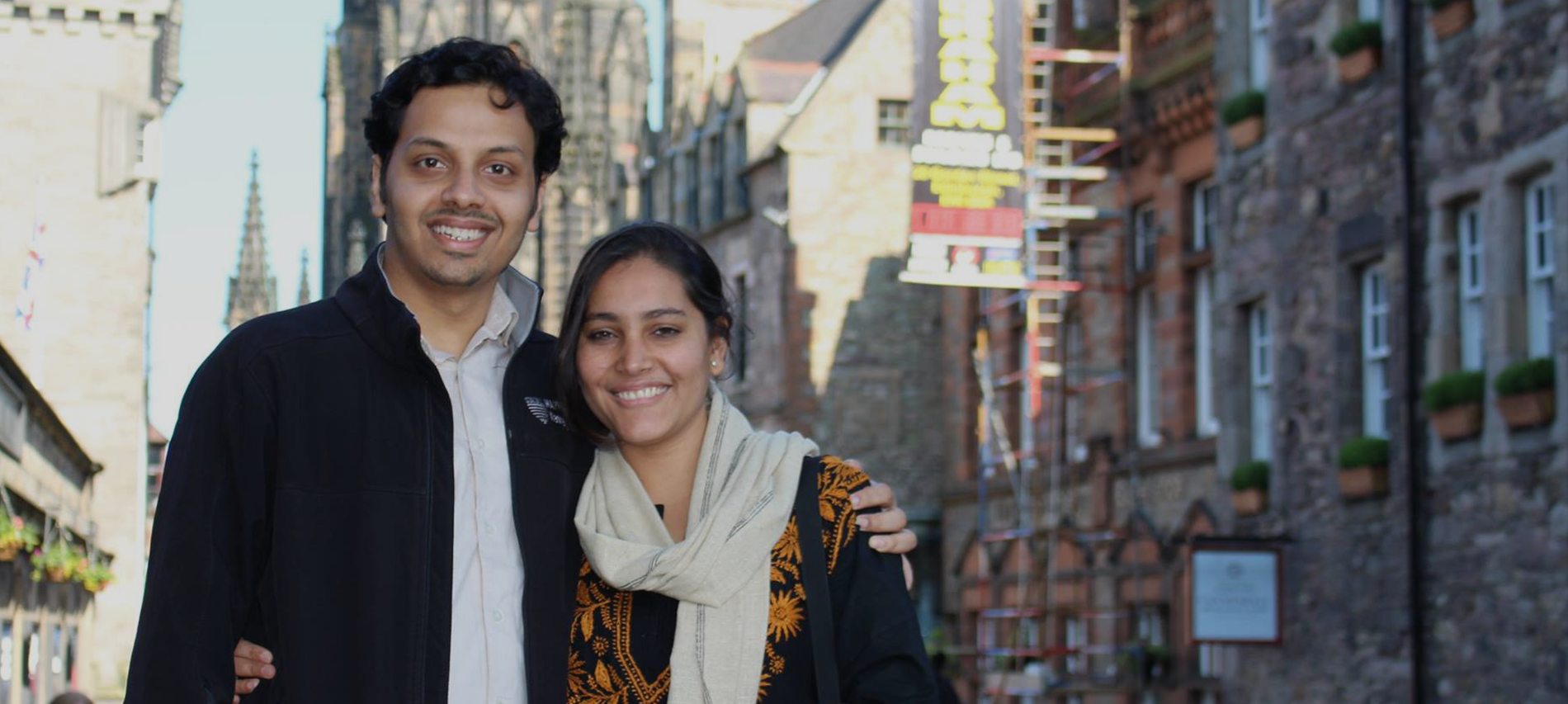
Rajat Sethi is an alumnus of IIT Kharagpur and Harvard University. Shubhrastha is an alumnus face of Miranda House, Delhi University. Both of them are actively involved in impacting politics in  various North-Eastern states of India.
Their book The Last Battle of Saraighat is the first-ever account of BJP’s landslide victory in the 2016 Assam legislative assembly elections.
Here are five things you should know about the power couple:


Aren’t they fascinating?

How Assam Happened—An Excerpt from ‘The Last Battle of Saraighat’

In ‘The Last Battle of Saraighat’, political campaigners for the BJP in the North-East, Rajat Sethi and Shubhrastha take you behind the scenes of the BJP’s landslide victory in the 2016 Assam legislative assembly elections. In the book, they  provide details of the election strategies and explain the rise of the party in the North-East.
Here’s an excerpt chronicling the win of BJP in Assam.
Assam celebrates three different Bihu festivals, each one of which coincides with a distinct phase in the farming calendar. Kati Bihu, the first in the series, is observed in October and is marked by solemn prayers to save the paddy crop from insects and evil sights. Bhogali or Magh Bihu is all about food and is celebrated in January at the end of paddy harvesting period when the granaries are full. The last Bihu in the calendar is called Rongali Bihu or Bohag Bihu, which marks the beginning of the Assamese New Year when the field is prepared for the next season of paddy cultivation. It is the most widely celebrated and colourful festival in Assam.
Every five years, the Assamese farming calendar closely coincides with the campaign calendars of political parties. The body politic of Assam is promised new dreams every time. This interesting tradition was captured in a 1992 song by Bhupen Hazarika on Bihu. Sung to the tune of a lullaby, it makes a plea to Bihu: Please do come once a year and wake up mother Assam, and even in these dangerous times, please O Bihu, come and give the Assamese body and mind its ritual bath.
Bihu is indeed a ‘national birthday—the day of renewal when the Assamese polity takes stock of its past and future’.
In the Bihu of 2016, the electoral curtains were to drop and a new polity was to emerge.
Armouring for the Battle
By the end of December 2015, BJP had almost all the right ingredients in place to project itself as the sole and credible political challenger to the incumbent Congress government in the ensuing assembly elections scheduled for April 2016. Anti-incumbency against the Tarun Gogoi–led Congress government was quickly building up. The BJP now appeared stronger as an Opposition in Assam. It had a face. It had the narrative. The party also had the required momentum to oust the incumbent.
But a deep emotional connect with the people of Assam was amiss. BJP had so far been only a marginal political player in the state and electorate were still finding it hard to relate with the party as its political choice.
On the other hand, the Congress had a well-oiled foundation and a veteran leader in Gogoi, who had led the state peacefully for fifteen long years. Assam has traditionally been a strong Congress bastion. Out of the nearly seven decades of independent India, the Congress was in power in Assam for nearly six decades. Winning Assam would have meant that the Congress was able to hold on to its turfs after its decimation in the 2014 Lok Sabha elections. Losing Assam would have implied a nosedive for the party nationally.
With the political ground that the BJP had covered over the past two years, it could not afford to lose the Assam battle. The next four months of electioneering were critical to tilt the balance in its favour. After the humiliating defeat in Delhi and Bihar, Assam was a test of the BJP’s confidence. It would also signify if there was a sense of trust for the party among the masses and if the Modi wave still reigned high in urban as well as far-flung rural centres of India. For the BJP, it meant finding a foothold in North-east India and marking its presence in a sensitive borderland. For the central government under Modi, Assam, if claimed, would have become a pivot for the Act East Policy. So, for all reasons—political and developmental—Assam was a catch!

error: Content is protected !!