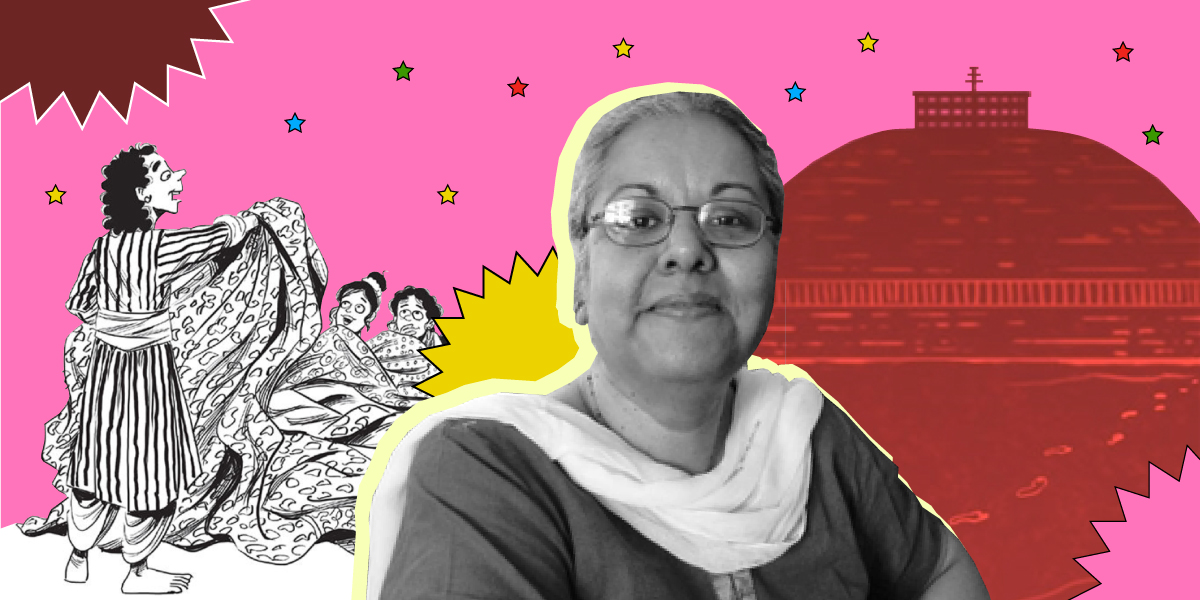
Covid might have taken away one of our most beloved authors, Subhadra Sen Gupta this year, but when schools reopen and children are back to their libraries, we could meet her again. In every children’s library in India, there’ll always be a corner that would sound like the shrieky excitement and the giggly wonder of kids and it would forever belong to the writer who said she wrote stories for the best readers in the world – children.
Since decades now, she is one of the ‘most issued’ authors in our school libraries along with J.K. Rowling and Roald Dahl. Her books were the first few that introduced children of India to literature that was based in the environment they belonged to. Her characters had names like ours, lived in cities like ours and had a life that we could relate to, unlike the western culture that had been dominating children’s and adult literature in India. Most importantly, Sen Gupta made history interesting for so many of us!
She took us through historical times with stories of unknown and unsung characters like a young maid of a princess during the Mauryan period or a dhobi who learnt to sing from Tansen under the reign of Akbar. The author introduced a literary culture that revolutionized writing in the day! Inculcating the thought that every story matters, whether it is the tale of a king or a pawn, interweaving genres together so children can learn about history through interactive storytelling or to make the habit of reading genuinely fun- Sen Gupta did it all!
While some of her most recounted stories are The Story of the World’s Worst Cook, Goodbye Pasha Begum and Mystery of the House of Pigeons, she went on to do something quite remarkable and extraordinary. She wrote The Constitution of India for Children and created a handbook in a fun and digestible format, explaining the most important document of our nation and even addressed issues like the participation of women in the drafting of the constitution.
Unfortunately, the literary icon passed away in May of this year due to Covid-19, at the age of 68, with probably more interesting stories and books inside her, waiting to be inked on paper.
However, we do have one last gift from her to the world and we’d love to share it with you! Told through the portraits of children growing up in the villages, towns and courts of our country, Let’s Go Time Travelling Again is Subhadra Sen Gupta’s sequel to the series and a vivid glimpse into our past.
Let’s Go Time Travelling Again || Subhadra Sen Gupta
How did Indian mulmuls make it into Cleopatra’s wardrobe? Who popularized the Mahabharata in households across the country? Did our ancestors really identify Jupiter and Saturn without even a telescope?
Find the answers to these and many other unusual questions about the India of yesterday. Go time travelling through the alleys of history and explore the many occupations that have existed through time – from dancers and playwrights to farmers and doctors. Sift through snapshots of the rich life led by ordinary Indians and discover unexpected titbits about language, food and culture.
This last book by our beloved author is replete with fascinating stories, information, and trivia about our ancient civilizations, kingdoms, and people.
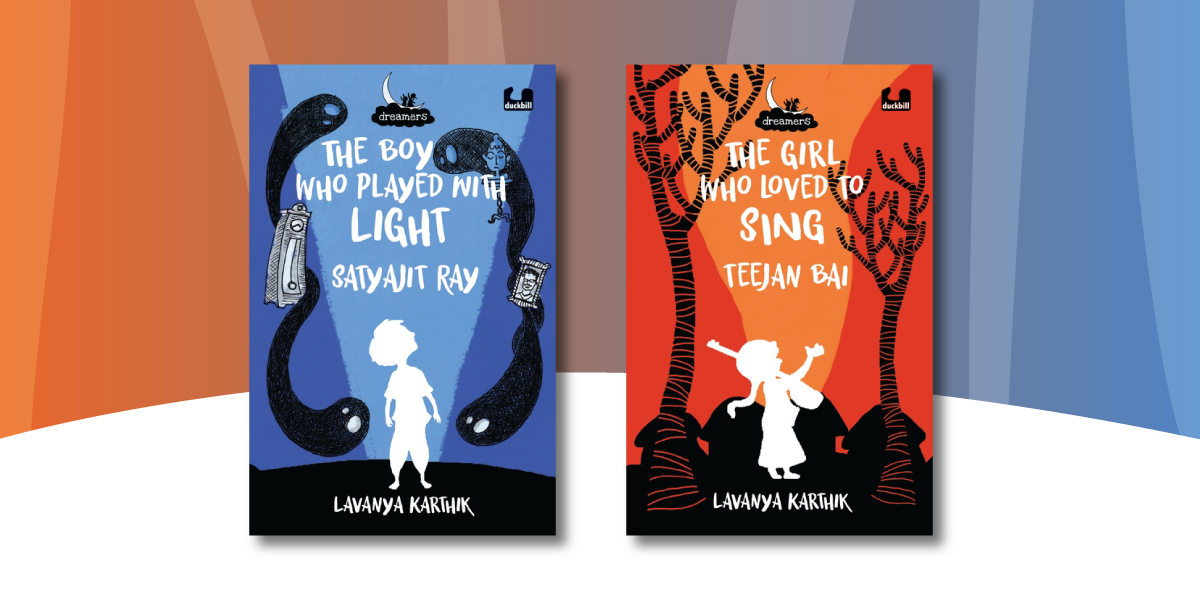
The vividly illustrated stories of Teejan Bai and Satyajit Ray in Lavanya Karthik’s Dreamers Series are inspiring for young kids. Karthik’s stories and artworks are perfectly synced with the high and low notes of Teejan Bai’s life and have captured the most significant shots of Satyajit Ray’s life. Both of them are acknowledged and appreciated for their unique talents.
Get your children hooked to the pages of Dreamers Series and let them get inspired to hone their skills. Here’s a glimpse of the younger selves of Teejan Bai and Satyajit Ray.
*
The Girl Who Loved To Sing: Teejan Bai
The Girl Who Loved To Sing: Teejan Bai || Lavanya Karthik
Once again, Teejan sneaks out after her chores for lessons with her grandfather.
Brijlal gives her her first tanpura.
‘Become your characters! Become your story!’
‘Feel the music!
‘Feel the story!
‘Feel it come alive!’
Teejan sings!
‘Don’t just sing—become the song!
‘Become the characters in it!’
Teejan cannot eat, she cannot sleep! All she can think of is song.
She forgets her chores; she ignores her siblings, until one day,
Ma catches her singing . . .
Teejan runs away.
The Boy Who Played with Light: Satyajit Ray
The Boy Who Played with Light: Satyajit Ray || Lavanya Karthik
There was light in the new home we made.
In the eyes of the family that welcomed us.
In the stories that Ma told me every night.
In the notebooks I filled with drawings, just like Baba once did.
But . . .
The shadows were always there.
They loomed in corners, watching me.
They crouched under tables, muttering and hissing.
I tried to describe them to my family.
My cousins chuckled. ‘Manik will be a writer like his baba!’
The shadows lurked in doorways.
They followed me through the house.
I thought my drawings might help.
‘What an imagination!’ Ma smiled. ‘Manik will be an artist like his baba!’
I raced through the house, up the stairs, down the corridors. The shadows followed!
‘Manik!’ my aunt called out, through the haze of the afternoon heat. ‘Play quietly! We’re trying to sleep!’
I dodged!
I dived!
I ducked!
The shadows kept pace!
Until . . . An open door!
. . .
They were stories, waiting for me to notice them.
**
Read The Girl Who Loved To Sing: Teejan Bai and The Boy Who Played with Light: Satyajit Ray from Lavanya Karthik’s ‘Dreamers Series’ to know what happens in the lives of these two great personalities and how did they become as the world knows them today.
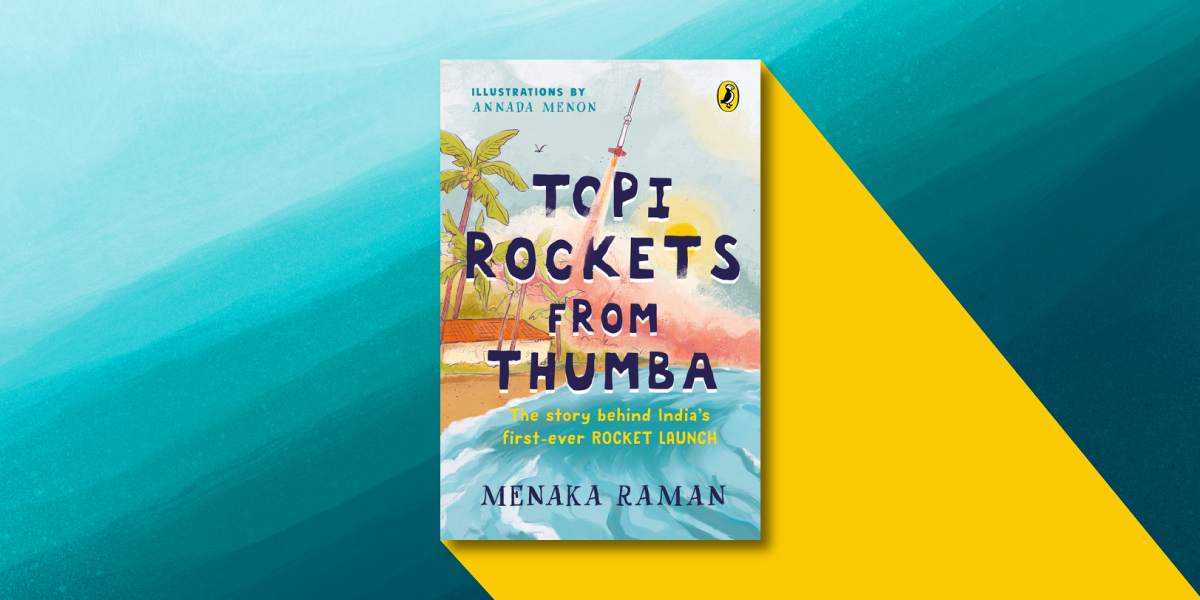
In this book about the launch of a rocket from Thumba, Menaka Raman’s story and characters are sure to tap on the creative nerves of young kids. The first time when Mary heard that a rocket will be a launched from Thumba, her excitement knew no bounds. She was bitten by an inquisitive bug and had a list of questions to find the answers of. She waited and hoped to see the rocket go up in Space every day.
Here’s an extract for those who, like Mary, are eager to know about India’s first ever rocket launch.
*
Topi Rockets from Thumba || Menaka Raman
January 1963
Every morning, a rickety old bus would arrive in Thumba from Trivandrum and drop off a group of men.
Everyone would come out of their homes and shops, wondering what was inside the many boxes the men carried into the church, watching them as they cycled from here to there or walked together in pairs.
Mary watched too, but her friends at school did not care.
‘So what?’ said George Thomas.
‘Big deal!’ dismissed Thomas George.
‘Who cares?’ shrugged Shoshakutty.
‘I can launch a rocket all by myself!’ boasted Chacko.
‘Why does Dr Sarabhai need so many people to launch just one rocket then?’ Mary wondered.
One day, Mary and her amma were on their way to the market when she saw a car pulling up outside the church. She caught sight of a tall man unfolding himself from the back seat, and knew immediately who it was.
Mary ran right up to him once again.
‘Dr Sarabhai! When is the rocket going to be ready? Why is it taking so long? My friend Chacko can launch a rocket all by himself. Why do you need so many people?’
Dr Sarabhai’s eyes lit up.
‘Mary, you remind me of myself when I was your age. Always asking questions! Let me try and answer yours.’
It’s taking time because India’s friends from around the world are sending us things we need for the rocket launch. We have to wait for them to arrive and only then can we start to put things together. And I need the help of hundreds and hundreds of hands and minds to do it.
The National Aeronautics and Space Administration (NASA) of the United States is sending us a NIKE APACHE ROCKET. They are also training our scientists at their centres in America.
March 1963
Days, weeks and months came and went. Mary turned ten. Ouso made her ayala fry, Amma stitched her a new dress and her brother gifted her his old bicycle.
Some days, Mary would cycle by the church to see if she could catch sight of the rocket.
But there was no rocket.
Mary studied hard for her exams, praying they would not launch the rocket while she was writing her maths paper.
They didn’t.
She spent the summer holidays learning swimming in the lazy blue sea.
Nothing.
Mary celebrated Palm Sunday, Easter Friday and Onam.
Mary was disappointed.
But her friends at school were not.
Sometimes, Mary wished she was one of the pigeons that sat on the rafters high up on the ceiling of the church so that she could see what was happening inside.
September 1963
By now, Mary knew some of the serious men who worked in the church. She knew where they were from and what they ate for breakfast. She discovered they were not so serious after all. And since Dr Sarabhai wasn’t always there to answer her questions, she had started asking them instead.
Mary: What are the parts of a rocket?
Scientist 1: A rocket has four main parts: the nose cone, fins, rocket body and engine. The nose cone carries the main cargo or payload of the rocket.
Mary: How do you launch a rocket?
Scientist 2: Rockets burn fuel in the engine and this creates exhaust. The hot exhaust comes out very fast in one direction pushing the rocket in the opposite direction! WHOOSH!
**
To know the answers to Mary’s numerous questions about Space and rockets, read Topi Rockets from Thumba.
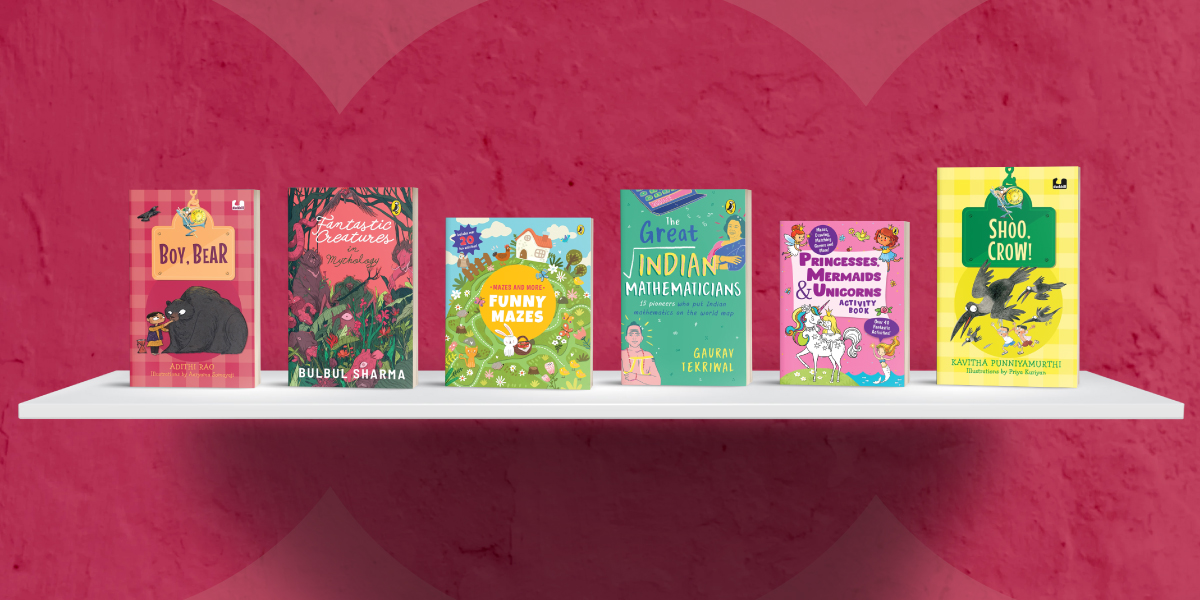
As the little ones step into the ninth month of the year, we know they need some good company to welcome the no-melting-no-freezing September. So, look nowhere else! We wholeheartedly sign up to accompany them, match their enthusiasm for reading, and give them a chance to taste the different flavors of imagination. Our books promise to stay by their bedside, on their study table, and make just enough space to be warmly packed in their already stuffed vacation bags. The vibrant covers of the books will have the kids googly eyes even before they begin reading the diverse stories.
Here’s our specially curated list of books that will get your children hooked and will transport them to the fantastical realms while they complete the plethora of engaging activities. It’s time to get them ready to cross the whirlpool of mazes and traverse through the wild alleys to meet mermaids and unicorns.
Boy, Bear
Boy, Bear || Adithi Rao
For ages: 5+ years
Boy and Bear have grown up together on the streets of Mumbai. Baba is a madari. But now that Baba is gone, how are Boy and Bear to survive?
The Hook Book series of short simple stories for beginning readers come with fun stories set in different parts of India. The gorgeous illustrations and short exercises are sure to enhance their reading experience.
Shoo, Crow!
Shoo, Crow! || Kavitha Punniyamurthi
For ages: 5+ years
The crows of Rajipuram are eating up all the corn in the fields. Can Velu and Akif find a way to shoo them away?
The Hook Book series of short simple stories for beginning readers come with fun stories set in different parts of India, gorgeous illustrations and short exercises to enhance the reading experience.
The Great Indian Mathematicians
The Great Indian Mathematicians || Gaurav Tekriwal
For ages: 10+ years
India’s mathematicians have made significant contributions over the last 5000 years. From the ever-popular Aryabhata, widely recognized for revolutionizing the number system and Shakuntala Devi, universally admired for her fast mental calculations to pioneers forgotten by time, like Baudhayana, who explained the Pythagoras’ theorem nearly 3000 years ago, the figures included in this book are trailblazers in the world of mathematics.
Fresh, accessible and inspiring, The Great Indian Mathematicians celebrates persistent mathematicians throughout Indian history. This book is an ideal introduction for the next generation of tenacious and curious maths wizards, and features a goldmine of tips and tricks, nuggets of surprise and much more!
Fantastic Creatures in Mythology
Fantastic Creatures in Mythology || Bulbul Sharma
For ages: 8+ years
Did you know that a celestial elephant once hid in the ocean after causing mischief ?
What happened when Rama and Lakshmana encountered a one-eyed headless demon?
Why did Ilvala turn his brother Vatapi into a goat and serve him to passers-by?
Find answers to these and meet many strange and wonderful creatures in this hand-picked collection of legends. Delve into the exploits of gods who took on magical avatars, birds and animals with superpowers, and demons and demonesses who were once good souls.
Bestselling children’s author Bulbul Sharma’s deft prose accompanied by bewitching illustrations will transport you to the fantastical realms inhabited by the Hindu pantheon. This book is sure to leave you spellbound!
Mazes and more: Funny Mazes
Mazes and more: Funny Mazes
For ages: 3+ years
Funny Mazes is a book from the series Mazes and More that features full-colour pages filled with different puzzles and mazes, along with search and find activities to keep little minds engaged. Designed to encourage logical thinking, sharpen hand-eye coordination, these activity-filled pages are sure to keep little puzzlers engaged. Grab your pencils, trace the squiggly path and follow each funny maze to a new discovery! With eye-catching illustrations, the book has puzzles organized by themes such as Circus, Island adventure, Fairyland, Camping among others. All mazes and puzzles come with answers to help kids if they get stuck on a puzzle.
Princesses, Mermaids and Unicorns Activity Book
Princesses, Mermaids and Unicorns Activity Book
For ages: 3+ years
From mermaids and princesses to unicorns and fairies, the fairyland brought alive inside this quirky activity book provides hours of creative fun for kids. Jam-packed with colouring pages and fantastic activities like interactive puzzles, dot-to-dot, spot the difference and playing peek-a-boo with fairies, Princesses, Mermaids and Unicorns Activity Book is the perfect companion to keep young minds engaged.
Children can follow mazes that feature prompts for problem-solving along the way. They can trace the path to the desired end, colour in the pictures, use the colour by number prompt to create a mystery picture, find the differences between two pictures, complete the drawings, connect the dots, learn to draw a simple picture, match the identical objects, find and circle objects, order the events, and much more. This carefully researched book aims to build vocabulary through picture-word association for toddlers and pre-schoolers and is suitable for parent-child association.
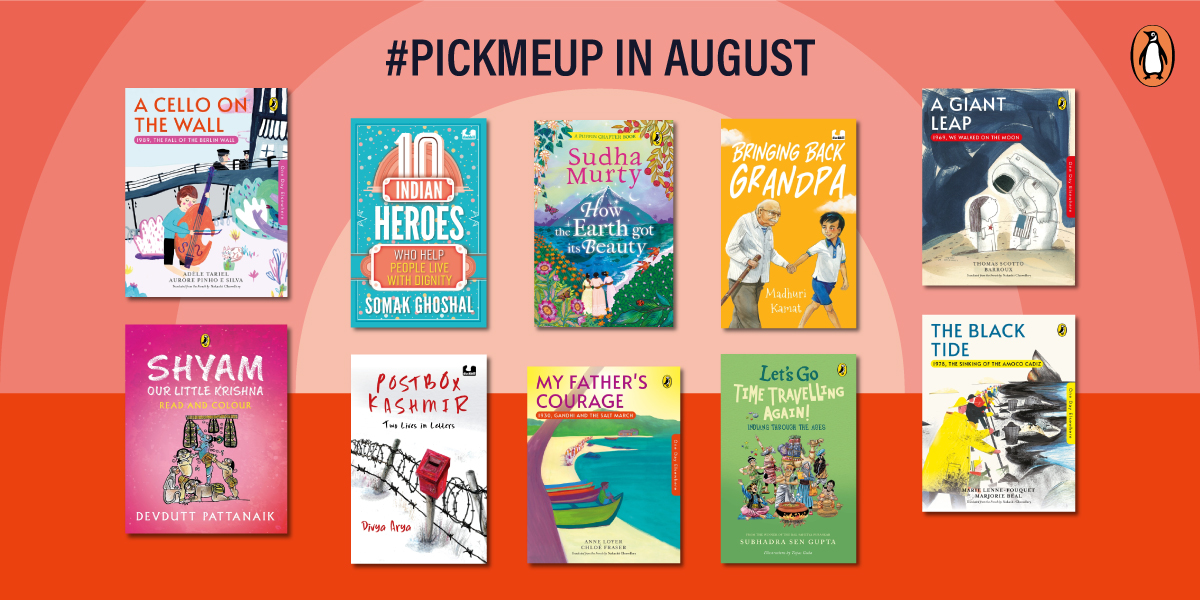
We know that the little ones are busy adoring the blue sky these days turning into purple-pink and are wondering whether to mutter ‘Oh! August is finally here!’ or ‘Aww! It’s only August’. So, taking care of their visual palette, we intend to captivate their attention with our vibrant and colourful covers of our latest releases in August and promise to keep them entertained, engrossed, and ecstatic. The curated list ranges from care to courage, mantra to nostalgia, and struggle to success. It’s time for you to make some space in your bookshelves for these amazing titles.
Here is a list of our recommendations for August.
A Giant Leap
A Giant Leap || Thomas Scotto, Translated by Nakashi Chowdhry
This is one of the books in the One Day Elsewhere series. It’s 20 July 1969. At home, June is waiting for a big event, the biggest of her life: the birth of the baby that’s in her mother’s belly. But in the hospital, on the streets, everyone else is waiting for another big event: a man is about to walk on the Moon.
My Father’s Courage
My Father’s Courage || Anne Loyer, Translated by Nakashi Chowdhry
Aslam helplessly witnesses his father’s arrest: he disobeyed the British authorities by harvesting salt-a heavily taxed item. The boy is assailed with doubt. Why did his father break the law? Why doesn’t sea salt belong to everyone? When he learns that Gandhiji is going to be marching through his village of Jalalpore, Aslam feels hopeful. He is the only one who can oppose the authorities and, maybe, free his father.
The Black Tide
The Black Tide || Marie Lenne-Fouquet
Yann, the son of a fisherman in Portsall, loves selling fish at the port with his father. He lays out the ice, puts the fish on it and plays shop. But one day, the sea is very rough. The storm and the wind bring a terrible smell and devastating news: there has been a shipwreck and an oil spill!
Shyam, Our Little Krishna
Shyam, Our Little Krishna || Devdutt Pattanaik
In this all-in-one storybook, picture book and colouring book, India’s most-loved mythologist Devdutt Pattanaik introduces the story of Krishna, fondly known as Shyam, to a new generation of readers. Told simply in his inimitable style, Shyam, Our Little Krishna is perfect as a read-aloud to acquaint young readers with the beauty, wisdom and love that Krishna embodied. The book is curated with fascinating bite-sized stories, myths and trivia about the young god, and it features over forty playful artworks accompanied by pages dedicated for colouring.
How the Earth Got Its Beauty
How the Earth Got Its Beauty || Sudha Murty
Have you ever stopped to marvel at the earth’s beauty: at snow-capped mountains and oceans so deep; at colourful flowers and extraordinary animals? The tale of how such beauty came into existence is a curious one indeed. India’s favourite storyteller brings alive this timeless tale with her inimitable wit and simplicity. Tricked out with enchanting illustrations, this gorgeous chapter book is the ideal introduction for beginners to the world of Sudha Murty.
10 Indian Heroes Who Help People Live With Dignity
10 Indian Heroes Who Help People Live With Dignity || Somak Ghoshal
This book tells the stories of ten Indian heroes who have been working in diverse fields to help society’s most vulnerable live a better life–from securing mobility rights for people with disability to abolishing the practice of manual scavenging. While their challenges are different, what they have in common is the desire to see all human beings live a life of dignity. Journalist Somak Ghoshal writes about the below-mentioned women and men who are trying to make the world a more just and equitable place for everyone.
Irom Sharmila Chanu
Aruna Roy
Bezwada Wilson
Medha Patkar
Dr Devi Shetty
Bhanwari Devi
Menaka Guruswamy
Anup Surendranath
Satinath Sarangi
Mahantesh GK
Bringing Back Grandpa
Bringing Back Grandpa || Madhuri Kamat
As his Grandpa gets ill and more confused, Xerxes’ life becomes correspondingly difficult. There are boys at school playing all kinds of mean tricks on him and his mother wants him to excel, as usual-but it is hard when his main ally Grandpa is not himself. How is Xerxes going to cope with the different things people expect of him? Will he make peace in school? And most importantly, can he help Grandpa become better?
Let’s Go Time Travelling Again!
Let’s Go Time Travelling Again! || Subhadra Sen Gupta
How did Indian mulmuls make it into Cleopatra’s wardrobe? Who popularized the Mahabharata in households across the country? Did our ancestors really identify Jupiter and Saturn without even a telescope?
Find the answers to these and many other unusual questions about the India of yesterday. Go time travelling through the alleys of history and explore the many occupations that have existed through time-from dancers and playwrights to farmers and doctors. Sift through snapshots of the rich life led by ordinary Indians and discover unexpected titbits about language, food and culture.
Told through portraits of children growing up in the villages, towns and courts of our country, this sequel to the award-winning Let’s Go Time Travelling is a vivid glimpse into our past.
A Cello on the Wall
A Cello on the Wall || Adèle Tariel, Translated by Nakashi Chowdhry
On an ordinary afternoon in West Berlin, Charlie discovers a cello that once belonged to his grandmother. His parents had fled East Berlin with this cello many years ago, while Charlie,s grandparents still live on the other side of the wall. But the year is 1989 and revolt rumbles in the streets of Berlin to tear down the wall. This book is another one in the One Day Elsewhere series.
Postbox Kashmir
Postbox Kashmir || Divya Arya
Do only Muslims live in Kashmir?
Why do girls in Kashmir do stone pelting?
Whom do they want freedom from?
Can you imagine being confined to the four walls of your home with no internet, no social media?
Are Kashmiris really invisible to the rest of the country?
These are some of the questions two teenagers–Saumya in Delhi and Duaa in Kashmir–asked through letters they exchanged over almost three years.
Framing these letters is the detailed history and commentary provided by Divya Arya, a BBC journalist who asked them to be pen pals, which places their conversations against the backdrop of the political history and turbulent present of Kashmir and India. Postbox Kashmir takes on the challenging task of attempting to portray life in Kashmir from the perspective of the young minds growing inside it and providing a context of understanding for the young generation watching it from the outside.
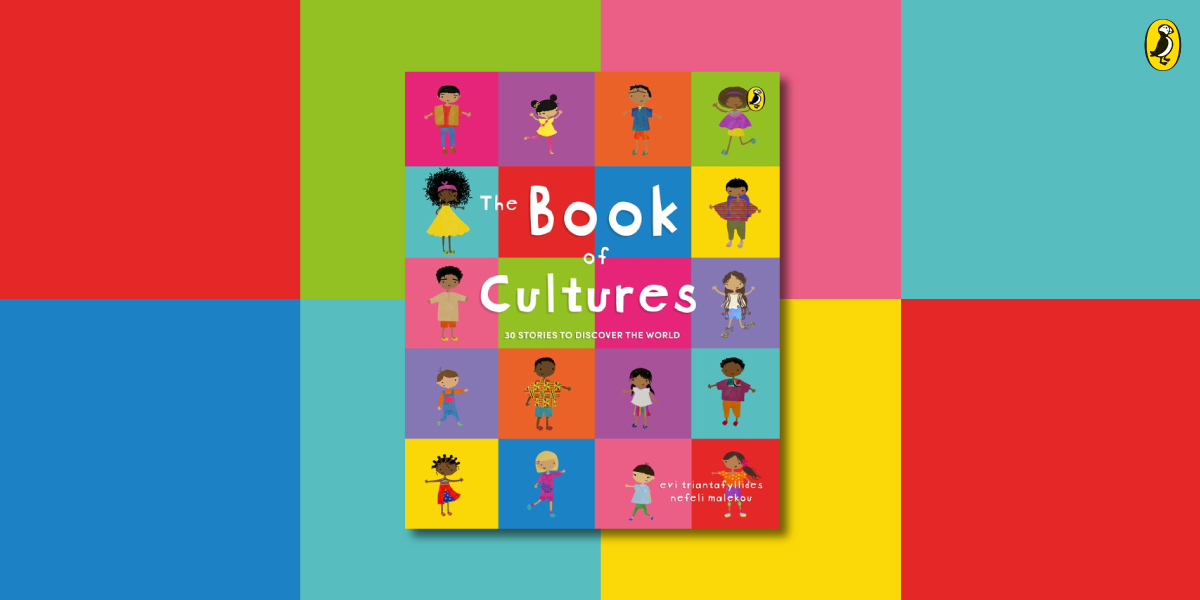
It’s time to make new friends from different parts of our planet and go on adventures near and far with 30 stories bursting with intrigue, curiosity and wonder! Sift through the beautifully illustrated pages of The Book of Cultures and become a globetrotter as you travel from Japan to Peru and South Africa to Denmark, and learn about diverse cultures, customs, traditions and more.
Here’s an excerpt from this book about the Maldives Island in which Akilah, along with her sea creature friends, try to save the island.
*
The Book of Cultures || Evi Triantafyllides, Nefeli Malekou
Akilah loved water. So much, that everyone called her a sea creature. She had an entire life under water. She went for long swims with her best friends, Stingray, Parrotfish, Turtle and Barracuda. In the sandcastles she built, she hid treasures she collected on their adventures. Sometimes, she even prayed under the sea.
When she found out that her island was slowly sinking, she wasn’t that worried. “Breaking news: Global warming means that icebergs are melting and sea levels are rising. The Maldives Islands, only a few feet above the sea, are in danger of disappearing under water forever,” the news anchor warned. There’s so much splendor under water, life there would be a delight, Akilah thought. But only she felt this way. “Some islands have already gone under water!” her parents confirmed. Even the neighbor, Ms. Sing Song, whose laughter penetrated through their walls, had become awfully quiet lately.
Akilah came up with a spectacular idea. Stingray, Parrotfish, Turtle and Barracuda joined to help, too. Soon, Akilah and the fish had built a wonderful underwater island. “Everyone can move here. We can call it the Island of Hope,” she said. She even made two houses next to each other, so that they could hear Ms. Sing Song laugh again.
But the more time she spent at the Island of Hope, the more she realized it simply wasn’t home. When she tried to sketch, the paper melted, and her crayons lost their color. And eating was particularly hard—water made the food all soggy. “Yuck!”
“I don’t want to leave my house,” she admitted. “We need a new idea. And this time, we need all the fish force we can get.” Stingray, Parrotfish, Turtle and Barracuda called their friends from across the Indian ocean. Within hours, so many fish squeezed and squished next to each other, you could barely see the ocean’s blue. If only these many people could help, she thought. Wait a minute, I know. “I have a message. It needs to be delivered to all corners of the planet. Please pass it along,” she asked the fish. I really love my home. I don’t want to lose it. But rising seas might make it sink under water. If every single one of you made even the smallest changes, then my house, the Maldives and the environment could be saved! What do you say? Will you help?
That night, the fish swam and swam. They passed on her message to thousands of other fish, who passed it onto millions of other fish, hoping that soon, it would reach buddies all across the world, just like you.
**
Now here’s a glimpse of Ella’s birthday in Denmark.
Before you go, peep into Suhail’s and Neha’s surroundings in India.
Daydreamer Dev loves volcanoes…and daydreams of course!
Forever daydreaming-that’s Dev. Sitting in class or watching the clouds from the roof of Kwality Carpets, he floats off to places all over the world and has wonderful, bizarre adventures.
Mild-mannered schoolboy Dev is no stranger to survival in extreme environments. Classroom trances and home-made flights of fancy take him all over the place-what other kid could have visited Amazon rainforests, summited Mount Everest and crossed the Sahara? Along with the challenges of all this, he also needs to avoid the wrath of teachers and make Amma and Baba proud . . . Not so easy when your brain lives elsewhere!
**
Dr Ira wore dark-rimmed glasses and had a soft, round face and a gentle voice. Dev could imagine her speaking calmly as the Titanic went down. She listened carefully to Amma and adjusted her glasses to read the two pages supplied by Dev’s headmaster. Dev imagined himself shrinking very steadily so that by the time she looked up, he would be gone.
‘Dev, what do you think about all this?’ Dev realized that he must still be visible. ‘Ma’am, I think it’s very bad that Mrs Kaur needs to write so many notes,’ Dev said. ‘Amma doesn’t like them, and Baba must spend his time lecturing me about concentration and teaching me the meaning of words like “lamentable” and “deplorable”.’
‘Would you be able to tell me about one of your daydreams, Dev?’
Dev told her about the time he hit a six off the final ball at Wankhede Stadium to win the match against Australia, and about riding on a dolphin.
The Astoundingly True Adventures of Daydreamer Dev || Ken Spillman (Author), Suvidha Mistry (Illustrator)
He was launching into another story when she interrupted.
‘Do you have some good friends, Dev?’
Surprised that she wanted to talk about his friends, he told her about Vihaan, Adil and the best of friends ever, OP—Omprakash, as only Mrs Kaur preferred to call him.
Dr Ira asked more questions and looked over his school reports. Eventually, she sat back and looked as squarely at Amma as a round-faced woman could manage.
‘It would be valuable if I could spend some time with Dev alone on another occasion. Would that be all right, Dev?’ Dr Ira paused and when Dev did not say no, she went on. ‘Let’s be clear—daydreams are normal. But recently, there has been some good research on what is called “maladaptive daydreaming”. This is when fantasy tends to takeover. And when fantasy takes over, it can get in the way of everyday things, such as education, or the jobs people do.’
Amma was like a sculpture. She was sitting bolt upright with her head tilted and her lips squeezed together.
‘Dev seems well adjusted socially,’ Dr Ira said.
‘And he’s managing at school. But Mr Bannerji and the school counsellor believe he is gifted and might do very much better.’
The sculpture beside Dev became Amma again.
She nodded vigorously. Dr Ira leant forward.
‘I’d like to explore this a little. Maladaptive daydreamers tend to imagine worlds and stories as relief in times of stress or boredom. In Dev’s case, I suspect it is boredom. But the ability to daydream so vividly that you experience a sense of presence in an imagined environment can be addictive. I can work with Dev to help him develop some strategies to manage it.’
The word ‘maladaptive’ came as a relief.
Evolution was all about adaptation. Dr Ira probably thought Dev needed to adapt, to evolve.
At least he wasn’t going to have an operation or an electric shock.
‘It will be quite painless, young man,’
Dr Ira assured, as if reading his thoughts. ‘Think about it like this. Active volcanoes don’t erupt every day. In fact, most of them very rarely erupt. Your daydreams can rumble away in the background and that’s healthy. We can try to limit unwanted eruptions that affect your education. Does that make sense?’
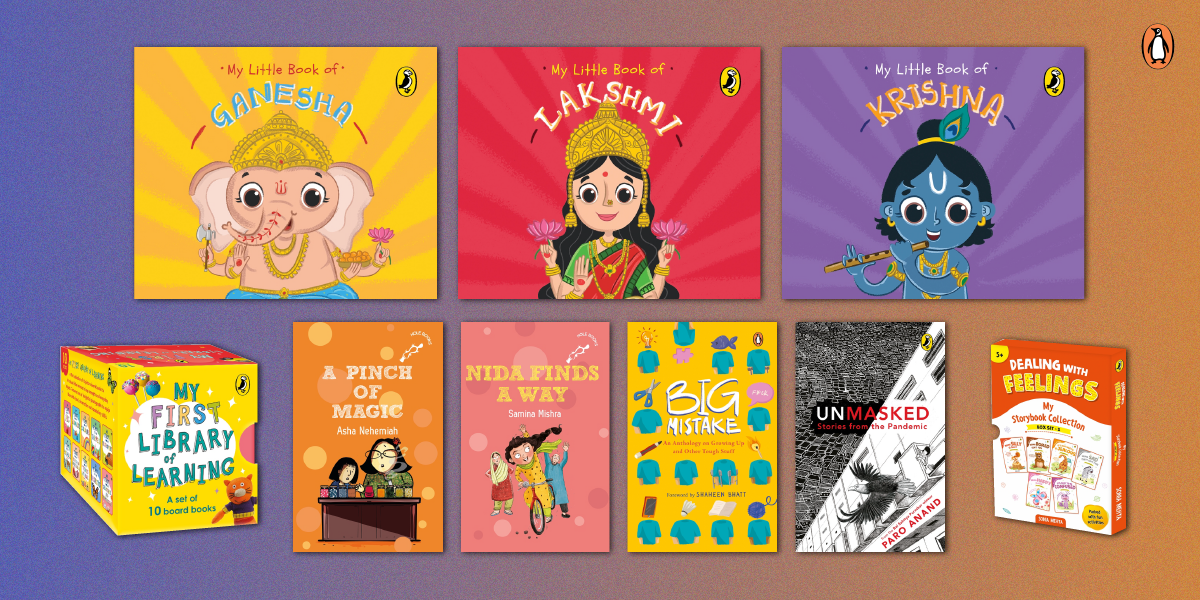
While we are still getting past the uncertain times and the young ones are spending the summer break indoors, we have come to their rescue with our interesting June book collection. With a tinge of laughter, a touch of magic, a series of adventures, and a sea full of learning, our books promise to offer entertainment, comfort, and knowledge.
Here’s a curated list for June readathon!
*
My First Library of Learning: Box set
My First Library Learning || .
Ages: 0 to 3 years
Foster a habit of reading in your little ones with this box set of 10 gorgeously designed and thoughtfully created board books. These books equip toddlers and preschoolers with essential reading, language, visual, motor and imagination skills. This bright, handy, easy-to-read and fun library contains books on English alphabet, numbers, colours, shapes, things at home, fruits and vegetables, seasons and opposites, transport, animals and insects.
Dealing with Feelings Box Set 2
Sonia Mehta
Dealing with Feelings || Sonia Mehta
Ages: 5+ years
Foggy Forest is inhabited by many fun little animals. These quirky creatures are always there for one another—helping each other overcome jealousy, boredom, sadness and confusion. Together, they deal with all the different feelings one might have every day. This special box set edition brings together six exciting titles to start a conversation with kids about their feelings and emotions.
Big Mistake
Big Mistake
Ages: 16+ years
Insecurities and assurances, conflict and solidarity, fearfulness and courage—the personal histories, stories and #ownvoices in this anthology cover a lot of ground in just a few pages. Let them spark conversations on love, identity, disability, family, body positivity, ambition and other tough stuff. After all, no matter how old we get, growing up can feel like one big mistake.
Nida Finds a Way
Samina Mishra
Nida Finds A Way || Samina Mishra
Ages: 7 to 9 years
Whenever Nida wants to do something new, Abba is scared for her and says NONONO. But Nida needs to learn and do new things—so the only way is for her to persuade Abba. Can Nida find a way?
A Pinch of Magic
Asha Nehemiah
A Pinch of Magic || Asha Nehemiah
Ages: 7 to 9 years
Veena’s aunt Malu is in trouble. Her pinching spoon is broken. She must get a new spoon or close down her herbal medicine business. But the only person who makes pinching spoons has disappeared. Can Veena help her aunt?
Unmasked
Paro Anand
Unmasked || Paro Anand
Ages: 11+ years
The year 2020 will forever be reported as the time when we all fell down. But it was also the year we all got back up and were forced to come together in a way we had never imagined before. In this timely masterpiece, Paro Anand writes of despair, courage and hope. Through eighteen short stories from the pandemic, Anand introduces us to characters who feel familiar and their stories intimate.
From a mother and son looking to make ends meet as the lockdown brutally affects their lives to a housewife who’s a victim of domestic abuse, from young keyboard wizards keen on making a difference to a home delivery executive who becomes an unlikely hero, this book unmasks the layers of the year that changed us all.
My Little Book of Krishna
My Little Book of Krishna || .
Ages: 3+ years
Naughty little Krishna’s search for butter leads to an unexpected adventure. With charming illustrations and simple language, this short tale about Krishna will entertain and delight. It is a perfect way to familiarize the little ones with India’s rich cultural fabric. It’s a must have to introduce a god from popular Hindu mythology and impart valuable life lessons.
My Little Book of Lakshmi
My Little Book of Lakshmi || .
Ages: 3+ years
Lovely Lakshmi comes to Earth once a year. Will she have a good time here?
With the beautifully illustrated pages, this short tale about Lakshmi offers a fun and enjoyable read about timeless myths and festivals for modern kids.
My Little Book of Ganesha
My Little Book of Ganesha || .
Ages: 3+ years
Clever Ganesha’s got something on his mind, but what that is you’ll have to read on to find.
This short tale about Ganesha has fascinating illustrations and lucid language, making it suitable for bedtime reading and parent-child association. It’s dotted with interesting facts as well as an interactive activities.
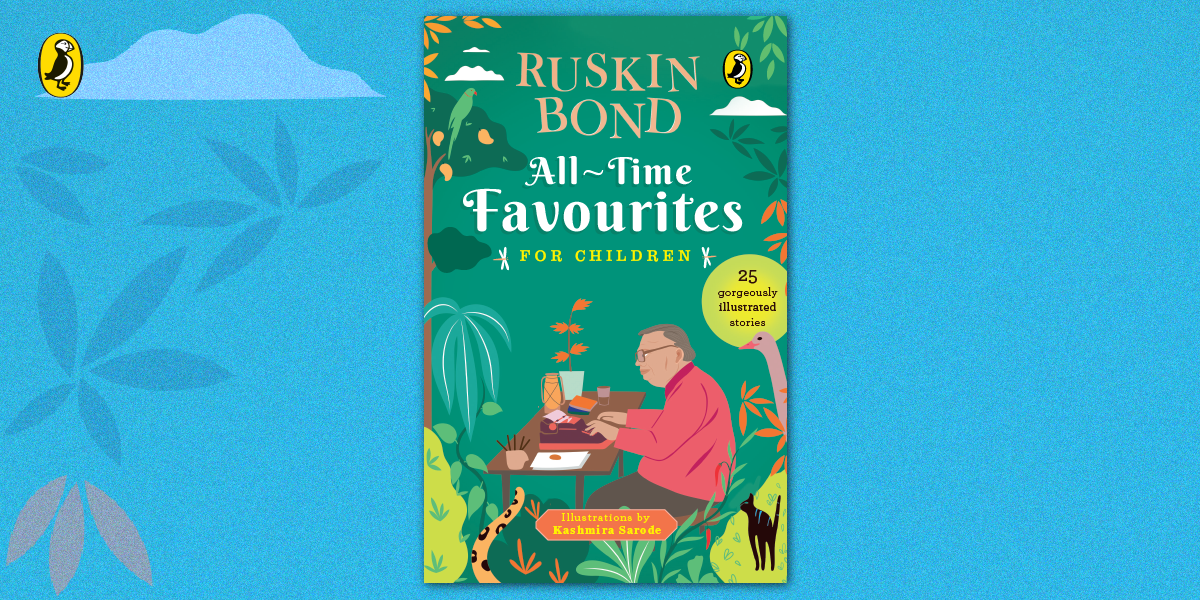
All Time Favourites for Children celebrates Ruskin Bond’s writing with stories that are perennially loved and can now be enjoyed in a single collectible volume. Curated and selected by India’s most loved writer, this collection brings some of the evocative episodes from Ruskin’s life. It brings together many known charming, endearing characters such as the iconic Rusty, the eccentric Uncle Ken and the ubiquitous grandmother, and a smattering of new ones that are sure to be firm favourites with young readers, especially middle schoolers. Heart-warming, funny and spirited, this is a must-have on every bookshelf!
All-Time Favourites||Ruskin Bond
Here’s a taste of what’s in store in this exciting collection of stories. An extract from the story of a parrot who could, but ‘wouldn’t’ talk. ‘What goes around comes around’ is a complete mood in this one.
~
‘Kiss, kiss!’ Aunt Ruby would coo, putting her face close to the barge of the cage. But the parrot would back away, its beady little eyes getting even smaller with anger at the prospect of being kissed by Aunt Ruby. On one occasion, it lunged forward without warning and knocked my aunt’s spectacles off her nose.
After that, Aunt Ruby gave up her endearments and became quite hostile towards the poor bird, making faces at it and calling out, ‘Can’t talk, can’t sing, can’t dance!’ and other nasty comments.
It fell upon me, then ten years old, to feed the parrot, and it seemed quite happy to receive green chillies and ripe tomatoes from my hands, these delicacies being supplemented by slices of mango, for it was then the mango season. It also gave me an opportunity to consume a couple of mangoes while feeding the parrot.
One afternoon, while everyone was indoors enjoying a siesta, I gave the parrot his lunch and then deliberately left the cage door open. Seconds later, the bird was winging its way to the freedom of the mango orchard.
At the same time, Grandfather came to the veranda and remarked, ‘I see your aunt’s parrot has escaped!’
‘The door was quite loose,’ I said with a shrug.
‘Well, I don’t suppose we’ll see it again.’
Aunt Ruby was upset at first and threatened to buy another bird. We put her off by promising to buy her a bowl of goldfish.
‘But goldfish don’t talk!’ she protested.
‘Well, neither did your bird,’ said Grandfather. ‘So we’ll get you a gramophone. You can listen to Clara Cluck all day. They say she sings like a nightingale.’
I thought we’d never see the parrot again, but it probably missed its green chillies, because a few days later I found the bird sitting on the veranda railing, looking expectantly at me with its head cocked to one side. Unselfishly, I gave the parrot
half of my mango.
While the bird was enjoying the mango, Aunt Ruby emerged from her room and, with a cry of surprise, called out, ‘Look, my parrot’s come back! He must have missed me!’
With a loud squawk, the parrot flew out of her reach and, perching on the nearest rose bush, glared at Aunt Ruby and shrieked at her in my aunt’s familiar tones: ‘You’re no beauty! Can’t talk, can’t sing, can’t dance!’
Aunt Ruby went ruby-red and dashed indoors.
But that wasn’t the end of the affair. The parrot became a frequent visitor to the garden and veranda and whenever it saw Aunt Ruby it would call out, ‘You’re no beauty, you’re no beauty! Can’t sing, can’t dance!’
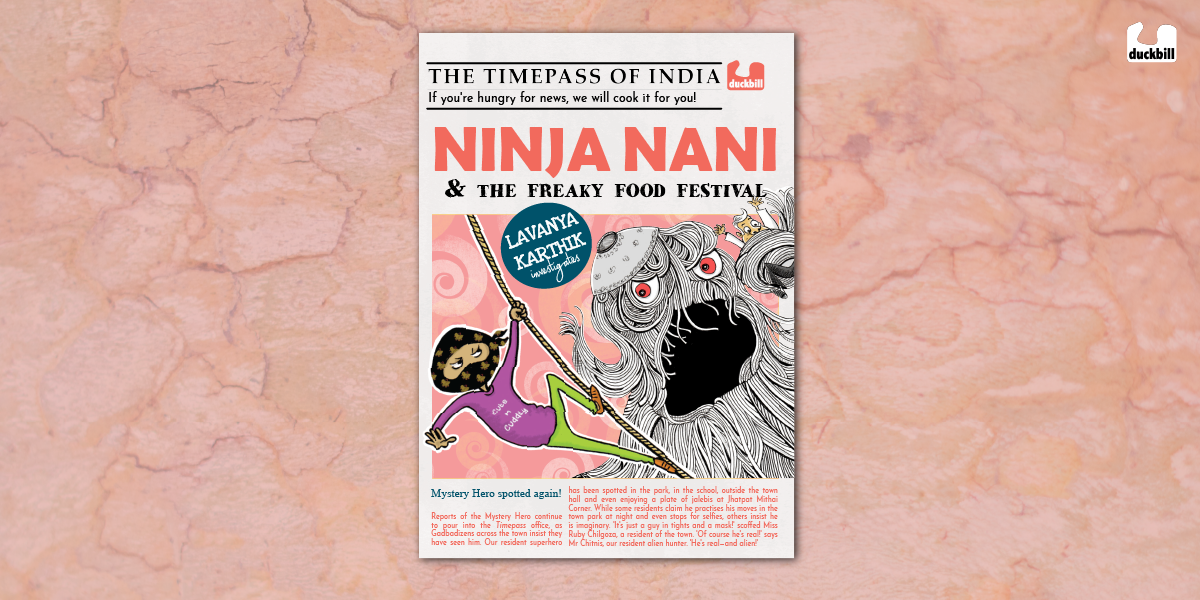
It is common for Nani to somersault around the room and backflip without a flinch. Her ninja senses jingle when there is danger in Gadbadnagar and the air then wibbles and wobbles around her. Nani steps out every night, catches robbers, helps people trapped in lifts and burning buildings, and saves stray pups and little birdies. Is it hard to believe?
Here’s an excerpt from the book where Nani gives a glimpse of her superpowers to young Deepu.
*
Ninja Nani and the Freaky Food Festival || Lavanya Karthik
‘So what happened? Where did you go? How?’ If Deepu’s questions had had feet, they would have tripped over themselves trying to get out of his head.
The door slammed as Papa rushed out of the house to get to his doctor.
Upstairs, another door slammed. Then they heard the SKREECH-THUD! of Mummy pulling her chair out and plonking herself in it. The muffled sounds of her talking on the phone followed.
Nani turned to Deepu. ‘I could tell you, or . . .’ She smiled and raised her hands. The air around her fingers fizzled! Little electric sparks danced.
Deepu gasped. ‘Is this . . .?’ he whispered.
Nani pressed her fingers gently to either side of Deepu’s forehead. Deepu’s brain sparked and frizzled! More jutsu!
‘The Ninja ThoughtMeld!’ Deepu shut his eyes tight, as images jumped and crashed and fizzed about inside his head. Morimori used it on his show all the time!
‘Who knows?’ said Nani’s voice, inside his head. ‘It’s this trick I picked up last week.’
‘Am I hearing your thoughts?’
‘You are! Pretty neat, huh? But wait, it gets better!’
She was right.
Deepu couldn’t just hear her thoughts, he could see them as well.
*
To know how Nani, Deepu’s own Superhero, fights the monsters and saves everyone from gadbad, read Ninja Nani and the Freaky Food Festival.