
Publish with Us

Follow Penguin

Follow Penguinsters

Follow Penguin Swadesh

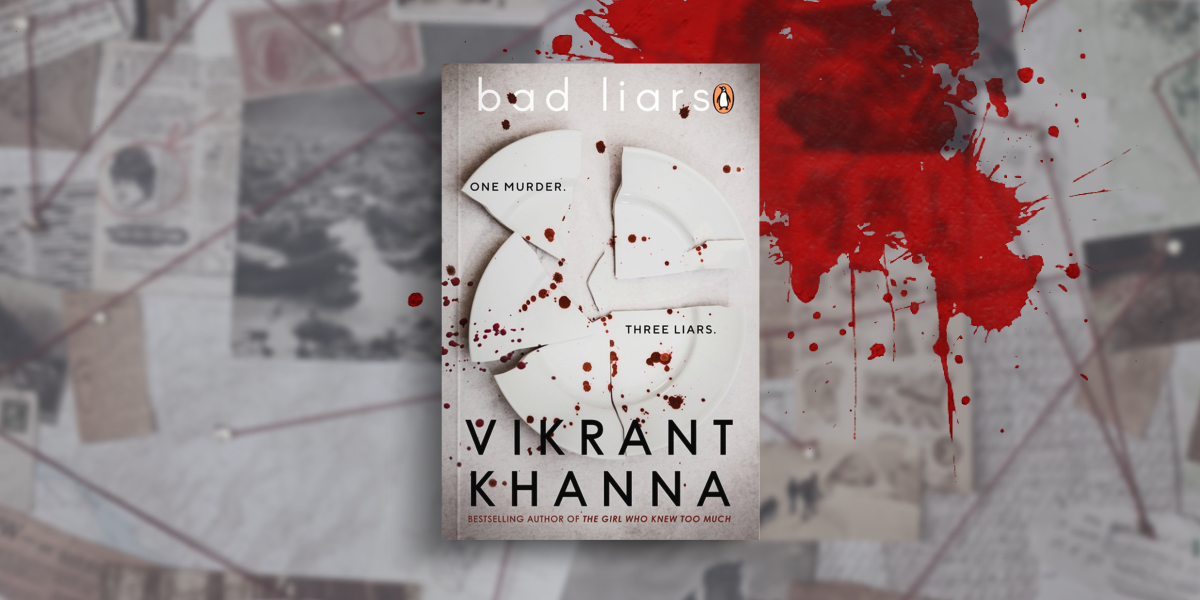
Murder Mystery Alert: ‘Bad Liars’

With no clear motive and inconsistent confessions from the three suspects, the police must go deeper into their past, and what they discover is both horrifying and baffling. Who murdered Anant, and more importantly, why? By the author of The Girl Who Knew Too Much, here’s another bone-chilling thriller.

 

Bad Liars
Bad Liars || Vikrant Khanna

**

Sanya wakes up with a start and sits upright on her bed, almost motionless for a few minutes. Her neck feels stiff, and she gently caresses it with her right hand. She looks outside the bedroom window to her left. The morning is crisp and bright. The first rays of sunlight light up the room. Tiny motes of dust dance it as it slants through the window on to the carpeted floor across from the bed.

She closes her eyes, inhales deeply and begins concentrating on her breath. She meditates for the next fifteen minutes, oblivious to her surroundings—a morning routine that she has religiously followed for as long as she can remember. When she is done, she gets off the bed and walks over to the dresser.

She sits down on a chair and looks at her reflection in the mirror. A tired face looks back at her. At thirty, she should be looking younger, she thinks. Her hair has already started greying, albeit just a few strands on the left side of her head. She notices a few pimples dotting her cheeks and runs a lazy hand over them. She leans forward and examines the dark circles under her eyes, not inordinately concerned. She hasn’t been sleeping well over the past few weeks.

She had turned thirty last month and, on her insistence, her husband had thrown a lavish party at their sprawling bungalow in Golf Links, Gurgaon. Her rich and famous husband is a real scrooge and hates parting with his money.

A smile escapes her at the memory of the silly argument she had had with him. It had taken her weeks to convince him that it was okay to spend money on special occasions. She turns her head to the left and lifts her hair to expose the scalp. The round Band-Aid doesn’t quite cover the entire wound on her brow and a small patch of skin, with dried blood on it, has escaped its confines. She runs a soft hand over it and gently presses it. She winces in pain and leaves it alone.

She puts on her glasses and rises, her eyes still on the mirror. She is tall, just a few inches shy of six feet. She looks piercingly into her own eyes for a minute or two, before heading to the bathroom.

After her morning rituals, she steps out of her bedroom and heads downstairs to the kitchen. Their helper, Sharda, greets her with an affable smile.
‘Hello, Sanya madam.’
‘How are you, Sharda? All good?’
Sharda nods. ‘I’ll get you some tea. Breakfast is almost ready, just a few more minutes.’

‘Sure, thanks.’
Sharda then gazes at her forehead and, in a flash, her face puckers in a frown. ‘What happened, madam?’ she points at the Band-Aid.

Sanya hisses sharply through her teeth. Sharda is looking intently at her. ‘I . . . I fell from . . .’ she stops.
‘I think you already know, Sharda.’

Sharda looks at her pityingly, ‘Oh, madam, he hit you again, didn’t he?’ Then adds after a pause, ‘Was it after dinner when he was, er . . . scolding you?’

‘Yes,’ Sanya says. ‘When we went upstairs to our room.’
‘But why do you let him, madam?’

Sanya doesn’t reply. Sharda is looking at her expectantly waiting for an answer. When her gaze doesn’t drop, Sanya says helplessly, ‘You wouldn’t understand, Sharda. It’s not that easy.’

Sharda wants to add a rebuttal, but her eyes fall on the gas stove, and she hurriedly turns off the flame. Some tea boils over from the saucepan. She mops up the mess and pours the tea into two cups. The toaster behind her produces a loud ding and she extracts the bread slices and places them on a plate. She retrieves the butter from the refrigerator.

‘Okay madam, you take the tea. I’ll lay out breakfast on the table shortly.’ She looks up at the wall clock. ‘It’s not even seven. You’re up early today.’

Sanya yawns. ‘Yes, I couldn’t sleep well last night.’
Sharda nods slowly, obviously concerned, as she butters the toast. ‘Where is sir?’

‘I’m not sure,’ she replies, shaking her head. ‘Haven’t you seen him yet? He’s an early riser.’

‘No,’ Sharda replies. ‘I haven’t seen him since morning.’

‘Okay, he might be in his study in the basement then,’ Sanya says, ‘reading something.’ She rolls her eyes. ‘He just reads all the time. Sometimes I think he’s a book with two legs sticking out.’

Sharda lets out a hearty laugh and Sanya chuckles, breaking the tension in the air.

‘Okay, let me go and call him.’

‘Sure, madam.’ Then as an afterthought, she adds, ‘Don’t let him do this to you. Men become stronger when they know their women need them.’

Sanya takes the stairs down to the left of the kitchen and calls out her husband’s name. Once. Twice. It doesn’t take long for her to cover the entire length of the basement. At the far end, she pushes the door to her husband’s study.

She screams.

**

Grab your copy of Bad Liars from your nearest bookstore or Amazon.
5 beliefs to let go of before learning public policy

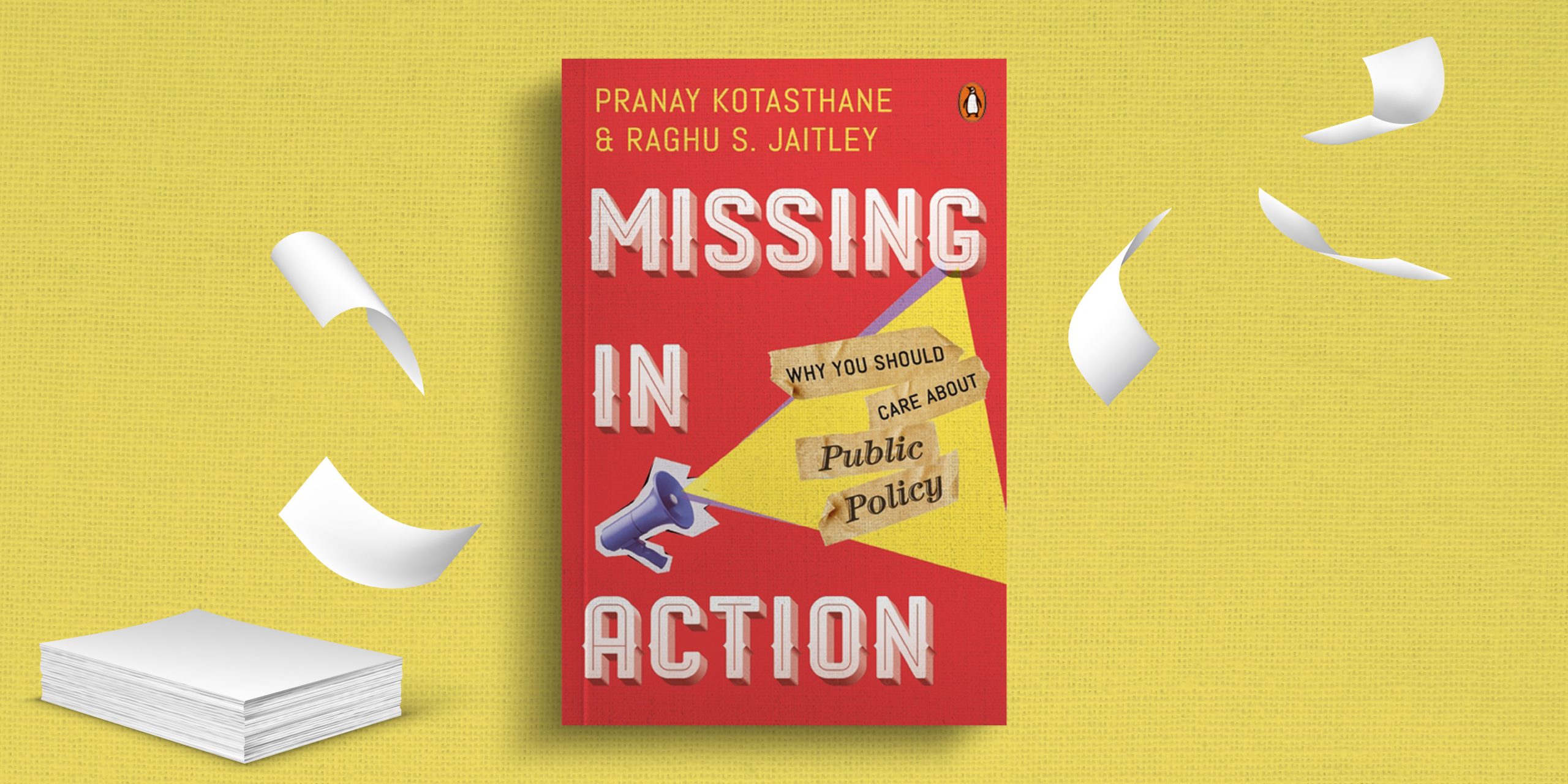
You might wonder, why should you, a common Indian citizen, bother about learning public policy concepts; shouldn’t we take these ideas to those who make policy—our politicians and bureaucrats—instead? We believe that in a democracy, the government mirrors society more often than it directs our choices. Missing in Action is an engrossing, interesting, and educational read that you should pick up right now!

Read this excerpt from the chapter titled ‘Making Public Policy Interesting Again’.


Missing In Action
Missing In Action || Pranay Kotasthane, Raghu S Jaitley

A good place to begin is to think of the beliefs we need to let go of before learning public policy.

Belief 1: What I Know Is Golden, So I Can’t Let Go of It

The first step is being open to the process of unlearning. Our prescriptions for policymaking are shaped by our
experiences, perceptions, and memory. Neither of the three sources is a true representation of reality. Hence, an unrelenting defense of what we have already learned is like falling into the trap of watching a sequel of a boring movie because you have already spent money on the first part.


Belief 2: Good Intentions Translate to Good Policies

This is a tough one to unlearn. This principle calls for dissociating the intentions behind a policy from its outcomes.
Most government policies have noble intentions. Yet, many of them do not have the desired consequences. How should we, as citizens, judge government actions then? The default response in India seems to be to evaluate a policy based on the stated intentions alone. Once things start going wrong, the blame is placed on poor delivery, corrupt politicians, and inefficient bureaucrats.

There are two problems with this approach of evaluating policies. First, intentions are difficult to gauge. Few government policies are made with a stated malintent in any case. Thus,
judging intentions is an unhelpful guide for evaluating policies. Next, imagine we had an insight into the minds of our policymakers, and we could decipher their intentions perfectly. It would still be unhelpful to evaluate policies based on intent simply because even the best motives can lead to terrible consequences.

Take the case of alcohol prohibition in Mumbai which began in 1949 with the noble intention of preventing alcoholism. As a policy, it turned out to be one of the reasons why the ‘underworld’ flourished in that city. First, it made bootlegging a viable business and encouraged smugglers to get into it. These operators then used this money to diversify into other illegal activities. Eventually, a strong police–underworld–politician nexus developed. There are a number of accounts tracing the rise of underworld figures such as Varadarajan Mudaliar and Haji Mastan to this well-intentioned policy called prohibition. As citizens, we must evaluate policies based on their intended and unintended consequences, and not fall into the trap of judging intentions.


Belief 3: India’s Bane Is That While the Policies Are Good, Their Implementation Is Bad

A common refrain in our public discourse follows this narrative—a ‘fantastic’ policy failed because its implementation was botched up. There was nothing wrong with the policy per se, it’s just that the inept bureaucracy or worse—the evil citizens—that came in its way. This is a fallacy because a policy formulated bereft of implementation details cannot be termed a good policy. By blaming implementation alone, we are letting governments off the hook easily. The government has resources and expertise at its command to anticipate at least some of the implementation challenges, stakeholder attitudes, and unintended consequences. Hence, we need to hold the government to higher standards when evaluating policies.


Belief 4: Certainty and Consistency of Views Over a Long Period Is a Hallmark of Good Policy Analysis

An evidence-based policymaking attitude demands that we don’t let our ideology interfere with our judgment. Too often, we fall into the trap of defending an ideology we hold dear.


Belief 5: Economics Is About Picking Your Poison—Capitalism or Socialism

Economics is the bedrock of good policy. Given its focus on incentives, it provides a lens through which we can anticipate policy outcomes. For example, economic reasoning allows us to anticipate that a price cap on cinema tickets will raise the price of the popcorn sold at the stall outside it. Economics is certainly not about eulogizing the patron saints of economic theories, whether it be Karl Marx or Adam Smith. As long as our efforts are aimed at substantiating why and how human beings behave, we can aim to have policies that can build the right incentives, nudges, or restrictions. Being wedded to an economic theory in the face of contradictory evidence is repeating the folly described in belief 3.

In reality, public policy is an applied discipline that requires understanding human motivations from different lenses. Sociology, psychology, philosophy, ethics, are all immensely helpful. Even so, economics is the core discipline to understanding policymaking.

**

Intriguing information, right? Start reading Missing in Action now! Get your copy of Missing in Action from the nearest bookstores on Amazon.

An “Unfiltered” Conversation with Saurabh Mukherjea!

 Saurabh Mukherjea shares some of the key takeaways from his life and mentions how his co-authored book, Unfiltered: The CEO and the Coach, can be a life-changer!

‘Unfiltered: The CEO and the Coach’ is the book which chronicles our six-year partnership. We committed to be bold, to be real, and to openly share what happens behind the doors of the confidential coaching space. To the best of our knowledge, this is the first book ever written which looks at the coaching journey – in all its intricate detail – from both the perspective of the coach and the client.

As in professional sports, so in business life, the coach’s job is to push her client to learn new skills, build on existing strengths and become more self-aware of both his strengths and his stressors. In Unfiltered, Ana and I have given several case studies based on our personal experiences of how this process works. Our book will let you go as close as possible to being “in a coaching session” without the resources and emotional investment that typically come with a first-hand coaching experience.

In addition to sharing our journey and hard-won lessons, we also offer many practical tools and resources that can immediately be used by anyone interested in self-development. Readers will be able to understand how their formative years shape them – for better and for worse – in their professional lives and how they can harness their past for success going forward. Great leaders will be able to more confidently choose their coach and design a coaching journey that feels right and lets them be extraordinary.


Unfiltered
Unfiltered || Ana Lueneburger, Saurabh Mukherjea


Seven years ago, when I turned forty, I felt that I had no more worlds to conquer. The business I had been hired to turnaround was now firmly in the black. At an individual level, for several years in a row I had been ranked the leading equity strategist in India. My previous two books on investing had become bestsellers. My family was thriving. In search of a new challenge, I requested the Board of my then-employer to let me run the firm as a whole rather than just the equities and investment management businesses (which I was already in charge of). That request of mine turned out to be a turning point in my life but not for any of the reasons I could have possibly foreseen.

My erstwhile employer hired one of the world’s leading search firms to assess whether I was fit for the Group CEO role. The verdict was that while I was a bright, hardworking individual with a credible leadership track record, I had some way to go before I could be given greater responsibilities. My shortcomings—as per this report—were a tendency to fly off the handle when dealing with people I didn’t like, a low emotional quotient (EQ) and a ‘moody and irritable’ nature. In addition, I was also ‘naturally suspicious’ of people. Their recommendation was that a world-class leadership coach should be hired to iron out my deficiencies. I was humbled.

Once the Board accepted the search firm’s recommendation, I was tasked with interviewing two highly credentialed executive coaches based in Europe. I chose Ana Lueneburger, a German national based out of London, on the mistaken assumption that she would be an easy-going coach who would not burden me with lots of homework. In retrospect, I can safely say that this was the best mistake I have made in my professional life!

The journey of introspection, learning and change that I then began with Ana six years ago has made a massive impact on my life and on the lives of my family and my colleagues, as laid out in detail in our book. Through a combination of tests and extensive discussions with my colleagues, friends and relatives, Ana – who is both a seasoned executive (with stints in Boston Consulting Group, Danone and INSEAD) and a trained psychotherapist – was quickly able to assess the root cause of my issues. Having done that spadework, she agreed with me on the goals that I wanted to achieve via her expert interventions.

**

The “Hacking Health” balanced diet!

Have you been putting off taking care of your diet and health because of the everyday grind? Mukesh Bansal tackles this monumental job, drawing from ancient wisdom while simultaneously debunking unscientific myths, he helps you make wise choices in pursuit of good health, using a mixture of personal experience and cutting-edge science, and brings you the ultimate balanced diet cheat code in his book, Hacking Health. Here’s an excerpt from the book.


Hacking Health
Hacking Health || Mukesh Bansal


A Code for A Balanced Diet

There is a lot of debate about what is a balanced diet and there have been numerous revisions to the ideal food pyramid, but if you can follow these simple guidelines, you will get all the nutrition that you need:


Ensure that you get the majority of your calories from plant-based sources like fruits, vegetables, nuts and seeds, legumes and grains. While fruits and vegetables will provide high quality energy and essential micronutrients, nuts and seeds are packed with healthy fats and proteins.


As children, we were berated for not eating our green leafy vegetables, and for good reason. Greens, along with other brightly coloured vegetables like beets, carrots and pumpkins, are packed with all kinds of nutrients, digesting slowly to provide energy for a long time after meals.


Incorporate healthy fats that come from ghee, coconut oil, various nut and seed oils, as well as vegetable fat sources like avocado and olive oil. Avoid refined and processed fats such as vegetable oils, margarine and light butter spreads, as well as deep-fried foods, since the cooking process results in the generation of trans fats that can be carcinogenic.


Instead of relying only on wheat and rice, get your carbohydrates from diverse sources to make your meals multigrain. Rather than buying multigrain atta, whose ingredients you have no control over, choose grains such as jowar, bajra, makkai, buckwheat, brown rice, ragi, amaranth and quinoa, among several other options.


Pulses and legumes, including the dals or lentils so common in an Indian kitchen, as well as chickpeas, black-eyed peas and other beans, are nutrient-rich and a great source of both complex carbohydrates and proteins. Boiled or sprouted pulses are a great addition to any diet.


Avoid all kinds of processed foods and sugary drinks like the plague. These are just empty calories that offer no benefits. You might have a dessert or a sweetened drink to celebrate an occasion, but they cannot be part of your everyday diet.


Black coffee and all kinds of white and green teas are full of flavonoids and antioxidants. These also work as appetite suppressants and can be great for your mind. Given that they are stimulants, though, it might be a good idea to avoid coffee and tea after 4 p.m., especially if you have trouble falling asleep.


Local and seasonal foods should be a big part of your diet. Fruits and vegetables are at their nutritious best and full of flavour at the peak of season. One of the best ways to identify what is in season is to visit your local vendor who does not have a freezer or refrigerator, and to pick what seems to be available in abundance and inexpensive.


Spices are densely packed pockets of essential micronutrients and should be liberally used in your food.

Fermented food is a great way to improve the health of the gut. In India, these have been an integral part of our diet, from curd set at home to rice or cooked vegetables soaked overnight in water and pickles. Fermented drinks like kefir and kombucha are also great choices.


Just because you are eating healthy doesn’t mean you should be eating all the time. In fact, don’t be shy about skipping a meal every now and then, to give your gut a much needed break.


**


Get your copy of Hacking Health from Amazon.

The Sleep Mindset – An excerpt from Ritual

Do you lack motivation on Monday? Are Monday morning blues making you dizzy? While at your work desk, all you can think about is the warm cocoon of your bed, but the moment the moon is at its apex you cannot sleep. Are you also one of the many people who cannot sleep at night and feel sleepy during the day? Being an author, columnist, and podcaster who has written on beauty and wellness for more than two decades, Vasudha Rai brings a solution to your sleeping problems and others to renew your mind, body and spirit through, Ritual: Daily Practices for Wellness, Beauty & Bliss. Here’s an excerpt from her book for a healthy sleep mindset.

*

Ritual: Daily Practices for Wellness, Beauty & Bliss
Ritual: Daily Practices for Wellness, Beauty & Bliss || Vasudha Rai

When we sleep well, we perform better the next day, our interpersonal relationships are better, we’re inspired to work out, eat healthy and make the right choices. On the contrary, when we don’t get enough sleep, we’re not inspired to do anything at all. The first step of sleep hygiene then is to put away your phone which will only happen when you are determined. Try replacing your smartphone or tablet with a book (especially one that is mildly academic/ slow paced). It may not be as stimulating as social media, but that is the whole point.

If you’re an overthinker, it may be a good idea to write down a list of things to do the next day, lest you forget. In Ayurveda, this is especially recommended for the ambitious pitta type. Vata types do well with a warm oil foot massage that works to ground their flight, anxious energy. Kapha types usually don’t have a problem falling asleep – for them the problem is oversleeping). But whether it’s journaling, meditation, massage, sound healing, the idea is to wind down and destress. The mind cannot run at a breakneck speed and then be expected to calm down and then help you fall asleep.

Someone like me who gets stimulated easily prefers to either read a non-fiction/ knowledge book or indulge in a sound bath before bed. Personally, I find that sometimes even reading on my phone is okay as long as I’m looking up information about beauty, health and wellness. For me these are comforting areas of interest. For you it could be language, astronomy or art history. If I get involved in an engaging conversation I stay awake longer. So even if I’m on my phone, I avoid social media because I don’t want to be faced with excitement, fear, revulsion, admiration, or any other stimulating information right before bed.

The big worry is if we will be able to sleep at all. Often the inability to fall asleep is what keeps us up all night. I remember reading an article about sleep management a while back on a particular night that I spent tossing and turning. It was almost 4am and I couldn’t bear the thought of listening to the birdsong in the morning after a night I had laid awake. So I picked up my phone and looked up ‘What can you do when you can’t sleep all night’. Among the various tips the author had given one line stood out so beautifully that I remember it to this day. A somnologist said something on the lines of ‘ultimately you will go to sleep at some point, it may not come soon enough but it will come for sure’. I felt comforted by that and have worried a little bit lesser since then.

The paradox is that when we try to stay up is when we fall asleep the soonest. So my trick when I’m wakeful in the middle of the night is to do something, instead of just tossing around in bed. I keep a heavy academic book, with difficult concepts in my bedside drawer. It could also be an old, classic novel. Something heavy and verbose always makes me feel drowsy. But that’s just me, we are all different and have different needs. Think about it like this – we feel the sleepiest when we’re trying to stay awake. So instead of tossing and turning waiting for it to come, engage yourself in something boring. You could step out of the room for a few minutes, lie down and listen to a guided meditation, journal your thoughts. If you wake up in the middle of the night and aren’t able to go to sleep, try one of these, or anything else that does not involve a screen.

**

Get your copy of Ritual from your nearest bookstore or Amazon.

‘Nights of Plague’ – A Series of Crises

From the winner of the Nobel Prize in Literature: Part detective story, part historical epic—a bold and brilliant novel that imagines a plague ravaging a fictional island in the Ottoman Empire. Here’s an excerpt from Orhan’s Pamuk’s Nights of Plague.

*

Nights of Plague
Nights of Plague || Orhan Pamuk

In the year 1901, if a steamer with black coal-smoke pouring from its chimney were to sail south from Istanbul for four days until it passed the island of Rhodes, then continue south through dangerous, stormy waters toward Alexandria for another half day, its passengers would eventually come to see in the distance the delicate towers of Arkaz Castle upon the island of Mingheria. Due to Mingheria’s location on the route between Istanbul and Alexandria, the Castle’s enigmatic shadow and silhouette were gazed upon in awe and fascination by many a passing traveler. As soon as this magnificent image—which Homer described in the Iliad as “an emerald built of pink stone”—appeared on the horizon, ship captains of a finer spiritual disposition would invite their passengers on deck so that they could savor the views, and artists on their way to the East would avidly paint the romantic vista, adding black storm clouds for effect.

But few of these ships would stop at Mingheria, for in those days there were only three ferries that made regular weekly trips to the island: the Messageries Maritimes Saghalien (whose high-pitched whistle everyone in Arkaz recognized) and Equateur (with its deeper horn), and the Cretian company Pantaleon’s dainty vessel the Zeus (which only rarely sounded its horn, and always in brief bursts). So the fact that an unscheduled ferry was approaching the island of Mingheria two hours before midnight on the twenty-second of April 1901—the day our story begins—signaled that something unusual was afoot.

The ship with pointed bow and slender white chimneys closing in on the island from the north, stealthy as a spy vessel, and bearing the Ottoman flag, was the Aziziye. It had been tasked by Sultan Abdul Hamid II with transporting a distinguished Ottoman delegation from Istanbul on a special mission to China. To this delegation of seventeen fez-,turban-, and hat-clad religious scholars, army officers, translators, and bureaucrats, Abdul Hamid had added at the last moment his niece Princess Pakize, whose marriage he had recently arranged, and her husband, Prince Consort Doctor Nuri Bey. The joyous, eager, and slightly dazed newlyweds had not been able to fathom the reason for their inclusion in the delegation to China and had puzzled over the matter at great length.

Princess Pakize—who, like her older sisters, was not fond of her uncle the Sultan—was sure that Abdul Hamid had meant her and her husband some kind of harm by putting them in the delegation, but she had not yet been able to work out what the reason might be. Some palace gossips had suggested that the Sultan’s intention must be to drive the newlyweds out of Istanbul and send them to die in yellow fever–infested Asian lands and cholera-ridden African deserts, while others pointed out that Abdul Hamid’s games tended to be revealed only once he had finished playing them. But Prince Consort Doctor Nuri Bey was more optimistic.

An eminently successful and hardworking thirty-eight-year-old quarantine doctor, he had represented the Ottoman Empire at international public health conferences. His achievements had caught the Sultan’s attention, and when they had been introduced, Doctor Nuri had discovered what many quarantine doctors already knew: that the Sultan’s fascination with murder mysteries was matched by his interest in European medical advances. The Sultan wanted to keep up with developments concerning microbes, laboratories, and vaccinations and introduce the latest medical findings to Istanbul and across Ottoman lands. He was also concerned about the new infectious diseases that were making their way toward the West from Asia and China.

There was no wind in the Levant that night, so the Sultan’s Aziziye cruise ship was making swifter progress than expected. Earlier it had made a stop at the port of Smyrna, though no such stop had been declared in the official itinerary. As the ship had neared the misty Smyrna docks, one by one the committee’s delegates had climbed up the narrow stairwell that led to the captain’s quarters to request an explanation and had learned that a mysterious new passenger was to come on board. Even the captain (who was Russian) had claimed not to know who this passenger was.

The Aziziye’s mysterious passenger was the Ottoman Empire’s Chief Inspector of Public Health and Sanitation, the renowned chemist and pharmacist Bonkowski Pasha. Tired but still sprightly at the age of sixty, Bonkowski Pasha was the Sultan’s Royal Chemist and the founder of modern Ottoman pharmacology. He was also a semisuccessful businessman who had once owned a number of different companies producing rosewater and perfumes, bottled mineral water, and pharmaceuticals. But for the past ten years, he had worked exclusively as the Ottoman Empire’s Chief Inspector of Public Health, sending the Sultan reports on cholera and plague outbreaks, as well as rushing from one outbreak to the next, from port to port and city to city, to oversee quarantine and public health provisions on behalf of the Sultan.

Inspector of Public Health and Sanitation, the renowned chemist and pharmacist Bonkowski Pasha. Tired but still sprightly at the age of sixty, Bonkowski Pasha was the Sultan’s Royal Chemist and the founder of modern Ottoman pharmacology. He was also a semisuccessful businessman who had once owned a number of different companies producing rosewater and perfumes, bottled mineral water, and pharmaceuticals. But for the past ten years he had worked exclusively as the Ottoman Empire’s Chief Inspector of Public Health, sending the Sultan reports on cholera and plague outbreaks, as well as rushing from one outbreak to the next, from port to port and city to city, to oversee quarantine and public health provisions on behalf of the Sultan.

Chemist and pharmacist Bonkowski Pasha had often represented the Ottoman Empire at international quarantine conventions, and had written Sultan Abdul Hamid a treatise four years ago on the precautions that the Ottoman Empire should take against the plague pandemic that had begun in the East. He had also been specially appointed to combat the outbreak of plague in the Greek neighborhoods of Smyrna. After several cholera epidemics over the years, the new plague microbe from the East—whose infectivity (what medical experts termed “virulence”) had waxed and waned in time—had, alas, finally entered the Ottoman Empire too.

**

Get your copy of Nights of Plague from the nearest bookstores on Amazon.

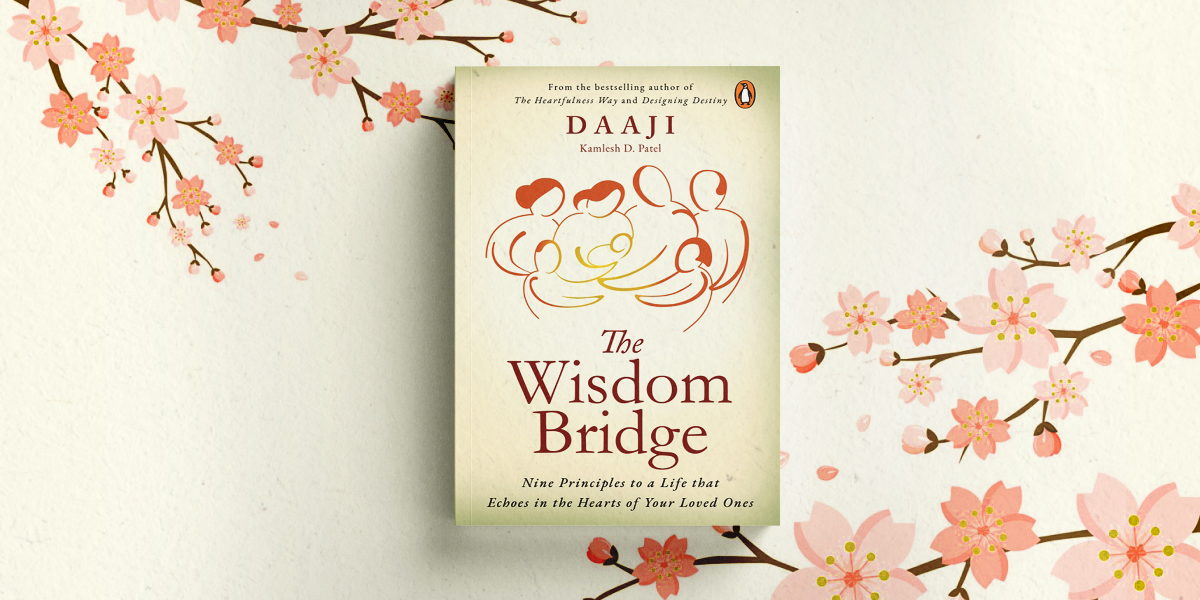
Learn how to cope with stress with ‘The Wisdom Bridge’

When it comes to wisdom, and no it’s not the stuff learned from books for exams, we’ve learned the best things from stories. Taking on that mantle of the storyteller with a wise lesson to pass on, Kamlesh ‘Daaji’ Patel’s The Wisdom Bridge is replete with such educational fables. Guiding parents and other family members to more holistic childcare, the book uses the Nine Principles learned by Daaji from his own experiences. Available at bookstores and Amazon, the following excerpt address the epigenetic effects of stress through the story of the caveman and the tiger. So, scroll down to understand how you can cope with stress.

The Wisdom Bridge||Kamlesh Daaji Patel

*

The villain in maternal epigenetics is stress. It’s a leading factor affecting pregnant women’s health. The form of stress that causes the biggest problems is chronic stress, which is the body’s response to emotional pressure suffered for a prolonged period. 

In today’s world, the sabretooth tigers are all around us. Stress at work, stress at school, the stress of finances, the stress of relationships, and stress because of stress itself. We are always on the lookout for the sabretooth tiger lurking somewhere.

Imagine your caveman ancestor strolling in the jungle and a sabretooth tiger attacks. There are three options: fight, flight, or freeze. If you freeze, well, that’s the end of the story. If you fight the tiger or outrun the tiger, there are chances of survival. It’s a high-stress encounter where the body creates stress hormones such as adrenalin and cortisol. Blood is redirected from the digestive tract and other vital organs and moved toward the muscles and limbs to give the energy needed for fight or flight. If your caveman ancestor was lucky and survived the attack, then the stress levels in his body would have come down, and the body resumes its regular business. This, in short, is how the stress response mechanism evolved. 

In today’s world, sabretooth tigers are all around: stress at work, stress at school, the stress of finances, the stress of relationships, and stress because of stress itself. We are constantly stressed about the lurking sabretooth tiger. This type of stress where one is always on guard is called chronic stress. Chronic stress is known to cause issues related to high blood pressure, suppression of immunity, damage to muscle tissue, and poor mental health. 

Research shows the epigenetic effects created by a combination of finance, relationships, lack of community, and racism induce chronic stress in pregnant mothers, resulting in premature deliveries. Cortisol, a stress hormone, crosses the placenta barrier and passes on to the fetus affecting its development. The effects of chronic stress on the fetus also include lower weight at birth and longer-term effects, including personality disorders, cardiovascular issues, and diabetes. 

Building immunity against stress is crucial because stress, first and foremost, affects the mother. Proper nutrition, a healthy lifestyle, and good social support help manage stress. While we know the harmful effects of chronic stress, avoiding stress altogether is not possible. We all have some level of stress in life. Studies show that moderate stress does not cause any damage to the fetus. What we need to avoid is chronic stress and burnout

In medicine, burnout is defined as ‘a state of emotional, mental, and often physical exhaustion brought on by prolonged or repeated stress. Though it’s most often caused by problems at work, it can also appear in other areas of life, such as parenting, caretaking, or romantic relationships.’

In a research study on burnout, it was found that in a short period of time Heartfulness meditation lowered stress in a statistically significant way. Not only did the stress levels reduce, but the length of the telomeres increased, especially in the younger population. Telomeres are cap-shaped sections of DNA found at the end of chromosomes. The length of telomeres indicates wellbeing. So longer telomeres are a good sign.

*

Get your copy to read more on how to cope with stress and live a life that inspires your younger ones.

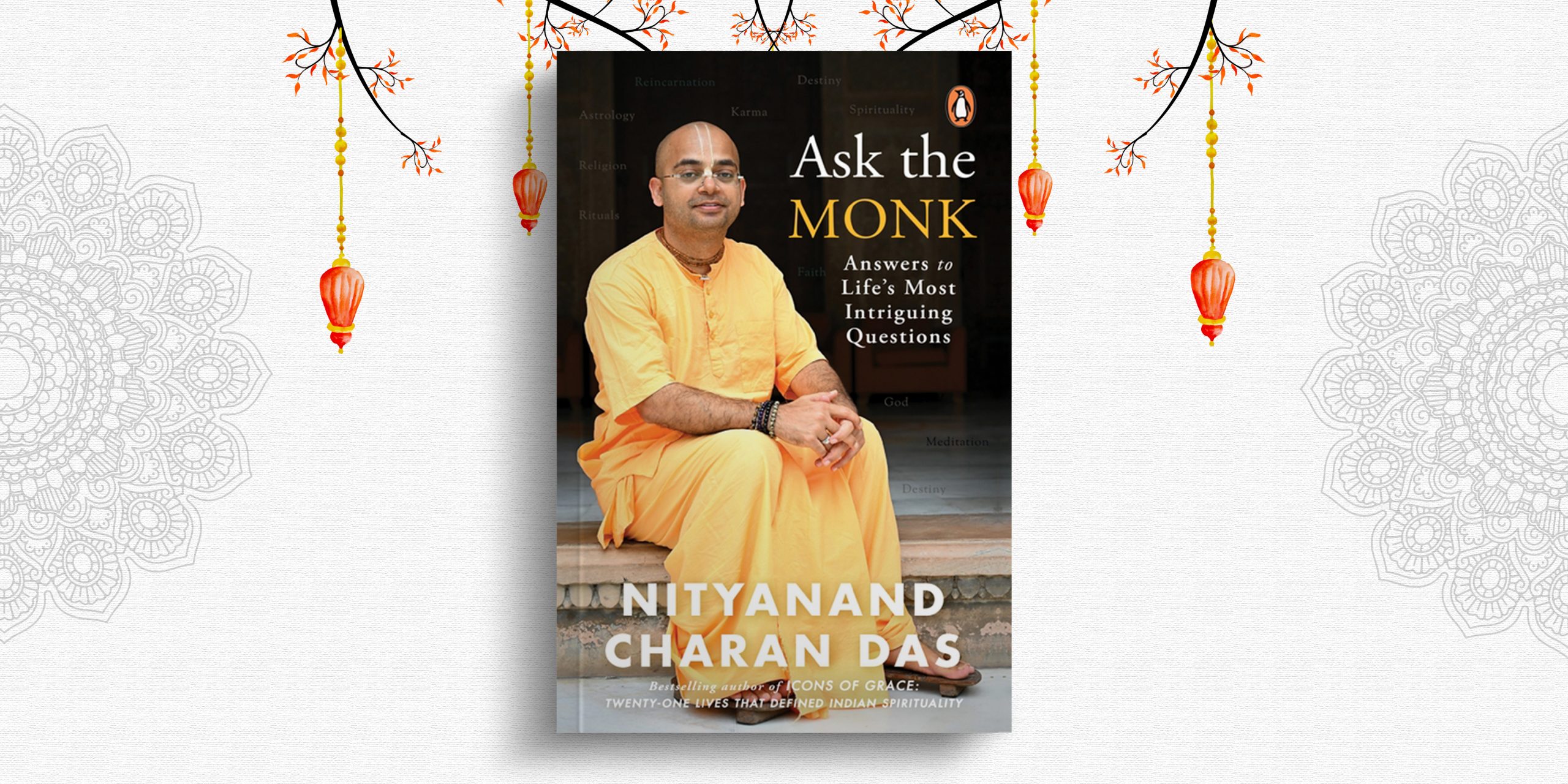
Ask the Monk: ‘Doesn’t spirituality demand blind faith?’

In Ask the Monk, celebrated monk Nityanand Charan Das lucidly answers over seventy frequently asked questions—by young and old alike—on topics such as karma, religion versus spirituality, mind, God, destiny, the purpose of life, suffering, rituals, religion, wars and so on.

Have questions? Intrigued to know more?

Read this excerpt from Ask the Monk​ and find out the answer to a very critical question—doesn’t spirituality demand blind faith?

​*

Ask the Monk
Ask the Monk || Nityanand Charan Das

No. Spirituality does not ask for blind faith, but ‘reasonable faith.’

Reasonable faith means, ‘I hear something. So let me try it. If it does not work, I can always give it up’.

Blind faith means, I hear something and straightway reject it without verifying.

Blind acceptance is bad, but blind rejection is equally bad. In fact, it is worse because we might miss out on a rare diamond, considering it to be a broken piece of glass.

And this reasonable faith is not something new. If we carefully examine, we will find that we have been applying it in every aspect of life. In fact, our life starts with reasonable faith. When we are born, we do not know who our father is. We hear from our mother and we trust her. Now if we talk about blind faith, then isn’t this also blind faith because we were not there earlier? Not at all. This is called reasonable faith. Now if we want, we can do DNA testing to verify it. 

When we get into a cab, we never check whether the driver has a license and knows how to drive. We have faith that he will take us to our destination.

We go to hotels and restaurants after hearing the food at a particular place is good. We go and try and then conclude based on our findings. We believe that the food is not infected, although chances are that it could be. But we have faith.

So the point is that we cannot move even an inch forward without this faith, else we will live in constant fear and go insane. 

The best way to move forward is to have a certain degree of faith in everything despite it all. It’s reasonable, since we cannot keep checking everything. 

The same logic applies to spiritual life as well. We can hear from the right authority and move forward thinking, ‘If someone is teaching something, let me try and apply it in my life and test the authenticity.’

Sometimes some people reject the spiritual truths as bogus or illogical, saying they are students of science. However, they are not scientific at all because science also says that before we accept or reject a theory, it must go through six steps; aim, apparatus, theory, observation, calculation and conclusion. Only when we have tested do we have the right to decide whether it’s real or not.

Thus, just like we apply reasonable faith to everything in life without immediately rejecting it, spiritual life must not be an exception. We can apply the principles mentioned in the scriptures and see if they work. If they do not, give them up. But giving up without trying is totally unscientific and illogical. 

The proof of pudding is in eating.

When we experiment based on what we hear, we get realizations and those realizations increase our faith. Spiritual life requires the same logic of faith that we apply everywhere else in our life.

**

Get your copy of Ask the Monk​ from your nearest bookstore or via Amazon.

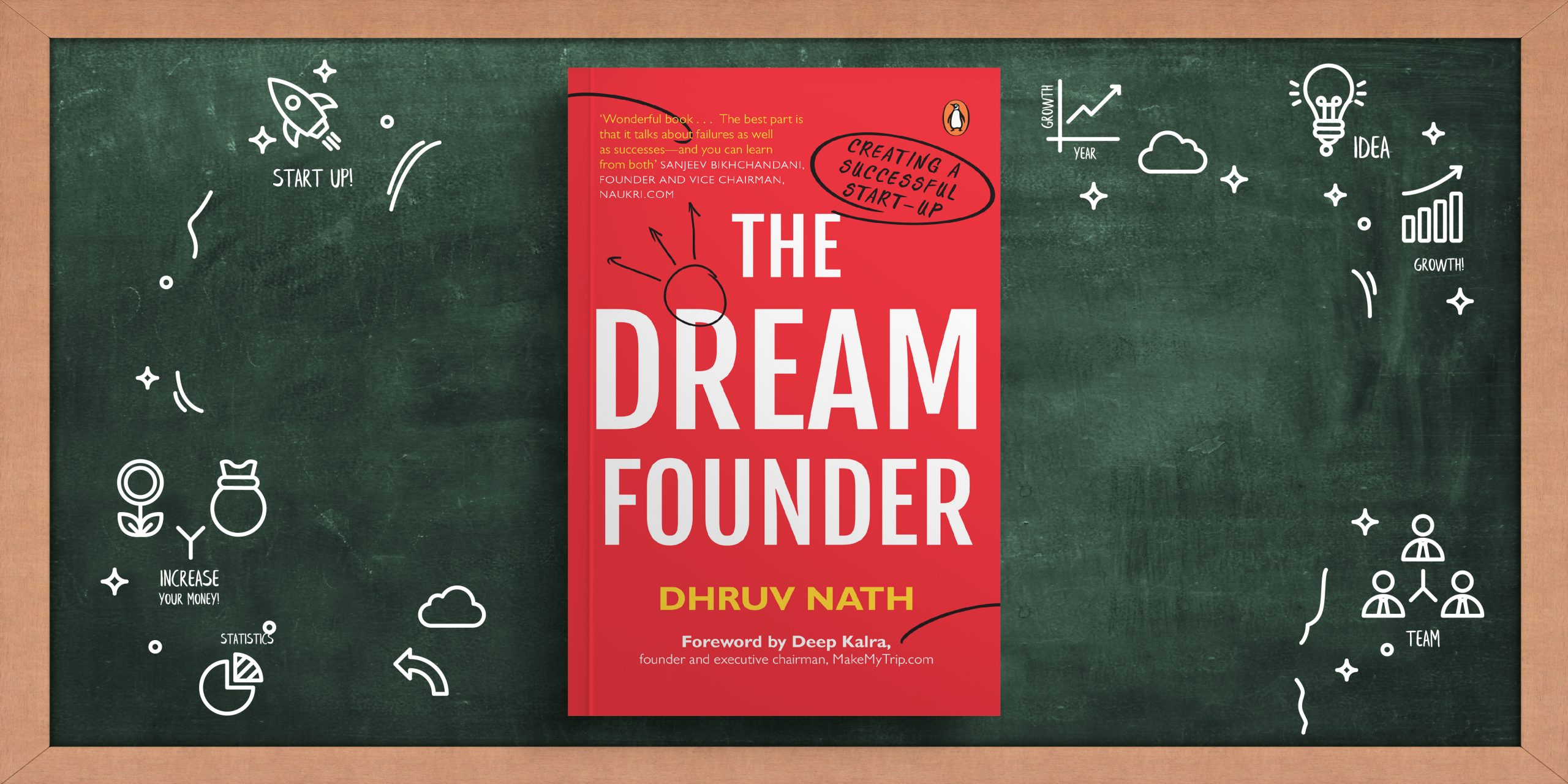
This book on start-ups keeps it real

In a world of several success stories, many starry-eyed, entrepreneur aspirationals buy books and watch numerous videos on what formula will make their own start-up stick. It takes a real expert like author Dhruv Nath, to know that the real lessons come from a comparative study of what worked and what didn’t. Compiling the journeys of the ideas that saw the light and went beyond, as well as those which ended before they even began, The Dream Founder is a must-read on what happens after the lightbulb switches on.

You can get your copy now from the nearest bookstore or visit Amazon to order.

The Dream Founder

*

One More Book on Start-Ups? Why?
Good question. There are several books on start-ups out there. Just get on to Amazon or Flipkart and you’ll see lots of them. So, why did I write one more?

Well, for a start, most of the books in the market talk about American start-ups—the Facebooks, the WhatsApps, the Ubers and the Airbnbs of the world. But hang on—aren’t you planning to create a start-up in India? In which case, you would want to learn from Indian start-ups, wouldn’t you? Sure, you can learn from Airbnb and Uber and all the rest of them—and you should. But isn’t it far more important to learn from companies in the Indian context? All of us are aware that the Indian environment is very different from what exists in the western world. Most western countries, such as the US, are developed. We are a developing country, which clearly means that both the opportunities and constraints will be different. Small-town and rural India—often called Bharat—offers a huge, untapped market, with no parallels in the west. Language is a major issue, with the future perhaps belonging to start-ups that cater to vernacular languages. I can go on and on, but I’m sure you get the idea. While you should learn from start-ups in the US, it’s much more critical to learn from start-ups in India. And that’s why this book is all about Indian start-ups. One of the few in this category.

Next, even if you were to look at the Indian books out there, all of them talk about huge success stories, such as Byju’s, Flipkart, Paytm and Ola Cabs. Whose founders are spoken about in hushed whispers, even at paan shops. And, of course, in bars, with alcohol warming the insides. I’m sure you would want to learn from these phenomenally successful guys. But let me ask you a frank question. Can you really identify with such start-ups? These aren’t start-ups any more. They are giants—in many cases, multinational giants. Who do you really identify with? The smaller guys, isn’t it? Those fledgeling start-ups which are just a few years old and are perhaps facing the same problems that you are. Wouldn’t you also want to listen to the founders of these young start-ups? Of course you would!

So, which ones do we discuss in this book?

Aha, that’s the best part. We discuss both. On the one hand, the book has stories about young start-ups which you can identify with. But it also has advice from the real giants in the business—the likes of Sanjeev Bikhchandani of Naukri.com, Deepinder Goyal of Zomato, Dr Annurag Batra of BW Businessworld and Meena Ganesh of Portea Medical. And then, we also have a highly successful investor—Sushanto Mitra of Lead Angels. They have all been happy to share their gyan, which I’ve promptly included in this book. So, you are in the happy position of learning from both the big guns and the smaller guys. And that makes this book truly unique.

But it gets even more unique, so do read on. You see, you can get lots of write-ups about start-ups that succeeded. Stories about their founders are plastered all over the Internet, the TV, the papers and, in fact, on virtually all kinds of media except possibly posters on public toilets (thank god!). But what about those that failed? Shouldn’t you be learning from them as well? To take an analogy from the film industry, if you want to be an actor, it is good to learn from Amitabh Bachchan. But isn’t it even more important to learn from those who came from their villages to try their luck and are still pottering around as extras in Bollywood? Or worse, those who got fed up and went back to their villages?

Agreed? So, how often have you read about failures? How often have you heard founders bragging, ‘You know, I’m really proud of the fact that my start-up was a failure, and I’d be delighted to have this come out in print’? Never happens, does it? Obviously, no one talks about failures. These things are never written about, which means you don’t learn from them.

And that, ladies and gentlemen, is where this book gets really exciting. As I mentioned earlier, I have spent several years with young founders, investing in their start-ups as well as mentoring many of them. There have been some really successful founders, but there has also been a fair share of failures. And I decided, in all my wisdom, to write about both the successful guys as well as the failures. Founders who were simply not able to build and grow their start-ups. And whose stories have remained under wraps and, therefore, unavailable to mankind. Of course, in some cases, liberal doses of alcohol—duly funded by me—had to be supplied to get these founders to open up.

And that, ladies and gentlemen, is what makes this book really, really unique!

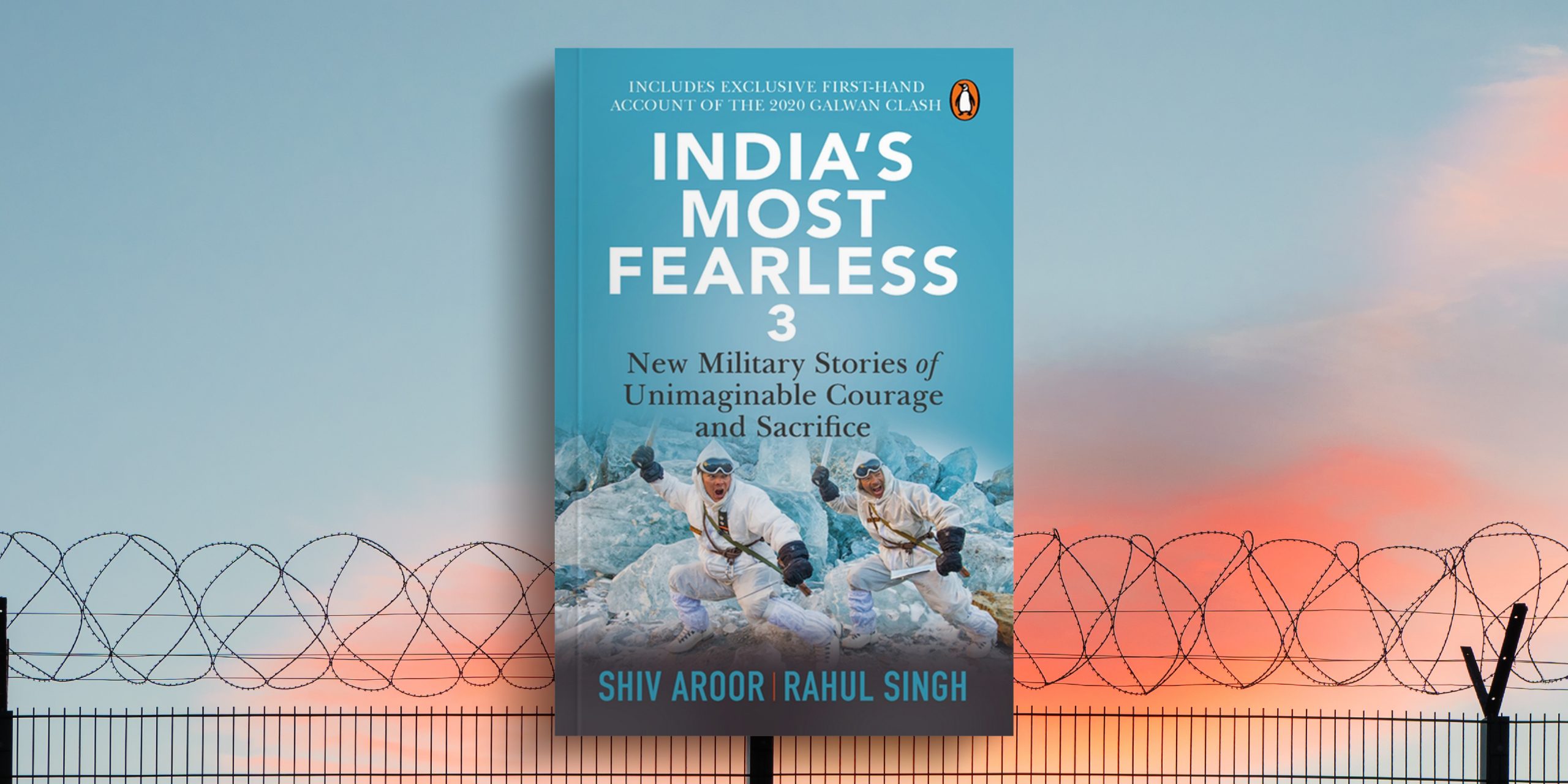
A first-hand account of the Galwan Clash

When the Galwan Valley clash happened in June 2020, the Indo-China conflict became the centre of the world’s attention. As shown in this excerpt from India’s Most Fearlesss 3, journalists Shiv Aroor and Rahul Singh have succeeded in recalibrating the narrative from speculative headlines to the real axis of the stories: the Indian Army soldiers. Read the full story of these bravehearts as well as many others in this thought-provoking book on real-life military bravery.

India’s Most Fearless 3||Shiv Aroor & Rahul Singh

*

‘I Had Never Seen Such Fierce Fighting’
The Galwan Clash of June 2020

Even above the loud, steady roar of the Galwan River, he heard the thundering footfalls. The sound of over a thousand men reverberating through the darkness, amplified by the tunnel effect of a narrow valley flanked by steep rising mountains on both sides. Peering into the black void beyond Patrol Point 14, lit only a few metres forward by hand-held torches, the reality of those sounds dawned on Havildar Dharamvir Kumar Singh of the Indian Army’s 16 Bihar infantry battalion. He clenched his eyes briefly shut to soak in every vibration. When he opened them again, he knew that the huge horde of men advancing towards his position was not marching.

They weren’t even jogging.

They were sprinting.

‘There were less than 400 of us,’ says Havildar Dharamvir. ‘We would soon discover that the number of Chinese Army soldiers running towards us was maybe three times that. We had been fighting smaller numbers of Chinese for two hours before that. But this was their main force. The all-out assault that the Chinese side was launching against us.’

An all-out assault.

Unarmed, as stipulated by decades-old protocol between the two armies, Havildar Dharamvir quickly glanced around at the soldiers with him. Even in the darkness he could tell their expressions. A curious mix of determination and fearlessness, but tinged with an edge of foreboding.

As the soldiers steeled themselves, rallied by their commanding officer and a group of younger officers, Havildar Dharamvir knew what lay ahead would need every ounce of strength the smaller force could muster. But it also made one particular man in the team even more crucial.

A non-combatant with a white suitcase.

Wading through the group of soldiers with him, Havildar Dharamvir emerged on the banks of the gushing Galwan, right where he had last seen the man he was looking for now.

With a big, unmistakable red ‘plus’ sign painted on to his parka, Naik Deepak Singh wasn’t standing. On his knees, his suitcase open with bandages and bottles of tincture, he was crouched over what appeared to be a small group of injured men, all groaning in the darkness. Three were Indian soldiers being administered first aid.

The six other soldiers receiving emergency ministrations from the young Indian Army medic weren’t Indian soldiers. They were Chinese Army personnel. Two People’s Liberation Army (PLA) officers and four jawans.

‘They are badly injured. They need to rest,’ Naik Deepak said before Havildar Dharamvir could ask. An hour earlier, the injured Chinese soldiers had been left behind by their retreating force. Naik Deepak, the young nursing assistant, had been summoned to Patrol Point 14 by his commanding officer two hours earlier. Not he, not Havildar Dharamvir and not his commanding officer knew then how crucial his crouched figure would be in the events of that night.

‘Is that your blood?’ Havildar Dharamvir bent down over Naik Deepak, inspecting a gash just above the nursing assistant’s right eyebrow.

‘It’s nothing. A piece of rock hit me. It’s superficial. Main theek hoon [I am fine],’ said Naik Deepak as he finished bandaging one of the Chinese soldiers, a young man whose face was covered with streams of blood from a head injury.

A short distance behind, at a point where the north-flowing Galwan River abruptly bent westward, Colonel Bikkumalla Santosh Babu, commanding officer of the battalion, had been alerted to the sounds of the Chinese advance. As he began to summon reinforcements and rally his much smaller force to face the arrival of the much larger Chinese advance, one thing was certain to him. No matter what transpired next in that desolate, ravine-like valley at 13,000 feet in Ladakh’s Himalayan heights, history had already been made with blood and bone that day.

As word of the lethal Galwan Valley incident shocked the world at 12.21 p.m. the following day, most would see it as a spontaneous flare-up that had ended a healthy forty-five-year run of zero fatal casualties on the India–China frontier. But waiting in the darkness on the banks of the Galwan River the previous night, Naik Deepak and Havildar Dharamvir knew that nothing, including that advancing horde of Chinese soldiers, was unplanned.

error: Content is protected !!