
Publish with Us

Follow Penguin

Follow Penguinsters

Follow Penguin Swadesh

Missing In Action: Letters and Clues of the Nowhere Man

In the pages of Nowhere Man by Shivalik Bakshi, a profound and urgent story awaits. This is not just a book, it is a call to action, a heartfelt plea to uncover the truth and shed light on the story of Captain Kamal Bakshi who fought in the 1971 Indo-Pak War and went missing at the mere age of 25, after 4 days of intense fighting. His family received clues & evidence in the form of letters from Pakistan over the years indicating that he was alive.  However, he was never retrieved.

Captain Kamal Bakshi’s story reminds us of the trials and tribulations he suffered, his courage, and his ultimate sacrifice in service of the nation and we must come together on a yielding quest for justice and give the Nowhere Man the respect he deserves.


Read this exclusive account unveiling the intricate timeline and clues gathered throughout the years that hinted at Captain Kamal Bakshi’s presence in Pakistan.

Nowhere Man
Nowhere Man || Shivalik Bakshi

***

A Timeline of POW Negotiations and Sightings

16 December 1971 – Cease Fire Declared


26 December 1971
India Weighs Bengali Pleas to Try Pak Officials – New York Times
Author’s Comments: India found itself between a rock and a hard place immediately after the war ended: on one hand, Bangladesh was demanding that it hand over Pakistani soldiers accused of war crimes. On the other hand, it did not want to anger Pakistan as there was a long list of items that needed to be negotiated with the Pakistanis, including the fate of Indian POWs in Pakistani custody.


9 January 1972
India and Pakistan Submit List of POWs- International Review of the Red Cross, February 1972
Author’s Comments: We now know that Pakistani authorities submitted an incomplete list of Indian POWs to the Red Cross. As for why they did it, the obvious answer was to use the Indian POWs as bargaining chips in case India handed over some Pakistani POWs to the Bangladeshis for war crimes trials.


18 March 1972
India Opens Way for Dacca Trials- New York Times
Author’s Comments: Pakistani officials could have used this news as further justification for withholding names of Indian POWs from the list they handed to the Red Cross two months earlier.


30 March 1972
Bangladesh Will Try 1,100 Pakistanis- New York Times
Author’s Comments: Now that we know for certain that Pakistani officials withheld names of some Indian POWs, A statement from Prime Minister Zulfikar Bhutto raises a troubling question: What exactly did he mean by ‘point of no return’? Was he referring to the return of Indian POWs whose names were withheld from the Red Cross?


14 June 1972
India to Deliver 150 POWs to Bangladesh to Face Trial- New York Times
Author’s Comments: India made a statement a couple of weeks before Pakistani President Bhutto was to arrive in Simla to begin negotiation talks. It probably did so to increase pressure on Bhutto to come to a settlement. However, once again, Pakistani officials probably saw this as justification for holding back names of some Indian POWs.


29 July 1972
India Ratifies Pakistan Pact- New York Times
Author’s Comments: Also called the Simla Agreement, this pact was a peace treaty between India and Pakistan, and set the framework around which further negotiations were to take place to resolve all open issues, including POW repatriation. In hindsight, this was another missed opportunity for India to ensure all its POWs were accounted for before signing this agreement.


29 November 1972
POWs to Be Freed Friday- New York Times
Author’s Comments: This exchange was only for prisoners of the western front. Captain Kamal Bakshi should have been a part of this exchange.


31 January 1973
90,000 Prisoners-  New York Times
Author’s Comments: This is referring to the Pakistani prisoners of war captured in East Pakistan (now called Bangladesh)


7 April 1974
India Talks Hinge on POW Issue- New York Times
Author’s Comments: This news, once again, shows that the fate of Pakistani POWs accused of war crimes was the central issue of postwar negotiations. And once again, Pakistani officials would have used this as justification for their decision to withhold names of some Indian POWs from the list they handed over to the Red Cross after the war.


10 April 1974
India, Bangladesh and Pakistan End Prisoner Dispute- – New York Times
Author’s Comments: This is the moment the fate of the missing Indian POWs was sealed. Indian officials did not have any leverage for negotiating their release after this point.


1 May 1974
India Completes Return of Pakistani Prisoners-  New York Times
Author’s Comments: This was Pakistan’s opportunity to come clean. With all their POWs freed, they could have easily released the Indians they had held back. Unfortunately, they chose not to, as the following events make clear.


7 December 1974

First letter from Major Ashok Suri to his father, R.S. Suri
Text on slip:
‘I am okay here’ Text on note: ‘Sahib, valaikumsalam. I cannot meet you in person. Your son is alive and he is in Pakistan. I could only bring this slip, which I am sending you. Now going back to Pak.
-M Abdul Hamid.’

Author’s Comments: At least one honourable Pakistani citizen named M. Abdul Hamid (likely an alias) believed that it was wrong for Pakistan to keep holding Indian POWs after India had returned all remaining Pakistani POWs earlier that year. 


13 June 1975

Second letter from Major Ashok Suri to his father, R.S. Suri
‘Dear Daddy. Ashok touches thy feet to get a benediction. I am quite OK here. Please try to contact Indian Army or Govt of India about us. We are 20 officers here. Don’t worry about me. Pay my regards to everybody at home, especially mummy, grandfather. Indian Govt can contact Pakistan Govt for our freedom. Your loving son.
-A.Kumar Suri

Author’s Comments: Clear proof that at least twenty Indian military officers were being detained in Pakistan after India had released all Pakistani POWs. It is also interesting to note that the letter originated in Karachi, and not some city in the hinterland of Pakistan, where it would have been easier to keep the POWs hidden. Sometime between 1972 and 1974, Inspector General of the Border Security Force Ashwini Kumar had learnt from his contacts in Pakistan that some Indian POWs were being detained secretly, outside the purview of Red Cross officials, in prisons on the Pakistan-Afghanistan border. Why would Pakistani officials shift them from a remote location on the Afghan border to Karachi which lies on the Arabian Sea coast? Were they trying to ship the men out of the country by sea?


1976-77- At least three Indian POWs transferred by sea from Pakistan to Oman


12 April 1979– The Government of India releases a list of names of Indian military personnel still believed to be in Pakistani custody. Included in the list is Captain Kamal Bakshi.


1980 onwards- Several civilian prisoners repatriated to India mention meeting or seeing or hearing about Indian Army POWs in prisons across Pakistan.


5 July 1988- Mukhtiar Singh, a civilian prisoner repatriated to India on 5 July 1988, claims to have seen Captain Kamal Bakshi in prison in Pakistan.


23 September 2012- Television news report about the existence of an Indian POW in a prison in Oman. Sepoy Jaspal Singh told the carpenter that he and four other soldiers were imprisoned in Pakistan for five or six years before being transferred to Oman by sea. That means Jaspal and his companions were shipped to Oman in 1976 or 1977.

***

Get your copy of Nowhere Man by Shivalik Bakshi wherever books are sold.
Lights, Camera….and Filmi Stories!

Life can be chaotic right? But how often does it transform into something truly ‘Filmi’? Author Kunal Basu in his book  Filmi Stories has vowed to do just that. Get ready to explore this story-telling masterpiece, where we encounter unforeseen terrors and adventures, surreal comedies, and apocalypses that will shake you to the core. And amidst it all, you will discover the sublime poetry of everyday life.

So get into a comfortable spot, grab some popcorn, and read this excerpt from Filmi Stories that rival the excitement of watching a  thrilling movie.

Filmi Stories
Filmi Stories || Kunal Basu

***

As he sat on the bus travelling from the city’s western suburb to the airport, the morning’s events flashed through Rishi’s mind like the madly spinning reel of a film. Like all days that spelt chaos, the morning had been deceptively calm. He had risen to the sing-song of his neighbour’s bird, jumped the queue to the communal toilet complaining of an upset stomach and then secured a seat, miraculously, on the congested local train on his way to work. Haste was a common refrain in the life of Bombay residents, and his morning was no different from that of millions who found peace in the daily hassle of the city. On that day though he was doubly keen to reach his office before the padlock had been opened by the talkative security guard, ever ready to offer a rundown of noteworthy events—from bank heist to waterlogging. It was Rosy’s, Rosalind Yasmin de Rosario’s, birthday, and Rishi wished to reach her cubicle next to their boss’s plush office before the employees arrived. He had spent a whole week scouting for a proper birthday card and struck gold with one shaped like a pink rose that allowed the petals to be opened to pen one’s greetings inside. May you always feel happy and never sad, he wrote, signing off with your loyal friend Rishi. 


Most of the day was spent waiting, Rishi recalled, while travelling on the airport bus. From his own cubicle, a good 50 yards away from Rosy’s, her face was visible only in profile. True to Monday morning rush, she could be seen stacking up files for the boss to sign, taking calls, reaching inside her purse for a breath freshener after her tea. Had she dropped the card, left by Rishi on her table, into the wastepaper bin, mistaking it for junk mail? He sat through the whole morning, forfeiting a cigarette break, just to keep an eye on her. By noon, waiting had turned to despair. His thoughts strayed over to several birthday cards he’d left for female colleagues in the past, hoping for a favourable outcome. For an out-of-state person like him, who hailed from a city far from Bombay, without family or friends who might assume the task of matchmaking, he saw the birthday card as his only hope. A card followed by an invitation to tea, a stroll in the nearby park, trips to the mall in the guise of shopping, ending with the final arrangement.


By 3 in the afternoon, he had given up on his prospect and returned to the thorny business of balancing the firm’s monthly ledger when Rosy walked down those fifty yards to his cubicle. Taking just a moment to recover, Rishi was about to wish her on her special day, when she cut him short.


‘Mr Manjrekar is waiting to speak with you. He has asked you to come at once.’ 


Me?’ Rishi stuttered.


‘Yes, you,’ Rosy answered in a matter-of-fact way and walked a step ahead of him to the boss’s office.


Like all employees, past and present, Rishi feared his boss. He had the habit of asking awkward questions, giving his employees no time to think before providing the answer himself with an air of disdain. As an MBA, he assumed a rightful superiority over his graduate employees and fell into lecturing them on topics that had nothing to do with their daily business. Normally, he allotted no more than 3 minutes to Rishi whenever he was summoned to his office, but on that day, he asked him to take a seat and came around to lay a hand on his shoulder.


He will fire me, Rishi thought, offer some kind of business logic that was beyond his comprehension. Maybe he’s found out about the birthday card and the several before this one and concluded that he was a threat to his female staff.


‘Word has come from our Patna office about your mother,’ Mr Manjrekar paused, rubbing his hand on Rishi’s shoulder blade by way of a massage. ‘Your uncle has been trying to contact you by phone from your hometown, but something appears to be wrong with your number. He is trying to pass on an urgent message to you.’


‘What message, Sir?’ Rishi managed to ask.


‘Your mother is sick,’ Mr Manjrekar’s voice turned a touch gentler. ‘She has been taken to the hospital. Maybe it’s nothing very serious. Could be the pathogenesis of a condition beyond the patient’s bandwidth.’


Rishi’s eyes widened, unable to follow what Mr Manjrekar meant. Standing beside him, he could sense Rosy nodding her head in agreement. 


Returning to his seat, Mr Manjrekar adjusted his tie and spoke calmly. ‘No matter her condition, you must go to Patna and assess the situation first-hand. Rosy has already bought your ticket, and you can leave now to collect your things from home and head off to the airport.’


The flight leaves at 7.45 p.m. It’s the only one to Patna from Bombay this evening.’ On cue, Rosy handed Rishi his ticket and turned on her heels to return to her cubicle.


‘I’m sure things will be fine back home,’ Mr Manjrekar concluded his 5-minute meeting with Rishi, adding, ‘We’ll consider your absence as a casual leave.’


Dazed by the event, Rishi took the wrong turn as he left Mr Manjrekar’s office, reaching the staff toilet at the end of the corridor, which was shut for cleaning. Then he retraced his steps back to his seat, passing by Rosy’s desk. The birthday card, he found to be still sitting at the exact spot he’d left it, yet unopened. 

***

Get your copy of Filmi Stories by Kunal Basu wherever books are sold.
Time is Money: The Story of Titan

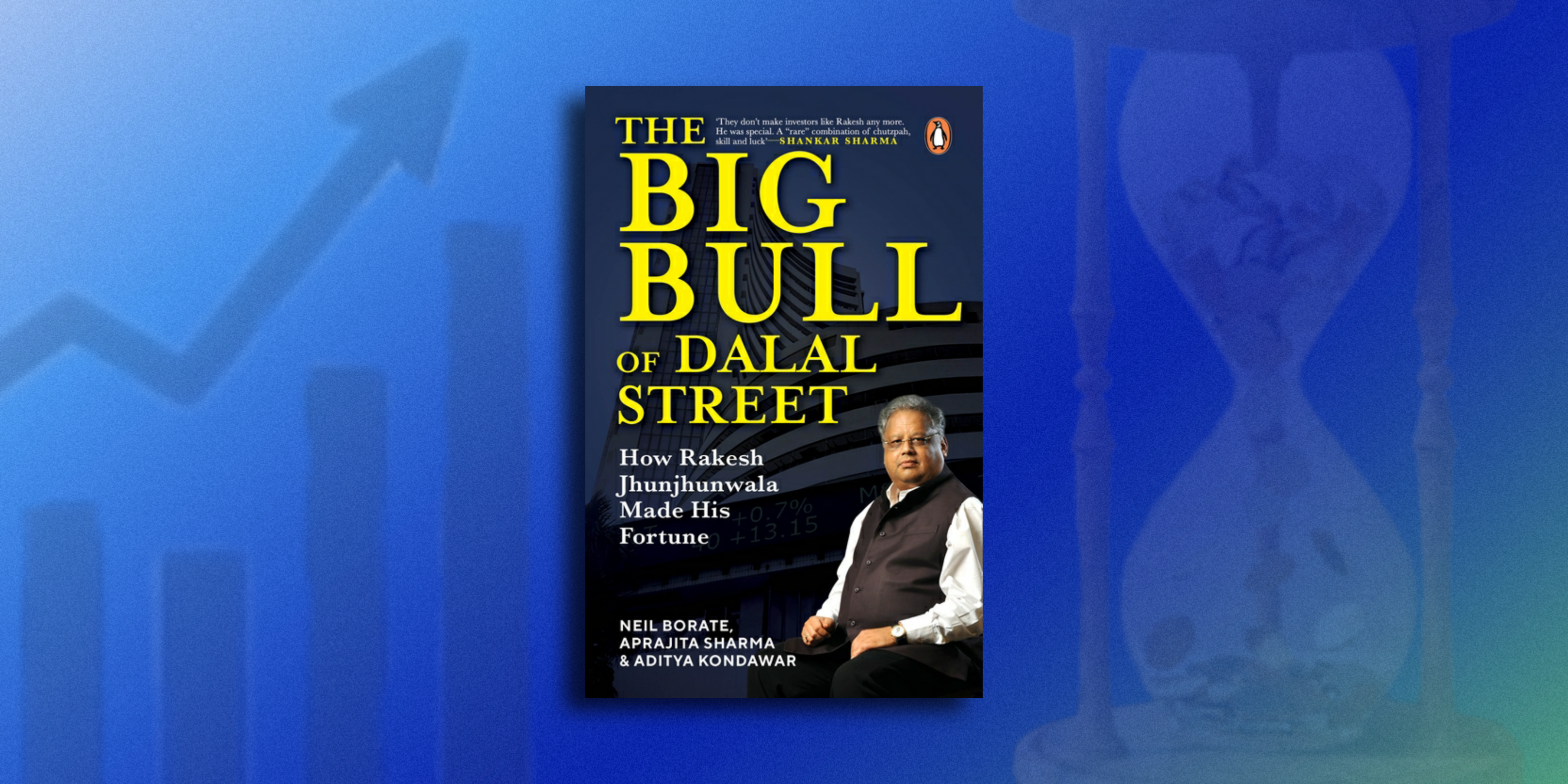
From its humble beginnings to its meteoric rise, Titan has captured the hearts and wrists of millions of people worldwide. With exclusive insights and extensive research, The Big Bull of Dalal Street offers a riveting narrative of Titan’s evolution, revealing the challenges and triumphs of this consumer brand powerhouse.

Here’s an excerpt from the book!

The Big Bull of Dalal Street
The Big Bull of Dalal Street || Neil Borate, Aprajita Sharma, Aditya Kondawar

*

The journey of a thousand miles begins with a single step, and the journey of Titan began with one watch! Today, every three seconds, someone somewhere around the world buys a Titan watch. Titan started in 1984 with just one product category—watches. Xerxes Desai, a senior executive with the company, was looking for new business opportunities for the firm when he chanced upon the idea of watch manufacturing in 1977. The Titan story is documented in detail in the book Titan: Inside India’s Most Successful Consumer Brand by Vinay Kamath, published in 2018, parts of which we will rely upon, along with Titan annual reports, in this chapter.


After almost a decade of tenaciously navigating through the public sector Hindustan Machine Tools’ (HMT) hegemony, the reluctance of the Swiss to part with watchmaking technology, the licence raj and RBI’s stringent forex norms, Titan was formed as a joint venture between Tamil Nadu Industrial Development Corporation (TIDCO) and the Tatas in 1984. TIDCO had been looking at a few projects and its talks with other watchmakers hadn’t borne fruit. To provide much needed foreign exchange to finance the purchase of the required capital equipment, assistance was sought from the International Finance Corporation (IFC), based in Washington DC. The IFC is the private sector-focused sister entity of the World Bank.


The IFC was so enamoured by the project, it even sought to make an equity investment in Titan. Titan chose to locate its first plant in Hosur and its headquarters in Bangalore. The fact that HMT’s watch plant was located in that city was a major incentive. Xerxes said as much in an interview published in Businessworld magazine in December 1989. The main reason for choosing Hosur was its proximity to Bangalore. They thought it would be easier for them to pull people out of HMT especially the ones with technical and managerial experience. They wanted to raid HMT and they were successful with the same. It was a blessing in disguise for them as HMT was overflowing with staff and the growth avenues at the top-level management weren’t many, which made the raiding even easier.


Titan launched with five watch collections: Exacta (steel), Fastrack (sporty models for the youth), Classique (gold-plated dials with leather straps), Spectra (two-tone—steel and gold) and Royale (gold-plated dials with goldplated metal bracelets). The lowest priced was Fastrack, at Rs 350, and the highest was Royale at Rs 700. From day one, Titan was projected as a premium brand. That first day at the Safina Plaza showroom, Titan sold seventeen watches; the first month’s sale was 313 watches. The Classique range was the bestseller, accounting for 65 per cent of sales.


However, the journey was not without its hiccups. From the initial batch of Titan watches manufactured in December 1986, J.R.D. Tata was gifted a watch. To the embarrassment of the Titan team, the quartz watch given to Mr Tata was not working. In the 1990s, Titan took the disastrous decision of entering the European market. Used to working in a monopolistic environment in India, Titan was unable to match up to the exacting standards of delivery and quality that watch retailing in Europe involved. It was a struggle, recalls Ajoy Chawla, a young manager in the early 1990s who would later head new business incubation and strategy for Titan Company Ltd, even to pay salaries and the rent for the premises. The effect was very clear on the financials—despite growing revenue from Rs 700 crore in 2000–01 to Rs 800 crore in 2002–03, net profit decreased from Rs 23.5 crore in 2000–01 to just Rs 6.2 crore in 2002–03. Titan was going through a tough phase. It was a trying time for Bhaskar Bhat, who took over as managing
director in 2002.

The Story of Exprovement: Where It All Began

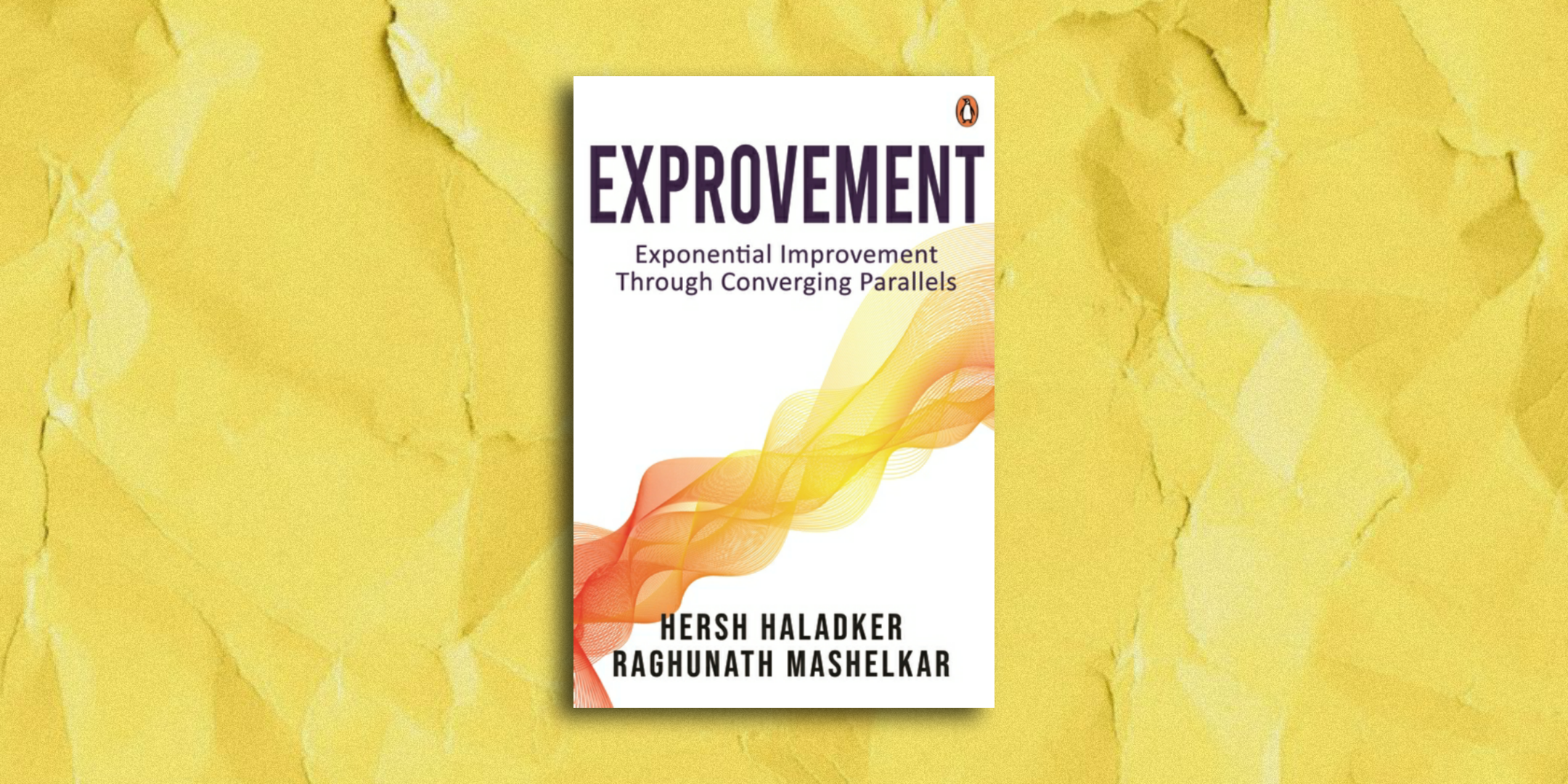
Get ready to be inspired by the exciting journeys of Hersh Haladkar and Raghunath Mashelkar as we uncover the birth of the groundbreaking philosophy of ‘Exprovement’ and its extraordinary potential for personal growth and success. From a childhood fascination with dismantling toys and making surprising connections to profound classroom experiences, unveil the immense potential of drawing parallels that transform into extraordinary results.

Read these captivating stories that offer a glimpse into the author’s mind and gain valuable insights.

Exprovement
Exprovement || Hersh Haladker, RA Mashelkar

***

When I was a child, I was in the habit of taking apart everything I could lay my hands on to examine what was inside.
More often than not, the object of my investigations was a new toy I had been given. So in general, I never really had a lot of toys to play with; just plenty of parts of toys. I distinctly remember a particular incident when I was about ten years old, and my parents—after much pestering and convincing—had finally bought me the expensive remote control toy car I had been eyeing for a while.


Much to their exasperation, this toy became the next victim of my investigations, and try as hard as I could, I simply could not put the toy back together again, once I realized how annoyed they were. Needless to say, the atmosphere at home was tense, and I couldn’t wait to escape to school the next day where (probably as a subconscious attempt to appease my parents) I paid extra attention in each and every class.


When I returned from school, I was excited to see a carpenter at home working on a remodelling project in the kitchen—a carpenter at home meant more tools for me to play with! It was my first introduction to a drill (the manual, not the motorized version) and of course, I had to experiment. While I was drilling a hole through every centimetre mark of my wooden ruler, wondering what to do with it once I had finished, I suddenly remembered the new gadget we had been taught about earlier that day in geometry class at school.


Like the teeth of gears suddenly falling into place perfectly, I was able, in a lightbulb moment, to see a connection between my broken toy car and the compass I had learnt about at school. I rushed to find the motor from my broken car, inserted the shaft of the motor into the ‘0 cm’ hole I had drilled and put it through a piece of paper. I switched on the motor, and my invention was able to automatically draw a circle. Next, I moved it to the ‘1 cm’ hole and drew another automated circle.


I was over the moon! I had just invented the next big thing—I had just automated the compass. That was my first-ever invention, and it drove me to continue the breaking, and in some cases, the making of things. It was only much later in life, on introspection, that I was able to identify my thought process as one of drawing parallels. I had been able to draw a parallel between something from my geometry class and something from my remote-controlled car to create, what was for a grade five student, a new and exponentially improved way of drawing a circle. I had created the electric compass, one of my first personal exprovements.


As I began my professional life, one of the questions born out of this thought process was:
What if parallels could be drawn between the seemingly unrelated to create unparalleled breakthroughs?’

—Hersh Haladkar


There are some ‘wow’ moments that change the course of one’s life. I had one such moment as a young boy in a school. Here is the story.

I was born in a poor family. I did my primary schooling in a municipal school until the seventh standard.
I then had to take admission in a secondary school. My mother could not gather the admission fee for a secondary school in time. I missed the admissions for the top schools in the area. I went to the school where most of the resource-poor children from our area went. But that poor school had rich teachers. One of them was my physics teacher, Mr Narahari Bhave. He did not believe in ‘chalk and talk’ but in seeing, experiencing and learning.


One day he wanted to show us how to find the focal length of a convex lens. He took us out into the sun. He held the lens in one hand and a piece of paper in the other. He moved the lens up and down, and when the brightest spot appeared on the piece of paper, he said the distance between the lens and the paper was the focal length. Then he waited for a few seconds and the paper burnt. When that happened, for some reason, he turned to me and said, ‘If you can focus your energies like this, you can burn anything, you can achieve anything’. This magical moment did two things for me. First, I said to myself, ‘Science is so powerful—I have to become a scientist.’
Second, it gave me the philosophy of my life—focus, and you can achieve great things.


But as I grew older, I saw a much greater meaning in that experiment. The sun’s rays are parallel and the property of parallel lines is that they never meet. The convex lens makes them converge and meet. That gave me the idea for what I termed as ‘convex lens leadership’, which makes people with divergent views and beliefs meet. Take national leadership, for instance. The nation gets divided on the basis of race, religion, language. A good national leader brings these diverse groups together. I used this analogy while leading research institutions.


The National Chemical Laboratory (NCL) had different divisions, unconnected to each other, like parallel lines. As director of NCL, I provided convex lens leadership to create ‘One NCL’, ‘Team NCL’. I was director general of the Council of Scientific and Industrial Research (CSIR), a chain of forty laboratories, again unconnected to each other, like parallel lines. I provided convex lens leadership to create ‘One CSIR’, ‘Team CSIR’. In fact, the result of this convex lens leadership was so powerful that the CSIR transformation in the 1990s was ranked as being among the top ten achievements of Indian science and technology in the twentieth century.


While engaged in convex lens leadership, my own scientific research led me to explore trans-disciplinary frontiers and has continued to do so for almost four decades. In fact, I brought together several diverse disciplines in my research on stimuli-responsive polymers. When I was invited to give the Danckwerts Memorial oration in London in 1995, I spoke on the emerging paradigm of seamless or borderless engineering science, emphasizing the need to create engineers with borderless minds.


Later, I extended this parallel lines analogy to ideas from diverse domains, which appear completely unrelated, and therefore are like parallel lines. But a ‘convex lens mindset’ makes them converge. And sometimes the result is an astonishing 1+1=11, not just 1+1=2!


In this book, we have focused on the challenge of building a convex lens mindset, which is capable of bringing together the parallel, connecting the seemingly unconnectable. We show how such a convex lens mindset creates the magic of exprovement, going well beyond incremental improvement.

—Raghunath Mashelkar

***

Want to know more? Get your copy of Exprovement today!

How did Shahbaz Taseer Find Himself Lost To The World?

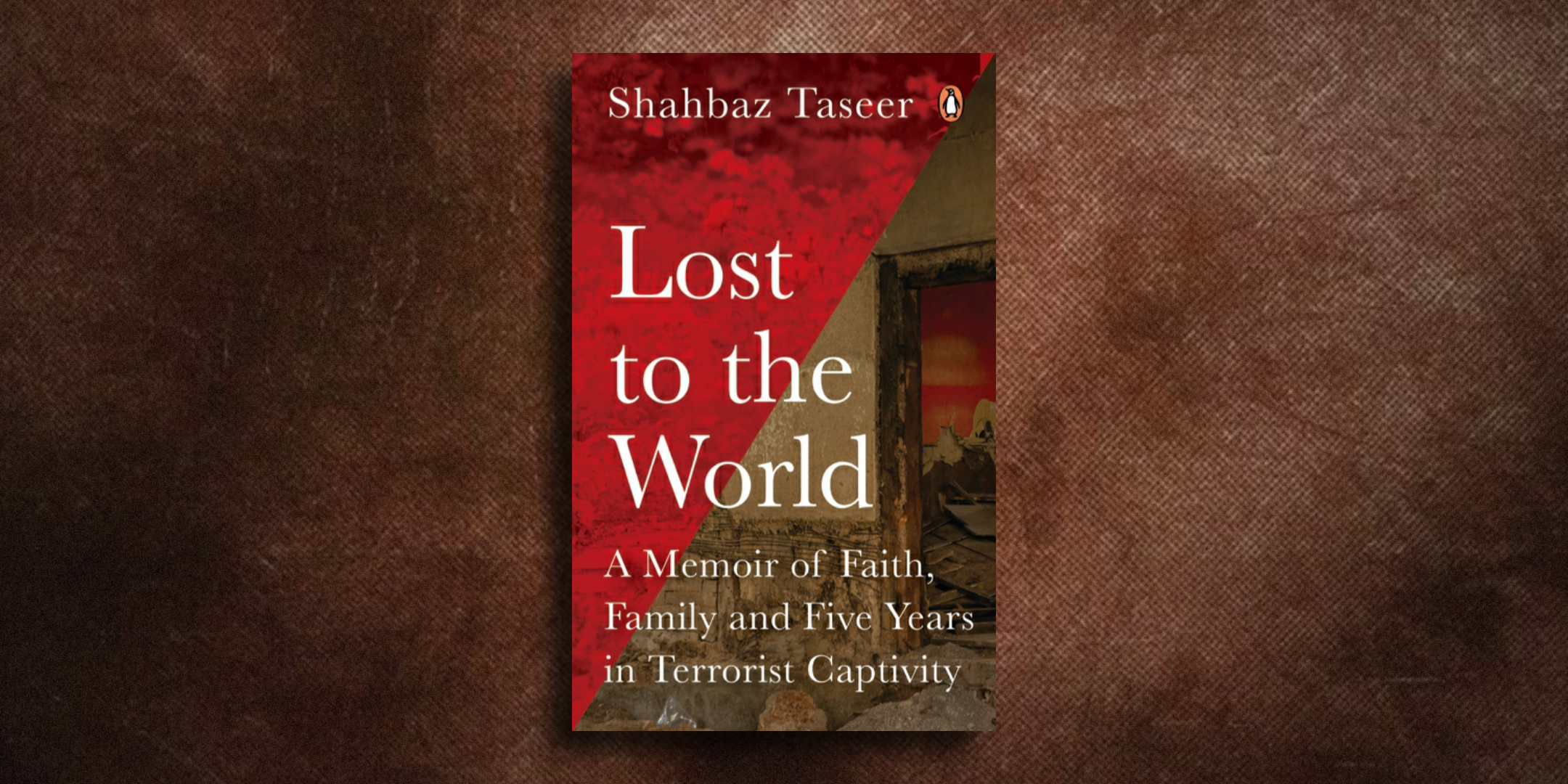
Discover an extraordinary tale of resilience and injustice with Lost to the World by Shahbaz Taseer. In this gripping memoir, Taseer recounts his shocking encounters of being wrongfully accused by the FBI, enduring racial profiling, and the unimaginable ordeal of being held captive by the Taliban for nearly five years.

Dive into this powerful narrative and witness the author’s unwavering spirit that emerges in the face of adversity.

Lost To The World
Lost To The World || Shahbaz Taseer

***

In 2010, about a year before I was kidnapped, I took my wife on a long-planned trip to California. Overall, it was a wonderful, if slightly exhausting, trip.

The journey from California to Lahore is an especially long haul, almost twenty-four grueling hours in total flight time. We arrived at SFO airport and boarded our plane to New York. The flight was delayed and delayed further. We sat with our fellow passengers, restless and waiting for updates. I tried to settle in and catch some sleep.

FBI agents boarded the aircraft, arrested the two of us, and took us off the plane.

It’s hard to express just how humiliating it is to be led in handcuffs off a plane full of strangers, all of whom assume you are criminals, terrorists, or worse. I’ll always be grateful for one sympathetic young college kid who stood up and started making a video on his smartphone and telling the officers this was an injustice, that we were being racially profiled. He was right. There was no other explanation for it.

They pushed my wife and me into separate cars. I could see Maheen sitting in the back seat of her car, looking confused, outraged, and worried. I tried to mouth some words to her to reassure her, so she wouldn’t feel anxious. But the agents saw us trying to communicate, so they repositioned the cars so we could no longer see each other.

Meanwhile, the remaining passengers were being evacuated. The FBI agent informed us that someone had made an anonymous call about the flight, claiming a bomb threat. By now, a bomb disposal unit had arrived on the tarmac and was boarding the plane with dogs to search the cabin. As far as Maheen and I knew, there might well have been a bomb on board, a terrifying prospect. We also knew for sure that we weren’t responsible for it. Watching all this unfold, both Maheen and I had the same thoughts, in our separate vehicles. Apparently, everyone thinks we were going to blow up this plane. And now they have left us here, parked under the wing, while they search for a bomb. If there is a bomb on board, and it goes off, we’ll not only explode along with the plane, but we’ll forever be blamed for being the ones who planted it. They’d say, “We got the right people. They were guilty all along.” 

Maheen and I sat on the tarmac for another hour or so, before the agents finally drove us to the terminal. Again, we were kept separate—I was led to one room while my wife was taken to another; we weren’t given a chance to speak. After sitting in the plane for hours, then on the tarmac, I was beyond embarrassed—I was outraged.

When I reached the small interrogation room, two agents greeted me and pulled the good-cop / bad-cop routine on me. It was like a scene out of Lethal Weapon. The bad cop barked, “Do you know why you’re here?”

“Not really. But I did see a bomb disposal unit.”

“You’re here because we suspect you tried to hijack and bomb that plane. And we’re checking your bags right now for bombs and ammunition.”

“The only thing inside my bag that’s even slightly suspicious is an iPad that I just bought. And it’s still in the plastic wrap. So, if you open it and find a bomb inside, that’s Apple’s fault, not mine.

I answered all of their questions honestly and forthrightly, but I didn’t react with anything like calm or poise. My anger at being singled out like this—at being hauled from our flight in handcuffs because someone thought a Pakistani man in a Lakers jersey and his wife wearing a beanie must obviously be a couple of terrorists—spilled over. Ever since 9/11, if you fly internationally on a Pakistani passport, you can expect undue attention. You will be pulled “randomly” from lines for extra security screening and be subjected to rigorous questioning by anyone whose job is guarding a border. Still, I’d always thought of myself as westernized, I fit right in. I was Shabby T!
I went to an American school. I listened to American music. I could recite whole Jay-Z albums from memory. My favorite junk food is McDonald’s. There’s nothing quite like twenty pieces of McNuggets.

None of this mattered to the agents questioning me or to the people who’d profiled us and made that call. To them, I was a Pakistani, and that meant a terrorist. We’d come for a relaxing vacation and now we were each stuck in a windowless room, defending ourselves against charges of terrorism.

At one point, frustrated, I may have pulled the “Do you know who I am?” card.
They did not know.

“My father is Salmaan Taseer. He’s the serving governor of Punjab province. Right now, Senator John Kerry is with my father distributing flood relief aid in Pakistan. Hillary Clinton has been to the governor’s house for tea.”

Lest I forget to mention, being the governor’s son, I was entitled to an official passport, known as the blue passport.

Slowly, I could see it dawn on both the good cop and the bad cop that they’d gotten it horribly wrong. It’s one thing to pull a random person off a commercial aircraft and label him a terrorist. It’s another when that person’s father is a high-serving official known to the U.S. secretary of state.

Their whole tone changed. They began damage control. They apologized for the mix-up. My wife and I were reunited; she was equally traumatized.

To compensate for their behavior, the agents picked up our suitcases and led us through an empty luggage hall toward the exit doors. On one level, I understood they were simply doing their jobs, protecting innocent people from real threats. I also accepted that this was a new reality. It evoked mixed feelings of not only anger and resentment but also sadness that the world, as we knew it, had descended into such a dark place where racial profiling had been legalized.

As we were leaving, an agent stopped us and said, “By the way, you guys might get these media people coming at you. Just ignore them. Let that go. Just go home safely!”

My friend Harris and his father met us outside the terminal. Harris’s dad was sympathetic, comforting us as he helped us into the car. Harris, meanwhile, was insisting that he knew a good lawyer if we wanted to sue. Then my phone rang.

It was my father calling, deeply concerned. “I just heard the news, are you okay?”

I was rattled and much shaken, but I didn’t convey that to my father, who always said I was the most stoic person he knew.

Despite all this, my bubble of privilege was more or less intact. I had my family, my home, my work, my life. I thought nothing could shake those fundamental truths.

I was wrong about that too. Even before I was kidnapped, life had one more unfortunate awakening for me

***

Get your copy of Lost to the World by Shahbaz Taseer from your nearest bookstore or on Amazon

Uncover the Secrets that Await in The Mistress of Bhatia House

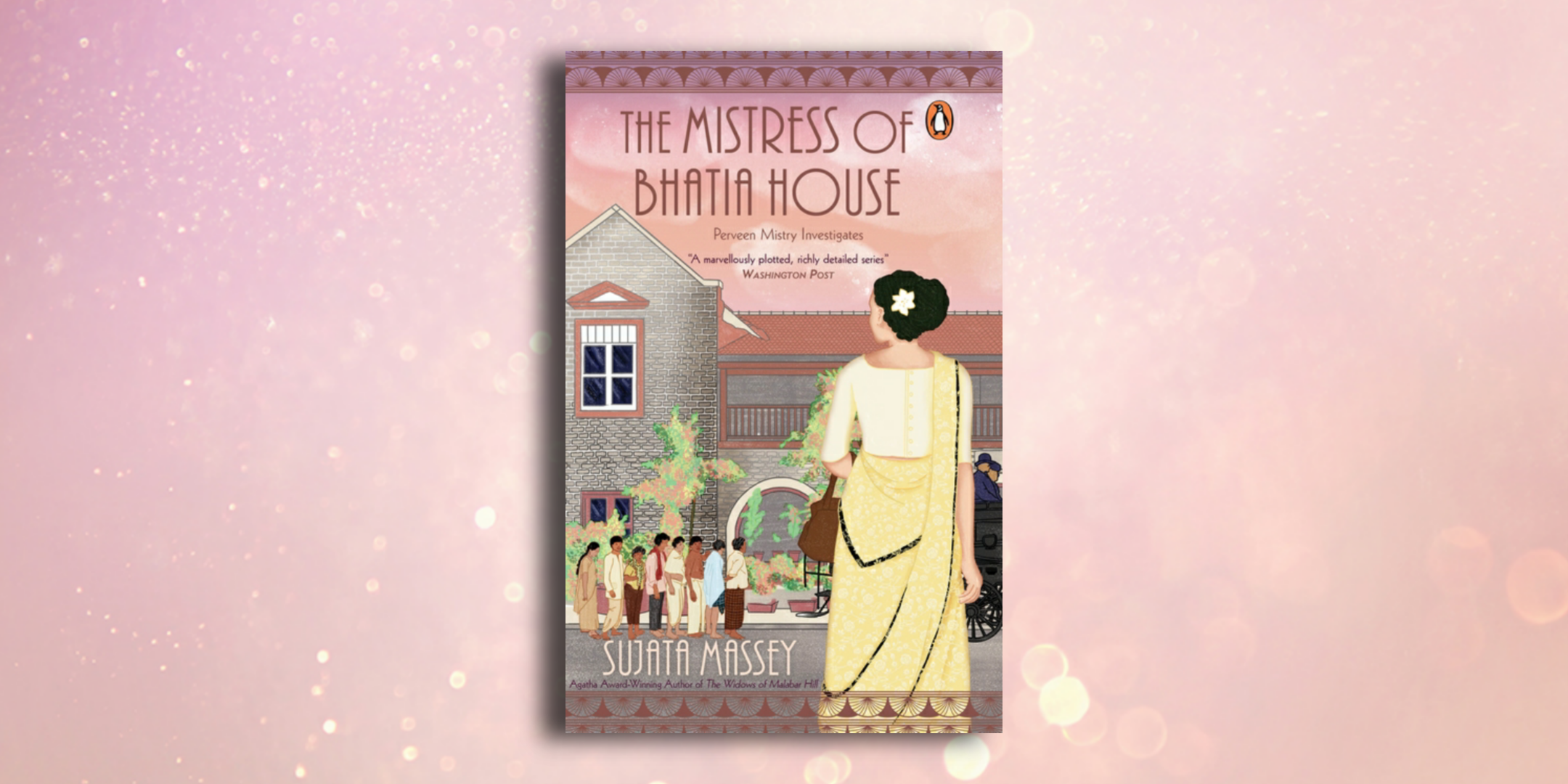
Step into the gripping and mysterious realm of the Mistress of Bhatia House by Award-winning author Sujata Massey. This spellbinding novel will take you to a world where traditions collide with modernity, power dynamics simmer beneath the surface, and the allure of forbidden love threatens to disrupt what is left in the life of Solicitor Perveen Mistry.

Get ready to lose yourself in the powerful story-telling and richly drawn characters of The Mistress of Bhatia House as Perveen sets off on an investigation that takes her through the evocative streets of old Bombay in search of the truth.

The Mistress of Bhatia House
The Mistress of Bhatia House || Sujata Massey

***

Perveen felt that getting past Mangala Bhatia had been like running the proverbial gauntlet. No matter what she’d said, 

it seemed to peeve the woman. But she’d made it into a beautiful stone courtyard half-filled with ladies dressed in pastel-colored summer saris. Many were in shades of pink—quite pretty, but confusing as she started her search for Uma Bhatia. 

And soon it would be too late to catch the hostess, as everyone would be sitting down for the presentation. Thin mattresses had been spread across the ground for seating, and in front of them stood short-footed wooden trays. Each tray held a banana-leaf platter, a copper tumbler for water, and a shockingly simple clay teacup. Western-style porcelain, silver, and furniture were in high use amongst Bombay society, so Perveen found this departure an unexpected and very charming setup. 

Perveen scanned the courtyard. She’d never been in Ghatkopar before, and she guessed that many of the guests were local. The charitable hospital Uma Bhatia was founding would be built inside Bombay, so Perveen had expected to see some familiar faces. Yet the only woman she recognized was Lady Gwendolyn Hobson-Jones, the prickly mother of Perveen’s best friend, Alice. 

Lady Hobson-Jones turned from chatting with one friend to the next, and her cool blue gaze swept the crowd. Perveen smiled and began walking toward her, but Lady Hobson-Jones did not return the greeting. Instead, the doyenne of British Bombay took the arm of the full-figured brunette next to her and motioned for a third woman—this one a slender blonde in her thirties—to step closer. Now all three ladies’ backs were toward Perveen. 

Perveen stood still, wondering if Lady Hobson-Jones had snubbed her. Was this what the British called “cutting someone dead”? 

Perveen could never admit to being fond of Alice’s mother, but they had always chatted and smiled their way through encounters. Irritation rising, Perveen walked in the opposite direction, resolved that she would complete the mission of locating Uma Bhatia. 

Amid the numerous women wearing pinks that ranged from the palest blush to brilliant fuchsia, Perveen finally settled on someone who seemed likely to be the chair of the women’s hospital committee. She appeared to be in her midtwenties and wore an expensive-looking rose silk crepe floral sari. Hanging from her neck was a black-and-gold beaded wedding necklace with a floral pendant made up of many small diamonds. 

Striving to appear casual, Perveen approached the woman and her social group, who were gathered around a tall woman in a blue-and-white flowered silk sari. This lady, who had a striking, strong-boned face, wore her hair tightly coiled in a bun. Instead of carrying a cloth purse, she’d nestled a large leather bag under her left arm. 

“We must make our hospital welcoming to all,” the tall woman was saying in fluent Marathi, the language spoken by most people born and raised in Bombay and the surrounding countryside. “Even the hospital sentries could be women. Of course, we will have female nurses, but we need more women physicians. I’ll do my best to recruit, but I hope that you’ll encourage your daughters to enroll in medical college.” 

The woman in pink glanced at the others, then spoke in a decorous tone. “Dr. Penkar, we admire you for receiving your advanced and useful education. But medical college is too expensive for most of us.” 

Hearing the surname, Perveen realized the tall woman had to be Dr. Miriam Penkar, the city’s only Indian female obstetrician-gynecologist. It seemed quite a coup for the fledgling hospital to have her on board. 

“The girls can study in India!” The doctor gave her a wide smile. “We are fortunate that the Lady Hardinge Medical College has opened in Delhi. One of our committee members at this gathering, Mrs. Serena Prescott, was even involved in their fundraising. She can help your daughters.” 

Skeptical glances flickered between a few women, as if they didn’t believe that an Englishwoman would assist them—or that they could send a daughter as far away as Delhi. 

“It’s a grand idea. But first, let’s get the hospital built. By the time the roof goes on, lady doctors may be plentiful.” Uma spoke pleasantly, turning from the crowd to take notice of Perveen. Switching to English, she said, “Good afternoon! Are you a new supporter?” She looked Perveen over, clearly noting the legal briefcase, a cousin to Dr. Penkar’s medical kit. 

It was a relief to be invited into a group. Smiling warmly, Perveen answered, “My sister-in-law, Gulnaz Mistry, asked me to bring her best wishes. My name is Perveen Mistry.” 

“The solicitor?” blurted Dr. Penkar. “I’ve heard tales of you.” 

***

Intrigued to know more? Get your copy of The Mistress of Bhatia House by Sujata Massey from your nearest bookstore or on Amazon

Exclusive Excerpt from The Roof Beneath their Feet

The Roof Beneath their Feet by Geetanjali Shree is a captivating novel that intertwines the past and present, uncovering profound truths along the way. Shree beckons us to dive into themes of love, loss and friendship, the weight of unspoken emotions, and explore the layers beneath the book’s intriguing title.

Read this enthralling excerpt from The Roof Beneath their Feet to get a glimpse of the roofs Chachcho and Lalna walk upon.

The Roof Beneath Their feet
The Roof Beneath Their feet || Geetanjali Shree

***

When the roof is beneath your feet, there’s the whole sky above. We have started walking—me and my memory of Chachcho. 

The flesh of Chachcho’s arms hasn’t started turning into water yet, so we will have to walk stealthily, away from staring eyes, making our way through the darkness. Chachcho bumps into her own arm and frightens herself. Wherever the level of the roof changes, we have to go up or down a couple of steps. Or climb up a water tank and jump. Or leap from a ledge. Then Chachcho will have to gather her sari above her ankles. 

Which she does. She looks around. In a faraway corner, servants have laid out their masters’ beds. The bright shadows of darkness. When Chachcho’s sari flutters in the breeze, she gathers it around her knees and easily climbs up the parapet. Then, as if walking a tightrope, she walks across and jumps down to the other side. 

She, and I with her. We keep walking, far away. Over countless houses, leaping over their suffocating walls. At the end of the mohalla, I stop—one more step, and down! At that moment, I feel her behind me. How long must she have been following Chachcho and me to have come this far? I don’t want to, but I have to turn back, and my memory of Chachcho is left behind, as if it has jumped over.  

On the roof, the evening lights have started coming on, as if it is their secret desire to stay up all night and gossip with the darkness. Lalna’s hair is red. Chachcho used to henna it for her with a brush. Lalna started greying earlier. But it was Chachcho who died first. I did not want some stranger to prepare Chachcho for the pyre. You can’t do it, son—the pundits, the elders, they all were adamant. It wasn’t the time for arguments, so I stayed silent. How could I make them understand that, just because she couldn’t say anything anymore, it didn’t mean that some stranger could see her body? 

As she grew older, Chachcho covered up more and more of her body. A blouse cut like a kurti to cover her midriff. Long, loose sleeves, coming down to her fingers. The pallu covering her head, down to her forehead. Her face wrapped tight in her aanchal. Her feet covered in shoes or lost under her sari. Uncle’s death has broken her, the people sunning themselves on the roof said. That’s how devoted our women are. 

No one thought that she might be covering up her ageing beauty, erasing her shrivelling body from her own sight. I’ll change the large mirror in your bathroom, it has become clouded and stained with water, I had said. Let it be, she had replied, its flaws hide mine. In my dumb heart, I see her reflection in the mirror, floating like a dream in the steam-filled bathroom. 

Whenever I feel like crying, it’s as if something big and restless in my chest starts panting. Not one tear comes out. Chachcho . . . Chachcho . . . What can I do, besides saying your name? Chachcho, Chachcho . . . Memories rustling like dry leaves. Memories like a magic lantern, moving from here to there in a flash, turning upside down, inside out, playing tricks. 

This isn’t right, I think. This memory, at least, must come soft and slow. This high-speed flashing and spinning doesn’t suit it. This memory is my grief. Grief is slow, is deep, is seeping in, drop by drop. I say to myself, I’m really sad, very sad, very, very sad. I’m stuck in my sadness, and it drags me along, to memories—old, useless, endless. I peep in from the skylight to where Chachcho’s room used to be, but I can’t make out much, except something just out of sight, some dream carefully folded and kept away. 

It’s because of my sadness that I have started dreaming in broad daylight. A dream not of the future, but of the past. Again, that tired old man, and memories of the past, bloodying him. Even the happy moments from this world of memories give the old man more grief. Dreams that go backwards, not forward, can do nothing else. Like that heavenly beauty from childhood tales who you realized was actually a witch when you noticed that her feet were turned backwards. I return stealthily. To be alone. To remember Chachcho alone. How meaningless these things are. To remember someone dear, their death, a son crying for his mother—what is there to tell? I love Chachcho—what do these words mean? I turned away immediately after lighting her pyre, I had no wish to see the fire blaze. 

Is that how easy separation is?
Lay her down, touch her with a flame, turn away.

I came back home feeling utterly light and empty. 

***

Get your copy of The Roof Beneath Their Feet by Geetanjali Shree from your nearest bookstore or on Amazon.

The Perfect Way: Osho’s Invitation into Light

In The Perfect Way, Osho beckons us to embark on a transformative journey from darkness to light, from a meaningless existence to a life filled with purpose and bliss. Are you ready to accept Osho’s invitation and rediscover the radiant path that leads to a world of infinite possibilities?

Read this insightful excerpt from The Perfect Way to set about on a journey of self-discovery and better understand the power of meditation.

The Perfect Way
The Perfect Way || Osho

***

Invitation into Light

I see man engulfed in a deep darkness. He has become like a house where the lamp has gone out on a dark night. Something in him has been extinguished. But that which has been extinguished can be relit. 

I see as well that man has lost all direction. He has become like a boat that has lost its way on the high seas. He has forgotten where he is to go and what he is to be. But the memory of what has been forgotten can be reawakened in him. 

Hence, although there is darkness there is no reason for despair. In fact, the deeper the darkness the closer the dawn. I see a spiritual regeneration for the whole world on the horizon. A new man is about to be born and we are passing through the throes of his birth. But this regeneration needs the cooperation of each one of us. It is to come through us, hence we cannot remain mere spectators. We must give way for this rebirth within ourselves. 

The approach of that new day, of that dawn, is possible only if each one of us fills himself with light. It is in our hands to turn that possibility into an actuality. We all are the bricks of that palace of tomorrow and we all are the rays of light out of which the future sun will be born. We are the creators, not just spectators. It is not only a creation of the future, it is a creation of the present itself, it is the creation of ourselves. It is through creating himself that man creates humanity. The individual is the unit of the whole and it is through him that both evolution and revolution can take place. You are that unit. 

This is why I want to call you. I want to awaken you from your slumber. Don’t you see that your lives have become utterly meaningless and useless, totally boring? Life has lost all meaning and purpose. But this is natural. If there is no light in man’s heart there cannot be any meaning in his life. There cannot be any bliss in man’s life if there is no light in his inner being. 

The fact that we find ourselves overburdened with meaninglessness today is not because life in itself is meaningless. Life is infinite meaningfulness, but we have forgotten the path that leads to that meaningfulness and fulfillment. We simply exist and have no contact with life. This is not living, it is just waiting for death. And how can waiting for death be anything but boring? How can it be bliss? 

I have come here to tell you this very thing: there is a way to awaken from this bad dream that you have mistaken for life. The path has always been there. The path that leads from darkness to light is eternal. It is there for certain, but you have turned away from it. I want you to turn toward it. This path is dharma, religion. It is the means of rekindling the light in man; it gives direction to man’s drifting boat. Mahavira has said that religion is the only island of safety, the anchor, the destination and the refuge for those being swept away by the rapid current of the world with its old age and its death. 

Do you have a thirst for the light that fills life with bliss? Do you have a longing for the truth that unites man with immortality? If so, I invite you into that light, into that bliss, into that deathlessness. Please accept my invitation. It is simply a matter of opening your eyes, and you inhabit a new world of light. You don’t have to do anything else, you only have to open your eyes. You just have to wake up and look. 

Nothing in man can really be extinguished nor can he lose his direction, but if he keeps his eyes closed the darkness spreads everywhere and all sense of direction is lost. With closed eyes he is a beggar; with open eyes he is an emperor.

I am calling you to come out from your dream of being a beggar and wake up into your reality of being an emperor. I wish to transform your defeat into victory, I wish to transform your darkness into light, I wish to transform your death into deathlessness. Are you ready to embark upon this voyage with me? 

***

Get your copy of The Perfect Way by Osho from your nearest bookstore or on Amazon.

Office Secrets: 7 Habits of Very Happy Managers

Imagine a world where managers not only excel at their jobs but also radiate happiness in the workplace. In Office Secrets by Harish Bhat, we uncover seven simple habits that can bring a smile to any manager’s face. From relishing a hearty lunch and planning fun weekends, to keeping presentations brief and even engaging in healthy gossip, these habits offer a refreshing yet practical approach to finding joy and success in the office.

Get ready to discover the secrets that will completely transform your work life, as revealed in this excerpt from Office Secrets.


Office Secrets
Office Secrets || Harish Bhat

***

Seven Habits of Very Happy Managers

Short presentations, saying no to multitasking and making weekend plans—here are some ways to keep a smile on your face.


Stephen Covey, one of the most admired management gurus of modern times, passed away a few years ago. Most of us have read
his bestseller, The 7 Habits of Highly Effective People. Thousands of people have claimed that this book has changed their lives and careers forever.

Here, I pay a simple but irreverent tribute to this influential thinker, on behalf of all office goers. I believe it is important for managers to be both happy and effective. Since Covey has already revealed how we can be highly effective, I tell you what it takes to be very happy at work. Just follow the seven simple habits described below, and you will smile every day.


First Things First, Eat a Good Lunch

As Covey says, we must put first things first. Therefore, a good and relaxed lunch in office takes the highest priority. Without it, you can never really be happy. If you hurry through this essential meal or skip it, you are likely to find yourself in a grumpy mood throughout the afternoon and evening. Your stomach may begin grumbling and you may end up eating too many fat-laden cookies during the rest of the day, which is not good for your waistline or your heartline. On the other hand, a delicious and healthy lunch, had with colleagues, with a good measure of talk and laughter, is a recipe for good cheer


Begin with the Weekend in Mind

Covey’s book advises us to always begin with the end in mind. We modify this advice slightly, and urge you to begin with the weekend in mind. The weekend is an enduring source of happiness, and therefore deserves a lot of attention and planning. Have you made a booking at that Thai spa? Have you decided where to party hard, and with whom? What about dinner with your glamorous ex-girlfriend, who has hinted that she wants to get back in touch with you? If your boss is in a generous mood, could you request him for an off day either on Friday or Monday, thereby creating an extra happy and long weekend? These are just a few of the many complex weekend choices we
are faced with, so clearly we have to begin preparations in earnest by Monday morning.


Keep Your Presentations Brief

We must recognize that no one, not even the chairperson, wants to attend a long and serious PowerPoint presentation these days, when there are many other interesting office pastimes to pursue. So, if you have to think win-win, your presentations must never exceed five slides and must conclude in ten minutes flat. You will find that most things can be summarized within that length and time. Also, your boss will be so happy with the quick ending that he is likely to approve your budgets immediately. If you want to deliver true happiness, begin and end your presentation with an appropriate comic strip visual which makes people smile. That will leave just three slides for the serious stuff, which is just about perfect.


Silence Is Really Golden

Managers love talking at meetings, and this is what gets them into deep trouble in the first place. So, you are likely to be the happiest if you keep as silent as possible, unless you have dramatic views that can potentially change the course of your company’s history. Let others in the room argue and fight among each other, while you remain, like the Buddha, calm and composed amid the gathering storm. Take copious notes, but don’t speak. Once in a while, look up, smile and nod enigmatically at the people who are doing the talking. They will regard these gestures as signs of deep wisdom and understanding.


Engage in Healthy Gossip

Scientific studies have consistently revealed that cubicle gossip is a great source of happiness. If you are a creative individual, you can actually be the source of some gossip. Otherwise you can choose to merely be a conduit for the grapevine. Either way, you are adding to the HQ (happiness quotient) of your office, which is so important in these stressful times. The conference room, email, water cooler, lift, office loo—they are all perfect locations for such talk. There is a caveat to be borne in mind, though. Healthy gossip has boundaries which need to be respected.


Don’t Multitask

Many managers think they must display their professional manhood by engaging in several activities at the same time. They believe multitasking is essential, given the multiple demands at the modern workplace. They also feel good that they are intellectually competent enough to do many things at once. Don’t believe in such rubbish. Multitasking is a recipe for being short of breath throughout the day, which, as we know, leads to hypertension and all its attendant ailments. In addition, it ensures that none of the jobs you are doing ever receive your full attention, leading to a state of niggling unhappiness at all times. To be really happy at the workplace, address one job at
a time, and do it really well. By doing this, you may complete fewer tasks during the day, but you will leave the office with a spring in your step


Refresh and Renew Yourself

Covey speaks about the need for reflection and for renewing yourself, the last of the seven habits he prescribes. This habit is as important for happiness as it for effectiveness. Unless you give yourself time every day to think and relax, you will never really be happy with yourself. There are many practical methods to achieve this. Define daily digital blackout periods, when you will not go anywhere near a computer or a mobile phone. Pursue a creative passion outside the workplace—this could range from painting (which is generally safe) to music (which may be dangerous if you are a bad singer and sing in public). Take time out to run or play tennis or work out in the gym, and use this time to blank out your busy mind. Finally, don’t meet or speak to your boss for at least two days each week, and see for yourself how completely this relaxes your entire being


I think the eighth and most important habit of very happy managers is our ability to laugh at ourselves, which is the first step to having great fun at work.

***

Get your copy of Office Secrets by Harish Bhat from your nearest bookstore or on Amazon.

What Makes Madam President a Great Leader?

In the book, Madam President by Sandeep Sahu, we explore the life of Droupadi Murmu and take a look at her formative years, where she honed her leadership skills amidst numerous challenges and her unwavering pursuit for excellence that would later shape her into a trailblazing leader. From her unyielding passion for education to active participation in cultural activities, Droupadi Murmu’s talents shone brightly even in her youth.

Read this fascinating account to catch a glimpse of the leadership qualities that marked her journey from the village to the historic role of Madam President.

Madam President
Madam President || Sandeep Sahu


***

After completing her high school education, Murmu went back to her village. She wanted to pursue higher studies. But given the poor state of communication those days, she did not get to know about the commencement of the admission process. By the time she did, the last date for admission had already passed. As a result, she lost a year after school. She spent the year doing household chores and teaching younger girls in the village. But determined as she was to be a graduate, she took no chances the next year and duly took admission in the Ramadevi Women’s College, the premier women’s college in Bhubaneswar which now is a full-fledged university. However, since
the hostel for ST and SC students in the college was not yet ready, she continued boarding in her old school hostel for some more time.


Her former classmates and contemporaries remember her as a quiet, disciplined girl who denied herself the ordinary pleasures that her batchmates indulged in. She was not exactly an outstanding student but was extremely attentive in classes, never participating in the pranks other students were up to. She would borrow books and notes from her seniors and ask them to help her out with a subject if she had a problem understanding something. ‘She consulted me and other seniors on what subjects to choose for the undergraduate and graduate classes,’ says Delha Soren, her senior in college, in an interview with this author.


There was great camaraderie among the boarders in the hostel, who came from similar sociocultural milieu. ‘There were five girls in every room. If someone was busy with something when the dining bell was sounded, others would keep her meal ready. If it suddenly started raining, whoever was present would collect the dresses of everyone, not just her own, hung outside for drying,’ shares Delha.


With the pittance she got as monthly allowance from her father, there was no scope for indulgences in college for Murmu. In her four years at Ramadevi, she did not go to the college canteen even once, rarely went to the market and watched just one movie, an Odia film called Gapa Hele Bi Sata at the now defunct Ravi Talkies. She would mostly hang out with girls from Mayurbhanj. But she would come into her own whenever there was a sports meet or a cultural function in the college. ‘She excelled in sports and often ended up on the podium,’ recalls retired Prof. Anima Kar, who taught her at Ramadevi, while talking to this writer. ‘I remember because I used to do the running commentary,’ she adds


‘She was most sought after whenever there was a cultural event in the college or the hostel because not only did she sing very well, she also played the percussion instruments to perfection,’ remembers Gayamani Besra, her senior in college and a lifelong friend. ‘During annual functions in the college, we would organize an adivasi dance item and sing and play the tunda, which is a tribal musical instrument. She was so good at what she did. Everybody appreciated her skills as a singer and musician. She was a happy-go-lucky girl but was always respectful towards seniors.’ Besra is among those specially invited by Murmu for the swearing-in ceremony. She adds, ‘She would invariably be part of the choir that sang the opening song at every cultural function in the college.’


Once, the girls of the hostel staged a play in which Murmu played the ‘hero’. ‘It was such a huge success that there was an invitation from a cultural group in Baripada, the headquarters of Murmu’s home district of Mayurbhanj, to stage the drama there. Murmu and the troupe travelled to Baripada and performed the play there to thunderous applause,’ recalls Delha.


Murmu was a quiet girl alright, but she was never shy of speaking up when she felt something wasn’t fair. ‘She never contested any election in college, not even for a class representative. But her leadership qualities were evident even in those early years. I remember an occasion when there was an issue about the quality of food served in the hostel. She led a delegation of students that met the principal and got the issue sorted,’ says Surama Padhi, senior BJP leader and a former minister in the Odisha government who was her senior in college, in an interview with this author.


Beneath her shy exterior lay nerves of steel. Once, she was on her way to the hostel from the bus stand on a rickshaw with her senior Delha when they realized a boy was following them on a bicycle. Without panicking one bit, Murmu took out a bundle of twigs she had brought from home to be used as toothbrush (no one in the hostel used toothbrush in those days) and waved it at the street Romeo, who panicked and stopped following them.

***

Get your copy of Madam President by Sandeep Sahu from Amazon today.

error: Content is protected !!