

Publish with Us

Follow Penguin

Follow Penguinsters

Follow Penguin Swadesh

Ageing Like a Boss: Insights from ‘Pause, Rewind’

Ever wondered how our brains change as we get older? In the book Pause, Rewind by Nawaz Modi Singhania, we explore this fascinating aspect of human health. This exclusive snippet from the book gives us a sneak peek into how our lifestyle choices, exercises for our brains, and other social factors can all play a big role in keeping our minds sharp and active as we age. So, let’s dive in and learn how to keep our minds as vibrant as ever with some natural anti-ageing techniques.

Pause, Rewind
Pause, Rewind || Nawaz Modi Singhania

***

Preserving and improving the grey matter as we age

As one ages, there tend to be subtle changes in the structure of the brain that affect the chemistry within and the functioning of the grey matter. This begins in middle age and as we head into our sixties, the actual brain size gets smaller, reducing the blood flow and the levels of neurotransmitters and hormones. The shrinking of the brain in its volume—particularly in the frontal cortex—affects memory, learning and other complex activities. As our vasculature ages and our blood pressure tends to rise, there is an increased risk of strokes and ischemia. Further, when the white matter of the brain develops lesions, the communication between the neurons is not as efficient as it once was, leading to the most common form of dementia, Alzheimer’s.


Actually, by around the age of forty-five, the objective memory performance of an average individual lowers in comparison to what it was in their twenties. However, for most people, these mental slips are minimal and do not progress. For those who are affected though—especially if there is a family history—this is a major concern, because cognitive decline affects independent functioning. It can cause great anxiety and serious problems.


Becoming Cognitive Super-Agers

There is ample research and growing evidence of the fact that lifestyle choices impact cognitive health throughout our lives. Habits such as smoking, alcohol and drug abuse, lack of sleep, high blood pressure and high cholesterol are known factors that lead to cognitive decline. However, the good news is that these can be controlled and improved upon.


First off, exercise! In its impressive array of health benefits, the important one of staying physically fit is how it effectively helps deal with the factors associated with cognitive decline, including relieving insomnia, dealing with anxiety and depression and more. Remember the happy hormones we spoke about? (Refer to Chapter 1, titled “Exercise and It’s Significance”, under subtitle, “Benefits of Regular Exercise”).


The next factor that helps is nutrition. A Mediterranean-style diet, which includes fruits such as avocado and blueberries, nuts, vegetables including the dark leafy ones, dark chocolate, whole grains, beans, seeds, moderate amounts of fatty fish, poultry, dairy products, and limits red meat, sugar, white flour and fried foods, promotes overall health—cardiovascular and otherwise. It lowers your risk of certain cancers and can protect against cognitive decline. Moderate consumption of alcohol (red wine, mostly) too is known to reduce the risk of cognitive decline.


Exercises for the Mind

As you age, performing mental activities gets even more crucial. In daily life, these can include reading, writing, solving math problems and crossword puzzles, playing chess and bridge, engaging in group discussions, listening to or playing classical music, amongst others. Try the memory game we spoke about previously, where you read the newspaper each day and later try to list twenty things you read. Recall the birthdays or phone numbers of twenty important people in your life. As long as you are stimulating the mind, one way or the other, it helps and does lower the risk of brain decline.


Keep it Social

Social interaction has a profound positive effect on health and longevity, especially with reference to friends, more than family. Research shows that people with strong, healthy ties to others are more likely to live longer, have better lives and are less likely to experience cognitive decline than those who are alone. So make sure to maintain a strong network of people with whom you can have meaningful conversations, where you support and care for each other and help reduce each other’s stress levels. Call each other often, eat meals together, step out for a walk, travel if possible, catch up for a movie and generally motivate each other to live a happy, healthy life.


Sleep it Off

Next, sleep—in terms of quality and quantity—is important in ensuring overall health and preventing cognitive decline. The body relies on sleep, along with good nutrition and exercise, for a variety of essential, central functions that are controlled by the brain. While the right amount of sleep differs from person to person, experts recommend at least seven to eight hours of sound sleep a night


Put Your Life In Order

Get organized—make notes, jot down what you need to do in terms of tasks, appointments and other events, and check them off as they get completed. Organize yourself in other ways as well. You should have a place for everything in your home—keys, glasses, medication, mobile, charger, bag, remote, etc.—and have everything in its place. Make this a habit, regardless of your age, because the better you manage and organize yourself, the better your memory is going to be. Training and organizing your brain this way regularly employs the grey matter, keeping the brain’s functionality and efficiency sharper.


***

Get your copy of Pause, Rewind by Nawaz Modi Singhania wherever books are sold.
Mastering Prince Dhruva’s Six-Month Success Sutra

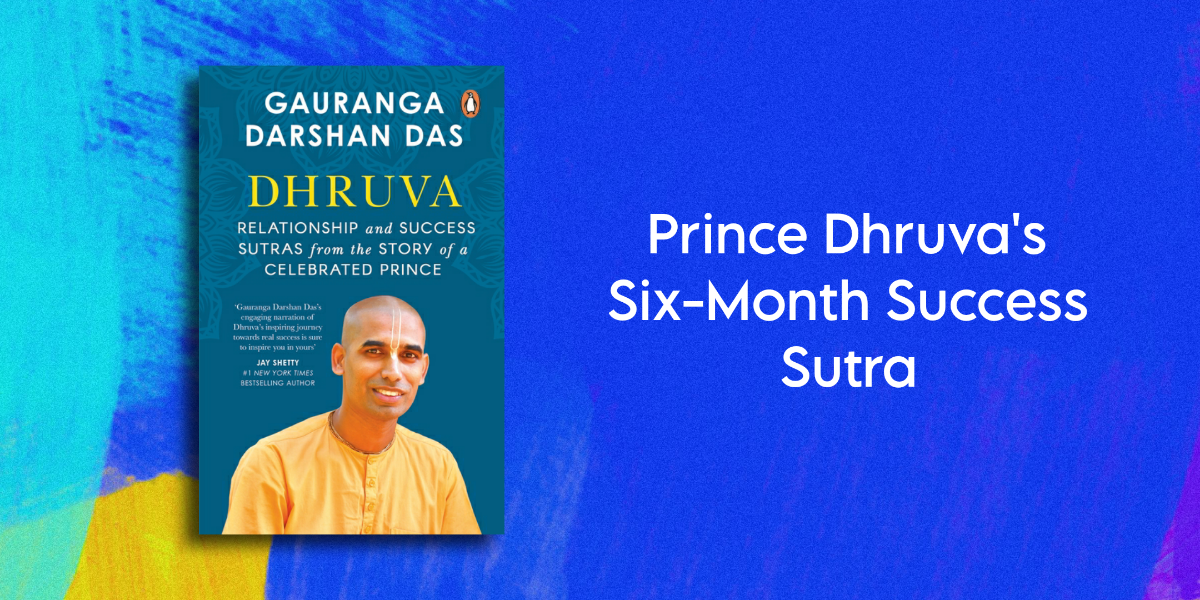
Experience the essence of success through the inspiring story of Prince Dhruva by Gauranga Darshan Das. Rooted in the timeless trio of desire, endeavor, and prayer Dhruva’s journey showcases steadfast determination and the influence of mentorship. Read this excerpt, to extract insights that surpass age and background, presenting valuable lessons for those on the path to success.

Get ready for the Ultimate Six-Month Success Formula!

Dhruva
Dhruva || Gauranga Darshan Das

***

The trio for success –

1. Desire,
2. Endeavour and
3. Prayer One’s ‘desire’ must be pure and strong,
one’s ‘endeavour’ has to be sincere and determined,
yet without the Lord’s sanction, one can’t be
successful, therefore, ‘prayer’ is necessary.


After being instructed by his mentor in the process of worshipping Lord Vishnu, Dhruva went to Madhuvana. Arriving at the bank of the Yamuna, he entered the river to take a bath. Later that night, he diligently observed a fast.

Then, as advised by Narada Muni, he began his worship of the Lord in the beautiful forest of Madhuvana. Dhruva’s austerities in the forest set a great example for all seekers for eons to come. The level of his determination and the intensity of his resolve was unparalleled even as a five-year-old child.


Increasing Intensity of Austerities

Dhruva began worshipping Lord Vishnu sincerely and restricted his eating only to fruits and berries named Kapittha and Badara, only once in three days, to keep his body alive. In this way, he spent one full month.


In the second month, Dhruva survived on some dry grass and leaves that he took only once in six days. Without wasting even a moment searching for food or other things, Dhruva became absorbed in his worship of the Lord.


During the third month, Dhruva’s austerities and his absorption in Lord Vishnu increased. He simply drank water only once every nine days. Thus, he remained rapt in meditation and eventually entered a trance while worshipping the Lord.


As the fourth month set in, Dhruva’s sadhana spiritual practice intensified further. He mastered pranayama or breathing exercises, and would inhale air only once in twelve days. Being completely fixed up in his position as a devotee of Lord Vishnu, he took only air as his food.


By the fifth month, Dhruva’s meditation reached its crescendo. He had completely controlled his breathing, attained perfection in the process and was able to stand simply on one leg. Like a motionless column, Dhruva fully concentrated on the form of Lord Vishnu in line with the teachings of his guru, Narada Muni. He continually chanted and meditated on the mantra ‘om namo bhagavate vasudevaya.’


The power of sincere meditation on the divine form of the Lord makes one completely absorbed in a trance.


Complete Self-control

Dhruva attained complete sense control. His senses were not at all agitated by any sense object. Generally, the greatest obstacle in spiritual life or even in one’s normal life is the distraction caused by the senses—our eyes constantly chase beautiful objects, our ears long to hear pleasant sounds and music, our hands hanker to touch soft objects that give pleasure to the body, our nose continually pursues sweet fragrances, and the tongue wishes to taste palatable dishes even if they may hamper one’s health. In this way, an average human being is constantly tormented by sensual attractions that are nothing but distractions. But Dhruva’s senses were riveted on his goal—worshipping Lord Vishnu.


Another great obstacle for a person engaged in spiritual practices is mental distractions. In fact, the senses become distracted because of a distracted mind. Whenever the senses come in contact with sense objects, they create various pleasant and unpleasant impressions within the mind. For instance, when a person sees a beautiful object, a pleasant impression is immediately created in the mind and when the same person sees an ugly object, an unpleasant impression is generated in the mind.


Thus, the mind becomes a storehouse of millions and trillions of material impressions that keep popping up regularly and distract the person from his or her goals. Therefore, mind and sense control are vital to attaining success in any endeavour, especially in spiritual life.


One who can control one’s mind and senses is a deserving candidate and becomes entitled to success.


Although immature in age, Dhruva exhibited complete sense and mind control in his devotional meditation on Lord Vishnu. He was also fully determined to follow the path instructed by his guru.

A student who is sincere in following the instructions of a potent guru is sure to attain success in spiritual life.

***

Get your copy of Dhruva by Gauranga Darshan Das wherever books are sold.

A Stream of Consciousness Odyssey to Kashmir

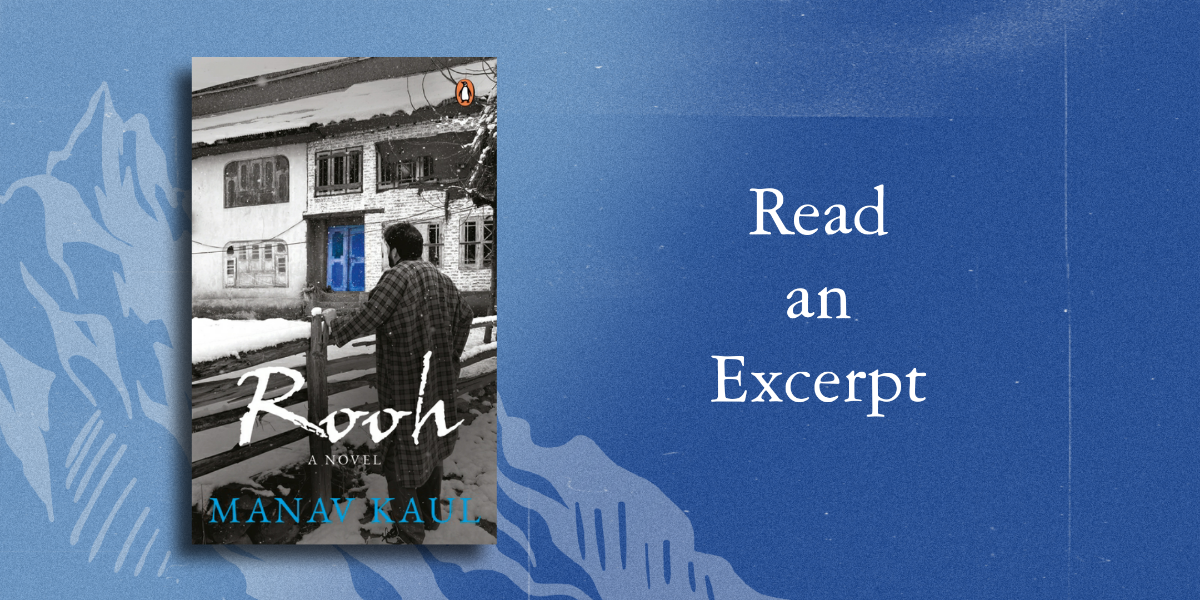
Step into the mesmerizing world of Rooh by Manav Kaul, and embark on a journey where past and present intertwine beautifully and memories come to life. Uncover the very soul of Kashmir, the author’s cherished friendship with Titli, and the echoes of a place that lingers in every word.

Read this excerpt to catch of glimpse of the nostalgia.


Rooh
Rooh || Manav Kaul

***

When pasts are so distinct, all the presents too have their own distinct expanses; it is difficult to be certain which memory would bring a smile to which face. Therefore, if you have picked up this book to understand the political, religious, economic, social and communal situation of Kashmir, you will be disappointed. I don’t know why I am writing this book. I don’t even know whether this writing will finally take the shape of a book. I just want to touch those images again that I had gathered in my childhood. Maybe that’s why even in the current situation in Kashmir I wasn’t reluctant to go there. I don’t know what might happen in the future at all.


In Baramulla, Khwaja Bagh, Titli lived right above our house. My brother, Titli and I . . . we played together all the time—all the games, games in the middle of a game, and our tired laughter after the games were exactly the same. My brother and I were not as sad to leave Kashmir as we were about getting separated from Titli. She was our first love. We could never find out whom she loved more between us. I knew precisely what was making me cry while leaving Khwaja Bagh, but I didn’t want to appear weak in front of Titli, and so I held myself together. While leaving, my brother had asked Titli for her photograph. I was surprised when my brother did this. Everything between us had always been divided into three. For the first time my brother had asked for something from Titli that was entirely his, and I had no claim on it. I was sure that Titli would refuse, but she took out a picture from her schoolbag and gave it to him. I kept thinking for a long time—I should have also asked for a memento or given her something for memory’s sake. But what could I have asked for and what could I have given? We left Baramulla for Srinagar.


This happened years ago. Now we had become two fair-skinned boys of a small district of Madhya Pradesh who didn’t like talking to each other much. Kashmir was in our stories still, but whenever there was mention of Kashmir, we could see Titli flying away. I had noticed that every time Kashmir was mentioned, my brother would immediately go to the other room. I was aware that in the other room, he would be staring at that black-and-white picture of Titli. Outside, I would be regretting the fact that I didn’t even cry in front of her. I had to really please my brother, run several errands for him, and then, on some afternoons, he would let me look at Titli. The only condition was I could not touch the picture, and staring was prohibited. Most probably, it was a photograph taken out from her school ID. She looked like a fairy in the photo—one who could step out any time and say, ‘Let’s fly!’


That picture didn’t stay for long in the pockets of my brother’s shorts. We had also begun to grow up, wandering in the bylanes of that village. Titli flew away from our lives gradually.

When Father was on his last trip to Kashmir some years ago, he had met Titli’s family on his way back to Jammu. He told us this, and we both blurted out together, ‘How is Titli?’ Father told us, ‘She was married off. During the delivery of her first baby her legs became paralysed. Her husband abandoned her. She passed away sometime ago due to depression.’


After speaking about Titli in brief sentences between sips of tea, Father got back to narrating his anecdotes about meeting Baby Aunty. But neither of us wanted to know about anyone else. After a long silence my brother got up and went inside. Now he didn’t even have the picture. What would Bhai be doing inside? For a long time I stood quietly outside his room. Then I took out the torn and faded black and-white photograph of Titli from my mathematics notebook. I had stolen the photo long ago from my brother’s pocket. I wanted to go to Bhai’s room and give the picture to him that very moment, but it was risky. So, I went to the courtyard and buried the picture under a broken wall.


I don’t know how many years ago I wrote about this incident. Now, in my preparation to return to Kashmir, all of this was coming back to me. How much of Kashmir lay scattered in my writings? In all my poems, where I mention a cloud, the cloud belongs to nowhere else but Khwaja Bagh. Every character that I have named Titli is the one whose picture I had buried under the broken wall of my home back then. Every time I say ‘tea’, the four o’clock tea made by my mother in Khwaja Bagh is what I remember. In the fragrance of home, a large part is Kashmir. Can all of this be buried?

***


Get your copy of Rooh by Manav Kaul wherever books are sold

Beyond Fear: Jai Singh’s Torch of Honour Lights the Way

Major General Ian Cardozo in his book Beyond Fear, recounts thirteen stories that inform the reader that fear is not exceptional. It is common to all human beings and how military personnel overcome it. One such story unfolds the life of Naik (Corporal) Jai Singh from the 16th Light Cavalry, shedding light on the futility of war and the enduring impact it leaves on families and what they can do to achieve positive outcomes from the tragedies that war can cause.

Read this exclusive excerpt from Beyond Fear to know more about Jai Singh and the promise that was made to him.

Beyond Fear
Beyond Fear || Ian Cardozo

***

‘Once upon a time,’ he began, ‘my grandfather was fighting in Burma during World War II. He had become ery close friends with another soldier named Jai Singh. Both were part of a medium machine gun detachment of their battalion that was supporting an infantry brigade, which was struggling to beat back the Japanese at the Battle of Kohima.’ The soldier was referring to a battle that would eventually turn the tide in the battle for Burma.


The Japanese had reached Kohima, which was a gateway to India from the north-east and is today the capital of Nagaland. A historic battle was fought there, with objectives captured, lost, recaptured and lost, and won again. This battle had important possible outcomes.
If the Japanese won, India would be open to the Japanese Army. If the Allies won, it would mean a hard slog back into Burma to wrest it back from the Japanese and then on to Malaya, Singapore, Siam (now Thailand) and the Dutch East Indies.


The soldier continued with the story as narrated to him by his grandfather, whose name was Mohan Chander.


‘It was during one of these battles that Grandfather’s friend Jai Singh got wounded. A piece of shrapnel from a mortar bomb ripped open his abdomen during one of the Japanese counter-attacks. Two members of the detachment carried Jai Singh away. My grandfather had to carry on with beating back the counter-attack, manning the machine gun on his own. After the attack had petered out, he went looking for Jai Singh and found him lying in the open. He was beyond help. There was nothing that my grandfather could do except apply a first-field dressing on Jai Singh’s abdomen to keep the contents inside.


‘Grandfather lifted Jai Singh into his arms and took him to the shade of a tree. Jai Singh opened his eyes and said, “I knew you would come.” He had lost a lot of blood and had become very weak. After a long silence, he told Grandfather that just a few days earlier, he had received mail from home. The letter had been written two months earlier. His wife could not write, and the letter had been penned by the local schoolteacher so nothing personal could be conveyed. She had, however, managed to convey to her husband that she prayed daily at the temple for his safe return.


‘Jai Singh smiled ruefully and said that could no longer happen. He would never return. My grandfather tried to assure him that professional medical help was on the way and he would soon be well again.


‘Jai Singh looked at my grandfather and said, “We both know that I will not survive. It will be good if you remain with me until the end. I don’t want to go away alone.”


‘After a while, he said, “It will be nice if you could visit my wife after this war is over and tell her that my last thoughts were of her. Tell her that I am sorry it had to end this way, but there was nothing I could do about it. Please do what you can for her. Please see that she gets her family pension.” He was silent for a while, and Grandfather thought he was about to lose him, but Jai Singh had only closed his eyes because he was in great pain.


‘After a while, he continued, “It would have been nice if we had a son. He would have looked after my wife. Now that I will be gone, there will be no one to take care of her and to continue my bloodline. With me, my name will die.” He sighed and closed his eyes once again.


‘My grandfather kept quiet for some time and then said, “Jai, I would like to assure you that your wife will be cared for as though she is part of my own family. If my wife and I have a son, we will name him Jai Singh. If we have a daughter, we will call her Jaya.”


Jai Singh smiled. He was getting weaker by the moment. “Thank you,” he whispered. A little while later, he was gone. Jai Singh had joined his forefathers and his God. For him, the war was over, but he had not been able to live to tell the tale. Grandfather decided to sit with Jai Singh’s body till the stretcher-bearers arrived.

***

Get your copy of Beyond Fear by Ian Cardozo wherever books are sold.

From Concept to Reality: The Birth of the Constitution of India

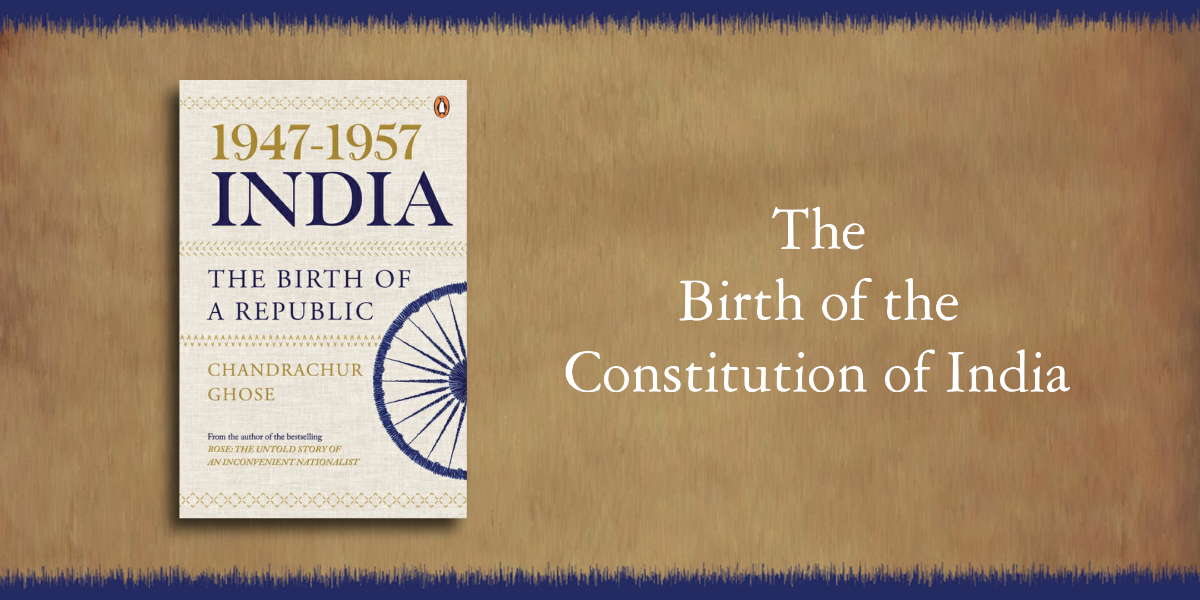
The Birth of the Constitution of India was a momentous journey, led by the visionary Dr. B.R Ambedkar and the Constituent Assembly of India. In the book, 1947-57, India: the Birth of a Republic, author Chandrachur Ghose offers a glimpse into the various criticisms and debates that ensued and how Dr. Ambedkar eloquently defended the federal structure of the constitution as it was adopted on 26th November 1949 and come into force on 26th January 1950, bestowing upon the people of India the responsibility of ensuring its success and upholding its democratic principles in the years to come.

Read this insightful exclusive excerpt to learn more.

1947-57 India Birth of a Republic
1947-57, India: Birth of a Republic || Chandrachur Ghose

***

Ambedkar further elucidated the relation between the Centre and the states as a number of criticisms had been hurled at the draft constitution, claiming that the powers of the states had been reduced. Answering the criticism that the Centre had been given the power to override the states, Ambedkar clarified that although the ‘charge must be admitted’, ‘these overriding powers do not form the normal feature of the Constitution. Their use and operation are expressly confined to emergencies only.’


Ambedkar told the Assembly:
As to the relation between the Centre and the States, it is necessary to bear in mind the fundamental principle on which it rests. The basic principle of Federalism is that the Legislative and Executive authority is partitioned between the Centre and the States not by any law to be made by the Centre but by the Constitution itself. This is what Constitution does. The States under our Constitution are in no way dependent upon the Centre for their legislative or executive authority. The Centre and the States are co-equal in this matter. It is difficult to see how such a Constitution can be called centralism. It may be that the Constitution assigns to the Centre too large field for the operation of its legislative and executive authority than is to be found in any other Federal Constitution. It may be that the residuary powers are given to the Centre and not to the States. But these features do not form the essence of federalism. The chief mark of federalism as I said lies in the partition of the legislative and executive authority between the Centre and the Units by the Constitution. This is the principle embodied in our Constitution. There can be no mistake about it. It is, therefore, wrong to say that the States have been placed under the Centre. Centre cannot by its own will alter the boundary of that partition. Nor can the judiciary.


On 25 November 1949, closing the debate on the adoption of the Constitution, Ambedkar made some incisive comments defending the work done by the Drafting Committee and the Constituent Assembly, and putting the onus of working the Constitution on the people of the country:

I feel, however good a Constitution may be, it is sure to turn out bad because those who are called to work it, happen to be a bad lot. However bad a Constitution may be, it may turn out to be good if those who are called to work it, happen to be a good lot. The working of a Constitution does not depend wholly upon the nature of the Constitution. The Constitution can provide only the organs of State such as the Legislature, the executive and the Judiciary. The factors on which the working of those organs of the State depend are the people and the political parties they will set up as their instruments to carry out their wishes and their politics. Who can say how the people of India and their parties will behave? Will they uphold constitutional methods of achieving their purposes or will they prefer revolutionary methods of achieving them?


He had argued equally strongly while introducing the Draft Constitution in November 1948:

No Constitution is perfect and the Drafting Committee itself is suggesting certain amendments to improve the Draft Constitution. But the debates in the Provincial Assemblies give me courage to say that the Constitution as settled by the Drafting Committee is good enough to make in this country a start with. I feel that it is workable, it is flexible and it is strong enough to hold the country together both in peace time and in war time. Indeed, if I may say so, if things go wrong under the new Constitution, the reason will not be that we had a bad Constitution. What we will have to say is, that Man was vile.


Rajendra Prasad referred to widespread public interest regarding the framing of the Constitution in his closing statement. He pointed out, ‘53,000 visitors were admitted to the visitors’ gallery during the period when the Constitution has been under consideration.’
The Constitution of India was finally adopted on 26 November 1949 and came into force on 26 January 1950.

***

Get a copy of 1947-1957, India: The Birth of a Republic by Chandrachur Ghose wherever books are sold.

Joya Chatterji’s Dive into Bombay Cinema’s Legacy

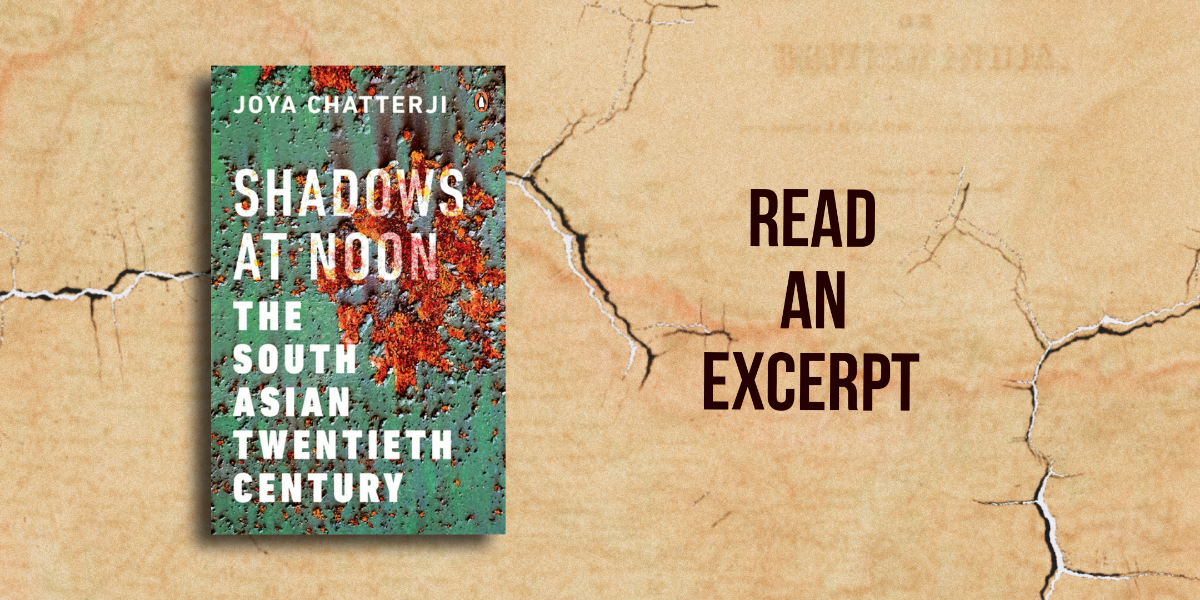
Explore the historical origins of Bombay Cinema, fondly known as Bollywood, in this excerpt from Shadows at Noon by Joya Chatterji. As the story unfolds, uncover the intricate mix of languages, influences, and talent migration that shaped Bombay cinema, creating a diverse and cosmopolitan industry that is celebrated all over the world.


Shadows at Noon
Shadows at Noon || Joya Chatterji

***

Why Bombay, one might ask? It was never inevitable that the ‘Maximum City’ would be its base, whatever film scholars say.  Mukherjee, in her otherwise excellent Bombay Hustle, argues that there was something exciting and dynamic about the city that made it the inevitable centre of the film industry. The argument is, to a historian, teleological. By the time Bombay showed its first full-length silent film, Raja Harishchandra (‘King Harishchandra’, 1913), studios were up and running in most major cities of India. Throughout the twentieth century, Calcutta and Madras were large centres of the film industry, and Bengali, Tamil, Malayalam and Telegu cinema were still thriving in 2000.


Nor was it inevitable that Hindustani, the language of Bombay cinema, would become the dominant language of the movies. Indeed, the subcontinent’s most renowned director, Satyajit Ray, made all his films, with one notable exception (Shatranj ke Khilari ), in Bangla. Nor has the flow of influence always been in one direction, from Bombay to these other centres. One of Bombay’s greatest stars, Waheeda Rehman, first performed in the Telegu film Rojulu Maraayi (‘The Days Have Changed’, 1955). She points out that its hit song in which she danced (she trained in the new form of Bharatanatyam) was bowdlerised in the Hindi version of the Telegu original movie. But because it usually flowed that way, I focus on Bombay cinema here.


The migration of talent at every level to Bombay cinema from other regions was fuelled by cultural influences that are not easy to pigeon hole. Take the case of Guru Dutt (1925–64), producer, director and actor in the 1950s, a period many regard (with justification) as the high point of Bombay cinema. He produced, directed and acted in some of the era’s greatest films. By birth a Saraswat Brahmin from western India, Guru Dutt grew up in Calcutta. He was often mistaken for a Bengali because of his (hard-to-define) Calcutta ways (marked even before he married the Bengali singer Geeta Roy in a Bengali caste Hindu ceremony). As a youngster he trained for a while at Uday Shankar’s school for the creative arts at Almora, where he was a peer of Uday’s brother, the sitar maestro Ravi Shankar. For their part, both Uday and Ravi Shankar grew up in present-day Rajasthan, where their father was in the employ of the Maharaja of Jhalawar, but their ‘ancestral home’, as we put it in these parts, is in present-day Bangladesh. (Uday Shankar was another sensation of the era, known for his avant garde choreography, his terrific talent as a dancer and his effort to revive old dramatic performance through modern dance fusion, rather than stilted classicism.)


Given that some of Guru Dutt’s best-known films are ‘Muslim socials’ (a genre depicting a Muslim urban aristocratic way of life), and given that Waheeda Rehman, Rahman and Johnny Walker (Badruddin Kazi, a former bus conductor), all Muslims, starred in some of his most famous films – Pyaasa (‘Thirsty’, 1957), Chaudhvin ka Chand (‘The Full Moon’, 1960) and Kaagaz ke Phool (‘Paper Flowers’, 1959) – and given his productive relationship with the scriptwriter Abrar Alvi, also a Muslim – it’s clear that Bombay cinema was a cosmopolitan world, which drew gifted people of all sorts towards it. Directors sought out talent wherever they could find it. It was a South Asian world of all the talents.


This brilliance was by no means born in Bombay, local to Bombay (or the British Bombay Presidency, post-independence Maharashtra after the former’s division into two states), or even the Hindustani speaking north of the subcontinent. It would be a gross mis – understanding to think of Bombay cinema as the film culture of‘Bombay-wallahs’. Bombay itself was being made by migration at the same time as its film industry.


A funny story illustrates this. A passionate movie buff from the Punjab, Raj Khosla, met Guru Dutt while the latter was directing a film. He wanted a job as a playback singer, but no such job was on offer. Guru Dutt, by all accounts a kindly man, asked Khosla whether he knew any Hindi. ‘Yes,’ he lied. He was hired, but he then had a problem: he knew some Urdu, like many Punjabis, but although Urdu has a similar vocabulary and grammar to Hindi, its script could hardly be more different. Keen Khosla went out and bought a Hindi reader the very next day. Of course he was caught out the minute he was asked to write something in Hindi. Far from sacking him, Guru Dutt found him something else to do and they became firm friends. The point here is that even Punjabi-speakers were flocking to what became known as ‘Bombay cinema’ (which was sometimes made outside Bombay).


Still, the city itself would become the hub of the great studios of the era where the first generations of Hindi movies were made. Studios like Bombay Talkies established themselves on the northern periphery of the city, in Andheri, where they had some access to its urban amenities but could just about avoid its accompanying cacophony. Bombay’s wooded hinterland provided scenic backdrops to many a movie.

***

Get your copy of Shadows at Noon by Joya Chatterji wherever books are sold.

The Evolution of Sri Lanka’s Cricketing Legacy

An Island’s Eleven by Nicholas Brookes takes us back in time to 19th and 20th century Sri Lanka, where cricket was becoming popular among different communities. The excerpt follows the story of a talented young player with Sinhalese roots, who played a crucial role in forming a club that truly represented the country. Despite facing challenges and missed opportunities, the book shows us the spirit and determination that shaped the island’s cricketing identity.

Read this excerpt to know more.

An Island's Eleven
An Island’s Eleven || Nicholas Brookes

***

For much of the nineteenth century, local cricket had been sustained by the Burghers—but a change began to take hold in the 1890s. While the Sinhalese on the whole resisted westernization, Ceylon’s Tamils proved more willing to learn English: from around 1870, their presence in the civil service swelled. Exposed to English customs, they soon took to cricket. Two Tamil clubs sprung up in Colombo during the 1890s, merging to form the Tamil Union Cricket and Athletic Club in 1899. Its first home at Campbell Park was leased from the government for 50 cents a year.


Meanwhile, Buddhist revivalism was changing the face of  Colombo. Ananda College opened doors in 1886—by teaching in English but retaining a Buddhist foundation, schools like Ananda gave those Sinhalese wary of westernization opportunities to rise through society. Nonetheless, these schools submitted to aspects of Britishness: by 1895, old-Thomian J.C. McHeyzer was coaching Ananda’s boys at cricket. Around the same time, some Sinhalese were warming to the idea of sending their sons to anglicized schools. By my estimation, around forty-five Sinhalese boys played in the Royal-Thomian during the 1890s.


By 1898, schools cricket had advanced sufficiently for a Combined Colleges XI to take on the Colts. In drawing the game, the schoolboys gave an excellent account of themselves—and the fixture was rebooked for the following year. By chance, the 1899 team was made up exclusively of Sinhalese boys; remarkably, they led the invincible Colts by a single run after the first innings. Seeing eleven of their own perform so admirably stirred a burning sense of pride in the watching Sinhalese. Suddenly, there were calls for a sports club of their own.


In fact, in D.L. de Saram, this ‘all-Sinhalese’ XI included at least one boy with a heavy dose of Burgher blood. While still at S. Thomas’, de Saram was establishing himself as one of the island’s most destructive batters. He was not a tall man, but his shoulders seemed broad as the doors he walked through, his forearms the size of saplings. An inspiring leader and born entertainer on the field, beyond the boundary de Saram was shy, struggling badly with a stammer. He let his cricket do the talking—and was the kind of batter uncowed by any bowler. When he came to the crease the field would spread; the crowd growing restless in anticipation of scything drives and dashing hooks.


In 1900 de Saram made history by scoring 105* for NCC, the first century by a schoolboy in club cricket. But his allegiance would soon be tested. On 28 March 1899, H.J.V.I. Ekanayake called a meeting to discuss the founding of the SSC. The next year, the club leased a plot of land in Victoria Park. Though cinnamon trees sprouted from the sandy soil, D.S. Senanayake and Danny Gunasekara worked tirelessly to get the ground ready for cricket.


Gunasekara and de Saram’s names were on the team sheet for the SSC’s inaugural fixture in July 1901. No doubt the Colombo Sports Club fancied their chances against this fledgling local side, but by day’s end they were humbled and sick of the sight of the teenaged de Saram. He dazzled with an unbeaten 132, 18 more than the Sports Club could manage. It was a famous victory: the perfect start to life in cricket for the Sinhalese.


During the first years of the twentieth century, de Saram was the club’s beating heart. He scored eleven of the first fifteen centuries— while no batter scored a hundred against the SSC until 1906. Alongside Kelaart, de Saram was invited to Bombay for India trials in December 1903; said to be a certainty for selection, until the tour collapsed due to lack of funding.


The sense of opportunity lost was compounded by the lack of international visitors around the turn of the century: after 1896, no English or Australian side arrived for more than a decade. And when the whistlestops returned in 1908, the ‘All-Ceylon XII’ Vanderspar picked was without any truly Ceylonese men. T.W. Roberts smashed 70 in an hour against the MCC amateurs. He should have walked out against a full-strength English side, but the professionals—a young Jack Hobbs included—requested their £5 match fee doubled. Vanderspar refused, filling their places with cricketers from the garrison and Colombo Sports Club.


The payment of professionals was becoming an increasingly thorny issue. When the homeward-bound Australians stopped in 1909, the CCC refused to cover their match fee. Sniffing an opportunity, the SSC offered to sponsor the visit. They organized a gate, raising enough to offer the Australian pros £10 a man. So for the first time, a team that truly represented Ceylon—rather than the colonists who lorded over the island—would have the chance to play against cricketers of international calibre.

***

Get your copy of An Island’s Eleven by Nicholas Brookes wherever books are sold

Let’s Play to Transform with these 21 Affirmations!

In Play To Transform, author Dr. Avinash Jhangiani unveils profound insights, empowering professionals to ignite hope and optimism within themselves before sharing it with others. And leading with confidence, to create a happy, connected environment that fosters steady growth. So let’s discover the power of positive thinking and self-talk as we present these 21 affirmations that will transform you into an authentic, purpose-driven leader.

Ready to play? Let’s begin!

Play to Transform
Play to Transform || Avinash Jhangiani

***

Play Manifesto for Your Inner Child

Hope and optimism can be effective drivers of change and leaders must understand how to provide these antidotes, not to just others but first to us. To receive maximum benefits in uncertain times, read positive affirmations before sleep or early morning. These are the times when you brain is in a calm, relaxed and programmable state. Note that the secret of making this work is to believe and feel these affirmations intensely in your heart. Your thoughts and feelings have a profound effect on your behaviours.

Here is the play manifesto with twenty-one positive affirmations to keep your inner child alive:


1. I have the power to create positive change.

2. I have a clear vision and bring clarity to everyone at work.

3. I create a happy, healthy, connected environment at work.

4. I create spaces to nurture curiosity, self-expression and creativity without judgement.

5. I create a sense of safety and belonging at work.

6. I set a positive example for others.

7. I am a cheerful, trustworthy, approachable person.

8. I am confident and can handle any obstacle in front of me.

9. I show my vulnerability and manage my emotions very well.

10. I allow others to fail and help them learn from their mistakes.

11. I give high candour, constructive feedback.

12. I inspire others to stretch and reach their truest potential.

13. I empower others to greatness with my infinite enthusiasm.

14. I provide opportunities for growth.

15. I learn something new and useful every day.

16. I make work fun and rewarding for everyone.

17. I am a conscious leader who puts purpose into profits.

18. I am an authentic leader who nurtures diversity, inclusion, and equity in the workplace.

19. I am grateful to my team, family and friends who help me grow as a leader.

20. I am proud of myself and very happy about my accomplishments.

21. With every breath I take, I bring more playful charisma and magnetism into my life

***

Get your copy of Play to Transform by Dr. Avinash Jhangiani wherever books are sold.

The Story Behind Mrs. K.M. Mathew’s Finest Recipes

Let’s explore the flavorful world of Mrs. K.M Mathew, a culinary legend from Southern India whose passion for food, deeply rooted in her multicultural upbringing, led her to become a celebrated cookbook author and editor of the prestigious Vanitha Magazine.

Now seventeen years after her passing, her daughter, Thangam Mammem, shares the story of Mrs. K.M. Matthew’s humble beginnings and her steadfast commitment to sharing the art of cooking across the globe.

Read this exclusive excerpt to know more about the remarkable Mrs. K.M Mathew and catch a glimpse of her finest recipes.

Mrs K M Mathew's Finest Recipes
Mrs K M Mathew’s Finest Recipes

***

My mother cradled two newborns in her arms in 1955. One was her last child (myself) and the other was her first book. It was a cookbook in Malayalam, titled Pachaka Kala (The Art of Cooking). Amma went on to write 23 more cookbooks, five of which were in English, over the next forty years. She also wrote three travelogues and a book on hair care, and edited the women’s magazine Vanitha for twenty-five years. The book in your hands, Mrs K.M. Mathew’s Finest Recipes, has been published seventeen years after she left this world. She left me more than a thousand recipes which she had collected, discovered or created. Amma had written her first cookery column on doughnuts, two years before I was born. It was published in the Malayala Manorama newspaper on 30 May 1953 along with her recipe for Goan Prawn Curry. These appeared under the name Mrs Annamma Mathew, and she became fairly well-known after a column on Mutton Bafath. Her popularity multiplied after she started using the name Mrs K.M. Mathew. This lucky name change was her own idea and she hardly ever used the name Annamma anywhere again.


It was my grandfather, K.C. Mammen Mappillai, who had spotted her talent while he was visiting my parents in Byculla, Bombay, and asked her to write a column in his newspaper. Fortunately, Amma was familiar with the varied tastes of India. Her parents were from Kerala, but she was born and brought up in faraway Kakinada, Andhra Pradesh, where her father was a doctor. He loved making chicken soup (he had made it even on the day he died, at the age of ninety-three) and her mother loved cooking Kerala’s Syrian Christian dishes. The neighbourhood was redolent with the scents of Tamil and Telugu food. Amma had always been partial to Tamil dishes, right from
childhood till long after her college days in Madurai. It was later that she developed a love for Kannadiga delicacies in Chikmagalur, where my parents lived in a coffee estate in the first few years of their marriage. Then they moved to Bombay, and this was where she learnt to cook a variety of local, north Indian and continental dishes.


Amma had another advantage—she spoke fluent English, a gift not so common among Indian women in those days. This helped her enter the kitchens of even the most elite hotels, where she would never shy away from asking for recipes or other cooking advice from the chefs. Amma did it with natural grace, whether she was in India or travelling to other countries, in her forties. She was inspired to share the art of cooking for the sheer enjoyment of delicious food. She did not even recommend any complex or elaborate recipes to her readers because, for her, simplicity and taste came before novelty. She even avoided using words like ‘foodie’ and ‘cuisine’. ‘Simple good
food’ was her motto.


She wrote her recipes early in the morning, after waking up at 3 a.m. No recipe made it to her column before she had tested it at least three times. My father always got the first chance to taste it and to give feedback. Amma made sure she bought all the ingredients herself and measured them precisely. In the early years, she would use cigarette tins as measuring cups and gradually she accumulated all the paraphernalia, including a mallet from abroad for tenderising the meat. When fair reviews of her books appeared in the press, she was ecstatic.


Food was sacred for Amma. She never wasted it. If there was anything left over, she would make a delicious new dish out of it. She always taught us to respect food and forbade shoptalk at the dinner table at our home in Roopkala, Kottayam, Kerala. All she wanted was for everyone to enjoy good food. Far from secretive, she took joy in sharing her recipes with everyone. In fact, sometimes she would send the recipe along with the food she would send for her friends and acquaintances and if they ever faced a problem cooking it, she would even send her trained cook to demonstrate the cooking procedure.


Whoever visited Amma, she always gave out a packet of crisp savouries for them to take home. Her wedding gift to her acquaintances was invariably a bundle of her cookbooks. Even today, many people in India and abroad tell me that Amma’s book Nadan Pachakarama was like the Bible to them when they had just started their married life and were learning to cook.


Even when she was in a wheelchair, in her twilight years, she remained engaged and active. When not cooking, she was often found reading books, appreciating art, singing songs, playing the violin, teaching music, raising funds for charity, guiding women’s organizations, or supervising work at Vanitha. As a mother, she practised tough love, with a heart that remained tender inside. This book carries the essence of her soul.

-Thangam Mammen

***

Get your copy of Mrs. K.M. Mathew’s Finest Recipes wherever books are sold.

Oppenheimer: Fascination with Sanskrit and the Bhagavad Gita

Talk of the town and how? Well, you’ve either watched Oppenheimer who you’re planning to, as you try to secure a seat in the fast-filling movie theatres and wait for the magic to unfold on the big screen. The story of J. Robert Oppenheimer has captivated audiences far and wide, leaving them intrigued and fascinated. And now, we’ve got something special for you—straight from the pages that birthed the epic, here’s a glimpse into the enthralling journey of Oppenheimer’s life.


Dive into this excerpt from American Prometheus: The Triumph and Tragedy of J. Robert Oppenheimer and witness his fascination with Sanskrit and the Bhagavad Gita, and how this passion for ancient wisdom shaped the mind of the brilliant scientist that reshaped history and forever changed the world.

American Prometheus
American Prometheus: The Triumph and Tragedy of J. Robert Oppenheimer || Kai Bird, Martin J. Sherwin

***

“I am learning Sanskrit,” Robert wrote Frank. “enjoying it very much, and enjoying again the sweet luxury of being taught.” While most of his friends saw this new obsession as slightly odd, Harold Cherniss-who had introduced Oppie to Ryder- thought it made perfect sense. “He liked things that were difficult,” Cherniss said. “And since almost everything was easy for him, the things that really would attract his attention were essentially the difficult.” Besides, Oppie had a “taste for the mystical, the cryptic.”


With his facility for languages, it wasn’t long before Robert was reading the Bhagavad-Gita. “It is very easy and quite marvelous.” he wrote Frank. He told friends that this ancient Hindu text- “The Lord’s Song”-was “the most beautiful philosophical song existing in any known tongue.” Ryder gave him a pink-covered copy of the book which found its way onto the bookshelf closest to his desk. Oppie took to passing out copies of the Gita as gifts to his friends.


Robert was so enraptured by his Sanskrit studies that when, in the autumn of 1933, his father bought him yet another Chrysler, he named it the Garuda, after the giant bird god in Hindu mythology that ferries Vishnu across the sky. The Gita- which constitutes the heart of the Sanskrit epic Mahabharata-is told in the form of a dialogue between the incarnate god Krishna and a human hero, Prince Arjuna. About to lead his troops into mortal combat, Arjuna refuses to engage in a war against friends and relatives. Lord Krishna replies, in essence, that Arjuna must fulfill his destiny as a warrior to fight and kill.


Ever since his emotional crisis of 1926, Robert had been trying to achieve some kind of inner equilibrium. Discipline and work had always been his guiding principles, but now he self-consciously elevated these traits to a philosophy of life. In the spring of 1932, Robert wrote his brother a long letter explaining why. The fact that discipline, he argued, ‘is good for the soul is more fundamental than any of the grounds given for its goodness. I believe that through discipline, though not through discipline alone. We can achieve serenity, and a certain small but precious measure of freedom from the accidents of incarnation . . . and that detachment which preserves the world which it renounces. I believe that through discipline we learn to preserve what is essential to our happiness in more and more adverse circumstances, and to abandon with simplicity what would else have seemed to us indispensable.” And only through discipline is it possible to see the world without the gross distortion of personal desire, and in seeing it so, accept more easily our earthly privation and its earthly horror. 


Like many Western intellectuals enthralled with Eastern philosophies. Oppenheimer the scientist found solace in their mysticism. He knew, moreover, that he was not alone; he knew that some of the poets he admired most, like W. B. Yeats and T. S. Eliot, had themselves dipped into the Mahabharata. “Therefore.” he concluded in his letter to the twenty-year-old Frank, “I think that all things which evoke discipline: study, and our duties to men and to the commonwealth, and war, and personal hardship, and even the need for subsistence, ought to be greeted by us with profound gratitude; for only through them can we attain to the least detachment; and only so can we know peace.”


In his late twenties, Oppenheimer already seemed to be searching for an earthly detachment; he wished, in other words, to be engaged as a scientist with the physical world, and yet detached from it. He was not seeking to escape to a purely spiritual realm. He was not seeking religion. What he sought was peace of mind. The Gita seemed to provide precisely the right philosophy for an intellectual keenly attuned to the affairs of men and the pleasures of the senses. 

***

Get your copy of American Prometheus: The Triumph and Tragedy of J. Robert Oppenheimer by Kai Bird and Martin J. Sherwin wherever books are sold.

error: Content is protected !!