
Publish with Us

Follow Penguin

Follow Penguinsters

Follow Penguin Swadesh

A brief journey across 5000 years of the making of a civilization

Indian civilization is an idea, a reality, an enigma. In the riveting INDIANS: A Brief History of a Civilization, Namit Arora takes us on an unforgettable journey through 5000 years of history, reimagining in rich detail the social and cultural moorings of Indians through the ages.  Enlivening the narrative with the  idiosyncratic perspectives of the many famous foreign travellers who visited India over millennia, local folklore and his own inimitable insights, Arora guides us through  six iconic places-the Harappan city of Dholavira, the Ikshvaku capital at Nagarjunakonda, the Buddhist centre of learning at Nalanda, enigmatic Khajuraho, Vijayanagar at Hampi, and Varanasi.

Read on for a glimpse into the exciting churn of ideas, beliefs and values that unfolded among our ancestors through the centuries.


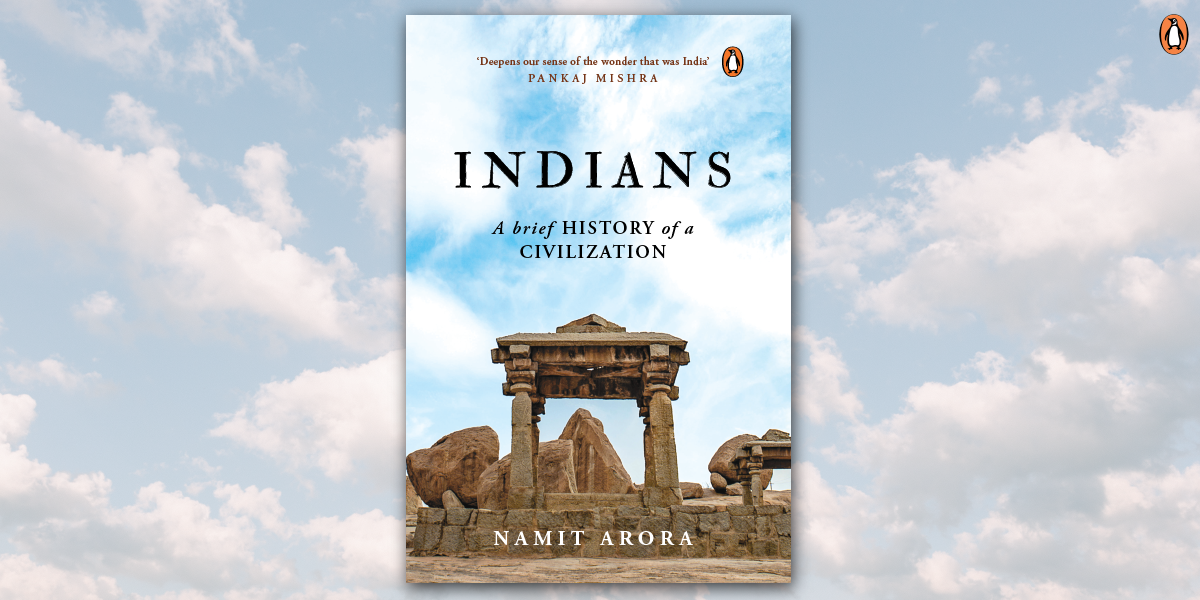
Front cover of INDIANS
INDIANS || NAMIT ARORA


Still, the lack of loud and clear indicators of war or standing armies, so commonplace in other civilizations, is a striking feature of the Harappan Civilization. Further, Harappan cities have not revealed monumental, or even humble, temple structures, a great puzzle for scholars. There aren’t any equivalents of the temples and pyramids of ancient Egypt or the ziggurats of Mesopotamia. Some say the Great Bath of Mohenjo-Daro had a religious purpose but this is highly speculative. Or perhaps the Harappans built religious shrines and large sculptures from perishable materials like wood. In any case, while there are hints, we have no clear sense of Harappan gods and rituals, or whether they had any temples or priests. Scholars have offered divergent interpretations of seals with possible religious content: a handsome seven-inch sculpture of a man named ‘priest-king’, who could well have been an aristocrat; a seal named ‘proto-Shiva’ that depicts a multi-headed, seated figure in a yoga-like pose, one of ‘several other yogi images in the corpus of Mature Harappan materials’; another seal that shows a female (deity?) standing under a Bodhi tree with its heart-shaped leaves, a figure kneeling before her in supplication and seven standing figures watching them; other seals that depict mysterious objects and rituals before a unicorn; the swastika motif appears often; some female figurines have a paste-like substance along the middle parting of their hair; a stone object in the shape of a phallus has been identified; two terracotta male figurines have erections; a small terracotta object in Kalibangan resembles the familiar Shiva lingam. All this is very tantalizing. There can be little doubt about cultural continuities. Harappan beliefs clearly shaped later religions of the Axial Age in the subcontinent. Quite possibly, Indian ideas of meditation and even renunciation have Harappan origins. But it’s difficult to draw firm conclusions about this, or about what the Harappans themselves believed, at least until the script begins to speak. Scepticism is essential: The deciphered Mayan script revealed how wrong many scholars were about the beliefs they had attributed to the Mayans (such as being peaceful). The Harappans did not build monumental sculptures, such as of kings or gods, as did the Mesopotamians and the Egyptians. This doesn’t make them any less complex than others, writes Possehl, rather it’s an alternative way in which a civilization, with a ‘highly complex sociocultural system, has expressed itself’.  They did make fine miniature art, as in seals and beadwork. And while their figurines aren’t notable for their artisanship, they still evocatively depict their people ‘in great variety, with many poses: sitting in chairs, lying on beds, holding babies and animals, kneading bread, and other things that people do to round out their existence,’ writes Possehl. Animal puppets, in which a bull might shake its head or pull a cart, reveal a playful sense of humour, perhaps designed to amuse children. There are some fantasy creatures too, but ‘on the whole, the Indus peoples in their art, as in other aspects of their lives, come across as people with a practical bent, a tendency to deal with and represent the real world as they [and we] see it’. That said, what jumps out as the Harappans’ greatest monumental work is the city itself, a marvel of urban design and engineering, city- wide sanitation systems that include the first indoor toilets in the world and sophisticated water management. ‘Probably not until later Roman times did people devise so many clever construction techniques to deal with comforts and discomforts related to water.’ They also excelled at shipbuilding and long-distance trade—another reason to think that they had centralized authority and bureaucracy to mobilize labour, develop trading networks and organize long-distance shipping expeditions. Harappan cities of the mature period (2600–1900 bce) had some walled neighbourhoods with larger buildings and better provisions, suggesting that an elite class resided there. But not everyone agrees. There is ‘no justification’ or archaeological support for this presumption, says archaeologist Jonathan Mark Kenoyer. In fact, in certain stages, the ‘citadels’ in Dholavira and Mohenjo-Daro were hubs of artisanal– industrial activity. There is no evidence of royal palaces; homes differ in size and provisions but not by much. Sanitation and water wells were available to all. Based on the bones of the dead, the rich and the poor seem to have enjoyed similar access to nutrition. Their burials too display a narrow range in their sizes and types of funerary objects. However, as noted earlier, burial practices may have varied across individuals, or social groups. That the Harappans had a social social class hierarchy is clear enough. What’s remarkable is that this hierarchy seems so much flatter than in other ancient (or modern) civilizations.

Get your copy now for a truly epic exploration of the cultural behemoths that continue to shape ‘INDIANS’ today https://www.amazon.in/Indians-History-Civilization-Namit-Arora/dp/0670090433
R.I.P. India’s sense of humour

Who do we laugh at and who do we laugh with? Avay Shukla, an ‘unserious’ writer, has a clear vision of what has been going off-track in India in the past decade. And he says it all with clarity and a biting humour. Here is an excerpt from his book PolyTicks, DeMoKrazy & Mumbo Jumbo: Babus, Mantris and Netas (Un)Making Our Nation.

I belong to a generation that was weaned on the Reader’s Di- gest feature “Laughter, the best medicine”, MAD comics, PUNCH magazine, Mark Twain, Oscar Wilde, Groucho Marx and quotations from a mysterious “Confucius” (“a man who be both a fool and an arsehole is an ignoranus”) who bears no resemblance to the original sage. Armed with the understanding of human character acquired from these astute observers I have gone through life realising that humour is the ultimate gift of expression that relieves, criticises, elevates, weeps, embraces. But most important, it always teaches, whether it be by the understatement, the mimicry, the pun, the satire, the suggestio falsi, the paraprosdokian or even the humble limerick. There is no more effective (but civilised) commentary on the times, and no more perceptive (but amiable) assessment of individuals. Societies and civilisations which espouse humour are tolerant. sensitive to public opinion, unbigoted and open-minded. By the same definition, those which seek to curb humour, either by legal fiat or street violence, are just the opposite, destined either for fascism or anarchy.

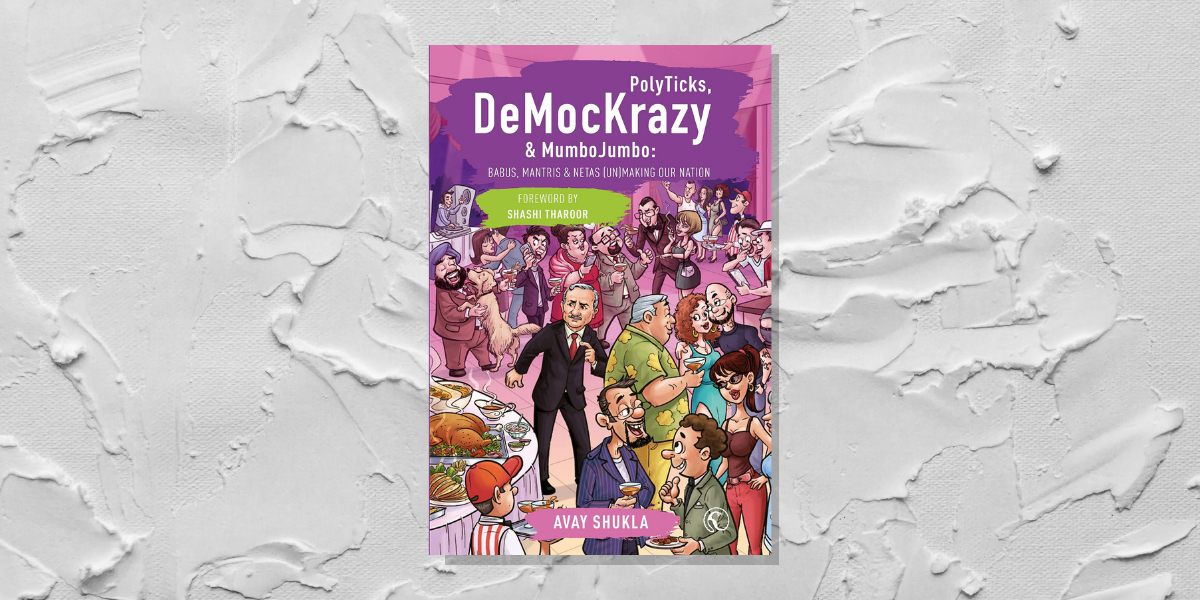
front cover PolyTicks, DeMoKrazy & Mumbo Jumbo
PolyTicks, DeMoKrazy & Mumbo Jumbo||Avay Shukla

India today seems to be headed in this latter direction. Powerful groups – both state and non-state actors, to use a preferred phrase – who brook no criticism, and mis-guided bleeding hearts or seekers of the two minute fame appear to have launched a war against all forms of humour in this country under the specious banner of “political correctness.” It began with Sashi Tharoor’s “cattle class” comment: in the ensuing din it is still not clear who was more offended – the champions of the poor who did not like the poor being “bovined”, as it were; or the Hindutva brigade who resented the disparaging reference to the cow.

Then came the arrest in Mumbai of the cartoonist Aseem Trivedi who dared to publish a caricatured version of the Ashoka Pillar, in order to show how our polity had been debased, distorted and corrupted over time. Cases were slapped against him for sedition and under the provisions of the Information Technology Act and Prevention of Insult to National Honours Act. One could be forgiven for thinking that he is a member of ISIS! Some time later a once-glamorous member of Parliament complained in the House how lawmakers were being made fun of in the media, and demand- ed steps to curb this tendency – she received a bi-partisan support that has not been seen since. Thereafter the Information and Broad- casting Ministry wrote to all TV channels not to make light of the Prime Minister’s sombre image, and to show more respect for his position. Last year this intolerance continued as criminal cases were registered against the entire team of AIB (All India Bakchod) and the presenters for staging the “Roast” show. There was even a demand to rope in some of the more prominent members of the audience. And this when everybody who watched the show had a rollicking good time and no one had complained!

And things are getting worse. Just yesterday a comedian, Kiku Sharda (a regular on the Kapil Sharma show) was arrested and sent to jail for mimicking – hold your breath – Baba Ram Rahim Insan of Sachha Sauda fame! The charge? (Hold your breath again) – hurting the religious feelings of his followers! (Sec. 295A of the IPC). It’s bad enough when this antiquated law is applied to any of the 33 crore Gods in the Hindu pantheon; now it is being used to protect even so called God men. Asa Ram’s lawyers must be watching these developments keenly – maybe the same argument can be used to spring him from jail.

~

Avay Shukla is a much-needed contemporary voice. His book tackles difficult topics with nuance and an acerbic sharpness.

Platform economy in a post-pandemic world

The decade leading up to the COVID-19 pandemic witnessed the rise of platform business models as they drove stock market gains and extended their influence across economic and political activity. The pandemic has accelerated these platforms further.


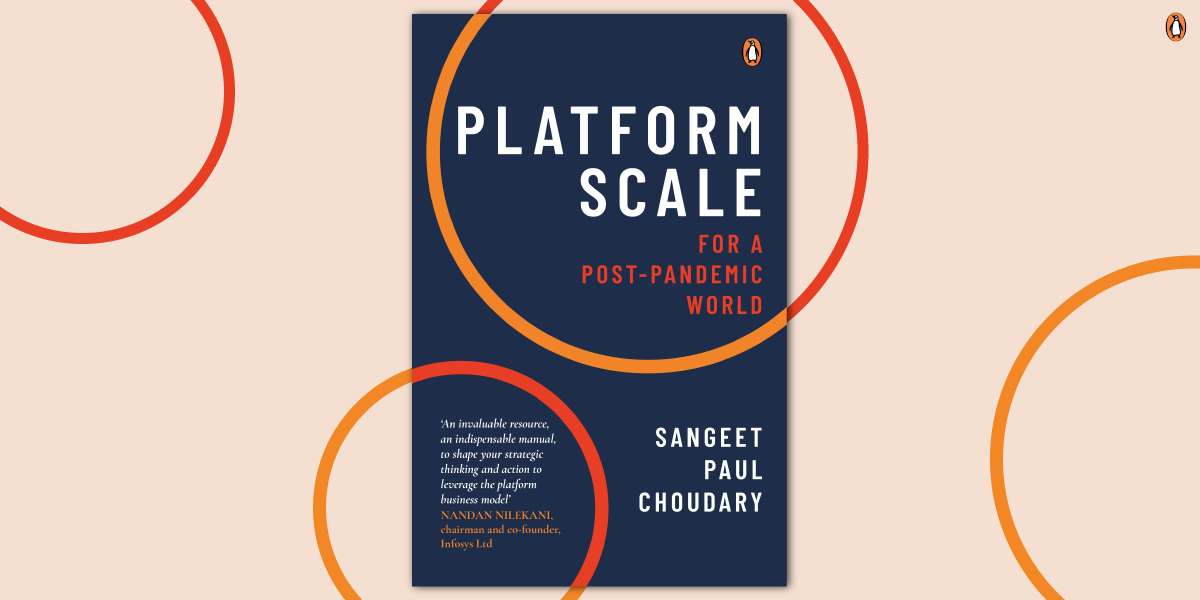
Platform Scale for a Post-Pandemic World by Sangeet Paul Choudary explains the inner workings of platform business models and their ability to scale rapidly. Here is an excerpt from the book that illustrates the same.


Scene One: The Pandemic


In August 2020, Apple became the first company to reach a $2 trillion market cap. That same month, Amazon’s Jeff Bezos became the first man to reach a personal net worth of $200 billion.


Even as most companies struggle to cope with the realities of a post- pandemic world, the platform firms—Amazon, Google, Microsoft, Apple, Facebook—have performed exceptionally well. Relatively smaller firms like Netflix and Shopify have also generated significant shareholder value.


The impact of platform firms during the pandemic has extended far beyond gains in the stock market alone. Google and Apple have joined forces to launch the Google–Apple contact tracing (GACT) platform, which uses application programming interfaces (APIs), Bluetooth technology and operating system (OS) level changes to assist in contact tracing.

While most supply chains reeled under the effect of the pandemic, Amazon and Alibaba came to the rescue. Even as the US–China trade war heats up, Alibaba’s Electronic World Trade Platform initiative is working with countries like Rwanda, Malaysia and Belgium to create a new infrastructure for global trade.


China’s platform economy leaders—Alibaba, Baidu and Tencent— have also been developing AI-driven solutions for COVID-19 diagnosis, vaccine development, contact tracing and risk assessment. Alibaba’s epidemic prediction solution model is trained on public data gathered from across China and predicts the trajectory of a coronavirus outbreak in a specific region with 98 per cent prediction accuracy. Meanwhile, the Alibaba Cloud hosts a virus genome sequencing application to diagnose new COVID-19 cases and has opened up its computing resources to research groups working on vaccine development around the world.


The pandemic has also highlighted the role of platforms as arbiters of discourse. Amazon took down books that it determined carried medical disinformation from its marketplace. Facebook, Twitter, Medium, Reddit and Pinterest have performed similar judge-jury- executioner roles, limiting search results for certain terms or entirely removing content deemed as misinformation.


Platform regulation was on the rise over the second half of the 2010s, and 2020 was supposed to be the year when Big Government would seize power away from Big Tech. Instead, what we’re seeing is quite the opposite.


The pandemic has accelerated the very grounds on which Big Tech was supposed to be regulated. Data access, privacy and usage laws are being revisited to counter the pandemic through contact tracing and other surveillance mechanisms.


As a final testament to the pervasiveness of the platform economy, platforms have started taking over governmental functions during the pandemic. This sounds dramatic but isn’t without precedent. During times of crisis, private firms often step in and take over activities which governments fail to perform. Platforms, as market mediators, are even more likely to take on such roles. Amazon’s directive to stop accepting non-essential products from third-party sellers who use its warehouses is an example of a private firm stepping in as a market regulator.


The pandemic has reinforced the importance of the platform economy. In the 2020s, we will see the platform economy gain further strength as the post-pandemic world uncovers new value pools for platforms to exploit.


Scene Two: The Post-Pandemic World


As we emerge into a post-pandemic world, we are already beginning to see the first signs of massive value migration.


More broadly, the post-pandemic world will see shifts in power across value chain actors. Platform scale and the ability to aggregate large and engaged user bases in order to attract other actors around your business will play a pivotal role. As an example, consider the rise in demand for online streaming services like Netflix and Amazon Prime Video during lockdown. These two brands may not use an open ecosystem of producers as other platforms do, but they benefit from many of the same drivers of platform scale that we explore subsequently in this book.


One might argue that things will return to normal post-lockdown. But it’s quite likely that they won’t. This seemingly transient shift in demand-side behaviour is driving a shift in negotiation power in the value chain.


With the pandemic-induced closure of major theatre chains, studios are breaking what’s known in the industry as the ‘window’— the three-month period between when a movie hits the big screen and when it’s offered for rentals or streaming. This window protects theatre revenues.


But with the pandemic, studios have been launching their films directly on streaming channels, eroding the window. Universal, with Trolls World Tour, announced that it will make movies available at home on the same day as their global theatrical release. In response, AMC Studios barred Universal from ever launching a movie in their theatres. Meanwhile, with AMC Theatres struggling, Amazon was looking to acquire its assets as of June 2020, further driving the consolidation we see during such periods of value migration.

In India, Amazon secured rights to premiere Bollywood movies, originally scheduled for a theatrical release, directly on Prime Video. Pre-pandemic, Amazon was getting into online sales of movie tickets to gain bargaining power over movie theatres and possibly negotiate the release window. With the pandemic, this balance is likely to further tilt in Amazon’s favour.


The post-pandemic world will also see new revenue models emerge. China’s Huanxi Media partnered with Douyin, a streaming platform by ByteDance, to launch its movies and TV shows direct to streaming on a new business model involving a combination of a licensing deal and a share of the advertising revenues. As studios like Huanxi Media test the success of releases on streaming platforms, they will likely use that data to negotiate with theatres post-lockdown. Theatres won’t go away, but their bargaining power may decrease. The combination of demand migration and a shift in bargaining power will likely create a permanent shift in power towards Amazon and Netflix. The longer the pandemic- induced changes last, and the greater the number of hit films and shows released direct to streaming, the more likely such a shift becomes.


The pandemic has induced a similar shift in the food retail value chain. With many countries moving into lockdown during the pandemic, there’s been a significant shift towards e-commerce in food retail. This is further reinforced by the disruption of food supply chains, a supply- side effect. A combination of these demand-side and supply-side effects has driven value towards online grocery platforms that can best harness these shifts. Demand has been increasingly centralized, with a few large online grocery platforms that can use centralized demand data to better predict demand patterns, improve stocking of fulfilment centres and better inform their supply chains. Post-pandemic, supply chain inspections and quality control requirements are likely to increase, and this will again favour larger players. This combination of demand- and supply-side effects will strengthen large grocery platforms.


In the post-pandemic world, we will increasingly see aggregation of demand with a few large players. With centralized and aggregated demand as a control point, large platform firms will be able to effectively orchestrate the entire ecosystem to deliver value to consumers and will be best positioned to harness value in these new value pools. As this book illustrates, leveraging technology—often commoditized—to orchestrate connected users towards new and efficient value-creating interactions holds the key to the business models of the future.


Platform Scale for a Post-Pandemic World serves as a maker’s manual, helping executives design and build platforms, and provides a lens to analyse the shifts currently underway and their implications for future platform-scale businesses.

Between coaching and controlling, there is only one winner

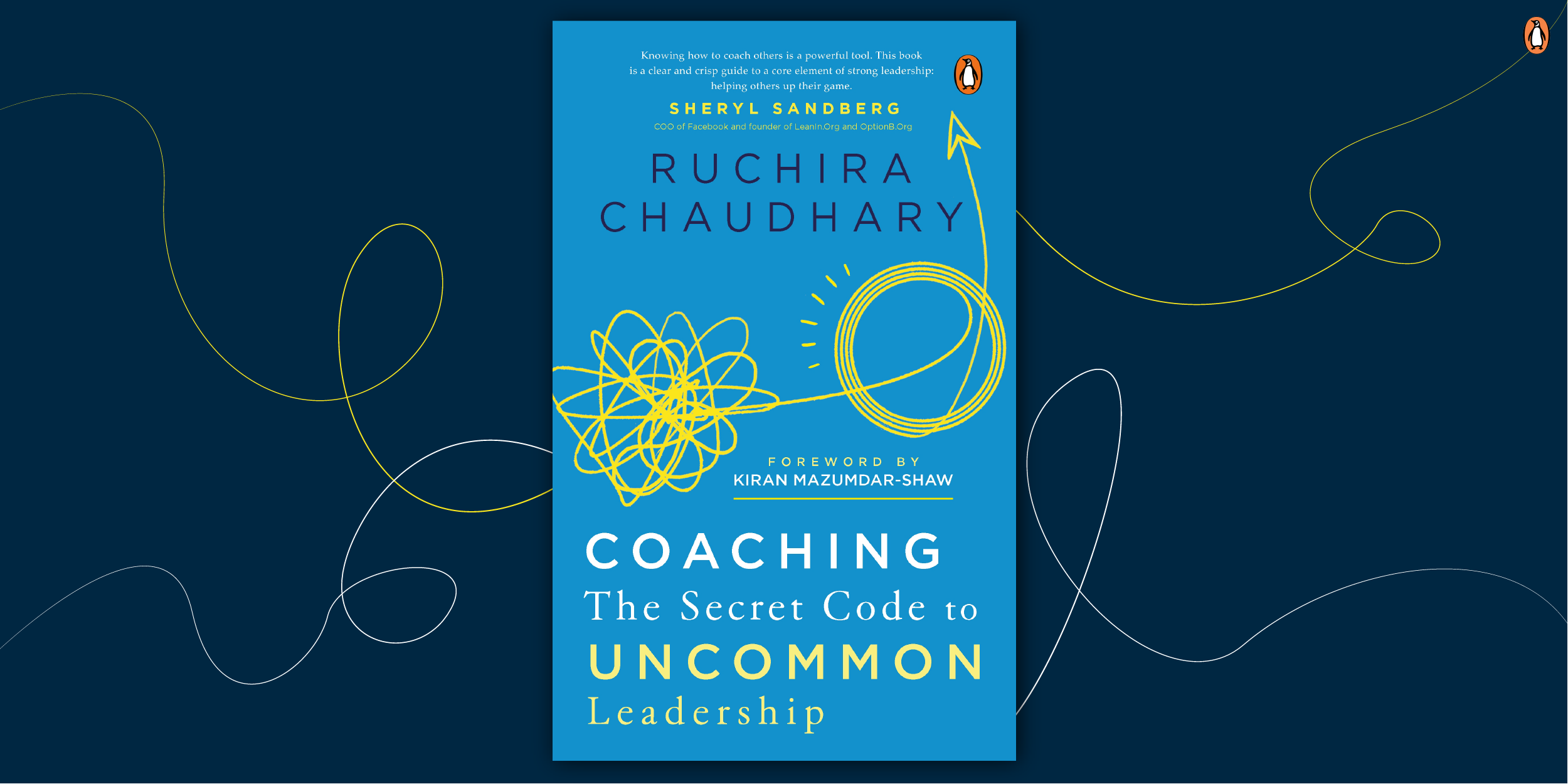
The world today is facing a looming crisis in leadership. Ruchira Chaudhary’s book Coaching: The Secret Code to Uncommon Leadership makes the crucial distinction between controlling from a position of power and coaching from one, which often make the all the difference between success and failure. Here is an excerpt:


‘You are failing us. But the young people are starting to understand your betrayal . . . You have stolen my dreams and my childhood with your empty words. The eyes of all future generations are upon you. And if you choose to fail us, I say we will never forgive you. We will not let you get away with this. Right here, right now is where we draw the line.’

A visibly emotional Greta Thunberg, the teenage climate activist, berated and excoriated world leaders for their inertia over the climate crisis. Her speech at the United Nations summit became symbolic of her generation’s demand for a better world. She has constantly provoked world leadership, demanding ‘how dare’ they not do more for the environment and for the future generations.

Would we—the current leadership of the business world— have to be similarly answerable to our younger colleagues one day for leaving the corporate world bereft of good leadership?

There is a massive leadership shortage in the world today even though there is enough talent, according to leadership gurus James Kouzes and Barry Posner. There are potential leaders out there who have a lot of talent. People who are eager, passionate and keen to succeed. And yet, we find ourselves in the midst of a leadership crisis when looking to steer the organizations (and nations) of tomorrow.

By 2025, 75 per cent of the workforce will comprise of millennials. Yet organizations around the world do not feel they have an ample leadership pipeline for current and future needs. About 86 per cent of the respondents to the latest World Economic Forum Survey (WEF) corroborate the view that we are indeed experiencing a leadership crisis. Companies believe they do not have enough leadership bench strength and the demographic shifts are creating more demand for exemplary leadership than the supply.

They go on to ask that if the need for leaders is so high—why aren’t we developing enough leaders? Why is the pipeline so bare, despite the knowledge that having the right leadership is critical to thriving and surviving in the future?

What holds true with the environment can also hold true for business.

Building sustainable leadership for the future is complex and unfortunately not enough of a priority, yet it is critical to the vitality of future businesses. As with the environment, the choice to act rests with us. We can bridge the leadership gap by nurturing and coaching our teams and our emerging leaders now, creating a much stronger pipeline of future leaders, ready to hold the rudder of the economy, when the time comes.

According to leadership scholar Jack Zenger’s research on the topic—this shortfall is fuelled by inadequate preparation. Potential leaders are simply not ready to lead others and most leaders are not getting adequate training. Not surprising, considering that the average age of a manager who goes through any leadership programme was forty-two!5

Just as you would not seek medical treatment from an untrained physician or allow an untrained mechanic to fix your new car—why would you let untrained, unprepared leaders steer your organization?

Why then aren’t we building enough leaders especially in light of such alarming statistics? Why aren’t organizations, educational establishments and governments spending more time, effort, energy and resources in developing this next line of leaders?

That’s because our approach to building leaders isn’t working!

Organizations (societies and nations) are often run according to ‘the superchicken model’, where the value is placed on star employees who outperform others. The model refers to ‘interactions among chickens’ observed in a study by Purdue University evolutionary biologist, William Muir, and explained later in this section.

As we saw in the case of Dr Big, Sachin and Travis—we are instantly drawn to our best performers, our stars, and there is a natural assumption that these superstars will morph into superstar leaders.

We’ve assumed that success is achieved by picking the superstars, the brightest men, or occasionally women, in the room, and giving them all the resources and all the power. The reality however can be very different says Margaret Heffernan.

The idea that top performers can be selected for desirable characteristics has a long pedigree. Charles Darwin, himself, relied upon animal breeding practices to explain how nature plays the same role as the farmer. During Darwin’s time in the mid-19th century, it was widely assumed that creating a better society was a matter of selecting the most able individuals.

This was the basis of an experiment conducted in the 1990s by Dr William M. Muir, professor of animal sciences at Purdue University. The purpose of the experiment was to increase the egg-laying productivity of hens. The most productive hen from each flock was selected to breed the next generation of hens, and so on and so forth, inevitably resulting in a flock of high-productivity chickens. In this model, scientists at Purdue University set out to build a flock of successful chickens by selectively breeding the best of the flock.

According to a Forbes article, ‘Muir left the chickens alone for six generations, expecting to see the super chicken flock turn into a breed of productivity thoroughbreds. But that’s not exactly what he found. The first group—the average chickens—were the same as before . . .’ These were plump, well feathered, healthy and actually producing more eggs than they were at the start of the experiment. ‘The super chickens, on the other hand, weren’t exactly fat and happy. All but three were dead. The individual superstars had pecked their kin to death.’

What should have amounted to a breed of ‘superchickens’ ended up producing a strain of hyper-aggressive hens that incessantly attacked each other.

Muir’s chicken experiment has become legendary among social scientists because it’s a kind of a parable—window into human behaviour and the way we work, and maybe also a lesson on how we could do better. It is not a surprise that these superflocks seem like an apt comparison to organizations of today. As Margaret Heffernan shares in her TED Talk, ‘Forget the Pecking Order at Work’, superchickens in the workplace can cause super problems.

…The superchicken model tells us many things about teamwork, collaboration and, most importantly, that being a star performer or being naturally gifted at your craft is sometimes not enough. These performers need to be nurtured and their craft honed if we want them to lead with the same panache and excellence.

~

Coaching: The Secret Code to Uncommon Leadership is a must-read for leaders, aspiring leaders and especially those that wish to transition from being just good leaders to extraordinary ones.

Technology and justice – a match made in heaven

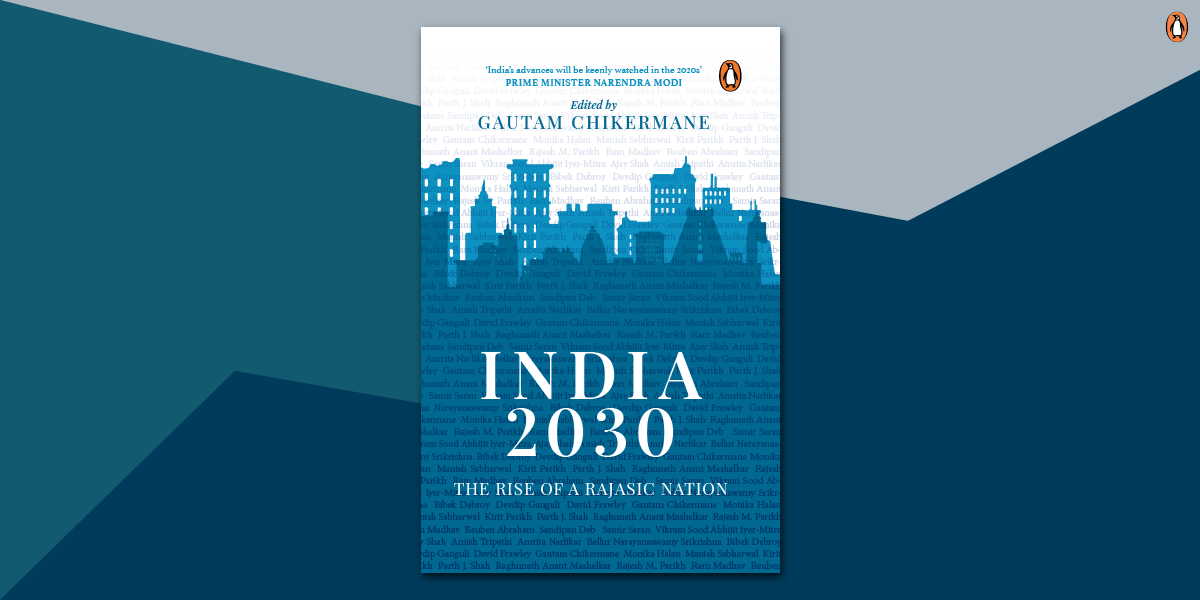
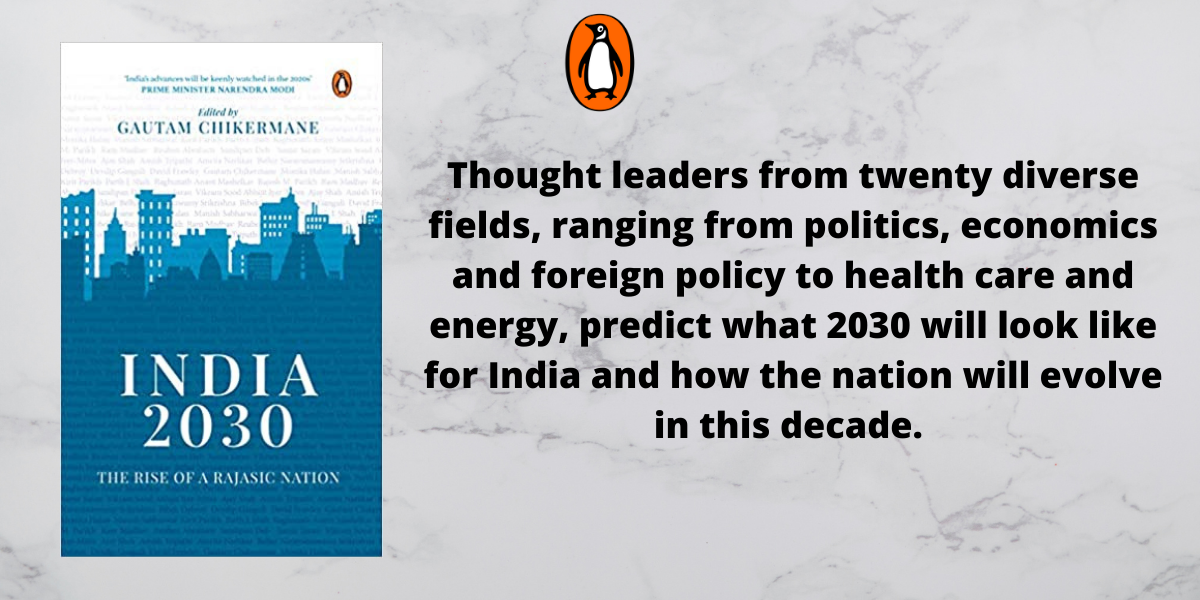
In India 2030, thought leaders from twenty diverse fields, ranging from politics, economics and foreign policy to health care and energy, predict what 2030 will look like for India and how the nation will evolve in this decade. The book can be seen as a handbook for citizens, a road map for policymakers and a guide for scholars. Its collection of essays capture the many aspects of a future that will see India becoming the world’s third-largest economy and a regional power before the decade gets over.

Here’s an excerpt from the book on how technology will revolutionise the way we mete out justice in the 2020s.


**

The biggest change in justice in the coming decade will be the use of technology in courts. Artificial intelligence will not only help organize cases, it will also bring references into the judgment at a speed not seen so far. Technology will ensure that those who do not have access to justice due to distance will not be excluded anymore. Appointments of judges to the higher judiciary, the high courts and the Supreme Court, will see a change in the 2020s. The collegium system has exposed its weaknesses; its critics say that the system has degenerated into cronyism and is arbitrary, with merit as a mere sideshow. Again, technology will ensure that by the end of the decade, this system is revamped and rationalized towards objective criteria. When India enters the 2030s, it will do so with a more robust, transparent and credible system.

The law and justice system operates to touch our lives in two ways. First, in the sphere of transactional events in our daily lives. Second, in the sphere of litigation: of lawyers, judges and the various fora for resolution of conflicts and disputes. Indubitably, there need be to be, and will be, drastic changes at both levels. The decade ahead will ensure these constitutional aspirations are fulfilled. Besides, citizens need to be educated generally, and in particular about their basic human rights. They need to be empowered to demand the satisfaction of these basic rights by society. They also need education on the means by which society can be compelled to accord to them the basic necessities of life. These too will expand in the 2030s.

Democracy, Constitution and Justice

These changes will not be easy to make. In a democracy based on adult franchise and wedded to the rule of law, like India, this could be a herculean task. While India has a brilliantly worded constitutional document, there are millions who are unaware of the true nature of the Constitution. There is a crying need to educate the people on their fundamental rights guaranteed in Part III of the Constitution and the Directive Principles of State Policy declared in Part IV, which determine the path of governance for the state.

front cover of India 2030
India 2030 || Gautam Chikermane


Access to information through low-priced telecommunications infrastructure will multiply the speed with which people will be able to learn and exercise their rights. When there is holistic awareness about the rights and the means of exercising those rights, the scene will shift to the legal arena. If the rights are required to be satisfied by the state, and if the state is deficient, the rights can only be enforced by resort to legal machinery and judicial fora. As people understand their rights and access to justice improves, litigation will rise.

Technology as a Change Agent

The extended lockdown in the wake of COVID-19 radically changed the lifestyles of all players in the field of justice— litigants, lawyers and judges—forcing them to resort to online resolution of disputes. It has also taught citizens the need for increased use of digitization. That would necessarily entail massive investment in the hardware and software required for effectively running virtual courts in the country. Though feeble attempts were made in the past for e-filing of petitions in the Supreme Court, they turned out to be mostly photo ops. Now there is an opportunity to test the verisimilitude of the words of the bard of Avon, ‘sweet are the uses of adversity’. And the Supreme Court has grabbed this opportunity with both hands and set the stage for speedy and more efficient delivery of justice in the decade ahead.

In May 2020, the Supreme Court introduced a new system of e-filing as a process tool and artificial intelligence as reference support infrastructure, both of which are characterized by efficiency, transparency and access to court- delivery services for every user. Effectively, India’s courts have ushered in a new and future-ready justice dispensation system that is not only in tune with the coming decade, but will also ensure it becomes the base for justice delivery in twenty-first- century India. The four key components of this system—24/7 filing, online communication of defects and scrutiny of matters, e-payment of court fees and digital signature for filing-related conversations—will speed up the court process. These process reforms stand on the infrastructure provided using artificial intelligence, and will play a big role in the organization of courts, categorization of matters and process automation. It will also enable extraction of information from court documents at the rate of one million words per minute and can be used by judges to decide a case. In the middle of COVID-19, these experiments in virtual courts have delivered success. Going forward, they will become the norm.

Once the use of artificial intelligence becomes a judicial standard, it will percolate and fix another problem: the continuing vacancies in judicial posts. Presently, 25–45 per cent of judicial posts remain vacant for unduly long periods, which puts a disproportionately large burden on the incumbents of other posts. This is a problem whose genesis is more in a lack of will than in a lack of resources. With appropriate artificial intelligence solutions, it will be easy to draw up a reserve list of judicial officers that can be kept updated, so that the proper person can be identified and promptly placed in the appropriate vacancy without loss of time. The 2020s will see this being implemented, and a major portion of the judicial pendency issue will be tackled effectively and resolved.

**


The kite rises into the air

Mirza Asadullah Khan Ghalib was born in Agra in the closing years of the eighteenth century. A precocious child, he began composing verses at an early age and gained recognition while he was still very young. He wrote in both Urdu and Persian and was also a great prose stylist. He was a careful, even strict, editor of his work who took to publishing long before his peers.

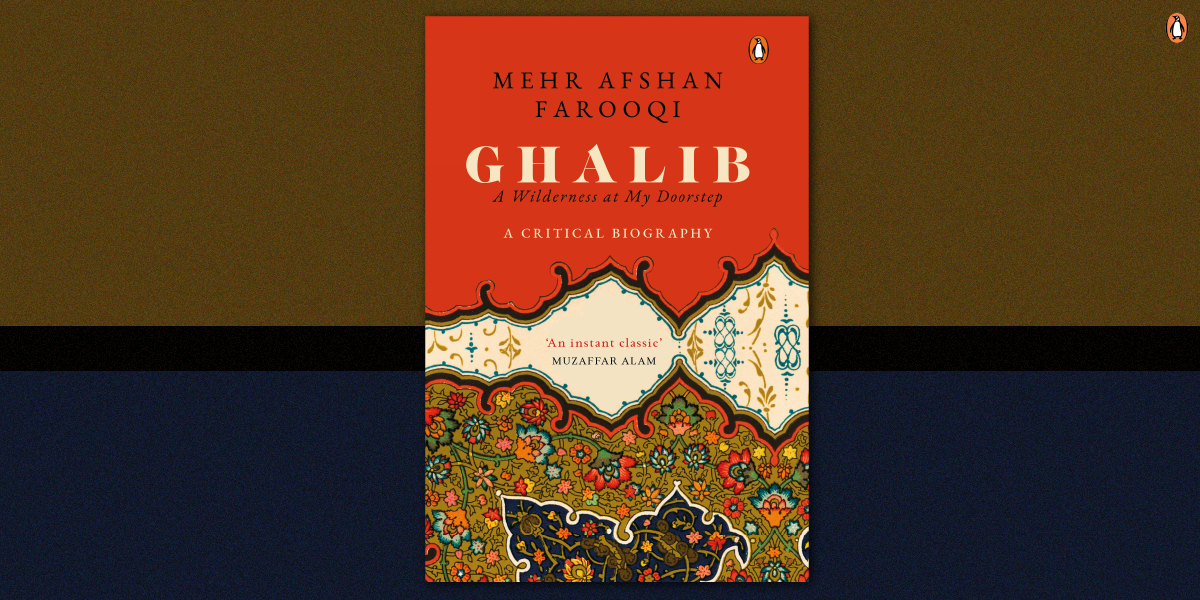
Ghalib’s voice presents us with a double bind, a linguistic paradox. Exploring his life, works and philosophy, Ghalib is an authoritative critical biography of Ghalib and opens a window to many shades of India and the subcontinent’s cultural and literary tradition.

Here is an excerpt from the text by Mehr Afshan Farooqi:


One day, my heart like a paper kite,

Took off on freedom’s string,

And began to shy away from me,

Became so wayward, it pestered me.


Ghalib, from an early composition


To tell the truth – for to hide the truth is not the way of a man free in spirit – I am no more than half a Muslim, for I am free from the bonds of convention and religion and have liberated my soul from the fear of men’s tongues.


Ghalib, in Dastanbuy


front cover of Ghalib
Ghalib || Mehr Afshan Farooqi


‘Mirza Asadullah Khan Ghalib, known as Mirza Naushah, titled Najmuddaulah Dabir ul-Mulk Asadullah Khan Bahadur Nizam Jang, with the nom de plume Ghalib for Persian, and Asad for Rekhtah (Urdu), was born on the eve of 8th of Rajab 1212 hijri (27 December 1797) in the city of Agra.’ Thus begins Maulana Altaf Husain Hali’s important biographical account, Yadgar-e-Ghalib.

Indeed, Hali’s critical, path-breaking memoir of his great ustad reconstructs the poet’s life story in a thrilling narrative woven with anecdotes, letters, personal trivia, first-hand observations and, most importantly, a penetrating analysis of Ghalib’s poetry and prose. Ghalib’s colourful personality shines in Hali’s lucid prose. It is hard to imagine how much or how little we would have known of Ghalib without Hali’s seminal work. There were Ghalib’s letters – volumes of them, a vital source of information – but the inspiration and direction that Hali’s work provided to generations of scholars remains undeniable.

In his youth, Ghalib was counted among the most handsome men in the city, be it Agra or Delhi. He was tall, with broad shoulders; his hands and feet were noticeably strong. Even in old age, when Hali first saw him, the signs of beauty were apparent on his face and demeanour. He was married on the 7th of Rajab, 1225 hijri (1810 ce) to Umrao Begam, the daughter of Navab Mirza Ilahi Bakhsh Khan Ma’ruf. Ghalib was thirteen years old at the time, and his bride eleven. Some years after his marriage, Ghalib moved to Delhi. It appears that he lived in Delhi for the next fifty years, till the end of his life. According to Altaf Husain Hali, in this long period, he never bought a house. He chose to live in rented houses; when he got tired of one house, he moved to another, but always remained in the same neighbourhood: Gali Qasim Jan, or Habsh Khan ka Phatak, or a place nearby.

Ghalib became an orphan at the impressionable age of five, when his father, Mirza Abdullah Beg Khan, was killed by a stray bullet in Rajgarh, Rajasthan, where he had gone with a force from Alwar to quell a rebellion. He was buried in Rajgarh. Raja Bakhtawar Singh of Alwar fixed a generous allowance for Ghalib and his siblings – his older sister, known as Chhoti Begam, and his younger brother, Mirza Yusuf. The children and their mother had always lived at the maternal home in Agra. In fact, Ghalib was born in the grand mansion of his maternal grandfather, Khwaja Ghulam Husain Khan Kamidan. Khwaja Ghulam Husain, a military commander (kamidan in colloquial speech) in the province of Meerut, was among the leading elite of Agra. His estate included numerous villages, and he owned many properties in the town itself. Ghalib’s mother, Izzatun Nisa Begam, was literate. Because Ghalib’s father lived with his in-laws, he was fondly known as Mirza Dulha, or Mister Bridegroom. Ghalib himself was known as Mirza Naushah, which, too, means Mister Bridegroom. Such nicknames were terms of affection used for males living with their in-laws. Presumably, Ghalib’s father died in 1801 (although Ghulam Rasul Mehr gives 1803 as the date), because we know that his paternal uncle, Mirza Nasrullah Beg Khan, died some five years later, in 1806, because of the injuries he suffered after accidentally falling off his elephant. Although Ghalib recorded his uncle’s death as an important event in his life, there is no evidence that he was close to his uncle; however, he and his siblings did become entitled to a pension because they were among Mirza Nasrullah Beg’s dependents.

**

Forces: consolidation of a rajasic India

Thought leaders from twenty diverse fields, ranging from politics, economics and foreign policy to health care and energy, predict what 2030 will look like for India and how the nation will evolve in this decade.


Editor Gautam Chikermane has masterfully weaved together essays by Abhijit Iyer-Mitra, Ajay Shah, Amish Tripathi, Amrita Narlikar, Bibek Debroy, David Frawley, Devdip Ganguli, Justice B.N. Srikrishna, Kirit S. Parikh, Manish Sabharwal, Monika Halan, Parth J. Shah, Raghunath Anant Mashelkar, Rajesh Parikh, Ram Madhav, Reuben Abraham, Samir Saran, Sandipan Deb and Vikram Sood into a single volume that looks towards India’s future.


India 2030 | Gautam Chikermane


Here is an excerpt from the book India 2030-


Beyond all other transformations in India, the 2020s will see a rajasic reawakening of the nation. This dynamic surge in the country’s soul will be driven individually, one citizen at a time; it will articulate its self-becoming as a coming together of India’s collective soul. Its manifestations will be physical and mental, its driving force spiritual. Supported by a political leadership that is in tune with the soul of India, Bharat, this change began in the 2010s. It will consolidate in the 2020s and reset the material destiny of India in the 21st century.


It will create a new balance between two forces. First, a centripetal force that will concentrate the energies of India to the principles of its nationhood, be informed by its own intellectual traditions and expressed through a modernity rooted in its soul. And second, a centrifugal force that will expand its footprint outwards, through a deeper and stronger engagement with civilised nations going hand in hand with a self-assured confidence that will keep a check on barbaric powers on its borders.


The 2020s will be a decade of transition. The transition will impact every aspect of India – its psychological approach, its democratic institutions, its diverse people, its global engagements. The shift will impact individuals, bind them, it will be powered by them and will simultaneously serve them as a collective. It will be a time when the very life force of India will be in constant motion towards a new equilibrium that will take inspiration from the nation’s swabhawa (essential character or spiritual temperament) in order to follow its swadharma (express its true essence).


The politics of a religious society

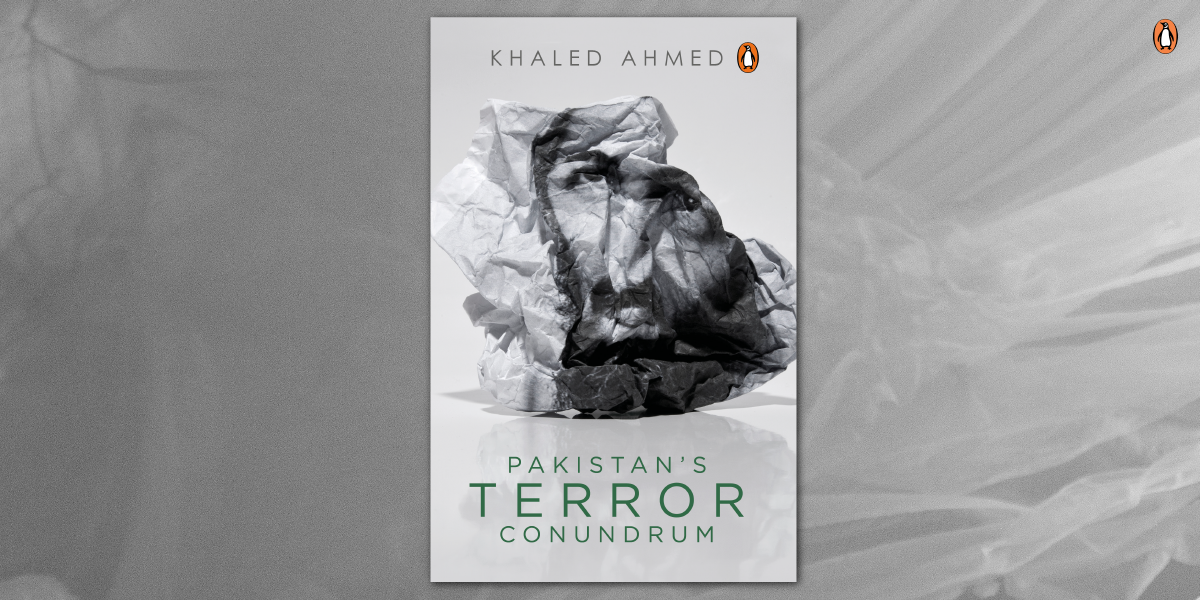
Journalist Khaled Ahmed examines how religion became intricately stitched into the fabric of Pakistan’s political and social framework. Read an excerpt from his book Pakistan’s Terror Conundrum:


The state of Pakistan was founded on the ‘consensus’ that it has to be Islamic. As a religious state, it seeks sharia as an ideal. All states must seek an ideal as their foundational teleology. There is muted disagreement between ideologues and pragmatists over this ideal. It is muted because of intimidation, but it is definitely there, especially after the Talibanization of the country through illegal action by the Islamists. It is the threat of religion as an extra-legal force that is causing many Pakistanis to wonder if the state can move forward into the future with Islam as its credo.

Front cover Pakistan's Terror Conundrum excerpt
Pakistan’s Terror Conundrum||Khaled Ahmed

…It is interesting to note that when in 1949 the Constituent Assembly of Pakistan adopted the Objectives Resolution, it used the less-threatening terms ‘Quran’ and ‘Sunnah’ rather than sharia, which later came to be embedded in Article 203(C) of the Constitution and is related to the Federal Shariat Court. The politicians who signed the resolution knew nothing about what the ‘guiding code’ meant, as they reassured the non-Muslim members that they would be equal citizens. The non-Muslims, not easily consoled, came down to Lahore only to learn from the clerics that they would be zimmis (non-Muslim subjects of a state governed according to the sharia) who would have to pay a special tax. When General Zia shoved the Objectives Resolution into the Constitution through the 8th Amendment, he removed the word ‘freely’ from the sentence, which assured the non-Muslims that they would be able to practise their religion freely. No notation was made in regard to the change of text. In 1949, the resolution had ‘God Almighty’ in its first paragraph; it was changed to ‘Almighty Allah’ in 1953 without any reference to the assembly that had passed it. The guiding principles, passed off as harmless in 1949, became menacing for both Muslims and non-Muslims with the passage of time.

Pakistan became less and less viable as it converged on sharia. Jihad used to be the grand Islamic subterfuge, confusing the world about war and ‘peaceful effort’; now it is straightforward qital (killing). It used to be accepted that jihad could only be declared by the state. Now it is consensually privatized and internationalized, thus undermining a fundamental function of the state. On the law of evidence, if a scholar leans on the Quranic text to challenge the clergy on the half testimony of a Muslim woman, he is told to shut up because sharia has already decided the matter. Sharia is what fiqh (Islamic jurisprudence) makes of the Quran and Sunnah. An Egyptian professor at the Saudi-funded International Islamic University of Islamabad contended that infibulation (female circumcision) was sharia in Egypt, under the practiced Shafi’i fiqh, but banned ‘wrongly’ under the official Hanafi fiqh.

… An Islamic state intent on a sharia-based revolution embraces isolationism as its programme, almost like the Stalinist slogan of socialism-in-one-country. After 1947, the state misunderstood itself as a castle of Islam. It fondly thought of itself as a society cut-off—that is what the word ‘castle’ means—from the rest of the world, with an ability to stand up to hostile sieges. It also presaged the totalitarianism of the clergy after the ‘modern’ state was overthrown. Pakistan also allowed the transnational concept of the umma to inform its ideology. It acknowledged that the concept of the nation state was not compatible with its teleology because of the concept of umma.

When it tested its first atom bomb, the state of Pakistan could not for long keep up the pretended doctrine that it was India- specific. It was soon acclaimed as an Islamic bomb, a transnational weapon that would threaten not only India but many other states across the globe. The moment it became a religious bomb, its transformation into a sectarian one was inevitable. Many respectable scholars believe that Pakistan’s Sunni bomb caused Iran’s Shia bomb to be produced. Just as a religious state Pakistan cannot avoid becoming a sectarian one, conceptually, its bomb too threatens Iran, in addition to threatening the entire non- Muslim world.

The terrorist outreach of political Islam is being opposed by strong powers that have the capacity to strike at its incubation grounds. If this polarity is interpreted as Christianity versus Islam, then Islam doesn’t benefit from the neutrality of the non- Christian world either. In fact, the non-Christian world feels equally threatened and is inclined to forget its contradictions with the dominant Christian powers, seeking to form an alliance with it to confront Islam. Given this near-total opposition of the world, political Islam, thriving on lack of secular education, has little chance of surviving as a winning force. Political Islam can only eat its own children.

The Islamic state is not viable in modern times unless Islam is reinterpreted. This is not the project of Islam today; this inclination to change the world by force to fit sharia. This springs from the intellectual attitude of not rejecting the premise when it fails to encompass reality. The suicide bomber of today is an agent of forcible change of reality to the premise of Islam. When not democratic, the Muslim state begins its process of decline as a state denying rights; when Islamic, it begins its process of decline under challenge from the clergy; when theocratic, it achieves stability by suppressing demands for rights under the doctrine of fasad fil ard (corruption on earth). The theocratic stage is the terminal stage, after which the state is either undone or finds refuge in reverting to the identity of the modern state with economic imperatives overriding religious passions. Pakistan is in the process of entering the terminal phase and is looking at itself once again in 2020, hesitating in the face of a possible negative reaction from a scared world.

~

Pakistan’s Terror Conundrum is a gripping examination of the origin story of Pakistan’s ideals, and how religion became the driving force behind Pakistani nationalism.


The real cost of COVID-19

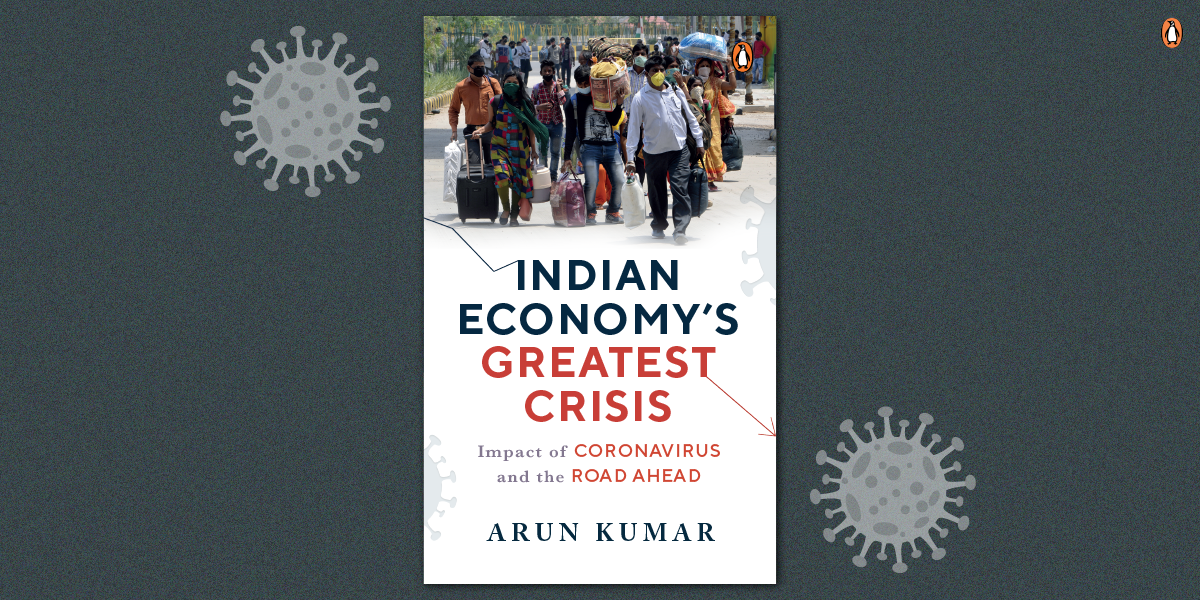
By now it is more than evident that the pandemic was different for the rich and the poor. Arun Kumar’s stellar research in his book Indian Economy’s Greatest Crisis  helps us understand the real cost of the pandemic and those who have had to bear it.

~

The Plight of Labour and Migrants

…The pandemic has brought into the open the terrible plight of the unorganized sector and its workers. They are the marginalized in society and policy seldom caters to their issues. They could not cope with the lockdown and now continue to suffer even with the lockdown eased under business pressure. …Without adequate testing, a large number of people will get infected as lockdown is eased. For herd immunity, if 60 per cent get the disease and develop immunity, 5 per cent of those infected will be serious, requiring hospitalization. That would be 4 crore people and most of them will be workers forced to go to their place of work. The poor are malnourished and don’t have the resources to get tested or get proper medical treatment. Even if only 2 per cent die, and this number will be larger if India’s weak medical system fails, 1.6 crore people will die—and most of them will be the poor.


Uncivil Conditions That the Urban Poor Live In

… Why was our medical system so weak and testing inadequate even months after it became clear in March that the disease would spread? It is a reflection of a political system and an executive that has hardly ever prioritized the welfare of the vast majority of the people it is supposed to serve. They are the residual, or the one’s marginalized in policymaking. If some benefits trickle down to them, that is well and good. If the poor rise above a given poverty line, the system claims it an ‘achievement’. The elite make it out that the poor ought to be grateful for the gains they have made since Independence.

The ‘achievement’ hides the uncivil conditions in which the poor live, especially in urban areas, and this now stands exposed thanks to the pandemic. They live in cramped and unhygienic slums, with little access to clean water and sanitary conditions. How are they to observe the lockdown and practise physical distancing? They live cheek by jowl and share toilets and water tankers. They have little savings, so they have to earn and spend on a day-to-day basis. With the pandemic, their earnings have stopped and they have turned destitute—this highlights the precariousness of their lives. One shock and they slip below the poverty line; one major illness in the family and they fall below the imaginary poverty line (Kumar, 2013). They had always been poor, but for policymakers, ‘progress’ was that they had jumped above the poverty line (APL).


Cause of the Mass Migration

…Industry and ruling elites capitalize on the poor working and living conditions of labour to lead their own comfortable lifestyle and make higher profits. Consequently, neither the state nor businesses grant workers their rights. For instance, a large number of workers do not get a minimum wage, social security or protective gear at worksites. They mostly have no employment security; often their wages are not paid in time; muster rolls are fudged; and there is little entitlement to leave. Given their low wages, they are forced to live in uncivilized conditions in slums. Water is scarce, and drinking water more so. Access to clean toilets is limited and disease can spread rapidly. There is a lack of civic amenities such as sewage. Their children are often deprived of schools and playgrounds.

front cover Indian Economy's Greatest Crisis - excerpt
Indian Economy’s Greatest Crisis||Arun Kumar

Now, using COVID-19 as an excuse, state after state has reduced even what little security was available to workers, by eliminating or diluting various laws to favour businesses. In Uttar Pradesh, at least fourteen of the Acts have been changed, such as the Minimum Wages Act, 1948, the Industrial Disputes Act, 1947, and the Payment of Bonus Act, 1965. It’s the same thing in Madhya Pradesh and Punjab. The plea is that this is needed to revive economic activity. The chief minister of Madhya Pradesh has said that this will lead to new investment in the state (Singh, 2020).

…In India, workers are characterized as either organized or unorganized. Those in the former category work in larger businesses and have some formal rights (which are being diluted) but, often, they find it difficult to have them enforced. Increasingly the big and medium businesses are employing contract labour provided by labour contractors from the unorganized sector, rather than permanent workers. Businesses pay contractors, who then pay the labourers part of the money they receive. So businesses claim that they are paying the minimum wage but the workers aren’t getting it.

In a scenario where even the minimum wage is inadequate for a worker to lead a dignified life, what chance do those receiving even lesser stand to lead a civilized existence?

Businessmen who now talk of livelihood have never shown such concern for the workers in the past. They have paid low wages to earn big profits. How else, at such a low level of per capita income, could India have had the fourth largest number of billionaires in the world? Clearly, most of the gains of development over the past seventy-five years, more specifically since 1991, have been cornered by businessmen. They have made money not only in white but also huge sums in black (Kumar, 1999).

Businesses have manipulated policy in their favour—before 1991, by resorting to crony capitalism, and since then by bending policy in their favour, curtailing workers’ rights and pressurizing the government to weaken its support to the marginalized sections on the plea that the markets be allowed to function. Now using COVID-19 as the shield, workers’ rights are being further curtailed. No wonder, then, that the country collects only about 6 per cent of the GDP as direct taxes despite huge disparities. The burden of taxation falls on the indirect taxes, such as GST and customs duty, paid by everyone, including the marginalized.

The lesson to be learnt from the pandemic is that India has not been able to cope with it because of the adverse living conditions of the majority of its people, namely the poor. Now labour laws are being diluted (such as increased working hours and reduced wages), which means a worsening of their living conditions (Kumar, 2020g). This will ensure that the country will flounder again when the next pandemic strikes. The tragedy is that India is today headed towards societal breakdown for short-term gains of some sections of society. But it appears that a rethinking of the prevailing ruling ideology always comes at a heavy cost.

~

Indian Economy’s Greatest Crisis  is a detailed and insightful work examining the various fault lines of the Indian social fabric and how they’ve been affected by the pandemic.

Lord Krishna’s fatal encounter with the hunter Jara

As the Mahabharata war wages on, it shows no mercy and takes no prisoners. Death and destruction abound.

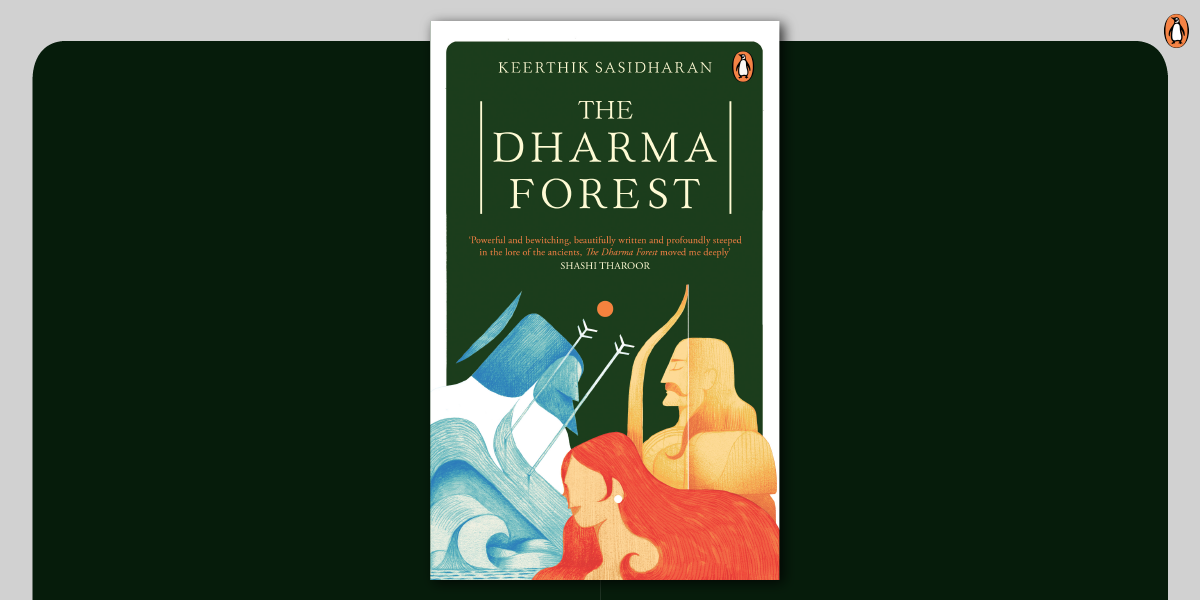
In the midst of a world rendered unrecognizable by the lust for power, malice and the machinations of war stand Bhishma, contemplating the immeasurable death he sees around himself as a man who cannot die, Draupadi, above and beyond the chaos and yet at the very centre of it, trying to protect her husbands at any cost, wondering whom to trust, and Arjuna, beloved, conflicted and melancholic in equal measure, uncertain of the ultimate cost of the war he is intent on winning. The Dharma Forest is a magnificent first novel in a trilogy filled with complex characters, conflicted loyalties and erotic jealousies from India’s most beloved epic.

Here’s an intriguing excerpt from the book.

**

By the time the arrowhead left the bow’s frontal arch, Jara was already filled with regret. He could have been more patient; he could have not abandoned his aspiration for non-violence; he could have not surrendered to who he truly was—one who loved to hunt and kill. All the while as the arrow travelled, Jara noticed that the trees had stopped swaying and the winds ceased their frenzied moves. Every falling twig was now audible, each drop of dew hit the grounds with a crackle. Up from the trees, the leaves began to abandon their tenuous bonds with the branches, frogs scampered around their puddles nervously and birds in the skies circled anxiously, like expectant fathers at the hour of birth. The forest stilled itself in anticipation. And the evening sky had acquired a darkness that Jara had rarely seen. The world was now brimming over with portents that not even the darkest oracles could fathom. And then, all too suddenly, he heard the arrow land with a thud and tear into some flesh which, ironically, brought about a semblance of normalcy to that moment thanks to the iron laws of cause and effect which had now seemingly prevailed. His arrow, as always, had found its mark, and Jara sighed in relief—finally!—as if some long nursed revenge had eventually found its release. From afar, he could see a pool of blood begin to flow and wet the grounds, and a voice in his head told him that an hour of sacrament was near.

Jara ran towards his mark, past the small ponds and the trees, to inspect the animal that lay there. Even as he hurried, he prayed that he may find an injured deer and not a dead one. To assuage his guilt, he told himself that he would bandage the animal and let it go. The flute’s melancholic song, meanwhile, had come to a stop. From the skies a roar broke out and boomed through the trees and branches, which had already shed their leaves, as if an untimely winter had arrived. Jara found himself running through a corridor of yellow and green when he heard the forests echo three times.

Jayaa, Jayaa, Jayaa…


front cover of The Dharma Forest
The Dharma Forest || Keerthik Sasidharan


Before he could make sense of it all, he had arrived at a spot where blood seeped freely into the earth. And there he found a man with many arms—was this a God who had lost his way, Jara asked himself in wonder and fear; his complexion was as dark as the blue nights of Jara’s dreams, and from his feet, blood trickled steadily. Jara’s arrow had sliced away the ankle of his foot. Instead of pain and horror, however, this injured otherworldly person sat there in silence, with his eyes closed, as if he was meditating. And then, perhaps stirred by Jara’s presence, he opened his eyes and smiled at him. A generous and beatific smile that took Jara by surprise, for he had expected to be on the receiving end of anger and abuse. Overwhelmed by grief and guilt on having hurt somebody, Jara bowed to this injured being and for reasons unknown to him, tears welled up in his eyes. He bent down to touch this being’s feet, out of concern and in regret, as if to make amends for this gratuitous injury. When Jara looked up again, the many arms on his body were no longer there. He was just another ordinary man, even though his presence exuded a form of gentleness and beauty of the kind that Jara had never thought possible in another human. Perhaps, Jara tried to reason, it was another trick played by the forest. Then, this kindly one spoke, ‘Jara, my dear friend. I hope it wasn’t too difficult for you to find me.’

Jara looked at him again, only to recognize an intuition froth within him that his wanderings through the forest which had lasted for weeks, had now come to an end. The man’s presence—despite the blood and agony all around—filled Jara with a kind of peace that he had not experienced in a long while. Then, even as he bled to death, the man said with an easy contentment: ‘I am Devaki’s son, Rukmini’s husband, and Arjuna’s friend. I am also known as Krishna of the Yadavas.’

He paused to let silence enter between them and then said to Jara, ‘I have waited for you my whole life.’

**

error: Content is protected !!