

Publish with Us

Follow Penguin

Follow Penguinsters

Follow Penguin Swadesh

Budhini Mejhan – ‘The woman who persevered’

The story of  Budhini Mejhan is a nexus of several socio-political strcutures. She was ostrasized by her village and lost her job for an innocent gesture, which was seen as a violation of Santhal traditions. Through Sangeetha Srinivasan’s beautiful translation, Sarah Joseph’s literary sketch of Budhini Mejhan is vivacious, hopeful and endearing. Here is an excerpt:

~

Let us begin with the woman who persevered. Not how she recaptured the dancing ground, but how she ran incessantly without knowing whose land to set foot in. Waking up in the fourth phase of the night, she lit her stove and boiled some water. If she had a pinch of tea leaves or rice, she would have made some tea or gruel.

Front Cover of Budhini
Budhini || Sarah Joseph, Sangeetha Sreenivasan (Translator)

‘Oye, Ratni, wake up! We have to be there straight away. Please don’t wake your baba. The moment he’s up he will start whining, “Why toil over something in vain, Ratni’s ma? You have been running for a long time now, haven’t you? Will your complaints reach their ears? Better get back to sleep than wear off the soles of your feet.” But, Ratni, it doesn’t work like that; we should barge in and vex them as often as not. In the end, they will be forced to make a decision. Your baba is depressed, but could we endure more than this! Put your blankets over those boys, Ratni. Poor kids, they have been cold all night. Here, take this hot water. It’s not likely that Jauna Marandi will wait for us. His tongue has no bones. And if we don’t make it on time, he will go on grumbling about it till we get there.’

Languorous but still on her feet, Ratni staggered out of the house. Could this shack covered with asbestos sheets, tattered burlaps and rags, sandwiched between the walls of two multi-storeyed buildings, be called a home? Shoving the ragged fabric covering the back of the house aside, the child squatted on the ground and peed. From the mud kanda on the ground, she diligently filled water in a coconut shell and rinsed her mouth and face. She shuddered because of the cold.

‘Ratni Mei!’ Hearing her mother call out in a hushed voice, she went inside without delay. A little black dog followed her into the room, squeezed itself to make space between the sleeping boys and then curled up on the floor. Looking into her eyes, it wagged its tail in concern.

…‘We are very late, Ratni Mei. It seems Jauna Marandi has already left.’ Ratni’s mother was dejected. Loosening the knot at the end of her pallu, she took out some coins and counted. ‘Jauna had promised to take us for free. What should we do now! I saved these coins to buy medicine for your baba, but now we will have to spend them on bus tickets. But if you can walk, Ratni, there is a shorter route through the forest.’

Ratni didn’t say whether she could walk or not. Her teeth chattered, thanks to the cold.

While life saunters, the sun might as well rise in the west one day, marking the end of order. Then daybreak will turn into the hour of darkness. Like time suspended, nothing will be understood. Not everyone will overcome the bewilderment that is yet to come.

As Jauna’s jeep climbed up the road from Asansol to Dhanbad, an arm adorned with thick silver bangles suddenly appeared right in front of his vehicle. A strong arm! Nothing else was visible in the fog. Jauna forced his weight down on the brake pedal.

‘Get in,’ he bawled.

The DVC workers noticed the woman and child get into the jeep through the impenetrable fog. The woman wore a mud- coloured sari with a green border and the girl a crimson sweater. The child carried a bundle of clothes which she hugged close in a bid to protect herself from the insufferable cold. She looked not more than seven or eight. The woman had a grey shaded shawl wrapped around her and a lengthy red fabric bag on her shoulder. There was no seat. They hunkered down on the floor.

It was only the next day that Jauna Marandi realized, much to his shock, that the woman and child had boarded his jeep and alighted at the gates of the DVC to commit suicide.

~

Budhini is an exploration not only of the social laws of identity through the story of Budhini Mejhan but also the imbalanced burden that modernization and urbanization places on communities reliant on ecological methods of sustenance.


Lighten your soul—Love, forgive, bless

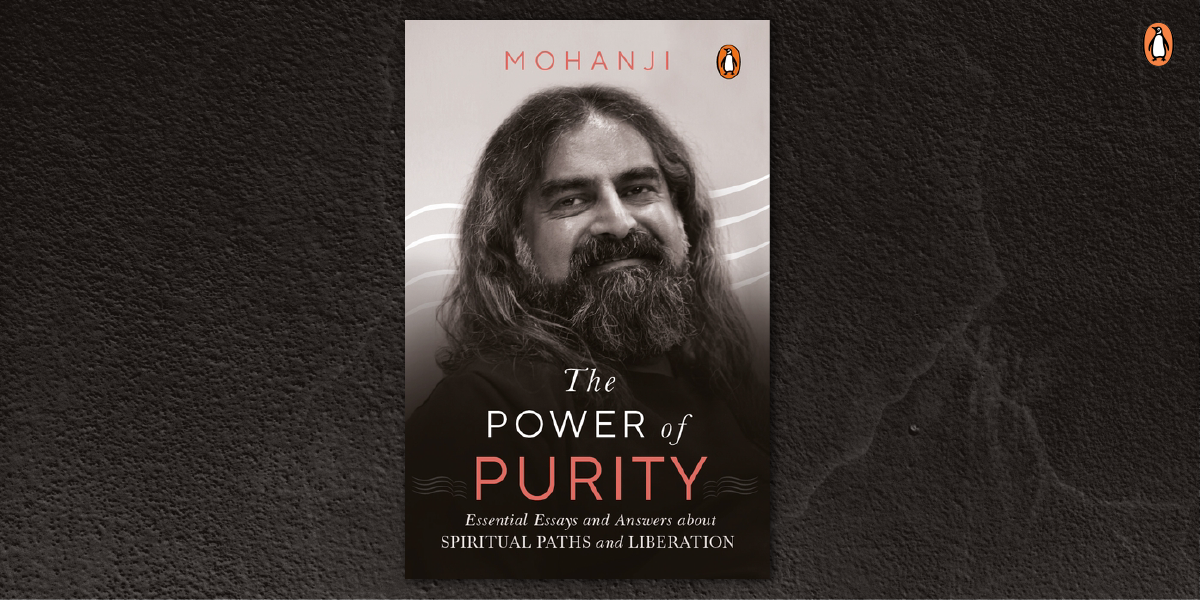
With our birth begins our life cycle and it ends with our death. We all are transitory beings. We can own nothing on Earth on a permanent basis. When we understand that all relationships, situations, sufferings, and emotions are perishable, we realise that the only conquest useful to us is our own mind. The real and only worthwhile journey is into our selves and our soul, for our soul is our greatest guru. When we understand our own soul, we understand all souls. They are all one. The Power of Purity aims to familiarise us with the nuances of our lives and to remind us to steer away from the illusions that the world offers.

Here’s an excerpt from the book in which the author introduces us to a way of life that will help us become aware of ourselves and elevate our soul.

*

Front Cover of The Power of Purity
The Power of Purity || Mohanji

Bless all. It will make you serene and light. Blessing expands you. It makes you light. When we bless all the people we like and all the people we do not like, we truly become the perfect expression of the Almighty. His true expression is unconditional love. When we remove all hatred and fear from our mind, we become an embodiment of love. Love expands. Love makes our life enjoyable. When we express sincere gratitude to all the objects and beings that helped our existence on Earth, we become universal. Once we understand the true relevance of the food that we have consumed so far, the houses that sheltered us, the books that gave us knowledge, our parents and our teachers, and, above all, the element of divinity that sustained us, we will be filled with humility and deep gratitude. Most of our vital functions, including respiration, circulation, digestion, heartbeat and even sleep, for that matter, are controlled by our subconscious mind. All these things are working in perfect synchronization because our conscious mind has nothing to do with it. We are given the time, space, intellect and situation to act out our inherent traits. What do we have in our control? Why do we blame others? Why do we entertain guilt at all? What is there to be afraid of? All experiences have been lessons. We could not have changed anything. So what else can we do, except express unconditional love and compassion? What else can we do but bless everybody and everything? When we realize that we are not really the one who does everything, we will see our ego getting nullified and our doership getting dissolved. We will then operate in perfect awareness and gratitude.

God is within us. God is to be loved, not feared. The soul element that fuels our existence is the God within all of us. God, the one who generates, operates and dissolves. Hence, all of us possess the same god element. No one is inferior nor superior to anyone. Some evolved higher through rigorous practices, contemplation and meditation. Through lifetimes of efforts, they attained higher awareness. That’s all. In principle, all are one and the same. The same soul element fuels the existence of all living beings, which includes plants and animals. Just like the same electricity is used to operate various equipment, the same soul operates various bodies, and some of them are human.

All of us are temporary custodians of a body, of money and possessions. It is the same with relationships. Everything is temporary. Everything has a definite longevity. There is no room for egocentric expressions, if we digest this truth. All we can do is forgive everything. Bless everything.

**

To understand your consciousness, the meaning of life, and the various facets of existence, read Mohanji’s The Power of Purity.

Alaap – A glimpse into the imminent

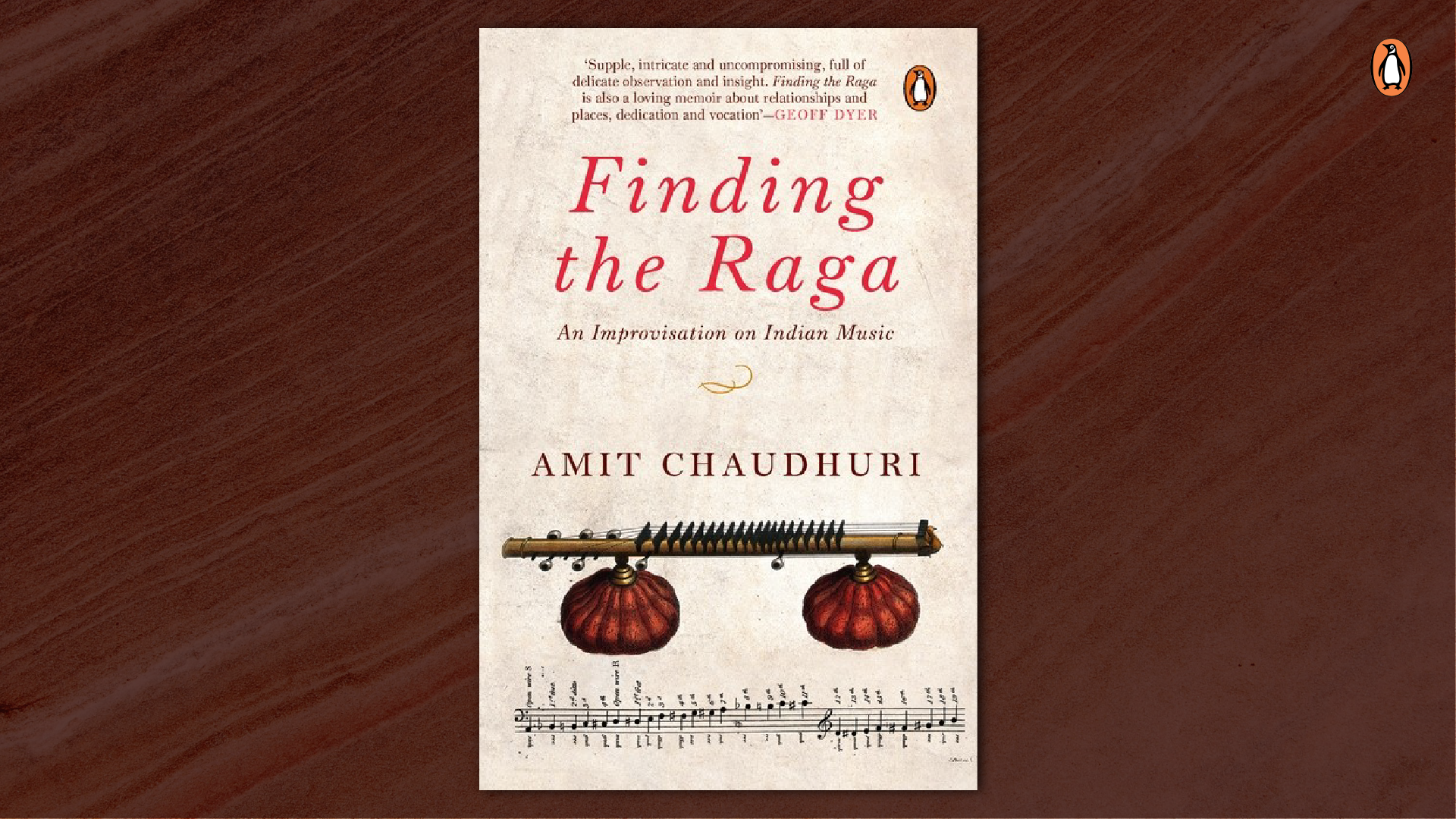
Finding the Raga is Amit Chaudhuri’s singular account of his discovery of, and enduring passion for, North Indian music. A work that simultaneously serves as an essay, memoir and cultural study on an ancient, evolving tradition. It aims at altering the reader’s notion of what music might – and can – be. Tracing music’s development, Finding the Raga dwells on its most distinctive and mysterious characteristics: its extraordinary approach to time, language and silence; its embrace of confoundment, and its ethos of evocation over representation. The result is a strange gift of a book, for musicians and music lovers, and for any creative mind in search of diverse and transforming inspiration.


Here is a glimpse into this profound work of art.

~

Front cover of Finding the Raga
Finding the Raga||Amit Chaudhuri

Not long ago, I found myself discussing narrative with a group of academics over dinner. Someone said that narrative doesn’t have to have a beginning, middle, and end in that order. I pointed out that there were narratives in which the beginning took up so much time that you didn’t know when you were going to arrive at the actual story. Personally, that was the sort of narrative I liked. I told the academics what the filmmaker Gurvinder Singh had said in a talk in Delhi about the screening of his first film Anhe Ghore da Daan (‘Alms for a Blind Horse’) at a film festival in Canada. Singh said that the ten-tofifteen-

minute prologue – which he showed us before his talk – had presented the director of the film festival with a problem. She wanted him to cut it and move straight to the main narrative. He said he’d rather not show the film at all than dispense with the opening. The film’s prologue was significant. Nothing happened in it except the establishment of a certain meandering lifelikeness. Since this lifelikeness, this quality of constantly revisiting the present moment, is more important to me than the story, I actually wanted Gurvinder’s entire film to have been a prologue.

While writing these pages, I wondered if I could call the first chapter ‘alaap’, thereby playing on the meaning of the main segment of khayal. ‘Alaap’ means – presumably in all North Indian languages – ‘introduction’. It’s also a major component of khayal. The initial delineation of the raga, before the vilambit or slow composition starts to the tabla’s accompaniment, is called ‘alaap’. So is the broaching and exploration of the raga in the vilambit composition, where the singer ascends reluctantly from the lower to the upper tonic, subjecting the notes and the identifying phrases to repeated reinterpretation. This is the alaap too; through a progression of glissandos, it contributes to a full emotional and intellectual engagement with a raga, and can take up to half an hour or more, depending on the singer’s inventiveness or obduracy. The alaap is all; its detail justifies the genre’s name – ‘khayal’, Arabic for ‘imagination’. From alaap we move to drut, fast-tempo segments, which are more virtuosic, less lyrical and tardy in character. No other music tradition allows the prologue to be definitive in this way; not even the Carnatic or South Indian tradition, or the dhrupad, precursor to the khayal, has a counterpart to the alaap’s divagation. Carnatic performance has alapana, a long opening without percussion in which the raga is established. But alapana, like the nom tom alaap in dhrupad, soon takes on a quasi-rhythmic form: that is, the syllables are sung in and out of metre, although percussive accompaniment is still to come in. The rhythmic element in alapana and in the dhrupad’s long introductory passages creates a sort of excitement to do with the climactic; in the khayal, though, all expectation of the climactic is set aside. In fact, the rhythmless alaap in khayal is relatively short; the percussion instrument, the tabla, soon joins the singer, playing a tala (a cyclical measure with a fixed number and allocation of beats) at an incredibly retarded tempo. The singer proceeds in free time, heedless of the tala and the tabla player except when they must return, after an interval, with the composition to the one, the first beat, of the time cycle: the sama. Otherwise, unlike Carnatic music or the dhrupad, free time reigns over the exposition, notwithstanding the tabla, which, in a feat of dual awareness, the singer nods to and largely ignores. The alaap is a formal and conceptual innovation of the same family as the circadian novel, in which everything happens, in an amplification of time, before anything’s begun to happen. At what point North Indian classical singing allowed itself the liberty of making the introduction – that is, the circumventory exploration that defers, then replaces, the ‘main story’ – become its definitive movement, I don’t know; it could go back to the early twentieth century, when Ustad Abdul Wahid Khan’s romantic-modernist proclivities left a deep impress on North Indian performance.

The alaap corresponds with my need for narrative not to be a story, but a series of opening paragraphs, where life hasn’t already ‘happened’, ready for recounting, but is about to happen, or is happening, and, as a result, can’t be domesticated into a perfect retelling. Should I call this chapter ‘alaap’, then? Or should I give the book that name?


A diving holiday, disturbing discovery, and kidnapping

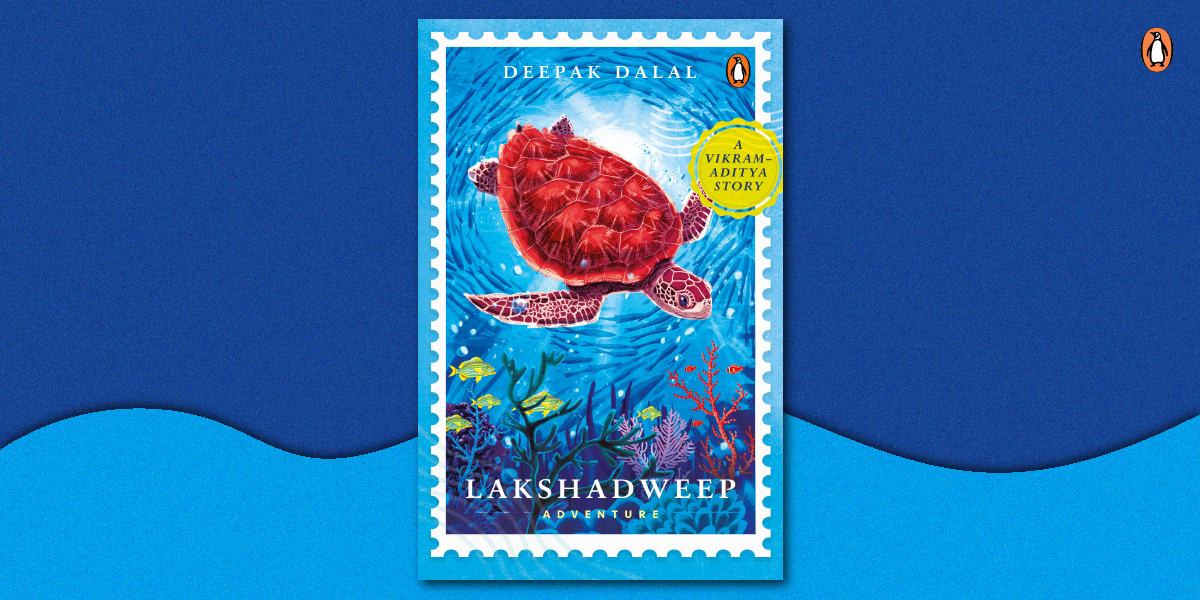
Far out in the Arabian Sea, where the waters plunge many thousands of metres to the ocean floor, lies a chain of bewitching coral atolls – the Lakshadweep Islands. Vikram and Aditya dive into lagoons with crystal-clear water and reefs that are deep and shrouded in mystery. But when they stumble upon a devious kidnapping plot, their idyllic holiday turns into a desperate struggle for survival.

Here is an excerpt from Deepak Dalal’s new book, Lakshadweep Adventure where Faisal – the boy who’s care Vikram and Aditya are left in – makes a disturbing discovery.

Front Cover A Vikram–Aditya Story: Lakshadweep Adventure
A Vikram–Aditya Story: Lakshadweep Adventure

Faisal was in a bad mood. His uncle’s impending arrival hovered like a dark cloud above him. And his friends’ decision to abandon him for the day only made things worse.

Faisal had noticed the wind the moment he had strolled out on to the beach, and his mood had soured even further when he saw his friends enjoying themselves. He wished he had accepted Aditya’s offer as he watched them speed their boards across the lagoon. But it was too late now. His uncle would be arriving shortly.

Faisal sat under a palm tree. He passed time drawing figures in the sand. Above him, palm fronds shook and fluttered as the wind whistled through them. The sun shone brightly. The sand intensified its glare, forcing Faisal to shut his eyes. It was pleasant under the tree and the wind was crisp and enjoyable. The rustling of the palms overhead soothed him and he soon fell asleep.

The tide slowly crept up the beach and finally washed over Faisal’s feet, waking him with a start. He looked at his watch, muttering softly to himself. It was past midday.

Basheer uncle would have arrived by now. He dusted sand from his clothes and rose hurriedly to his feet.

Faisal heard raised voices from the living room window when he entered the yard. He crept forward till he was below the window and peeped in.

His uncle was standing in the centre of the room, facing a group of men.

Basheer Koya was a copy of Faisal’s father, except that he was fatter and there was hardly any hair on his head. But unlike his brother, whose manner was calm and collected, Basheer Koya’s face was contorted with rage. His cheeks were dark and red and he was shouting like a man possessed.

‘Fools!’ thundered Basheer Koya in Malayalam. ‘Monkeys have more brains than you lot. Idiots. I thought you had ears. But obviously you don’t. You weren’t to set foot in Kalpeni. How many times did I tell you not to come here? Yet, not only do you come to the island, but even more brainlessly, you visit my home.’

A bearded man with big, wide shoulders spoke. ‘Sir,’ he began. ‘Sir—’

Basheer Koya ranted on, cutting off the man. ‘I travelled all the way to Kochi to make certain that no suspicion fell on me and I returned only after the operation was over. And you? I come home and see you fools sitting in my house. I take all these precautions and now everyone on this island can link me to you and from there to the operation.’

‘But, sir—’

‘You were under orders to head to Tinakara Island. What are you doing here?’

‘Sir. I was trying to explain just that, sir. We were headed for Tinakara. But we had engine trouble, sir. A terrible rattling noise came from the engine and we were forced to head for the nearest island. You can speak to the mechanic, sir. He looked at our boat and said we were lucky to make it here to Kalpeni.’

The explanation diminished Basheer Koya’s rage, yet he continued to glare at the bearded man. ‘Kumar. Where is Kumar?’ he barked.

‘Kumar is safely on board, sir. There’s no need to worry about him. He is in the lower cabin and one of our men is with him all the time. He can’t make a sound or do anything. He won’t be able to alert the mechanics.’

Faisal froze. This was not for his ears. It was wrong of him to eavesdrop. He wondered if he should leave, but who was Kumar and what was his uncle up to?

‘No one is to know that we have a prisoner on board,’ growled Basheer Koya. ‘Even Allah will not be able to help you if he is discovered. I make no allowances for mistakes.’ Basheer Koya stared at his men, shifting his gaze from one to the other. ‘Do you understand?’

There was silence in the room.

Faisal understood full well what his uncle meant. He shuddered.

***

Journey through these breath-taking islands with a tale of scuba diving and sabotage, set in one of India’s most splendid destinations.

The ‘Third Vision’ of the world is need of the hour

We essentially need a ‘third vision’ of the world that transcends national interests and takes into account global issues, from trade to environmental impacts. We need a vision that values human capital more than financial capital. A vision that works for everyone to attain a multipolar world, where people at the bottom of the economic pyramid benefit the most. We need to ask the world’s people: Do they want to live forever with poverty and hunger, with inequality and unemployment, under the shadow of discrimination and fear, with the police at every corner and the military at all borders? Or do they want to live in peace with friendly neighbours, in a clean environment, and with respect, dignity, equality, opportunities and hope for all? The present reality is scary. Don’t we want to change it?

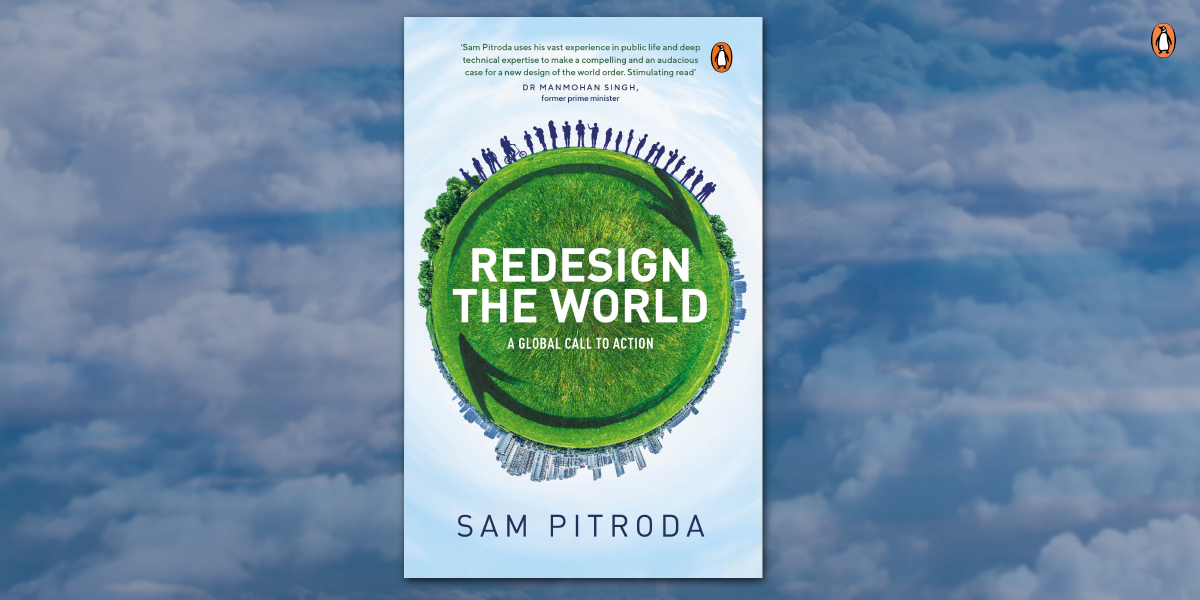
Redesign the World A Global Call to Action
Redesign the World: A Global Call to Action || Sam Pitroda

We do not want just the ‘open’ vision of America or the ‘closed’ vision of China. We want a third vision of the world where America is open to engagement, and China is engaged in openness. We want a reset of the world so that we can redesign it. We want to reset international interests over national interests, human diversity over human differences, globalism over nationalism, inclusion over exclusion, non-violence over violence, rationality over religion, and respect over race. We want international cooperation on climate change, global health, poverty, hunger, violence, security, amity with neighbours and much more.

I firmly believe that it is possible to redesign the world with this third vision because multiple, intricate and timely technologies with incredible innovations in information, genetics, bio, nano and material sciences are now all coming together. They are taking deep roots across the social, political and economic landscape, which will profoundly impact our livelihood and longevity. This will give new meaning to life, work, values, wisdom and progress. It will lead to a new development model based on cooperation, collaboration and communication, which can finally deliver peace, justice and prosperity to all by the middle of this century.

We are so used to thinking and behaving traditionally with our narrow compartmentalization of people and their ideas, values and experiences. We always tend to look at past experiences and our history to find solutions. We find pleasure in the past, comfort in the present, and fear for the future. The future is prosperous with new bold ideas and different toolkits, such as hyperconnectivity, which did not exist earlier. The future demands a new mindset with creativity, innovation and courage. I firmly believe that we are at a crossroads because of hyperconnectivity. We must think very differently to redesign the global organizational architecture. Only with this can we achieve new goals and growth for humanity’s sake. Connectivity is the key to break our past, transcend our present, and build bridges to network for the future.

Love that brings heaven and earth together

A magnificent drama based on an episode from the Rig Veda, Vikramorvashiyam is filled with dramatic turns of event, music and dance. The scenes, characters and dialogues are at once lively and theatrical as well as sensitive and speculative. Believed to be the second of Kalidasa’s three plays, Vikramorvashiyam is an undisputed classic from ancient Indian literature. A.N.D. Haksar’s brilliant new translation gives contemporary readers an opportunity to savour this delightful tale about star crossed lovers, King Pururavas and the celestial nymph Urvashi.


To enable you to feel the full extent of the intensity of the drama and emotions in this play, we find ourselves compelled to give you a glimpse into this magnificent story.

~

Front cover of Vikramorvashiyam
Vikramorvashiyam||Kalidasa

Chitraratha: Great Indra heard from Narada that Urvashi

had been kidnapped by the demon Keshin. He then ordered

the army of celestial singers to get her back. On the way, we

heard from the bards about your victory, and have come here

to you. She must salute Indra, together with you and me. For

you have indeed done what he wanted, sir. Look,

Long ago did the sage Narayana

present her to the king of heaven,

and now she has been rescued

by you from the demon’s hands. (14)


King: No! It is not so!

It is indeed by the power of

the wielder of the thunderbolt,

that his allies defeat the foe:

from his mountain cave, even the echo

of a lion’s roar can terrify elephants. (15)


Chitraratha: This is quite well said. Modesty does indeed

ornament valour.


King: This is no time for me to visit Indra, the lord of a hundred

sacrifices. You should yourself take this lady to meet him.


Chitraratha: As you wish, sir. Ladies, this way.


(The nymphs mime to leave.)


Urvashi: Friend Chitralekha, though this saintly king did save

me, I cannot say good-bye to him. So, please be my mouthpiece.

Chitralekha (approaching the king): Great king, Urvashi says

she wants to express her gratitude to you and, as for a dear

friend, to carry your fame to great Indra’s realm.


King: Do go, till we meet each other again.


(The nymphs mime mounting to the sky, together with the

celestial singers.)


Uravashi (miming great reluctance): Alas! My string of pearls

has been caught in the vine of a creeper plant. Chitralekha,

please set it free.


Chitralekha (with a smile): It is stuck hard, and is difficult to

disentangle. But I will try to do it.


Urvashi: Remember your words!


King (to himself ):

Creeper, to me your deed is dear,

it delays for a while her going,

and her side-long glance at me

as she turns away her face, I see. (16)


Charioteer: Noble lord,

Having hurled into the sea

the demon who had great Indra wronged,

your wind-like arrow has again

come back to its quiver now,

like a serpent to its burrow. (17)


King: Then, bring back the chariot so that I may mount it.


(The charioteer does so and the king mounts the chariot. Urvashi

gazes at him and sighs as she exits with her friend Chitralekha.)


King (looking towards where Urvashi has gone): Alas! My

desires did look for something hard to attain!

As she flies to her father, the sky,

this divine damsel has torn

the heart out from my body,

like the mate of a royal swan

pulls a stalk from a lotus bloom. (18)


(Exit all.)


End of Act One

Different perspectives of the same time and story

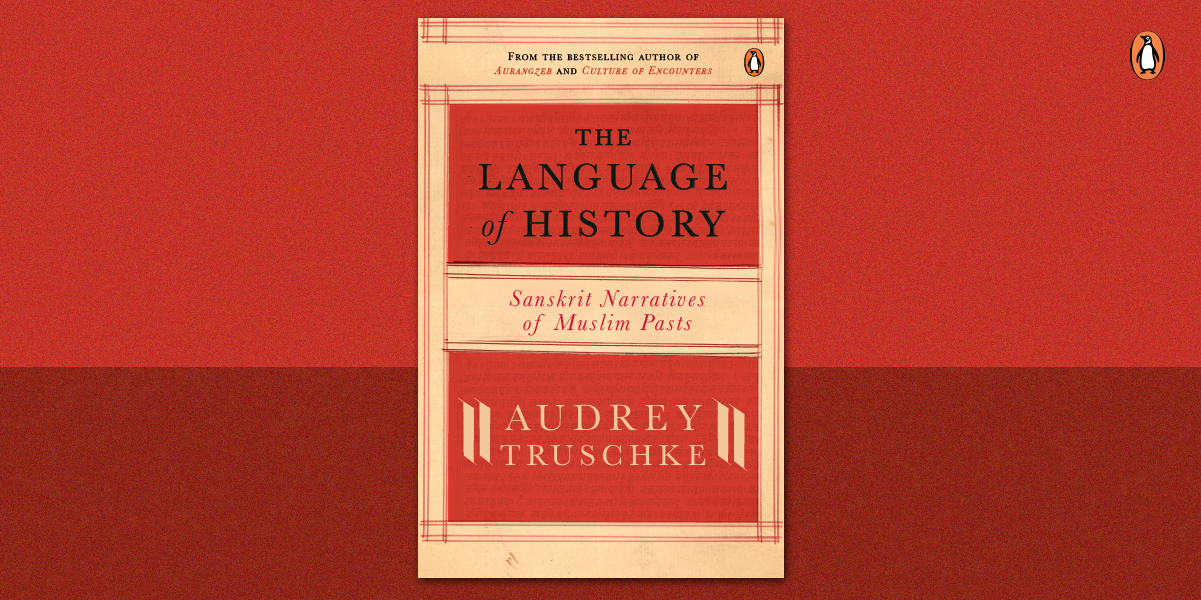
The Language of History by Audrey Trushchke analyses a hitherto overlooked group of histories on Indo-Muslim or Indo-Persian political events, namely a few dozen Sanskrit texts that date from the 1190s until 1721. This book seeks, for the first time, to collect, examine and theorize Sanskrit histories on Muslim-led and, later, as Muslims became an integral part of Indian cultural and political worlds, Indo-Muslim rule as a body of historical materials. This archive lends insight and perspectives into formulations and expressions of premodern political, social, cultural and religious identities.

Here is an excerpt from the chapter titled Local Stories in Fourteenth-Century Gujarat and Fifteenth-Century Kashmir.

*

Different perspectives, different storytellers, always complicate the narrative; that’s good because what we are trying to make sense of is complex.

—Githa Hariharan, 2016 interview

As Indo-Muslim rulers made further inroads into parts of the Indian subcontinent from the fourteenth century onwards, authors developed locally based traditions of Sanskrit historical writing that detailed this political trend. In this chapter, I investigate and compare two regional traditions that took off in the fourteenth century and fifteenth century, respectively: Gujarati prabandhas and Kashmiri rajataranginis. Gujarat and Kashmir had both witnessed Muslim-led military activities and, at least in parts, Muslim- led rule for centuries prior to the inauguration of these respective bodies of Sanskrit texts. Both sets of materials narrate some of that history as relevant to their region. Additionally, because they are plural rather than single texts, these materials allow me to compare authorial choices and see trends and exceptions within a deepening interest in Indo-Muslim history among premodern Sanskrit intellectuals.

Front cover of The Language of History
The Language of History || Audrey Trushke

The Gujarati and Kashmiri materials that I discuss here differ from each other in numerous ways. Four Gujarati texts were composed within a tight time-frame, dating between 1301 and 1349. A trio of Kashmiri works stretch across more than three centuries, with Kalhana penning his Rājataraṅgiṇī (River of Kings) in 1149 and two successors writing in 1459 and 1486, respectively. The two series of texts were authored by men belonging to different religious communities: Shvetambara Jains (prabandhas) and Kashmiri Brahmins (rajataranginis). They exhibit distinct styles and foci. Nonetheless, both constitute regionally based Sanskrit traditions of history writing in areas shaped, relatively early on, by Muslim-led political activities. I consider Gujarati prabandhas and Kashmiri rajataranginis together here, not as two sides of the same coin but rather as two distinct local traditions. When read against each other, these series of texts enable us to sketch out the increasingly complex contours of Sanskrit historical writing on Muslim-led incursions and rule in the fourteenth and fifteenth centuries.


Pairing Difference in Gujarati and Kashmiri Materials

The Gujarati and Kashmiri works both addressed local audiences, although delineated in rather different ways. Jain monks envisioned the four prabandhas I discuss below as being inspirational to the Jain faithful. Two authors, Merutunga and Rajashekhara, penned collections of stories about Jain ascetics and laymen. The other authors—Kakka, Jinaprabha and Vidyatilaka (Jinaprabha’s continuer)—structured their narratives around Jain pilgrimage destinations. Extant manuscript evidence indicates that the four prabandhas were often read in and around Gujarat. In contrast, Kashmiri Brahmins penned the first three rajataranginis for a more politically defined audience. Kalhana, who completed the inaugural Rājataraṅgiṇī in 1149, claimed to write for others who lived through the vicissitudes of sovereignty. For Kalhana, this was a personal subject since his father had been ousted from the court of King Harsha (r. 1089–1101), leaving Kalhana unemployed. Kalhana’s chronicle found a reception, a bit ironically, among those who enjoyed royal patronage, and Jonaraja and Shrivara, the authors of the next two rajataranginis—who imitated Kalhana in style and focus—were court poets of the Shah Miri dynasty. The Rājataraṅgiṇīs of Jonaraja and Shrivara doubled as extensions of Kalhana’s text and as official court chronicles for an Indo-Persian polity.

Despite the distinct origins of these two bodies of historical materials, the founding authors of both local traditions envisioned the same key antecedent: the Sanskrit epic Mahabharata. Kalhana alludes to the Mahabharata throughout his work and also assigns his chronicle the same unusual aesthetic goal attributed to the epic in the Kashmiri thought of his time, namely, inducing quiescence (śāntarasa) in the reader who would shun the world after perusing the monstrous cycle of politics. Merutunga, who penned the earliest prabandha work I discuss here, was more direct. In an opening verse, he billed his Prabandhacintāmaṇi (Wishing-Stone of Narratives, 1305) as ‘pleasing like the Mahabharata’. Neither Kalhana nor Merutunga refer to any of the historical materials that I have dealt with earlier in this book, which accords with the generally fractious nature of Sanskrit historical writing on Indo-Muslim political events. But neither did these authors posit their works as clean breaks with the Sanskrit literary tradition. Rather, the authors imagined themselves as updating established ways of writing about past events in Sanskrit, modernizing (or early modernizing?) them for new times and in response to new occurrences. Analysing the prabandhas and rajataranginis together here underscores the self-proclaimed continuity of both sets of authors as well as their differences in interpreting what it meant to write political history in Sanskrit.

Kalhana and Merutunga headline focusing on the present as a crux of their innovation. Again, Merutunga is more forthcoming. In an opening verse, he claims that his work narrates recent history (vṛttaistadāsannasatāṃ), which sets it apart from old stories (kathāḥ purāṇāḥ). Kalhana indicates his emphasis on recent history by becoming more precise and verbose as he comes closer to his present day, such that his later chapters, on events increasingly close to his own time, are far longer and denser than his earlier ones.9 More than half of Kalhana’s Rājataraṅgiṇī concerns the sixty years prior to the text’s composition. In this emphasis on recent history, Kalhana’s Rājataraṅgiṇī is a far cry from the Mahabharata epic that was always, even in its own internal frameworks, about times and people that were long gone. More generally, the prabandhas and rajataranginis I discuss here concentrate on the lives of real, historical people and sometimes include specific dates and citations of sources. Their authors coupled these historiographical innovations with an incorporation of stories about how Indo-Muslim political actors were shaping the contemporary political and social realities of Gujarat and Kashmir, respectively. By reading these two bodies of works side by side, we can see both their shared similarities and substantial divergences that added texture and depth to the growing tradition of Sanskrit historical writing.

**


‘Gestational learning’: A glimpse into learning a new language

One of India’s most incredible and enviable cultural aspects is that every Indian is bilingual, if not multilingual. Delving into the fascinating early history of South Asia, Wanderers, Kings, Merchants reveals how migration, both external and internal, has shaped all Indians from ancient times. Through a first-of-its-kind and incisive study of languages, such as the story of early Sanskrit, the rise of Urdu, language formation in the North-east, it presents the astounding argument that all Indians are of mixed origins. It explores the surprising rise of English after Independence and how it may be endangering India’s native languages.

Here’s an excerpt from the book in which the author introduces us to the concept of gestational learning through a personal anecdote, about the process of learning a new language.

*

Indian English comes to most of us not in measured steps, visible day by day, as would happen with a foreign language we learnt in class at school, but mysteriously, gestating inside our heads invisibly for years before it is ready to be ‘born’.

My first glimpse of gestational learning came from observing my daughter. Her first language was Hindi, but English was a language she heard every day at home being used by adults. There is a common belief that children can learn any language they are exposed to before the age of five. Yet while she was hearing English all the time, when she spoke it was only in Hindi.

When she was two and a half, we went abroad for a few months. If she thought that English was something only adults spoke, maybe in a playschool she would meet children her age who spoke English and pick it up from them. But it didn’t happen: she stuck to Hindi, and I had to be her translator.

Front cover of Wanderers, Kings, Merchants
Wanderers, Kings, Merchants || Peggy Mohan

And then one evening back in Delhi, when she was four, she overheard her father and me wondering in English who to leave her with so that we could go out. She started to cry.

She understood! And then about a week later, she suddenly started speaking to us in English, a bit hesitantly at first, but in full sentences, with the accent of a fluent Indian speaker of English. When I remarked on her speaking English, she looked nonplussed.22 She did not even notice that she was doing anything different from before, she was simply . . . talking!

It is interesting to speculate on what all must have been going on inside the black box that is her mind. The first thing to note is that while Hindi was spoken to her emphatically in sing-song ‘motherese’ and with full eye contact, English was something she encountered in profile, as it were. Adults talking among ourselves, but not directly to her.

When we make films for young children, we use point-of-view shots, with close-up frontal images of people talking directly into camera. If the shots on the screen are profile shots, of people speaking to each other but not directly to children who are watching, their eyes stray away from the screen. They do absorb what is happening, but they do not give it their full attention. They have a clear idea of when they are being spoken to, and what speech can be treated as background noise.

It is not clear how the background noise from conversations in another language gets absorbed and eventually comprehended. In linguistics, we believe that children are born with innate clues as to what to expect when they encounter languages, allowing them to construct complete representations in their minds. But the English adults speak between ourselves is not the stripped-down code that we would use to a child, because it is not meant for a child. Adults’ sentences are longer and more complex—our speed of speech is faster, and we use much, much more vocabulary to refer to things that are not a part of a child’s world, including abstract things.

Out of this rich diet, children do eventually sort out basic sentence structure, leaving up in the air a large number of things that cannot make sense to them right away. There is a strong relationship between how difficult incoming data is to sort out and how long a child will delay before beginning to speak. In multilingual homes where two or more languages are used from the start for exactly the same things—with the two parents speaking the two different languages—children do grow up bilingual or multilingual, but they tend to start speaking later. And when they do, they are set to become ideal translators, as they can say exactly the same things in their different languages.

**

For a fascinating insight into learning a new language and the import of languages for a culturally diverse country like India, read Peggy Mohan’s Wanderers, Kings, Merchants.

Preparing for a pandemic

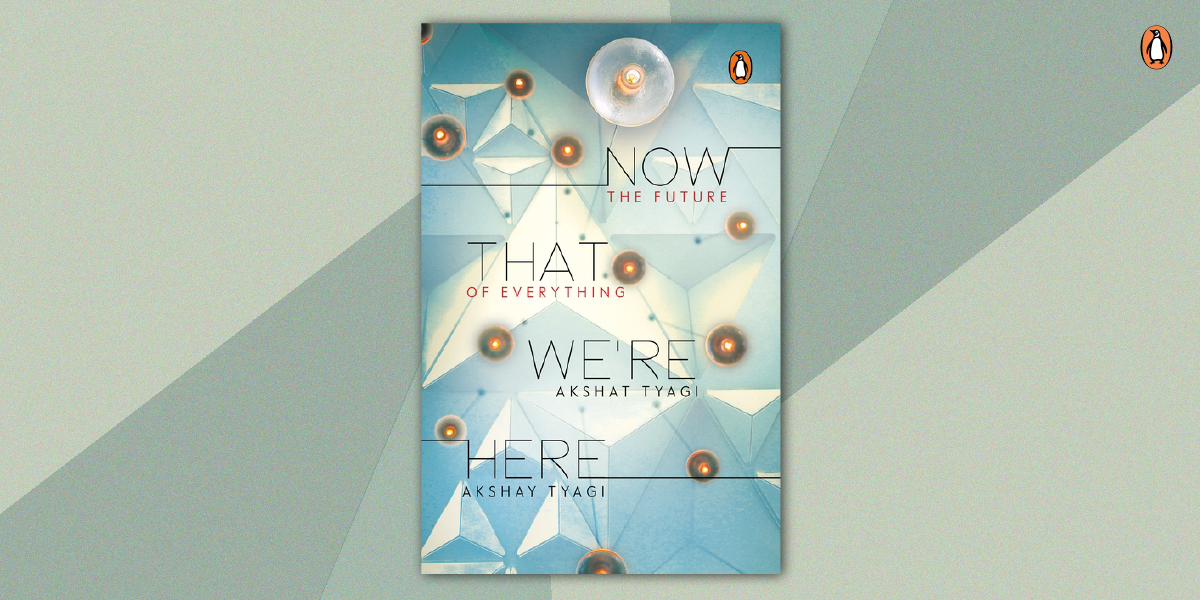
Author’s Note: We didn’t write a generalist guide for the future imagining a once in a lifetime pandemic. This is not the moment of celebration we would have chosen for the book. There’s so much else that needs your love and attention right now. Now that we’re here, we hope the book can offer some comfort and optimism about humanity making it through difficult times, and things getting better. 

Now That We’re Here by Akshat Tyagi and Akshay Tyagi is a generalist guide about navigating the future in times of a pandemic. A playful mix of social science and technology, the essays on Data, Design, AI, Behavioural Economics and other important themes provide a peep into what’s coming. The following excerpt is from the chapter Viral Economics, written as the pandemic was unfolding.

Even though the collapse of economic prosperity is terrifying, the mourning of its fall should not turn into an endorsement for its previous design. Our economic growth has been highly inequitable, especially so over the last few decades. When your income drops from INR 70,000 a month to INR 40,000, it pinches hard. But even before the crisis, the average monthly income in India was below INR 12,000. We are still an extremely poor country, and we keep forgetting that fact until the next flood, drought or recession arrives.

Our public education hasn’t prepared us to understand the urgency of a pandemic. What you read in this book on data, complexity, economy and technology should be considered basic education. We were so busy bickering over Tipu Sultan’s mention in our history textbooks that we forgot to learn about the history of the Spanish flu and why there wasn’t anything particularly Spanish about the 1918 influenza pandemic.

It is important to maintain civil order by converting a difficult fight against the virus into a temporary celebration of essential workers. But in a different world, our government would be able to explain to us a virus’s non-linear growth graph, and we would pay our workers far better than we do. Making people bang pots and pans is okay only if we understand what we’re dealing with and how long it’s going to last. Otherwise, we are all at the mercy of our beloved leader and his wisdom.

With his utterances about injecting disinfectants and recommending unproven medical cures, Donald Trump may have made daily briefings look like a bad exercise in democracy. But they at least showed us how competent he was as a leader in handling emergencies, helping Americans divert him to other interesting things in the next election. To not show oneself at all during a moment of national crisis or conflict is a signature feature of tyrants. Stalin and Hitler were absent from public appearances for much of the war.

A country of 1.3 billion people with very high linguistic diversity, no universal access to devices for listening to a live broadcast, an unstable electricity supply and a two-hour difference in mean solar times between its easternmost and westernmost points shouldn’t be reliant on a charismatic head of state’s address to the nation. No leader can appeal to the sensibilities and convenience of such a diverse population in an hour’s time.

Front cover of Now That We're Here
Now That We’re Here || Akshat Tyagi, Akshay Tyagi


Our Internet penetration is at the highest-ever point in our history, our data rates are the cheapest in the world and journalism is bleeding to death because of its open access—so why then were we still busy rioting as late as February 2020! Arundhati Roy called the madness of communal sickness our version of the coronavirus before we officially got sick with Covid-19.

A pandemic lays bare our structural injustices. Just like with any other disease, the poor are at a disadvantage here too. Pre-existing medical conditions and weak immune systems both increase vulnerability and are, not so surprisingly, correlated in part to one’s economic standing. Little access to nutrition, poor hygiene, few resources shared by more members in the family and safety hazards at repugnant jobs are all risks that Dalits and Muslims have faced for all of our developmental history.

When Ebola spread in a slum in Liberia, the area was sealed off with the help of armed forces. At the rioting of residents, indiscriminate fire helped restore the desired calm. You never heard about this because it didn’t happen in a gated community of rich citizens in a politically significant country.

There is no bright side to a pandemic. In fact, ignorant optimism hurts more when the threat is a respiratory virus. Leaders who tell false stories to trick people into staying calm destroy public trust in leadership and create greater chaos. A pandemic is also the time when more and more of us grow comfortable with the idea of compromising our liberty to let the government act. Naomi Klein, a strong advocate against neoliberalism’s worst, has been warning for a decade that emergencies should not be allowed to worsen inequalities and decrease political transparency.

We cannot buy our way out of this virus, but as we wait for medical solutions to arrive we should remain vigilant about the ad hoc measures offered by our governments.

A pandemic is the worst time to stop holding your government responsible.

**


The book explores how our friendships, jobs, health and democracies are changing, and why we must prepare for this new unpredictable world. There aren’t any easy answers, but Now That We’re Here let’s be vigilant and kind.

The quest for an egalitarian society

It all began in the late-nineteenth-century Kerala, with a Dalit man flamboyantly riding a bullock cart along a road. What might sound mundane was actually a defiant form of protest, as riding animal-pulled vehicles was a privilege reserved for the upper castes.

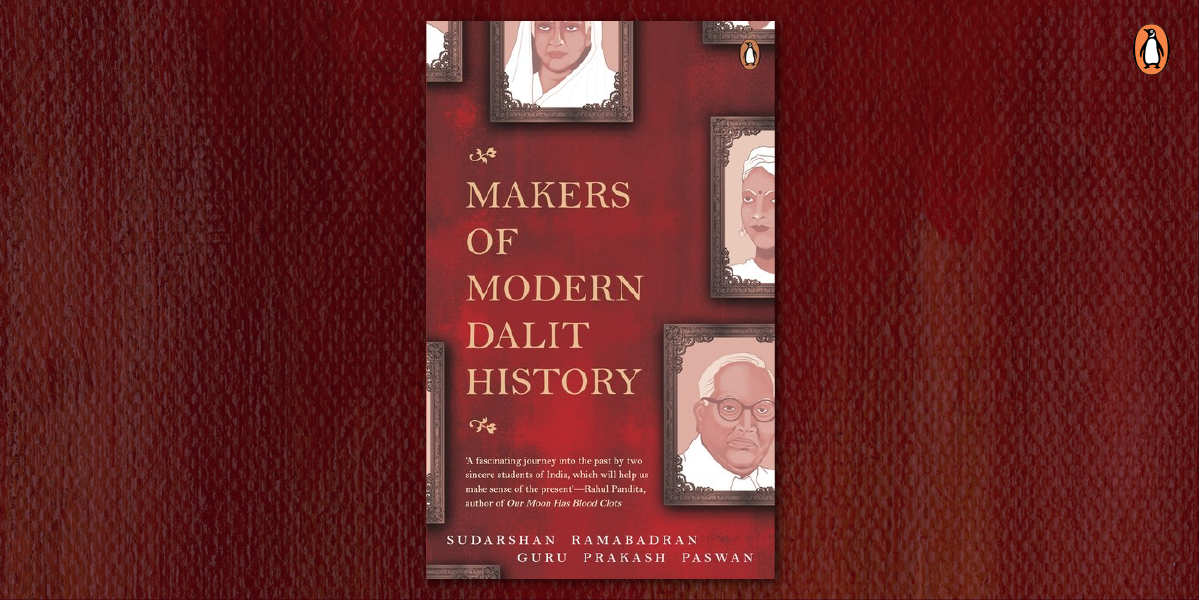
Featuring several such inspiring accounts from the lives of individuals who tirelessly battled divisive forces all their lives, Makers of Modern Dalit History seeks to enhance the present-day Indian’s understanding of the Dalit community.

Backed with thorough research on historical and contemporary figures such as B.R. Ambedkar, Babu Jagjivan Ram, Gurram Jashuva, K.R. Narayanan, Ayyankali, Soyarabai and Rani Jhalkaribai, among many others, this book promises to be a significant addition to the Dalit discourse. It opens a path to initiating an overdue discussion centred around Dalit identity, history and politics.

~

Makers of Modern Dalit History cover
Makers of Modern Dalit History||Sudarshan Ramabadran, Guru Prakash

Bhagwan Das, author of In Pursuit of Ambedkar, says:


The newspaper used to publish a lot of things about Gandhi, Jawaharlal Nehru, Azad, Subhas Chandra Bose and Jinnah but hardly a thing about the untouchable communities. I used to wonder, ‘Who is our leader?’ I asked Abba this, and he replied,

‘Umeedkar, the one who brings hope,’

which is how Abba saw Babasaheb Ambedkar.1


Original thinker, scholar, jurist, legislator, economist, public policy leader, development practitioner and chief architect of the Indian Constitution, Bhimrao Ramji Ambedkar was all this and more.

His thoughts were crisp, his views precise and clear, and words unabashed and unapologetic on every platform he spoke from. The more one reads about Ambedkar, the more one admires his unique intellect and understands his significance, the circumstances under which he jolted the status quo and truly sought disruption in calling for complete annihilation of the caste system.

Ambedkar saw society like no one else from the prism of brute force and caste-based discrimination. Thus, he stood for the cause of all-round empowerment of the socially disadvantaged till his very last breath. Even when he was on his way to England for the first roundtable conference in 1930, it is recorded that he wrote in a letter to ‘Dadasaheb’ Bhaurao Gaikwad how the people there were sympathetic towards him and that he was happy to see them inclined to favour the demands of the untouchables.2

As a child, Ambedkar, a Mahar, was made to sit separately in primary school because of his caste.3 When someone served him water, it was from a height to avoid physical contact with him; he was even denied a haircut because he hailed from the Mahar community.4 All this is just a glimpse of the treacherous  discrimination that a six-year-old Dalit child had to go through.

Who would have thought then that this child, born on 14 April 1891 in the tiny military village of Mhow, would one day establish himself as one of the founding fathers of independent India? Ambedkar came from a financially stable family, which enabled him to have a primary school education. However, this access never could remove the ‘untouchable’ tag from his consciousness. The thought of being ‘untouchable’ plagued his mind, especially when he was denied the services of a barber or a

driver because of it.

During his primary-school days, he was treated differently and ridiculed solely because he was a Mahar. This left a huge impact on him. However, Babasaheb took the fight to the orthodoxy, and at no point did he give up. For it is these very incidents that made him realize that the fight for the dignity of Dalits had to begin and be a constant one, until his very last breath. He recorded the experiences of untouchability faced by him in the newspaper Janata, which he founded in 1929.5 Dhananjay Keer’s biography, Dr Babasaheb Ambedkar: Life and Mission, published in 1954, also recounted all of Babasaheb’s experiences.6

While his journey to educate himself was excruciating, he was determined to venture into the unknown. His secondary education was funded by the Maharaja Sayajirao Gaekwad III, the erstwhile ruler of Baroda (now Vadodara), and he studied at the Elphinstone High School in Bombay. Ambedkar’s quest to arm himself with education never ceased, be it when he was in Columbia University, the London School of Economics or Gray’s Inn, where he excelled in academics. The years spent in Europe and America made him feel the stark difference in the treatment he received there and the treatment meted out to him in India.

In 1942, when he founded the All India Scheduled Castes Federation (AISCF), which he later dissolved to found the Republican Party of India, he also initiated scholarships for Dalit

students to study abroad.7

Ambedkar was always a firm advocate of education. He believed that if this revolution for the marginalized was to be won, access to quality education was crucial. He was never violent in his methods. He knew that equipping oneself with education would ensure a battle of dignity for the Dalits that could be fought and won. It was only after education that he felt empowered, for he believed only power could defeat power. Ambedkar being elected to the Bombay Legislative Council in 1926 and him founding the Independent Labour Party in 1936 are testimony to how crucial political representation was for Dalits.8

This focus on education was inculcated in him by his teacher at Columbia University, Professor John Dewey. Ambedkar has often said that he owes his intellectual life to Dewey, who was an American philosopher and psychologist but, above all, a reformer of education. Dewey was also one of the central figures associated with functional psychology, philosophy and progressive education.9

Very few Indian leaders have been educated in America. Ambedkar studied with the best minds at Columbia University in the three years he spent there. When he enrolled, he took a number of courses, including railroad economics. He was keen to learn from the top-ranking professors at the university.

All his life, Ambedkar sought the complete eradication of caste, for only this, he believed, would lead to an honourable society. As Bhalchandra Mungekar writes in his introduction to The Essential Ambedkar, ‘Ambedkar’s basic arguments were against institutionalization of caste-based isolation and discrimination

prevalent in the Hindu mind.’10

~

Makers of Modern Dalit History is a essential read for anyone who wishes to understand the Indian experience in its totality.

error: Content is protected !!