

Publish with Us

Follow Penguin

Follow Penguinsters

Follow Penguin Swadesh

Two lives in letters

Two teenagers—Saumya in Delhi and Duaa in Kashmir—ask through letters they exchanged over almost three years some pertinent questions about Kashmir.

Like Anne Frank’s letters, Post Box Kashmir:Two Lives in Letters provides an insight into the minds and hearts of teenage girls undergoing momentous points in history.

*

Finding my letter writer in Delhi was a pleasant accident. I hadn’t really started looking at that time. On a completely different mission, one winter afternoon in February 2017, I found myself at Saumya’s house. It was books that led my husband and me there. Both of us, he way more than me, are guilty of hoarding books. And now, a carefully built selection of over fifteen years needed a new purpose. Our search for a library, where we could part with our much-loved treasures knowing they will be equally valued, was what led us there. It was a cosy unassuming two-bedroom flat in a colony in outer Delhi. Saumya’s parents ran a small library-cum-reading room from an even smaller space on the floor above.

Front cover of Postbox Kashmir
Postbox Kashmir || Divya Arya

They could have rented it out to supplement their income, but decided to use it to work with schoolgoing children by providing them a place to come read. As the name suggested, Umang Library was to spread the simple ‘joy’ of immersing in the written word, to give wings to young imaginations. We were inspired with what we saw and went back down three floors to make multiple rounds, heaving cartons full of books up a narrow, broken staircase.

Saumya didn’t speak much at that time. She quietly helped with the unpacking and laying out of books, stopping only to peer at some titles from behind her thick spectacles. She was fifteen years old and preparing for her Class X board exams. We didn’t talk about Kashmir.

A few weeks later, when I started the search for my letter writers, I recalled the shy young girl from that winter afternoon. The more I thought about it, the more she seemed to be the perfect fit. A couple of phone calls later, it was done. Saumya Sagrika was waiting to get her first letter.

In Kashmir, the situation was very different. I had never been there, I had no family there and very few friends. As I started making calls, finding connections and building bridges to reach out to parents, it became very clear that the biggest hurdle was going to be trust. It was the casualty of decades of conflict. Entering into anyone’s circle of trust is always difficult, but on some days, it seemed unsurmountable. The physical distance, lack of confidence that a personal meeting could build, all added to the challenge.

In 2017, there were visible strains of pain and anger. The violent autumn after Wani’s encounter had quietened as snow covered the streets in the Valley. But the cold seeped in through the telephone line from the other side when I tried to explain our project. The memories were very raw.

There was a strong belief that the momentous upheaval led by young people was going to change something. The rage was still simmering. At that time, when opinions, borders and beliefs had a razor-sharp edge to them, my offer of a quiet conversation over letters seemed suspiciously innocuous to the parents on the other end of the phone call.

But I persisted, not losing hope. Days turned into weeks, which turned into months. And finally, a door opened just a crack. My request had landed at fifteen-year-old Duaa’s doorstep, with just a recommendation from an acquaintance trusted by her family, holding this together.

Duaa’s father had a gentle demeanour. We discussed the project a little and then some more. But we spent a lot of time trying to know more about each other. Me and my family and Duaa and hers. The conversations with her parents were never rushed and always began with courtesies that extended to my parents, my husband and his family. This was my lovely introduction to Kashmiri tehzeeb (etiquette). As trust grew, the anxieties became more honest too. And some stemmed from what had happened to another Kashmiri teenager.

*

Divya Arya has been telling people’s stories on social issues for almost two decades now. In Post Box Kashmir she deals with another non-fiction story on the backdrop of political history and turbulent present of Kashmir and India.

Of war, grief and longing

Long-listed for the Booker Prize 2021, A Passage North begins with a message from out of the blue: a telephone call informing Krishan that his grandmother’s caretaker, Rani, has died under unexpected circumstances-found at the bottom of a well in her village in the north, her neck broken by the fall.

Scroll down for a searing glimpse into Anuk Arudpragasam’s powerful story of longing, loss, grief and legacy of war.

*

front cover of A Passage North
A Passage North || Anuk Arudpragasam

The caller had introduced herself, somewhat hesitantly, as Rani’s eldest daughter, an introduction whose meaning it had taken him a few seconds to register, not only because he’d been distracted by the email but also because it had been some time since the thought of his grandmother’s caretaker Rani had crossed his mind. The last time he’d seen her had been seven or eight months before, when she had left to go on what was supposed to have been just a four- or five- day trip to her village in the north. She had gone to make arrangements for the five- year death anniversary of her youngest son, who’d been killed by shelling on the penultimate day of the war, then to attend the small remembrance that would be held the day after by survivors at the site of the final battle, which was only a few hours by bus from where she lived. She’d called a week later to say she would need a little more time, that there were some urgent matters she needed to attend to before returning— they’d spent more money than planned on the anniversary, apparently, and she needed to go to her son- in-law’s village to discuss finances with her daughter and son- in- law in person, which wouldn’t take more than a day or two. It was two weeks before they heard back from her again, when she called to say she’d gotten sick, it had been raining and she’d caught some kind of flu, she’d told them, would need just a few more days to recover before making the long journey back. It had been hard to imagine Rani seriously affected by flu, for despite the fact that she was in her late fifties, her large frame and substantial build gave the impression of someone exceptionally robust, not the kind of person it was easy to imagine laid low by a common virus. Krishan could still remember how on New Year’s Day the year before, when they’d been boiling milk rice in the garden early in the morning, one of the three bricks that propped up the fully laden steel pot had given way, causing the pot to tip, how Rani had without any hesitation bent down and held the burning pot steady with her bare hands, waiting, without any sign of urgency, for him to reposition the brick so she could set the pot back down. If she hadn’t yet returned it couldn’t have been that she was too weak or too sick for the ride back home, he and his mother had felt, the delay had its source, more likely, in the strain of the anniversary and the remembrance on her already fragile mental state. Not wanting to put unnecessary pressure on her they’d told her not to worry, to take her time, to come back only when she was feeling better. Appamma’s condition had improved dramatically since she’d come to stay with them and she no longer needed to be watched every hour of the day and night, the two of them would be able to manage without help for a few more days. Another three weeks passed without any news, and after calling several times and getting no response, Krishan and his mother had been forced to conclude that they were wrong, that Rani simply didn’t want to come back. It was surprising that she hadn’t bothered to call and tell them, since she was usually meticulous about matters of that kind, but most likely she’d just gotten so sick of spending all her time alone with Appamma that it didn’t even occur to her that she should let them know. Confined to a small room in a house on the other side of the country, forced to tolerate the endless drone of Appamma’s voice every day and night, unable to go outside the house for significant periods of time, since she didn’t know anyone and couldn’t speak Sinhalese, it made sense, they’d agreed between themselves, if Rani had decided after almost two years in Colombo that it was time finally to leave.


*


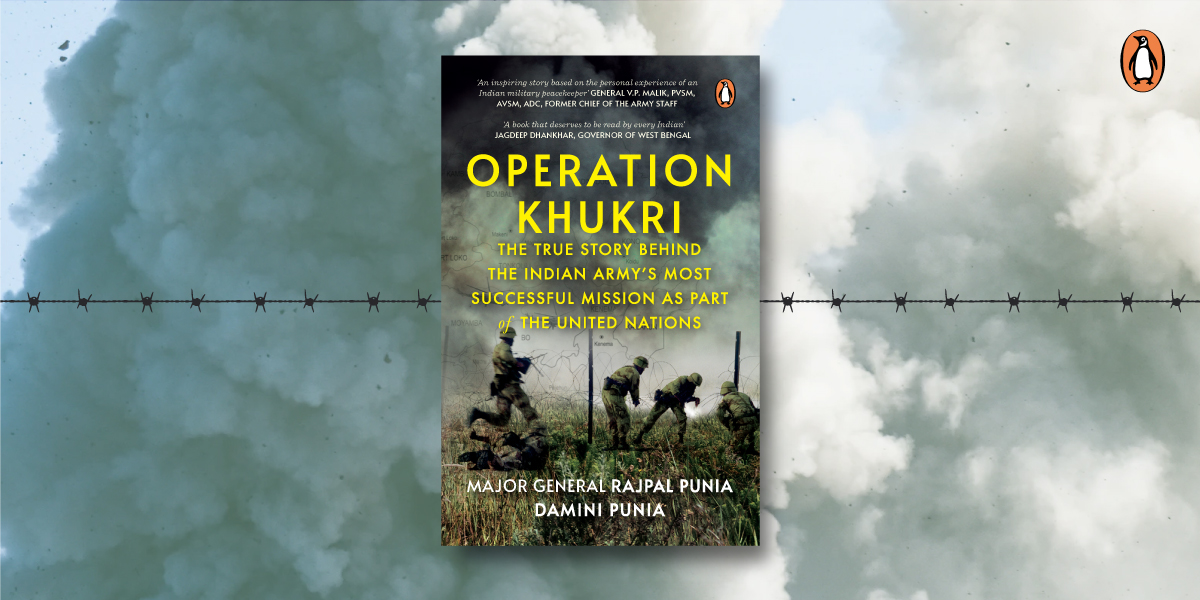
Cordoned Off in the Jungles of Africa; the story of 233 Soldiers of the Indian Army

Did you know that 233 soldiers of the Indian Army were cordoned off for almost three months without food in the jungles of Africa?

How did a United Nations Peacekeeping mission turn into a war for dignity, a war for the Indian tricolour?

Operation Khukri was one of the Indian Army’s most successful international missions, and the book is a first-hand account by Major Rajpal Punia, after three months of of impasse and failed diplomacy, orchestrated the operation, surviving the ambush of the RUF in a prolonged jungle warfare twice, and returning with all 233 soldiers standing tall.

Here is an excerpt from Operation Khukri by Major General Rajpal Punia and his daughter, Damini Punia

Operation Khukri
Operation Khukri || Major General Rajpal Punia, Damini Punia

After driving for about half an hour through the wilderness, I could see some sort of habitation, which looked like an RUF camp. I got off the vehicle as two RUF soldiers continued pointing their guns at me. Major Nair’s vehicle, too, arrived, and he was in a similar state. I saw Jonathan, the RUF intellectual, who came forward to welcome Major Nair and me. Seeing him, I remarked, ‘The RUF is playing with fire, the consequences of which will be hazardous. Jonathan, I thought you were smarter than that. I’m amazed to witness how the RUF is on a road of self-destruction.’

He explained that these were the orders from the Field Commander but assured us of ensuring that they would follow protocol. He then said something in the local language to the soldiers who had their guns pointed at us. As a result, they moved a few steps back and put down their weapons. Even Major Kupoi’s behaviour changed slightly after Jonathan’s arrival. Jonathan explained that it was part of RUF tactics to separate Commanders from their companies and that their next step would be to disarm all peacekeepers as per instructions. I asked Jonathan about Colonel Martin, and he informed me that currently Colonel Martin was in the field and would meet me once he got back. Jonathan also told us that what was happening was a response to the previous day’s unfortunate incident in which many RUF soldiers were killed by United Nations peacekeepers.

I wondered why we were not informed of the incident by our own headquarters. Had we known, we probably would not have landed into the RUF trap. After an hour, eleven military observers hailing from different countries were brought in vehicles from Kailahun to the RUF camp, and now Jonathan’s major worry was to provide food to everyone. He put forth his concern that the RUF would not be able to offer food to our taste, so he was going to send one of our vehicles to our camp to get food for everyone.

The military observers were petrified; most of them had been manhandled by the RUF. Major Andrew Harrison of England was scared out of his wits. Sierra Leone was an erstwhile British colony, and he anticipated that he would be the first casualty in case the RUF started eliminating us one by one.

The first exercise the RUF carried out was to physically frisk each of us by taking everyone individually into a dark room. All the money the observers had was taken away, and during

the frisking, most of them were roughed up. Thereafter, all of us were asked to stay in ‘barracks’ that had no roof and no walls. Primarily, it was only a stretch of coarse floor in the name of barracks. I instructed my driver to get groundsheets for everyone when he would go to procure our dinner, since it was already well past lunch. The so-called barracks had four armed RUF soldiers on four corners, while the rest went into their living areas.

Major Nair and I wondered what must be transpiring back in our companies. But one good thing that happened was that the food vehicle going to camp eventually got back with all the information about the developments taking place in our camp. Overall, I was feeling miserable, having been separated from my command in a crisis, which is the worst thing that can happen to a soldier. My boys, my men, were my responsibility. But here I was stuck as a hostage without any offence and with barely any knowledge of what my soldiers were going through in Kailahun. I just kept praying for their safety.

Om Prakash, my driver, accompanied by four RUF soldiers, brought our dinner from the camp. He also brought in the situation report of our company being surrounded by the RUF in large numbers. Since morning, they had been trying to coerce and threaten the company to lay down weapons, failing which, they would attack the company. That sight of dead bodies of innocent soldiers piled up wouldn’t have been a pleasant one. They also used Captain Sunil as a human shield for terrorizing the company to surrender, threatening to shoot him. I was told Captain Sunil displayed undaunted courage and valour by shouting back at our soldiers, ‘Koi bhi hathiyaar nahi daalega chahe yeh mujhe goli hi kyun na maar de. Humare tirange ki izzat kam nahi honi chahiye kisi bhi haal mein (Even if they shoot me, nobody will surrender, nobody would diminish the honour of our tricolour).’ I was so proud of the young officer and wondered where he went right after the town hall incident in the morning.

My driver further shared that almost all peacekeepers of the United Nations deployed in areas other than Kailahun had surrendered to the RUF, and the soldiers who accompanied him were wondering why the Indian peacekeepers were not laying down weapons despite being in the RUF heartland of Kailahun. My driver also informed me that the RUF had captured a United Nations helicopter that was on a routine sortie.

I anticipated more pressure on our camp to surrender since it was a matter of prestige for the RUF. Therefore, I quickly wrote strict directions on a piece of paper: ‘No surrender come what may…’

What happened next? Grab a copy of Operation Khukri to learn more!

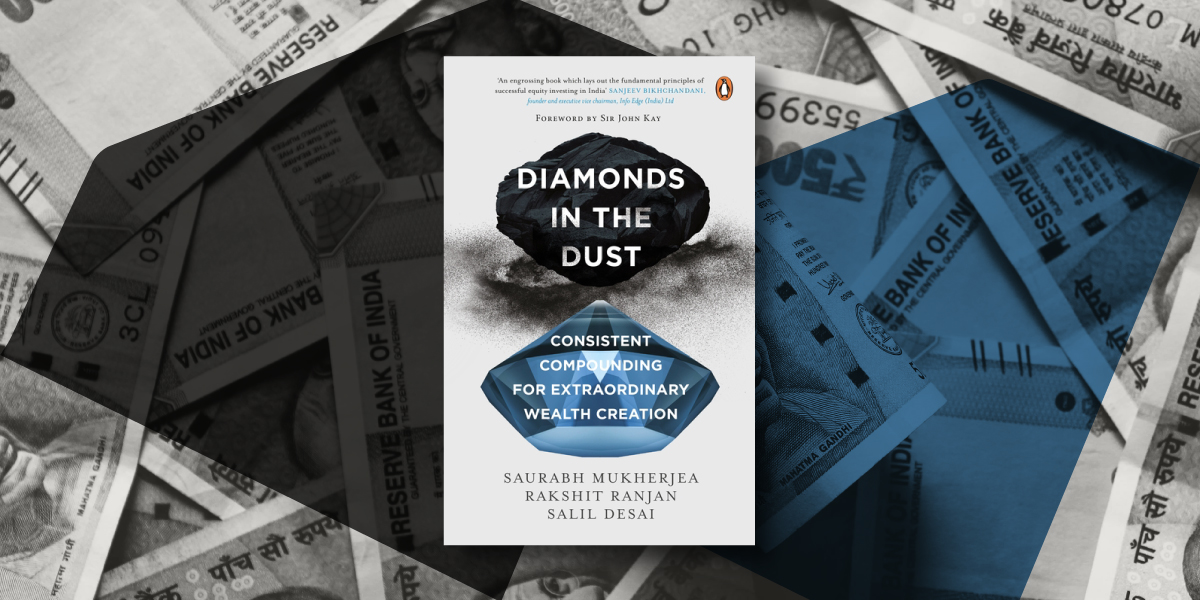
The consistent compunding formula

In this book, we elaborate on the key elements necessary for crushing risk to generate steady and healthy returns from equities in India. Our approach is to buy clean, well-managed Indian companies selling essential products behind very high barriers to entry. We call this approach to investing Consistent Compounding, and have seen, both in theory and in practice, that it works. This approach has three key elements—Credible Accounting, Competitive Advantage and Capital Allocation. They are the foundational pillars of Marcellus’s investment philosophy, which will help investors generate healthy returns without taking extra risk (or loading up on beta). The first pillar, Credible Accounting, uses a set of forensic accounting ratios and techniques to identify companies with the least accounting risk and the highest reliability of reported financial statements. Competitive Advantage is the search for companies that possess strong and durable pricing power, enabling them to be leaders in their markets and consistently earn returns higher than their cost of capital. This mitigates their revenue and profit risk. The third pillar, Capital Allocation, is about finding companies that make the best use of their excess returns (the difference between return on capital and cost of capital, akin to free cash flow) in order to grow their business as well as to deepen their competitive advantages. Knowing what stocks to buy using the three pillars is what we call the Consistent Compounding Formula.


Diamonds in the Dust
Diamonds in the Dust || Saurabh Mukherjea, Rakshit Ranjan, Salil Desai

Foreign idea of freedom

Born in a Karachi slum, Sharif Barkati became obsessed with American ideas of love and freedom at a very young age. He began to dream of a public place in the city that did not follow the rules, where people would be free to say and do whatever they wanted under open skies, away from the conservative eyes of Pakistani society.

With the help of his friend Afzal – and TJ, an extremely wealthy Pakistani-American – Sharif was able to realize his dream in the form of a colossal compound on the Karachi coast, full of bars, cafes, clubs, and the people of Karachi strolling about, hand in hand.

They called it Little America.

Now in prison, Sharif tells the story of his life in a letter to his favourite novelist, hoping that he will turn it into a literary masterpiece. At once a rollicking journey around the mind of a man desperate to be free, an allegory of the neo-colonial endeavour, and an investigation of the desire to emulate the perceived superior while desperately trying to hold on to one’s own cultural identity, Little America asks the question: What, really, is freedom, and what can be sacrificed in its name?

Here’s a taste of the book. Read on to get a glimpse into Sharif’s life while he was a young boy still forming his ideas about such worldly matters.

~

Little America Front cover
Little America||Zain Saeed

I kept asking Baba what that was, all the touching and the kissing on TV, at the cinema, and he pulled at his moustache, and thrusting out his bony chest—not more than five feet off the ground—told me it was just a thing Americans did, told me they would all go to hell.

I had no friends, you see. No brothers. I stayed at home and memorized my time tables and ABCs and God is Great and spoke to no strangers, because Baba told me I was supposed to become a big man. I missed out on the gossip of the slum boys, and the schoolboys (I went to a school beyond the trash, in the city, God bless Baba), never partook in the stealing of video tapes, comparing sizes of appendages; missed out on it all. I ached with curiosity, but I was a good boy, and I was going to be a big man—and that is what I became!—and I was sure it was all for my own good. I accepted the censorship as a necessary thing.

But like a climber infatuated with the top of a mountain, I was smitten, enthralled by the power those images held over a cinema full of grown-ups. I had no idea what it meant, what it led to. It was simply the coming together of two bodies, so close, so close, closer than I had ever seen in the quotidian, that fascinated me, led me to daydream in English class on a sunny day, wondering what made a

thing wrong, what made it right.

I used to have a baby sister. As I think about it now (forgive the drops of sweat that have smudged these lines) I realize that I do not remember my mother ever sprouting a belly before she gave birth to her. I had no conception of it—I simply could not see it!

On the day in question, Baba told me to leave the house for a few hours, go play with friends I didn’t have. He told me that when I came back, there would be someone in the house who would call me Bhai. I picked up my English books, and did as I was told, skipped out of the house thinking imagine that! Imagine that! Me! A brother!

When I came back at sunset, nothing had changed, except for a splash of blood on the bed sheets. Baba sat hunched in a corner. I remember Amma, like a punctured balloon tied to a bedpost, sprawled

on the mattress. She lay there all day with her eyes closed. I did not ask, and I was not told. Imagine that! God making a dead baby! I thought about it a few years later, after I’d discovered the magic present in the bodies of all women, and I wondered if my parents’ distrust of hospitals had caused the death—oh, how I fumed!—their lack of education, their insistence on having a pregnant woman pray five times a day, their backward, Pakistani ways. I know now, of course, that life is simply like this, everywhere—it just seems different based on where you imagine it from—but when I was still convinced of my parents’ blunders, it shoved me clattering closer to the idea of Little America indeed.

In the weeks and months following the little one’s day of birth, our one-room house got bigger in the mornings and afternoons, because Amma no longer walked around, humming, and Baba went back to the office. Before I forget: he worked at some lawyer’s firm as a typist—he couldn’t read or understand English, just knew what every letter looked like and where to find it on the typewriter. His employers knew as much, had hired him for that exact reason, so that he could type up sensitive handwritten documents and not have a clue what they said. He used to bring home scraps of these typewritten documents, ones on which he’d made mistakes, and ask me what they meant. I could not tell him much more than that they mentioned large sums of money and the names of the people who had it, along with several other sentences that I was simply not cut out to read. I think this might have inspired my desire to read in the following years—I wanted to be able to tell Baba everything, let him know what his employers would not: the importance of his work, his worth, his ability to affect the lives of strong people.

He worked so hard, my friend. Sometimes he did not come home till eight in the evening. On these days, with Amma having taken to the bed, I had time after school unsupervised, so I took to renting out films from Lucky Video. Baba had started giving me money for lunch ever since Amma’s sadness (Rs 10 a day) and I used it to rent out love stories, for I realized early on that that is where most of the kissing would be. With the lack of food in my body, I grew even thinner, but stopped short of disappearing, and

that was enough.

I’d bring the film home. I’d tiptoe around the house, around Amma’s slow breathing form, whispering ‘Amma! Amma!’, a part of me wishing her to wake up, the other part hoping she’d stay asleep so I could watch my movie. I’d sit next to her head on the mattress, not touching, but feeling content in the slight movement of the foam of the broken mattress whenever she moved. Her eyes never opened, and if she noticed me she did not say, continued her mourning curled up on the bed.

On those afternoons, it was just me and the TV and the VCR, and the volume turned way down low.

Oh the things I saw!

Oh the love I felt!

Oh the joy, the joy!

Sadness, too—who enjoys a mother in strife?

But children cope. Do they not, my friend?

Ma Anand Sheela leaves Bhagwan

In her latest book, By My Own Rules, that she has dedicated to everyone who helped her get through the life, Ma Anand Sheela has given a glimpse of her past through the eighteen rules she follows in her life. Here’s an excerpt from the book where Ma Anand Sheela writes about how Bhagwan’s love made her confident and fearless in life. She shares an anecdote of the time in her life when she was torn within, and it had become difficult for her to choose between the inner truth or to forget everything—her values, the responsibility, and the people in the community—for Bhagwan.

*

By My Own Rules || Ma Anand Sheela

Faced with this distress, I remembered the advice of my parents. ‘Every person must follow the inner truth. No one needs to be afraid of their feelings.’ Their teaching became my guiding light. I knew that I could not compromise with the values they had ingrained in me. I did not want to sell my soul in the name of love. I could not be with my beloved Bhagwan any more. I could not breathe near him any more. It was time for me to leave Bhagwan. I trusted my instincts and followed my heart. I believed that everything would turn out to be fine. I returned all his expensive gifts, which had been an expression of his love, with a goodbye letter.

My parting caused a wave of disappointment and shock. Something no one expected had happened: Bhagwan and Sheela, who had been one heart and one soul, who had stuck together like the sun and the moon, had finally separated. Bhagwan was deeply disappointed in me. My leaving the commune hit him at the core. At the same time, he had to fortify his position in order to retain the trust of his people as many others were contemplating leaving too. Negative stories were spread about me and I was vilified. I had always been aware that many people were jealous of me and wished to be in my place, trusted and loved by Bhagwan. They had the opportunity now.

With my decision to leave the commune, crazy accusations began doing the rounds. Friends and followers of Bhagwan gave vent to their pent-up emotions over me. Bhagwan had always been a master storyteller. The crazy accusations against me were like fire in dry straw and I was ablaze. This fire became the touchstone of my life as well as of his teachings. I was accused of various crimes. I eventually ended up in prison.

After thirty-nine months in prison in the United States, I understood the essence of Bhagwan’s teachings. Bhagwan used every opportunity to train the consciousness and repeatedly created situations in which he tested the limits of our trust and love. He talked about meditation, of love, life, laughing and acceptance, all his life. These are beautiful words and very easy to live by once we are integrated in a harmonious community. Every person can meditate and be satisfied when life is going well. However, alone in a cell, in prison, isolated and rejected by the rest of the world, the true strengths of a human being become apparent. Only negative things were written about me. Hatred and contempt reflected in the faces of the people I met.

I did not know whether I would survive the next day or ever see the sun again. These were the darkest days of my life. The only thing that I could do was to find trust and clarity in myself and to accept life as it was. Despite all the hurtful accusations, my love for him proved indestructible. His teaching was like a precious diamond to me that reflected the beauty of life, without which everything would be empty and dry. Today I am aware that I went through fire out of my love for him.

**

Written in Ma Anand Sheela’s own words, read her story By My Own Rules to get a glimpse of how she negotiated with several situations in her life.

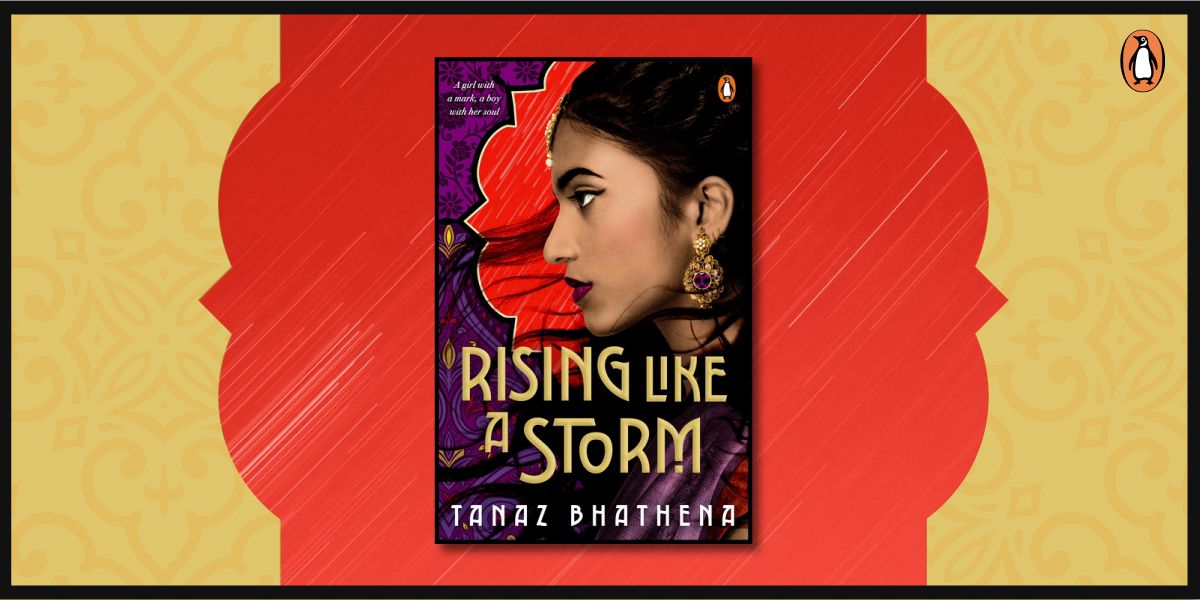
Gul and Cavas amid the storm

In this spectacular book, Tanaz Bhathena brings forth the journey of Gul and Cavas, who are much more than lovers. With a willingness to keep fighting, through pain and hardship, the two fight all odds and eventually achieve their goal. Through her strong characters, Bhathena attempts to reconstruct what India might have looked like without the British at its helm.

Here’s an extract from the book about the conversation between Cavas and Juhi, who endured a brutal marriage to King Lohar.

*

Rising Like a Storm || Tanaz Bhathena

I fall silent for a long moment. “Who else is in this prison?”

“Right now, it isn’t full—if the guards’ gossip is to be believed. Raja Amar had initially signed an order to free the cage victims being held here. After Shayla took the throne, she overrode the order, deciding she was better off reselling them at the flesh market. Didn’t make much off them, from what I hear. The mammoth turned out to be a liability, trampling half his handlers. He had to be put down. The peri she sold escaped his merchant owner by killing him in the first week. The merchant’s family demanded compensation from Shayla, which she, naturally, didn’t give. Now, apart from the shadowlynx, which even the guards are afraid to approach, this prison holds only me, Amira, and you.”

“Amira’s still alive, then.” Relief briefly flickers in my ribs. “Gul had nightmares about you both.”

I wonder if she’s still having them. I won der who’s taking care of her now.

“Amira’s alive,” Juhi says. “And she will prob ably remain so until Gul is captured.”

If Gul is captured,” I correct. “She won’t make it easy. She’s stronger than she was before. I’ve felt her magic.”

“Which is why they got to you first, didn’t they? So that they could draw her here to Ambar Fort?”

“That was my fault— I went to attack Alizeh,” I say, my guilt like salt rubbed over an open wound. “Gul’s too smart. She won’t take their bait and pay the price for my stupidity!”

“Oh, Cavas, I wish I could believe you. But you don’t believe yourself.”

In the darkness, something prickly crawls across my foot, a bloodworm that I kick off in the sharp blue light of the shackle.

“I wish I could tell her not to come,” I say.

“Can’t you?” Shrewdness returns to Juhi’s voice, reminding me why I didn’t trust her the first time I met her— why I still don’t feel wholly comfortable confiding in her.

“What do you mean?”

“You said you felt her magic. That’s very specific.”

We’re complements. It would be easy to say aloud. But the prison’s walls likely have ears and I don’t want my words falling on the wrong ones.

Juhi seems to understand. “Try,” she whispers. “Try to tell her.”

I close my eyes, breathing deeply, my mind entering that eerie, meditative space that makes my skin glow, that takes me back to Tavan’s darkened temple. I make my way to the shadowy sanctum, where Sant Javer waits alone, watching me calmly. I hesitate, feeling shy. Gul, I know, has spoken to the sky goddess several times, but I’ve never done so with the saint I’ve worshipped since I was a boy.

My tongue eventually unties itself and I wish him an “Anandpranam.”

“She isn’t here, my boy,” Sant Javer says softly. “She hasn’t been here for a while.”

My already fraying nerves teeter on the edge of breaking. “Gul?” I call out. “Are you there? Gul!”

The pain makes it difficult to concentrate and so does the distance. Barely a moment goes by before I’m opening my eyes again, my head resting against the wall where I collapsed.

“Juhi?” I whisper.

“Still here,” she says. “You began glowing for a bit and then you collapsed.

What happened?”

“It didn’t work,” I say. “I couldn’t reach her.”

And I’m terrified that if I do reach Gul, all I’ll hear in return is silence.

**

Karma—Thinking and acting

In his book Karma, Acharya Prashant answers various questions posed to him by his diverse audience over decades. Offering an enriching kaleidoscopic perspective to readers, this books traverses alleys through interactions based around human conditions, confusions and questions related to one’s identity, one’s actions, and how to take the right actions. Read this excerpt from the book on when to think and when to act. It answers a question asked to Acharya Prashant: ‘I do not express my thoughts because I am socially restrained. I am afraid of being judged. Can I free myself only by deeds?’

*

Karma
Karma || Acharya Prashant

There is no more a final arbiter than action, deeds, life. What else is life but a continuous flow of actions? One finally has to give oneself the liberty to do it. Talking as a precursor to doing is all right, acceptable, but talking as a substitute to doing is evil.

If you want to use talking or thinking or discussing as a preparatory method before leaping into action, it is okay. Sometimes, the beginner needs that. Sometimes, everybody needs to think a little before taking a leap. Other times, one needs to talk to herself, sometimes to others. All that is understandable. But if one becomes a professional thinker specializing in nothing but thought and deliberation, and therefore vacillation and inaction, then it is merely self-deception. Also, I must warn you against the temptation to be fully sure at the level of thought. No absolute clarity is possible at the level of thought. Thought can bring you a certain level of clarity. It would be a relative level.

So, if you insist that unless you are totally clear with your thoughts you will not move, then you have ensured that you are never really going to move; then you will always have a reason to think a little more because thought by its very design can never be fully certain. An iota of doubt will always be residually present, and you can very well exploit that last iota to keep stretching the thought.

This is where faith is important. Faith is needed, so that you can act without being fully certain. At the level of thought, thought is still raising its habitual objections, but you say to thought, ‘You might not be clear. I am clear.’

Have you ever found thought coming to a final conclusion? That which appears like concluded tonight reopens for discussion tomorrow morning because a final conclusion would mean the death of thought. So, why would mind ever lend itself to conclusion? Thought would always leave a little scope for doubt to remain. And then, based on that doubt, that uncertainty, more thinking can be justified.

So, think if you must, but never expect thought to come to a solution. Thought is useful, but in matters of living, loving, and Truth, the utility of thought is limited. Do not try to overexploit thought. You will end up being exploited.

If you are saying that social restrictions, etc., are preventing you from enacting what you know, then you will have to weigh the security that you get from social conformity against the suffering that you get from this willing avoidance of your destiny.

What is bigger, your demand for security or your love for Truth?

This answer will determine your life.

*

To know in depth about Karma, what it means and how it functions, the ways of choosing the right action and the results that come from those actions, read Acharya Prashant’s Karma.

A delicious romance in a co-working space!

Simi is a marketeer for a furniture company.
Ranvir is an analyst at a finance start-up.

At BizWorks, a swanky co-working space, their paths aren’t meant to cross. But as circumstances bring them together, again and again, they find it harder to deny the spark between them.

Scroll down for an excerpt from this story of a sweet and delicious romance set in a co-working space in Bangalore.

*

Champak, made his grand entry— the strap of his satchel bag taut across his chest, his round glasses slipping off his nose, his sharp, hawk eyes darting around to take in everything.

Champak, the all-knowing, overachieving, obsequious, boss’s chamcha, was taken aback by the sight of Simi at work.

‘You’re here already!’ he exclaimed. He made a dash to claim the seat opposite Simi, to her inward groan.

‘Why do you have to sit here?’ Simi frowned. ‘There are so many other seats.’

Front cover of Strictly at Work
Strictly at Work || Sudha Nair

‘It’s motivating if we can see each other.’ His fake smile grated on her nerves. ‘Healthy competition, you know. . . ’

In their old office, Champak had sat a few cubicles away from Simi, but even then, he had constantly kept an eye on her and anyone who came into her cubicle. He knew everything—how late she came in, how long she took for lunch, how early she left.

He bragged about his skills, always trying to ingratiate himself with the boss and bag the best campaigns. Now, he was right in her face. There was practically no escape! Deepa waltzed in right after him. ‘Hey!’ Deepa twirled around and took in the new place, looking just as much in awe of it as Simi had been.

‘This is wonderful!’ ‘You’re late,’ Champak exclaimed. ‘You?’ She groaned. ‘Couldn’t you find another place to sit?’

If Simi called Champak a prick, Deepa called him a flirt. Deepa was the designer on the team, and Champak was always at her desk with some changes or the other. ‘What better place to see you all the time.’ He grinned at Deepa.

He thought he was flirting with her, but on the contrary, he was irritating the heck out of her. Deepa rolled her eyes.

‘More like see and hear us all the time,’ she muttered under her breath. He was such a pest! ‘Now we can’t even talk in peace,’ Deepa whispered to Simi. Deepa was right. But that didn’t stop their whispered raptures about their window seats and proximity to the break room and restrooms. ‘Girls, does either of you have a red gel pen?’ Champak asked, setting up his laptop, a notebook beside it, and three coloured markers neatly arranged on the side. Ugh! He was so irritating!

The git! Both of them ignored him and got to work. Simi continued to work on her presentation slides, thanking her stars for the charger or she wouldn’t have been able to do anything until now. At 10 a.m., they all got up and headed to one of the small conference rooms for the meeting. She gave her presentation on the new social media campaign for the Pumpkin chair. Champak interrupted her on almost every slide with questions and suggestions for improvement.

‘I think green will look better for that message,’ or ‘A stronger punchline would make a better impact!’

She tried to keep her cool and not get pulled into the black hole of his questions. Every time Champak opened his mouth, she felt a tightness in her belly, as if he was going to expose a mistake that she’d inadvertently made and make her look like a fool in front of everyone. Sometimes their boss, Nandan, picked up on Champak’s suggestions, but today, it looked like even he wasn’t in the mood for interruptions. ‘Let her complete her presentation, Champak!’

Nandan said finally. That made Champak shut up through the rest of the slides.

**

Sudha Nair won the Amazon KDP Pen to Publish 2017 contest for her debut novel, The Wedding Tamasha—a tale about love, family, values, and traditions.


A journalist’s janata journal

Vir Sanghvi’s has been an interesting life – one that took him to Oxford, movie and political journalism, television and magazines – and he depicts it with the silky polish his readers expect of him. In A Rude Life, he turns his dispassionate observer’s gaze on himself, and in taut prose tells us about all that he’s experienced, and nothing more for he’s still a private man.

He unhurriedly recounts memories from his childhood and college years, moving on to give us an understanding of how he wrote his biggest stories, while giving us an insider’s view into the politics, glamour and journalism of that time

Here’s a glimpse into his book.

~


A rude life FC
A Rude Life || Vir Sanghvi

As Advani had predicted, the BJP did well but not as well as Janata. It got 85 seats while Janata got 143. (The Congress got 197, far more than any other party but around a hundred seats short of a majority.)

The BJP said it would support Janata but even together, the two parties did not have a majority. They needed another fifty seats and they got them when the Left parties agreed to support them from outside.

This three-cornered alliance was full of contradictions. The 1977–79 Janata government had fallen, at least partly, because Janata members objected to the Jan Sangh’s communal roots. The BJP was even more of a Hindu party now than the Jan Sangh had been in 1977. Would this not be a problem? And what about the Left? Was it comfortable being part of a three-cornered arrangement with the BJP?

The only person for whom the alliance made sense was L.K. Advani. He would be remembered, he believed, as the man who had taken the BJP from a mere two seats in parliament to being the kingmaker at the next election.

There was yet another complication. Janata was not the old Janata Party any longer. It was now the Janata Dal, composed of some of the old Janata veterans but supplemented by a new party of Congress defectors led by V.P. Singh and Arun Nehru. The two sides did not get along. Chandra Shekhar, from the old Janata, for instance, had total contempt for V.P. Singh whom he viewed as a characterless opportunist.

How was this all going to work?

I was deeply skeptical about the prospects of any arrangement lasting. Till that point, India had mostly been run by governments with majorities in the Lok Sabha. Mrs Gandhi had briefly lost her majority after the Congress split in 1969 but even though she knew that she could count on the communists to back her, she had called a mid-term election (where she won a majority) as soon as she could.

Our sole experience with coalitions was the disastrous 1977 to 1979 period when politicians frittered away the goodwill that had got them elected and forced the electorate to recall Indira Gandhi, her transgressions during the Emergency forgiven.

I did not believe that this government would last even for a year. Apart from the contradictions between the BJP and the Left, there were too many differences within the Janata Dal itself.

I went to meet Chandra Shekhar at his ‘ashram’ (a large estate; ‘ashram’ sounded nicer than ‘pleasure palace’) in Bhondsi on the outskirts of Delhi. I had known Chandra Shekhar during my Imprint days because a friend of mine, Kamal Morarka, was a dedicated Chandra Shekhar supporter who boosted his prospects even when the Rajiv wave was at its height.

Chandra Shekhar believed he should be prime minister. He had opposed the Emergency and later had been the centre of all opposition to Indira Gandhi. He believed that with the Congress out of power his time had finally come.

I told him I didn’t think he had the votes. Besides, V.P. Singh had led the campaign against Rajiv (Chandra Shekhar had refrained from personal attacks) so the media expected Singh to be the next prime minister. Chandra Shekhar did not agree with me but looked grim.

I have no idea what happened next but TV footage showed Chandra Shekar, Devi Lal (a Haryana leader) and others laughing delightedly before they went into the meeting of the Janata Dal parliamentary party. After the meeting was called to order, Chandra Shekhar was called on to speak. He said he proposed Devi Lal for prime minister.

Devi Lal was then asked to accept the nomination. He said that he was honoured to be nominated but felt that the position belonged to V.P. Singh.

V.P. Singh then got up. He did not nominate anyone else. He grabbed the job and ran with it.

Obviously some deal that excluded Chandra Shekhar had been struck. Devi Lal had agreed not only to accept V.P. Singh as prime minister, he had agreed to deceive Chandra Shekhar as well. They had made a fool of Chandra Shekhar in front of the parliamentary party and the TV cameras.

Afterwards, Chandra Shekhar told the press that he had been betrayed which may have been the understatement of the year. But even he did not realize how completely he had lost out. When the ministry was sworn in, Chandra Shekhar’s supporters were sidelined or kept out. Yashwant Sinha, who was told he was only a minister of state, walked out of the swearing in and drove straight to Bhondsi to confer with Chandra Shekhar.

I met Chandra Shekhar a few days later at his MP’s bungalow in Delhi. He was livid with V.P. Singh and with Arun Nehru who, he said, had plotted the deception. Oddly enough, he felt no rancour towards Devi Lal without whom none of this could have happened. The way Chandra Shekhar told it, V.P. Singh had publicly declared that he wanted no position. But his followers had made it clear that they would not accept Chandra Shekhar. So Devi Lal had been chosen as a compromise candidate.

Either, Arun Nehru took Devi Lal aside after the consensus was arranged and told him to give the job to V.P. Singh or the whole exercise was a con job from the very beginning, intended only to make a fool out of Chandra Shekhar. He preferred the first explanation. I thought the second was more likely.

The problem with V.P. Singh was that he was a little like Arvind Kejriwal is today. Financially upright, soft-spoken, competent and capable of evoking strong emotions among his supporters. But he was also a man without any core beliefs, without any long-term loyalty (except to one or two political friends) and without any transparency. Even Advani who was vilified by the secular media was a relatively straight person.

If he said he was going to do something, he usually did it. V.P. Singh, on the other hand, was capable of such duplicity that if you asked him what day of the week it was and he said Tuesday, the chances were that it was really Friday. But he was charming, intelligent and entirely plausible at first. I had admired him in my Imprint days and I could see why he was now such a hero to the media. But how long, I wondered, before the media discovered how hollow he was? How long before the early popularity faded?

error: Content is protected !!