
Publish with Us

Follow Penguin

Follow Penguinsters

Follow Penguin Swadesh

K. Raju’s enlightening introduction to The Dalit Truth

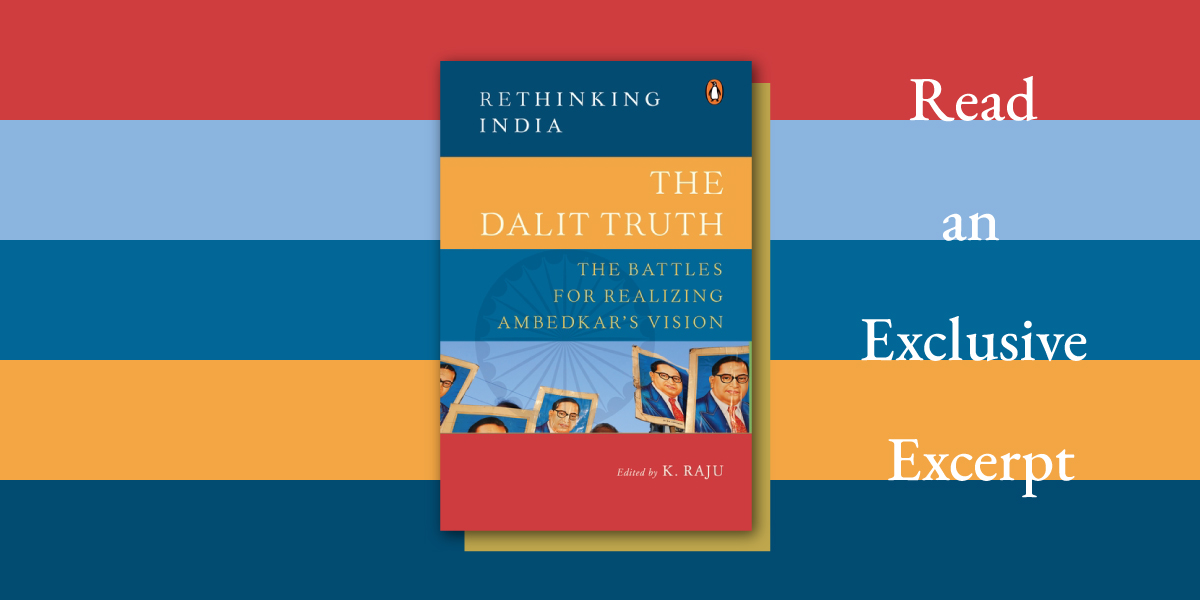
This Dalit History Month, The Dalit Truth is one of the many releases we’re spotlighting to celebrate and honor Dalit stories and discourse. Be it the framing of the Indian Constitution, making the Green Revolution a roaring success, or overcoming obstacles and hurdles that are overlooked by many, K. Raju illustrates the Dalit resilience beautifully in this book. Read an excerpt from The Dalit Truth to get a glimpse into this amazing book!

Across the country in Dalit localities today, statues of Dr Ambedkar—holding the Constitution of India in one hand and showing the way forward to the nation with the other—are a common sight. The Dalits not only own Ambedkar but also the Constitution, as they consider it as ‘Ambedkar’s Constitution’. This volume examines how far the constitutional promises made to the Dalits have been fulfilled and how far the Dalits have progressed on the way shown by Ambedkar. The Dalits are among the world’s largest group of people with a long history of discrimination against them. In their quest for equality, as promised by the Constitution, they have been waging relentless battles against the caste system.

The essays in this book are about those battles. This book is set in contemporary times, when the political mobilization of the Dalits is following a trajectory that the founders of the Constitution would never have expected. Though the Congress party, in partnership with Ambedkar, had formulated the Constitution, and brought out policies, programmes and legislations aimed at their social, economic and political empowerment, the Dalits are drifting away from the Congress in a few states. Some critics argue that it is the Congress that is drifting away from the Dalits, with Manuwadi parties making inroads there. This volume tries to objectively examine the truth and falsities that are influencing the political mobilization of the Dalits. This book has been influenced by my own career as a former civil servant and current Congress leader, and my life as a Dalit. In over three decades as a civil servant, I have had the opportunity to listen to the small and big voices of the Dalits, partake in their pain and celebrate their victories with them.

As a Congress leader, I could closely fathom the realities of politics where the Dalits have a stake. It was with this in mind that I invited thinkers who have the courage of conviction to speak the truth to contribute essays for this book. The truth some of them speak may be unsettling to a politician, whether Congress or non-Congress. It is an attempt to engage with a variety of intellectuals on Dalit lives and politics, and to acknowledge the Dalit truth. Though I strongly believe that the Congress remains the best hope for Dalit emancipation, none of the essays in this book has been ‘censored’—including those critical of my party.

The book’s inquiry into Dalit lives takes you through to the Dalit truth. There are many things which are routinely said about truth: that it is naked and it hurts; that it cannot be hidden for too long; that it prevails. But one thing which is not often said is that it always bears the burden of the past with unflinching grace. It might reveal something ugly, dull or even obvious, but it always holds its head high elegantly since it has nothing to hide. Truth remains plain and solid in its transparency. Yet societies have always had an unsaid preference for lies.

Unlike truth, which can be uncomfortable, lies offer a tempting simplicity. They stand seductively in the corner, promising false liberation from the burden of untangling the complex web of the past. But the salve of lies is temporary. Along with being divisive, lies negate history so that the dominant classes, which are mostly responsible for fabricating them, continue their hegemony. The truth fights against forgetting, while lies encourage it. To comprehend any socio-political phenomenon, the truth must be unravelled layer by layer, like the age-old metaphor of peeling an onion to reach the core.

This metaphorical onion takes us through the layers of human and personal history to arrive at the nucleus. Over a period of time, these shiny layers of lies multiply. Each dominant regime contributes another layer of cover-up, making the quest for truth cumbersome. But the unalloyed truth remains buried underneath the palimpsest of time, mummified without decay.

And what is the truth of Dalit life? It is that in society’s reparation attempts, there is exclusion hiding behind the pretense of inclusion. It is the dominant class’s insecurity and obsession for power which makes them rob the Dalits of opportunities. The primordial lie, which forms the very basis of the Varna system, is that some are born ‘higher’ than the others. This leads to compulsive, draconian, ever-increasing lies, passed off as ‘divine will’, hiding the truth that the Dalits have been stripped of opportunities related to education, employment, wealth and dignity for centuries.

While this injustice has been at the heart of the Dalit truth, there is the other truth as well: that parallel to the stories of agony and despair of the Dalit life, there are also ones of extraordinary resilience, triumph and meaningful contribution to India and the world.

The ability of Dalit individuals to overcome adversities is so profound that it can be held as an example for future generations. The Dalits, even while being crushed by society and the state, toiling under poverty, apply their remaining energies to the development of the nation. And what better way to teach inclusivity than to celebrate the contributions of all great Indians from all communities?

Take, for example, the first Dalit female graduate of India, and one of the fifteen women members of the Constituent Assembly, Dakshayani Velayudhan. A true Gandhian, she did not hesitate to contradict Gandhi’s stand in favour of Ambedkar’s on various occasions.1 She had great determination for the Dalit cause and felt the need to lay a strong foundation for the nation. And yet, the loud lies of the dominant voices have muffled Dakshayani’s truth to a great extent.

Much before Dakshayani Velayudhan, another Dalit woman showed the world great courage and grit. Her name was Jhalkari Bai, and she showed exceptional strength and skills from an early age. In the famous battle against the British in 1857, she disguised herself as the rani of Jhansi and fought a fierce battle against British forces, facilitating the rani of Jhansi’s discreet exit from the battlefield.2 Lakshmibai’s prowess is undeniable, but the fact that Jhalkari Bai’s contribution was kept hidden for so long raises many questions.

In the history of our country, there are many instances when the truth of Dalit valour, wisdom and sacrifice was pushed under the tarp of caste-related lies. Consider Matadin Bhangi, the man responsible for awakening the conscience of Mangal Pandey. Matadin was the one who pointed out the hypocrisy of the social order which didn’t allow Pandey to accept water from his hands due to his ‘low caste’ but compelled him to bite the end of the bullets smeared with cow and pig fat. Unfortunately, for centuries after 1857, Matadin’s truth was purposefully hidden. Similarly, Udadevi and Makka Pasi, the Dalit couple martyred during the First War of Independence, were never remembered.

Ambedkar, one of the greatest figures in Indian history, is himself a story of success. The leading voice on the Indian Constitution, and a powerful leader safeguarding Dalit, women and minority rights, Babasaheb remains a beloved son of the soil. His understanding of people was truly unparalleled. He is cabined as a Dalit icon, but the truth is that his influence extends far beyond his caste, and even beyond India. He was a once-in-a-generation thinker, an advocate of a new social order that recognizes liberty, equality and fraternity as fundamental tenets of life. Also, look at Babu Jagjivan Ram. He stands out as a key figure with his share of truths while bearing the burden of lies.

A Dalit man from Bihar, he became a towering figure in the history of India, not just as a Dalit icon but as an able administrator. He ensured the implementation of constitutional promises to the Dalits after Ambedkar resigned from Nehru’s cabinet. His contributions  to the Green Revolution were remarkable, helping bring food security for the first time to the hungry millions in Indians across the social spectrum. He served as defence minister during the 1971 Indo–Pak war and was instrumental in the creation of the ‘Joint Command’ of Bangladesh and Indian forces for the final assault which led to victory. Damodaram Sanjeevaiah became the first Dalit chief minister of an Indian state, Andhra Pradesh (1960–62), when he was just forty years old.

In 1962, Sanjeevaiah became the first Dalit leader to become the All India Congress Committee president (1962–63). He also served as Union minister for labour and employment (1964–66). As the Andhra Pradesh CM, he introduced 27 per cent reservations for OBCs in government jobs and educational institutions, long before the Mandal Commission came into the scene. As Union minister, he introduced the Payment of Bonus Act and pensions for the aged. He is remembered for his impeccable integrity and honesty. People of Andhra Pradesh fondly remember him as a chief minister who, after stepping down from office in Hyderabad, took a public transport bus to reach his humble house in his native village in the Kurnool district of Andhra Pradesh. An Indian Dalit is a proud citizen who believes in egalitarian assimilation of cultures—an idea alien to the hubris of those in power.

Dalits can never be accused of sub-nationalism. This sense of national integrity is one of their most remarkable contributions to India. This book is our effort to strip the lies, the philosophical sidestepping and the self-serving excuses that have obscured the beating heart of the Dalit truth. The essays offer pathways of hope for the Dalits to realize the promises that we, the people of India, made to them when the Constitution was adopted on 26 November 1949. This book is a companion to the seekers of truth who wish to dismantle the architecture of lies designed to keep the Dalits in their place.


Get your copy of The Dalit Truth this Dalit History Month now!
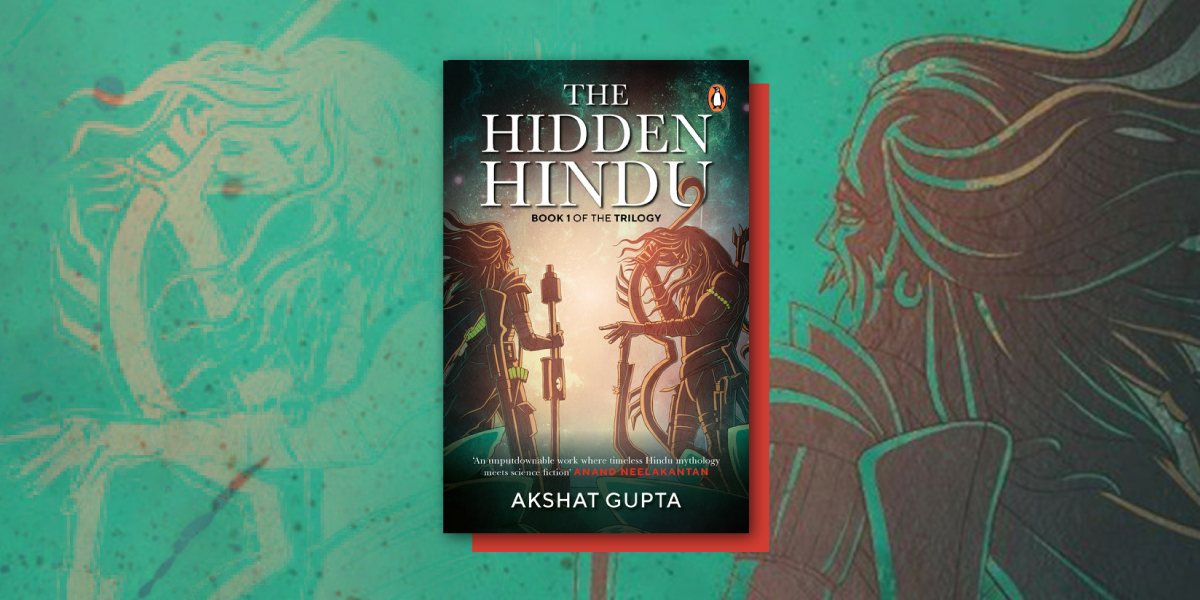
Gods of Death and Destruction

A thrilling amalgam of mystery and mythology, Akshat Gupta’s The Hidden Hindu is creating buzz for its uniquely imaginative take on Indian epics. Refashioning the lore of the immortals (chiranjeevi), you can now read the prologue in its entirety in this exclusive excerpt below.

The Hidden Hindu||Akshat Gupta

*

Memory of the Unborn

Year 2041

There was an eerie silence in the room. It seemed like everything had come to a halt. The space between the empty walls of the room was filled with the sound of their breath. Before Mrs Batra could ask Prithvi what was bothering him, he turned around and, in a strong voice, said, ‘I have seen it all myself in 2020 and so I know that there has not been anyone like him before, nor will there ever be. He is the divine truth, an undefeated challenge to the gods of death and destruction.’

‘How can that be? You are saying that you have seen things from before you were even born? That’s impossible!’ said the agitated seventy-four-year-old Mrs Batra. She was bewildered as to how a boy who was around twenty years old in 2041 could have seen things from 2020. ‘You are right. I wasn’t born then, yet I was present in that facility on Ross Island in more than one way. I remember everything as clearly as if I am still there, witnessing it all happening right in front of my eyes,’ replied Prithvi.

Looking at Prithvi, Mrs Batra spoke again, ‘I have witnessed many incredible events and mysterious things in the last few years, things that science does not have an answer to. So I am compelled to believe that there are truths and mysteries that an average human mind like mine cannot process.’ With tears rolling down her cheeks, she continued, ‘I wanted to live a normal life and die silently, like every average person. I almost got a satisfactory death in 2020. Things were good then. I wish I had died peacefully then, but everything changed.’ Mrs Batra took a deep breath and tried to contain herself. Prithvi silently stood there, giving her time. After a long pause, she said ‘Neither did I want to be part of any of that then, nor do I want to be a part of any of this now. Why are you here?’

‘Because I am still searching for him and you are the last person to have seen him,’ responded Prithvi with hopeful eyes. Mrs Batra looked into Prithvi’s eyes and said, ‘I lost everything in that fateful mission and yet, I don’t know how or why. Yes, I have seen him. But I still don’t know who he was. You were there on the island, you said. Tell me what happened on that island in 2020. You said you are searching for him. He was also there on the island back then. You must know who he was. What do you know about him? Tell me everything,’ insisted Mrs Batra.

Prithvi stared at Mrs Batra for a while, and then eventually asked, ‘Will you tell me everything that you know if I answer your questions?’

‘I promise, I’ll not hide anything . . . just tell me what happened in 2020. It changed my death. I don’t want to die not knowing why all this happened to me and why I was chosen.’

Now Prithvi was looking into the old, hopeful eyes of Mrs Batra looking back at him. He took a deep breath and started to narrate . . .

*

Want to know Prithvi’s secret? Find out in The Hidden Hindu, available at your nearest bookstore.

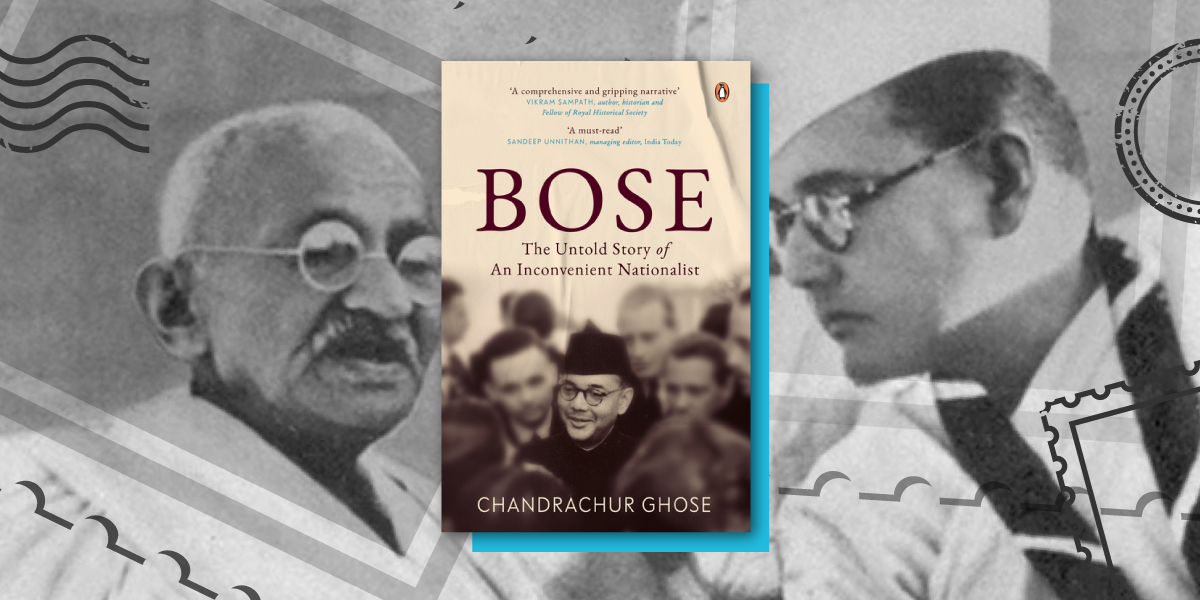
What was Bose’s relationship with Gandhi like?

There are not many Indian heroes whose lives have been as dramatic and adventurous as that of Netaji Subhas Chandra Bose. Whether it was his resignation from the Indian Civil Service or evading the framed intelligence network to travel to Europe, controversies have always surrounded his life. And out of those controversies, a consistent one has always been his relationship with Mahatama Gandhi.


Here’s an excerpt from Chandrachur Ghose’s latest biography, BOSE, throwing light on the everlasting debate:


‘While the war of statements and counterstatements was raging on in the public domain, one man held his silence, only to speak after the dust seemed to have settled. But that was just the calm before the storm. The battle lines had been drawn. Whether Subhas realized it or not, his opponents were biding their time to come at him with the full force of satya and ahimsa, waiting for the signal.

There was never any doubt that Subhas had a great regard for Gandhi the man, and for the role he had played in transforming the character of India’s struggle for freedom. Politically and mentally, however, their differences were too big to be bridged. Subhas had started opposing Gandhi’s policies and strategies very publicly even when he was a greenhorn in the Congress, which reached the highest pitch in his 1933 joint statement with Vithalbhai Patel against Gandhi. With his larger-than-life stature, Gandhi could afford to (and he did) play down Subhas’s dissenting voice as long as he wished. The occasional periods of truce and bonhomie, with 1937 and 1938 being the best period, however, did not alter Gandhi’s fundamental attitude towards Subhas. He was still ‘not at all dependable’. And now he had thrown a direct challenge not only to Gandhi’s policies, but to his indisputable grip over Congress leadership.


Gandhi’s statement issued on 31 January was a mix of the grace and strictness of a mentor, but laced with biting sarcasm and a hint of a challenge. It set the tone for what Subhas was about to face very soon:


Shri Subhas Bose has achieved a decisive victory over his opponent, Dr. Pattabhi Sitaramayya. I must confess that from the very beginning I was decidedly against his re-election for reasons into which I need not go. I do not subscribe to his facts or the arguments in his manifestos. I think that his references to his colleagues were unjustified and unworthy. Nevertheless, I am glad of his victory. And since I was instrumental in inducing Dr. Pattabhi not to withdraw his name as a candidate when Maulana Saheb withdrew, the defeat is more mine than his. I am nothing if I do not represent definite principles and policy. Therefore, it is plain to me that the delegates do not approve of the principles and policy for which I stand.

… Subhas Babu, instead of being President on the sufferance of those whom he calls rightists, is now President elected in a contested election. This enables him to choose a homogeneous Cabinet and enforce his programme without let or hindrance.

… My writings in the Harijan have shown that the Congress is fast becoming a corrupt organization in the sense that its registers contain a very large number of bogus members. I have been suggesting for the past many months the overhauling of these registers. I have no doubt that many of the delegates who have been elected on the strength of these bogus voters would be unseated on scrutiny…

… After all Subhas Babu is not an enemy of his country. He has suffered for it. In his opinion his is the most forward and boldest policy and programme. The minority can only wish it all success. If they cannot keep pace with it, they must come out of the Congress. If they can, they will add strength to the majority.

The minority may not obstruct on any account. They must abstain when they cannot co-operate. I must remind all Congressmen that those who, being Congress-minded, remain outside it by design, represent it most. Those, therefore, who feel uncomfortable in being in the Congress may come out, not in a spirit of ill will, but with the deliberate purpose of rendering more effective service…


The popular Bengali monthly Masik Basmati asked caustically, ‘When Mahatma Gandhi is not even a four anna member of the Congress, why is he so perturbed by the victory of Subhas?”


How do you think Bose responded to all this?

To know more about the revolutionary that Bose was and how the camaraderie between him and Gandhi morphed over the years, get yourself a copy of Ghose’s BOSE.

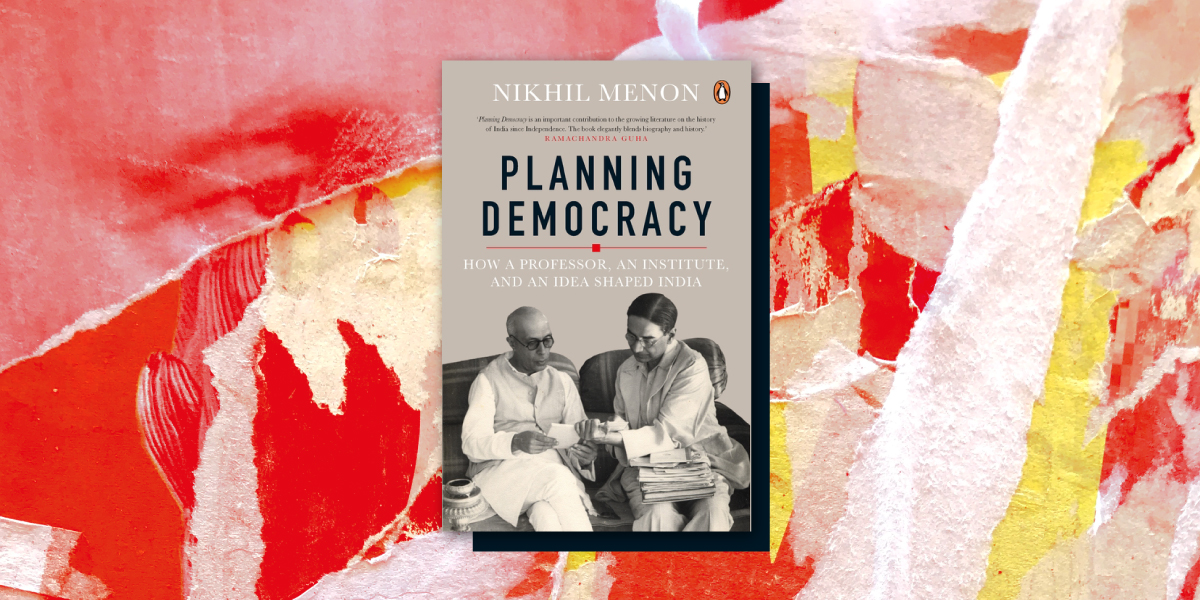
The Professor Visits The United States

In Planning Democracy Nikhil Menon takes us into the mind of a professor and his quest to make a newly-independent India make sense through statistics. How his bright-eyed vision of straightforward calculations mutated into a complex legacy is what makes this book a must-read for history fans.

The following is an excerpt from the chapter ‘Machine Dreams’.

Planning Democracy || Nikhil Menon


*

From when he first laid eyes on an electronic computer, Mahalanobis was smitten. Amazed by its ability and convinced of its utility to his country’s development, he was soon involved in a quest to bring these machines to India; an affair that would last for most of the rest of his life. In March 1946, while on the east coast of the United States, Mahalanobis heard the scientific genius John von Neumann present a general account of a computer under development at the Institute for Advanced Study in Princeton.

The Professor broached the possibility of developing a computer in India and Von Neumann was open to working on an Indian computer the next winter, but warned that the cost of building it would be steep. Von Neumann assured Mahalanobis, however, that once the first model had been built, subsequent ones would come with a ‘moderate’ price tag—“only 30 or 40 thousand dollars.” The next month, while in New York, Mahalanobis met with statisticians from Columbia University and dropped in at the Watson Computation Laboratory. Based on these conversations he concluded that if statistics were to progress in India it was “essential to build up at least one first rate computation and calculating laboratory.” It was a matter deserving “serious attention at an early date.”

Early next year, with his country’s independence yet months away, Mahalanobis saw a digital computer in operation for the first time. During a visit to Harvard, he was given a tour of the Mark I by computer pioneer Howard Aiken, with whom he spent much of the day in conversation. The reason Mahalanobis hadn’t seen this machine on earlier trips was because “this machine was still a Navy secret.” The Professor soon proceeded to Princeton, where he renewed discussions about computing with Von Neumann. While there, Mahalanobis also made the obligatory pilgrimage to its most famous resident, Albert Einstein, who expressed hope that the transfer of power from British to Indian hands would proceed smoothly.

Increasingly occupied with national income assessment, sample surveys, and planning in India, Mahalanobis believed that computers would prove vital to addressing these questions. Digital computers could perform complex mathematical calculations at hundreds of times the speed of humans. The Professor saw that they would be of tremendous help in tabulating and processing data emanating from the National Sample Survey. Feeding this raw information into a computer, planners would be able to generate estimates and parse trends in the Indian economy in a fraction of the time it would otherwise take. Another major application for computers in the realm of planning was modeling the economy, through inter-industry input-output tables. These tables, first systematized by economist Wassily Leontief in the 1930’s, defined the interrelationship between different sectors of the economy. It was based on the understanding that one industry’s output is often the input for another. The input-output table became a widely adopted method of tracking the movement of goods and services between sectors of the economy, providing a structural snapshot of the entire economy. Leontief began using computers in developing these tables: in 1949 he entered data on forty two sectors of the U.S economy into Harvard’s Mark II, running it for fifty-six hours to create an input-output table representing the American economy. Nearly a quarter century later, Leontief would win the Nobel Prize in Economics, primarily for his work on this technique. The United States continued to conduct input-output research on a regular basis, except for a few years in the 1950s when the Eisenhower Administration had it shuttered—due to its perceived proximity to planning in communist countries.

Never burdened by any formal training in economics, Mahalanobis was instinctively predisposed toward this kind of mathematical abstraction—imagining the material life of India as a series of input-output tables. It was the distillation of a technocratic vision. But quite apart from these applications, the computer was also an object of desire, status, and fantasy. It was chased after as much for the fabulous possibilities it evoked, as the more modest capabilities it delivered. Rare, notoriously expensive, and seemingly boundless in potential, it promised the future and appeared to belong to it. The Professor salivated at the prospect.

*

Read about the surprising history of India’s Five-Year Plans in Planning Democracy, now available at your nearest bookstore.

Start Small: How Micro-Habits Lead To Success

‘Shoot for the moon. Even if you miss, you’ll land among the stars.’

This famous, often paraphrased quote from Norman Vincent Peale is an insightful look at human motivation. And author Amit Agarwal would agree with this philosophy, which resonates in his book Small Is Big.

In the following excerpt, the author explains how micro-habits are an underrated and efficient tool for achieving goals. The book is replete with practical exercises, frameworks and examples so that readers can apply this ideology in their own way.

Small Is Big || Amit Agarwal


*

You follow a habit without knowing that you are doing so, or nearly or completely involuntarily. Isn’t this worthy of reflection? Almost every moment we perform an action that we have become so accustomed to doing that we are not even aware of it. Take a moment and recall the time you sleep and wake up every day. Is there a pattern to it? What do you do right after you wake up during the first hour of the day? Do you notice a similarity in what you do every day? Don’t be surprised if you do. It is all because many of our activities are simply a matter of habit.

Small changes in habit create a domino effect. The changes may appear as just minor tweaks of your old ways, but the continuous impact they have is brilliant. So how do we create effective micro-habits? I’ll begin by sharing a straightforward, an accessible framework.

STEP 1

Choose one pillar from the following: work, personal finance, family, physical health and mental health.

STEP 2

Under that pillar, list all the problems that you are experiencing. From that list, circle the top three issues you wish to address.

STEP 3

List all the benefits you will enjoy if you manage to tackle all the problems for the pillar chosen in the preceding step. This will help you to experience the nature of your desired state. Choose the three most important benefits.

STEP 4

For each of the elements identified in Step 2 and Step 3, what is the one thing that you can START and/or STOP doing?

STEP 5

Make that change and continue repeating that action for sixty-six days until it becomes a habit.

*

Small Is Big is now available at your nearest bookstore. Get your copy of this life-changing book, now!

Unlearn and relearn like never before with Let Me Hijack Your Mind

What comes to your mind when someone mentions the current education system, or perhaps something as abstract as curiosity. According to Alyque Padamsee, visual simulation and proactive thinking are key to unlearning and relearn what we’ve been taught since time immemorial. Instead of blindly following what we’re told, we need to step out of the confinements set by society and think for ourselves, form our own perceptions, and discover what the world has to offer without being influenced by what society dictates or expects us to do. Read this excerpt from the great Alyque Padamsee’s final tribute to the youth of India, Let Me Hijack Your Mind, co-authored by Vandana Saxena Poria!


ALYQUEISM

“Have you noticed how many American expressions are visual? 

‘Hit the ground running’

 ‘Keep your eyes peeled’ 

The power of the visual is so strong, it’s amazing. Now, how can we bring visual stimulation to the classroom?”

School vs Edutainment

For years, education in this country and almost all over the world was about rote learning. And unfortunately, Britain was in India during the Victorian period. If Britain had been our rulers after the Beatles, just imagine how different life could have been. The Beatles generation disrupted the culture of Britain completely. It was an exciting time over there, where people were doing mad things that didn’t have logic. No linear thinking, but squiggly thinking, all over the place. If post-Beatles Britain had ruled India, I think India would have been quite a different place. We actually had Britain ruling over us during its worst period, at its most conventional, with, ‘Don’t answer back. Little boys should be silent and only speak when they are spoken to.’ And as for little girls . . .

We have continued in this trap, this time worshipping the false gods of education. We are still handcuffed to the old system. Education here in India is for the teacher to dictate, no questions asked. A lot has changed abroad, which I must say is very good, but most of what is being taught in Indian schools is unfortunately still very much by rote, where you learn by heart, faithfully reproduce in the examination and you pass to get your degree. Do you really want a degree that says you are nothing more than a robot? Garbage in, garbage out?

I mean look at History—these poor kids today have to learn all these dates and reel them off in the exam. They get marks for getting the dates right. BUT WHO CARES ABOUT THE DATE if they don’t understand the crux of why the war was fought or the significance of the action? History is not about dates; history says it was thanks to a man like Gandhiji that we got our independence through non-violence, which everyone said was impossible. Now how did we do that? Can we bring that teaching in?

I am saying education is for the learner to learn and not for the teacher to teach. It’s for the teacher to enthuse, and it’s for the learner to be enthusiastic enough to be able to learn on their own. That’s what education is all about.

Curiosity Did Not Kill the Cat

I get quite annoyed with this proverb, as it is not entirely accurate. Shakespeare had it right in Much Ado About Nothing, where Claudio says to Benedick, ‘What, courage, man! What though care killed a cat? Thou hast mettle enough in thee to kill care.’ In this instance, care meant worries.

So Shakespeare was saying worrisome thoughts would kill you. That is not at all the same as curiosity! I wouldn’t be surprised if those religious zealots of times gone by changed the phrase to get people to stay in line and not question religion too much! Anyway, I say, ‘Curiosity inspired the cat’, and that has proven true throughout my life. Curiosity is the best form of edutainment anywhere. Honestly, if you just keep your eyes wide open and go explore different areas, you will somehow stumble upon your passion.


If these words resonate with you, grab your copy of Let Me Hijack Your Mind and unlearn and relearn like never before!

Achieving multi-dimensional success through the power of goals

“The greater danger for most of us is not that our aim is too high and we miss it, but that it is too low and we reach it.”

Michelangelo


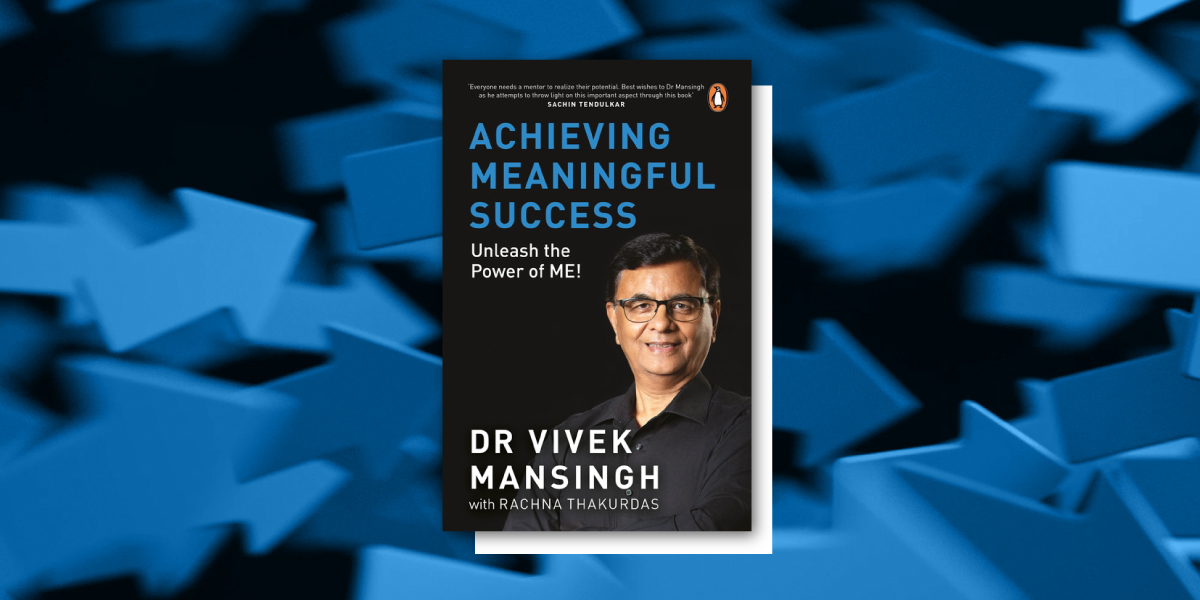
According to Dr. Vivek Mansingh, one should be aspirational and think big when setting professional goals instead of worrying about the constraints that you might face while achieving them. Freeing yourself from constrained thinking is one of the most important things to achieve meaningful success in the long-run, and consistently. Read an excerpt from Dr. Vivek Mansigh’s latest release to learn more!

Achieving Meaningful Success||Vivek Mansingh, Rachna Thakurdas

It’s not uncommon for people to achieve phenomenal professional success, only to find that they are mysteriously disappointed, and unhappy. This empty feeling has been reported in several studies by seemingly successful people including CEOs, government leaders, scientists, athletes, entertainers and award winners in every walk of life.  In a study of CEOs of Fortune 500 companies at Yale University, many apparently highly successful professionals reported that they felt their lives were incomplete and disappointing at many levels.


Professor C. Clayton of Harvard University, author of The Innovator’s Dilemma, talks about an intriguing phenomenon. He did a study of his MBA students at Harvard. At their fifth-year reunion, they were doing fairly well: they had great spouses, jobs, houses and cars. At the tenth reunion, many had achieved professional success, but one-third reported being unhappy in life. At the twenty-fifth reunion, the situation was even more bleak. Although most people were doing well at work and financially, many had been unhappy, divorced or were grappling with relationship issues. Some had serious health issues, and some had even ended up in jail for unethical business practices.

What had gone wrong with these smart people after such a terrific start?

The answer is simple and lies buried in the nature of the goals. Possibly, they pursued single-dimensional success by chasing money or only professional success,  and in doing so sacrificed other things that were important for achieving meaningful success.


Andrew Carnegie sums it up neatly: “If you want to be happy, set goals that command your thoughts, liberate your energy, and inspire your hopes.”  And he did!

Carnegie, who started his career as a bobbin boy at a cotton factory earning $1.20 a week, went on to sell his company, Carnegie Steel, for some $480 million, making him one of the world’s richest men!


After selling his steel company, this petite-framed colossus, just five feet, three inches tall, retired from business and devoted himself full time to philanthropy.

He gave away some $350 million (the equivalent of billions in today’s dollars): really the bulk of his wealth. Among his philanthropic activities, he funded the establishment of more than 2,500 public libraries around the globe, donated more than 7,600 organs to churches worldwide and endowed organizations dedicated to research in science, education, world peace and other causes. Among his gifts was the $1.1 million for the land and construction costs of Carnegie Hall, the New York City concert venue that opened in 1891. He also funded the Carnegie Institution for Science, Carnegie Mellon University and the Carnegie Foundation. A lover of books, he was the largest individual investor in public libraries in American history.


I often say that if you do not make decisions about your life, someone else will. People without goals end up working for people with goals! So, it is important that you are goal driven and set your own goals.  


Once you’ve set your goals, create a strategy and plan and write it down along with milestones. According to many studies, people with written goals have an 80% higher probability of achieving them. I am one of these people.


To me, success wasn’t something I would gauge by comparing against others. I strived to compete with myself after defining what meaningful success meant to me. If success to you means becoming a cricketer, singer or painter, go for it. But strive to be the best that your potential holds. It is also important to be joyful and positive while you are pursuing your goals and going through your life’s journey. According to research in positive psychology, happy, positive and joyful people have higher probability of achieving their goals and success.


If you’re looking to achieve meaningful success and set multidimensional and balanced life goals to help you attain happiness and fulfilment, grab your copy of Achieving Meaningful Success here!

The Tank Battle Begins

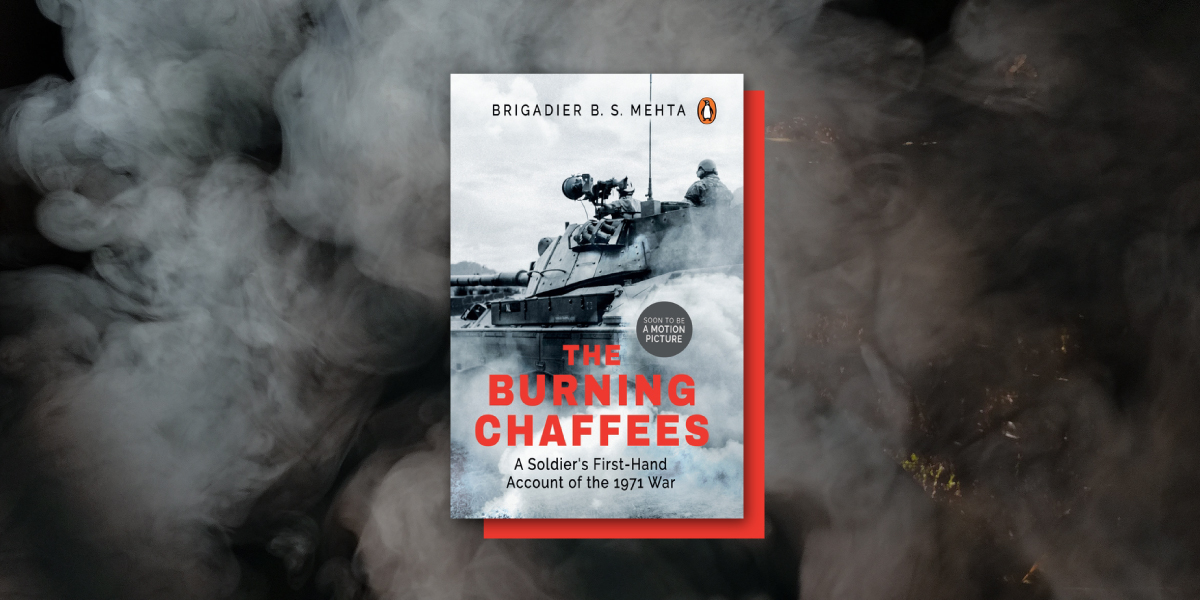
A lesser-known event in Indian military history, the Battle of Garibpur was fought between 21-22 November 1971. In The Burning Chaffees, Brigadier B.S. Mehta records the behind-the-scenes tension that eventually exploded into the momentous Bangladesh Liberation War, India’s tank column movement into then East Pakistan, and the victory which shook Pakistan’s confidence.
The following excerpt is an account from 20 November 1971, moments before the main conflict took place.


The Burning Chaffees || Brig. B S Mehta

*


We had barely moved out of the Battalion HQ when an urgent message came through on the radio. What we had been suspecting since the early morning now stood confirmed by the radio message, followed by the short shrill blasts from a whistle, which somebody was blowing impatiently. It was a signal, practised and rehearsed during exercises, to indicate an imminent air strike.  

I elbowed my entry into one of the crowded trenches close to the Battalion HQ, as there was no way I could make it to my tank. The trench, designed for not more than three persons, was a small, ramshackle shelter with an apology for overhead cover consisting of small khaji saplings and dry twigs covered with earth to provide protection. On one side of the trench, a small aperture had been cut open through which its occupants could fire their weapons in case of a ground attack. Before I could adjust my weight on my feet, somebody inside yelled, ‘Enemy planes are coming.’ The four black dots had now grown much larger, their outline becoming more menacing. Soon, they were overhead, and started to circle over our position, to determine our defence perimeter within which they would select their targets to spell death and devastation. Their main effort was directed towards the tanks, being the more lucrative targets. Sitting inside the trench, packed like sardines, one could do nothing more than watch the aircraft, which we now recognised as the infamous Sabres. We had heard and read enough about these aircraft but all that knowledge was of no avail, since it had only acquainted us with the physical and technical features of the aircraft. What we were going to discover in the next 10 minutes or so would be its capacity for annihilation and its ability to create havoc amongst the ground troops. The cumulative effect of its monster-like presence moving around at supersonic speed, creating a blood curdling roar through its jet engines, the reverberation and echoes, plus the physical damage its cannon, bombs and strafing would create was something we would be compelled to undergo with our hearts in our mouths. While they were still high up in the sky, I ventured to count them, hoping to draw some consolation from their numbers: one, two, three, four—possibly some higher up in the sky. The Sabres were pulling up once again to gain height as by now they had completed a dry run. It would now be only a matter of moments before they swooped down, one after another, unloading their cargo consisting of bombs, cannons, machine guns, on pre-selected targets.  

*

Soon to be a major motion picture, you can get your copy of The Burning Chaffees from your nearest bookstore.

What It Means To Socialize As A New Parent

No more fodder for gender-restricted roles, parenting is now a joint venture and for the good. But even while our idea of parenting changes, the truth is that babies are still the same. So how do we fill this gap?

Sleeping Like A Baby shows various examples of modern parenting problems with simple, priority-driven solutions. There’s even a section on travelling with babies in-flight! This particular excerpt deals with the perils of parents who want to keep up the momentum of their social life without compromising on their baby’s sleep.

Sleeping Like A Baby || Neha Bhatt & Himani Dalmia

*

Some families are more social than others and have varying degrees of obligations and priorities. Depending on your situation and family dynamic, here are some tips you could use to tweak your social life which allow you to let down your hair while also keeping the baby’s sleep routine front and centre: 

Choose well

In the first few years, accept social invitations that are truly important to you and offer some leeway in terms of time and day.  

Become the host

Move the party to your house. Put the baby to bed, press play on the white noise, keep the baby monitor next to you and hang out with your friends and family.  

Pivot

Accept that your social life will change after having a baby, and that’s a good thing. It means everyone is growing up, not just the baby! Request friends and family to be flexible and accommodate celebrations at a time in the day that are baby-friendly. And while your outings may seem severely limited in the first year or so, once the baby moves to a one nap routine (at around 15-18 months) it gets a lot easier to plan visits. 

Take turns

If there are invitations you do not want to decline that clash with your baby’s sleep routine, take turns to go. You attend one while your spouse goes to the next one, or one that is more important to either one of you.  

Get your me-time

Once your baby’s routine has settled down, go out with your friends while your partner does bedtime and bridges sleep cycles. For this to happen successfully, involve your partner in baby sleep from Day 1.  

Create your ‘outing’ at home

If it’s hard to go out or you just feel too exhausted to leave home, staying in can be just as fun. Snuggle up with the latest Netflix movie or your favourite book, a tub of popcorn and your beverage of choice once your baby is down for the night. Now that the COVID-19 pandemic has made virtual parties legitimate social events—go right ahead and organize your own Zoom gatherings.  

It’s all a phase

Hitting pause on late-night socializing pays off in the end, we promise you. Sticking around to help baby sleep at night rather than taking her out with you when it’s her bedtime results in a well-rested child who grows to love her sleep because she is in touch with her internal cues and feels safe and cared for. As she grows, you will be able to socialize more without compromising on her sleep.  

Find your tribe

In the time of social media, it’s easy to find a tribe of your kind of parents who are happy to create fun social experiences that suit baby routines. Reach out to them! Take turns to plan gatherings that work for everyone, especially the kids. We did the same and not only have we had a ton of meaningful conversations and boisterous fun, but we also made friendships to last a lifetime.  

Dial down wedding worries

Weddings are not typically baby-friendly events. Try and book a room at the venue where the baby can take a nap, or fall asleep for the night with a caregiver while you attend the wedding and can go back to the room if she needs you.  

*

A true balm for parenting and baby sleep woes, Sleeping Like A Baby is now available at every bookstore near you.  

Mapping the ascendance of the BJP

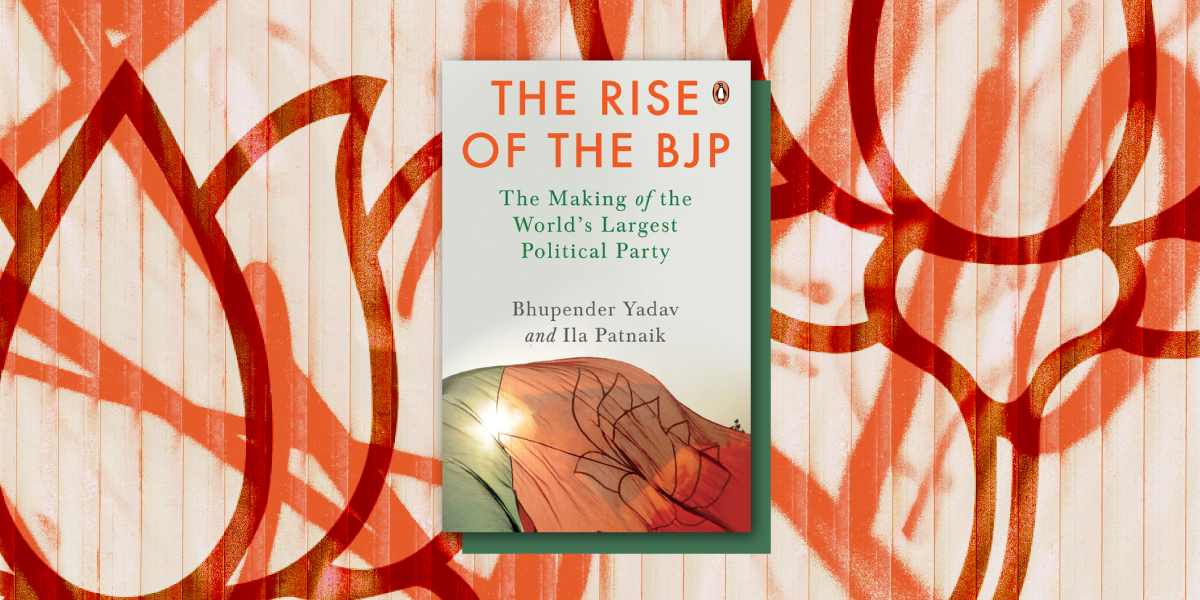
In The Rise of the BJP, co-authors Bhupender Yadav and Ila Patnaik chart the journey of how BJP came into existence and established itself as one of the most powerful political parties. It delves into the political strategies and the organizational design that made the party successful and drove the transformation.

Let’s read this excerpt to understand BJP’s position in the government, starting from 1996 and how it eventually rose to becoming the single-largest party.

*

The Rise of the BJP
The Rise of the BJP || Bhupender Yadav, Ila Patnaik

After the fall of the Vajpayee government, thirteen parties came together as the ‘United Front’ to form a government with the support of the Congress from the outside. The new administration started with H.D. Deve Gowda as the Prime Minister, on 1 June 1996. The coalition depended on Congress support. However, the Congress began to soon feel uncomfortable with the decisions of the Deve Gowda administration. For one, Gowda showed a lack of interest in post-poll adjustments in the run-up to the 1996 UP state elections. Further, he announced the creation of Uttarakhand as a separate state in his Red Fort speech on 15 August 1996, without consulting the Congress. He was also unhelpful towards the Congress leaders who had pending cases against them with the agencies. Issues such as these led to a change of heart in the Congress and the party withdrew its support to the Deve Gowda government.

On 11 April 1997, Gowda had to face a floor test after the Congress withdrew support. When Gowda spoke during the floor debate, he referred to Kesari’s prime ministerial ambitions, describing the Congress president Sita Ram Kesari as an ‘old man in a hurry’. As expected, the Gowda government lost the trust vote by 292 to 158 votes.

After Gowda was voted out, Congress supported another coalition, and a new Prime Minister was sworn in. Inder Kumar Gujral, who was foreign minister in Gowda’s government, became the Prime Minister, again with outside support of the Congress. However, Gujral’s term was also short-lived. Following a hung Assembly in the Uttar Pradesh elections of 1996, a powersharing agreement had been reached between the BJP and BSP in April 1997. It was decided that for the first six months, BSP leader Mayawati would be the state’s chief minister and for the next six months, Kalyan Singh from the BJP would head the state.

However, during Kalyan Singh’s tenure, the BSP decided to withdraw its support due to disagreement over certain issues. This led to considerable friction and some violence in the streets, which prompted the BJP government led by Kalyan Singh to call for a vote of confidence. In response to BSP’s decision, BJP state leader Rajnath Singh announced that if the BSP wanted to withdraw its support, it could do so. He was optimistic about the BJP winning the vote of confidence as it was the single-largest party in the state.

Prime Minister Gujral responded to this by recommending the imposition of President’s Rule in the state. In a rare act of autonomous decision-making by the office of the President, President K.R. Narayanan did not act on this; he asked the government to review its recommendation. To avoid a confrontation with the President, the United Front government was forced to reverse its decision to dismiss the Kalyan Singh government. While most allies in the United Front agreed that a confrontation was best avoided, the Congress wanted the BJP government to go. The Congress felt that the BJP was gaining ground in Uttar Pradesh and could become the major force in the state. In stark opposition to the Congress party, prime minister Gujral did not want President’s Rule to be imposed in UP. However, as his government was in place with the Congress’s support, his decision not to dismiss the BJP government in UP made the collapse of his government imminent.

It was, however, the investigation into Rajiv Gandhi’s assassination that brought the coalition government led by I.K. Gujral to a premature end. The inquiry commission’s report on the assassination of Rajiv Gandhi, led by Justice Milap Chandra Jain, said that the conspiracy to assassinate Rajiv Gandhi had a connection to the DMK. The Jain Commission report concluded that the DMK had provided sanctuary to the Liberation of Tamil Tigers Eelam (LTTE) and was thus an accomplice in the assassination. These explosive findings triggered a chain reaction that shattered reputations, forced realignments and brought down Gujral’s fragile government. When the Gujral government did not dismiss the DMK from the Cabinet, despite these allegations, Congress president Sita Ram Kesari announced the withdrawal of support from the government. Gujral’s time as prime minister lasted eleven months.

In his resignation letter, Gujral wrote, ‘. . . My Council of Ministers and I hereby submit our resignation from my Government. In my communication to the Congress President [Kesari], I have said that it is unfair and unethical to tarnish the fair name of a party only because the Jain Commission’s Interim Report—without any substantiated data—has chosen to blame the party and, I say with sadness, the entire Tamil people . . . My Council of Ministers and I hereby submit our resignation.’

Mid-term Lok Sabha elections were held in 1998. The BJP built on its growing success in elections and scaled up its methods. A large-scale mobilization of voters had been accomplished through numerous yatras at the national stage and within many states. By this time, measurement of the populace through polls had become an important activity, both within the media and as an information system to support decision making in election campaigns. The BJP brought in greater professionalism to do the number crunching in order to chalk out winning strategies.


The results were consistent with the long journey of the BJP towards growing influence.

error: Content is protected !!