

Publish with Us

Follow Penguin

Follow Penguinsters

Follow Penguin Swadesh

Where the Sun Never Sets: About a day in the lockdown

Many things in life come unexpected, as did the COVID-19 pandemic. The highs of life suddenly turn into lows and everyday events seem to become hard to deal with. During such phases, the present time slows down and one goes back to thinking about their past. As clichéd as it may sound, one eventually finds the light at the end of the tunnel.

During a similar time, Stuti Changle’s protagonist in Where the Sun Never Sets, comes to terms with her past that she has been running away from. Read an excerpt from the book to get a glimpse of Changle’s protagonist’s thoughts penned down in her diary.

*

Where the Sun Never Sets
Where the Sun Never Sets || Stuti Changle

Today felt just like every day is going to feel in my lockdown life.

Once upon a time, it rained for hours, just like it rained today, heavily, unendingly, unstoppably. Rain might wash the physical world, but with it, washed-out memories resurface. Rains deepen the colours of your surroundings as if you’ve unknowingly switched to 4K HD mode. It also deepens the colours in your mind, unlocking the deepest of desires.

Rain is powerful indeed. And what does rain remind you of? The rain reminded me of the onion fritters Mom would deep fry until they were golden and crisp. The mere thought lit up my face, filling my mouth with water. I closed my eyes for a moment, imagining the crisp fritters between my teeth, chewing them with a crunch. Nishit, my ex-boyfriend, would often give me company. He would also tell me that peacocks teach you to dance your sorrows away in the rain.

The rain also reminded me of masala chai, the kind my landlady prepares in Gurgaon, with ginger, lemongrass and basil leaves added in generous amounts. She is the kind of bitch who calls you up to catch up and when you do so, she gives you a list of things you need to get repaired at your own expense.

She keeps reminding me that I am an orphan and it’s her responsibility to bully me to make me stronger. She believes that my parents would have done the same. She also feels that my elder sister is a bitch to have abandoned me. When I am engaged in bitter conversations with her, masala tea is my guru who preaches finding goodness in everything.

I requested Shyamala Aunty to prepare masala tea and fritters in the morning. I gave her very specific instructions. These days of lockdown have to be the perfect time for me to finish the movie script.

But where to start? Why can’t you talk, my diary?

I entered my attic-style bedroom to start writing the script. I had asked Shyamala Aunty to set up my desk in front of the huge window that overlooks the beautiful Mussoorie hills. It’s going to be a long lockdown after all.

I watched some YouTube videos by Tibetan Zen masters. They say that one must prepare well before a new project. Some changes are necessary while some are not as important. But the room where you engage in creative work has to be organized.

Considering the lockdown situation, all I can say is that it is one of the most unpredictable times. Of course, things will change sooner or later. They must. That’s the hope, and we hang on to it.

But I don’t know how much peace organizing my room will bring me when the world is in chaos.

‘Relax. Focus. Concentrate. Yes. Harder,’ I told myself. ‘Write a few words at a time. Bricks build

castles. And castles stand for ages and inspire people for many years to come,’ I murmured.

I sat at my desk wondering if all the days were going to be the same here. You watch the sunrise. The sunset. Sunrise. Sunset. Yet you feel you’re stationary. ‘The sunrise. The sunset,’ I murmured as I had still not written a single word. I put my pen aside.

‘Time never really moves here. That’s the beauty of time in small towns,’ Shyamala Aunty said, breaking my reverie. I hadn’t realized she had entered the room. She sneaks in whenever she likes, and I have hated it since my teenage years.

She continued to mop the floor with a magic mop, even as its engineering was beyond her comprehension. It reminded me of my arguments with Dad, who often said, ‘It is important for everyone to understand mathematics to be able to lead a good life.’

I would always tell him, ‘It is not important to understand an airplane’s engineering to be able to travel in it. You could be a layman and still live a happy life.’

**

To know what happens next, get a copy of Where the Sun Never Sets from your nearest bookstores or online.

The second first crush of his life

Many people would understand the nostalgia of a first crush. For filmmaker Onir, this rush of pure emotions happened twice. 
Throughout I Am Onir and I Am Gay, the author seamlessly entwines his sexual identity with his life, especially his childhood days of moving around and being boundless. 

The following excerpt is the first chapter in its entirety. 

I Am Onir & I Am Gay||Onir with Irene Dhar Malik

*

First Crush

I met him in 1984, when I came to Calcutta (now Kolkata) for my higher secondary studies. There’s a lot about those two years that I try to forget—the disillusionment of the young boy coming from a Himalayan small town to a big city, whose excitement had quickly transformed to disappointment and anxiety—but I will always remember him. In this city that I used to visit every year during the winter vacation and that had seemed full of welcoming relatives, I now desperately searched for accommodation and ended up in many scary or awkward living arrangements.

We didn’t even have television in Bhutan at the time a fifteen-year-old me moved to Calcutta. The protectionist policies of the Bhutanese government ensured that it was the last country in the world to allow television, which was as late as 1999. Calcutta was overwhelming and, in many ways, I was the proverbial smalltown boy experiencing big-city blues. I quickly realized that I wasn’t going to get admission in any of the well-known schools as my ICSE marks were abysmally low by Calcutta standards. Anything above 60 per cent was considered first division and therefore something to celebrate back home in Thimphu, but my marks were woefully inadequate here. Those were not yet the days when students scored 99.9 per cent, but a 90 per cent didn’t hurt anybody, as we found out the following year when my brother easily secured admission into La Martinière for Boys. As for me, I finally got admitted to St Augustine’s in the rather dingy Ripon Street neighbourhood of Calcutta. It was a tiny and somewhat cramped school at the time. The stairs were grimy, the classrooms small and windowless.

I think we were about ten or twelve students. Though they must have, like me, not been academically brilliant, my classmates were all very kind and generous, and that made all the difference. Of the teachers I don’t have many memories, except that I was so enamoured by my biology teacher Miss Mukherjee that biology quickly became my favourite subject. I still haven’t forgotten her gentle voice and kind smile.

I also remember my Bangla teacher, even though his name escapes me. I remember him because I was terrified of him. My Bangla was atrocious, having started learning the alphabet only when I was in Class 9, and it was by some miracle that I passed my ICSE Bangla paper. At St. Augustine’s, I used to hate my Bangla teacher and his classes. After I cleared my Class 12 Bangla paper, the man I had been so terrified of wore a broad grin as he patted me on the shoulder and said, ‘I never thought a gadha (donkey) like you would pass, I’m so relieved.’ I realized that he was perhaps actually fond of me and had been so severe with me only because he hadn’t wanted me to fail.

It was during those years that I had what I can call my first crush. He was tall and dusky, with thoughtful eyes and sensuous lips, and he had somehow decided to take me under his protective wing. He not only made sure no one bullied me, but also helped me cross roads and board buses. I couldn’t manage to cross the busy Calcutta streets on my own, nor board the crowded buses or trams before and after school. Very often, I used to walk long distances just to avoid getting into a crowded bus.

So yes, he was the one who would hold my hand or navigate me through the streets of Calcutta, his arm around my shoulder. I had no idea then what being gay meant. But unlike my Bhutan schooldays, I did not fall in love with any girl in my Calcutta school. There was an element of physical attraction with one of my classmates, but there was no emotional involvement at all with that boy. Stolen moments of touching and kissing in cinema halls, classrooms, deserted parks. There was no shame or sense of wrong in me, just the acknowledgement that sex was supposed to be something hush-hush; and we were discreet, like most boys and girls were those days.

I was aware that what I felt for my tall and dusky friend was different, but I didn’t give much thought to that difference. Life went on, and we sat for our ISC exams. We knew that we would soon go our diverse ways, our paths dictated by education and career choices.

One afternoon, it was just the two of us in his flat. We sat on the floor in his room, next to each other, our backs resting against the bed, talking about many, many things, as teenagers tend to do during languid Calcutta afternoons. I don’t really recall the exact flow of events, but I remember his white vest and the lungi he wore, and I can still remember his smell. At some point he put his arms around me, drawing me close to him, and asked me if I would like to touch him. This was not my first sexual experience, but I was nervous that afternoon, maybe because I had felt that unspoken and as yet unexplored feeling of love. This wasn’t the first time I had kissed someone, but whenever the reference to the ‘first kiss’ happens, it’s him that I think of. Of that sweaty afternoon and my limbs intertwined with his long limbs. When I walked back home that evening, everything had seemed pleasantly hazy. Yes, I know it sounds like a clich., but maybe that one time in my life, I did experience that cliché of being blissfully in love.

Much like in the falling-in-love sequences of the Hindi films that I’d grown up watching, his image was omnipresent for the rest of the day, superimposed over all details of my mundane existence.

At 7 a.m. the next morning, there was a knock on my door. When I opened the door, I was surprised to see him standing there. He didn’t want to come in but asked me to step out so that we could talk for five minutes.

Standing in the narrow lane outside the tiny Calcutta flat I then shared with my siblings, surrounded by the din of morning chores being executed in the surrounding middle-class households, I heard what he had to say. ‘Look, I thought about it, and whatever happened yesterday shouldn’t have happened. It was wrong, and what we did is a sin. I want you to erase that memory and so will I. And since that alone is not enough, I think it’s best that we don’t meet for the next ten years.’

He walked away. I was so numb that I didn’t utter a word as I watched him turn around and leave. No parting hug, not even a wave . . . he just walked away.

It was not then, but a couple of days later, when I was walking near Dhakuria Lake, that the truth suddenly hit me, and I could not stop the tears. The year was 1986, and I was seventeen. I realized for the first time that my love was not acceptable to the world I lived in and that something that was priceless to me was considered sinful by others. I didn’t understand why, but I was filled with a sense of emptiness, a great sadness, because I knew that this was not fair.

A couple of years later, I happened to pass by the building where he lived. Perhaps it was by design, but I don’t think so. After a lot of hesitation, I went up to the building watchman and asked about him. The entire family had emigrated to the US.

We never met again.

*

I Am Onir and I Am Gay is available for pre-order. 

What makes organizations successful? Here’s Piyush Pandey’s take

What makes organizations successful in the long run? 

Is it money, projects, or growth? 

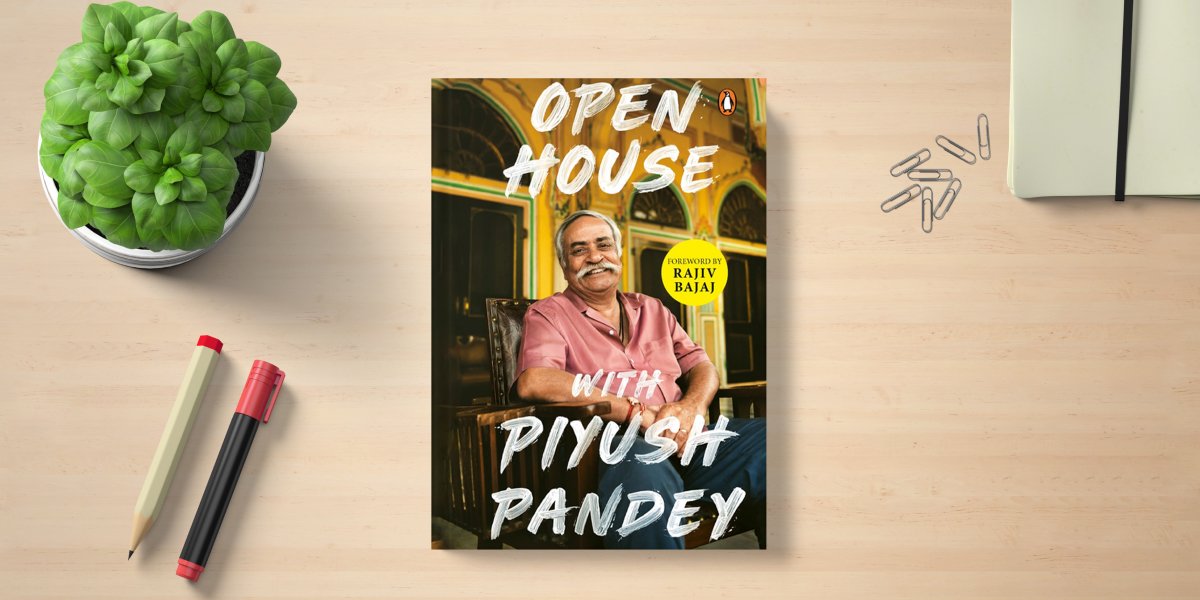
According to Piyush Pandey, the advertising legend of India, emphasizes the importance of building an organization where every single member is aligned to the same extraordinary goal of creativity. Community building, an integrated audience, and an environment that fosters and promotes individual creativity without compromising on the essence and ideals of the company is crucial for success in the long run. Read this excerpt from Open House with Piyush Pandey to know more! 

Open House Book Cover
Open House||Piyush Pandey

“I must say that while Apple, indeed, is extraordinary, there are many other companies that have done reasonably well in building a company, products, brands and communities. Off the top of my head, I could name Nike, Coke, Burger King, Mondelez and, closer home, Pidilite and Asian Paints. Perhaps Google would be another. 

In each of these instances, the principles are the same.  

Apple’s employees, anecdotally, love going to the office. They seem free to express themselves, and seem unhampered by rules and structures. 

And yet there is a system; it’s not that it’s free for all. They have created an environment of creativity seemingly freed from constraints to express oneself. In most companies, for example in network agencies and other communication companies, rules and procedures are created to prevent chaos or the unpredictable. Apple, from the time they began with the 1984 release of the Mac to the second journey under Steve Jobs, was unsatisfied with the normal or the staid – they wanted extraordinary products and took extraordinary punts in the quest for the extraordinary products.  

The success with the iPod gave them the courage to invest more in experiments and risks and the products that followed ensured that success. 

Companies such as Apple spend an extraordinary amount of time – and money – in creating the culture that fosters out-of-the-box thinking. We admire the company because of the successive successes that they’ve had. And we will continue to admire them till they continue to succeed. 

The product basket, thanks to the near monopoly market that they enjoy in the early stages, sees them enjoying high margins – which in turn allows them to invest in the next big idea. 

Such companies are almost like close-knit families. The rules exist but are unwritten and unsaid. However, the ‘ecosystem’, the family, is, as a collective, aware of problems and unhappiness and challenges that particular members of the family might be experiencing.  

A critical party of the ecosystem is the partners of the business; they’re also family and need to be treated as such. The role that Lee Clow and TBWA Chiat Day played in the success of Apple has been described many times by Jobs himself. Apple has worked with Lee’s team literally since inception.  

These are unusual, but visionaries like Jobs chase their dreams and not bow to the pressures of the stock market. That allows them to take a long-term view of their product portfolio and their brand – something very few have the courage to do. 

I’ve had the pleasure of working with some brands for over 20, 30, 40 years. The ones that easily come to mind are Fevicol, Asian Paints, Cadbury Dairy Milk, many HUL brands. Other companies who have invested in their partners becoming long-term ‘family members’ include Amul. 

The performance of these brands is there for all to see.  

Can another Apple be born? Only if we see another Steve Jobs. Is Tim Cook the new Steve Jobs? That answer will help us understand if there is indeed an ecosystem that can win every time, or whether it was the vision of Steve Jobs. Apple’s performance post the passing of Steve Jobs suggests that there is, indeed, an ecosystem that works.” 

Intrigued? 

Get your hands on this honest, irreverent and informative read now! 

We’re only human: But what does it imply?

As living, breathing, and thriving humans, we often believe a common pretense: we are the most superior form of life. Sometimes people refer to organisms, especially humans, as ‘perfectly designed’, but our aquatic ancestors had to twist and stretch and rework what they already had. You can’t get to the perfect solution for being a human from that fishy starting point! 

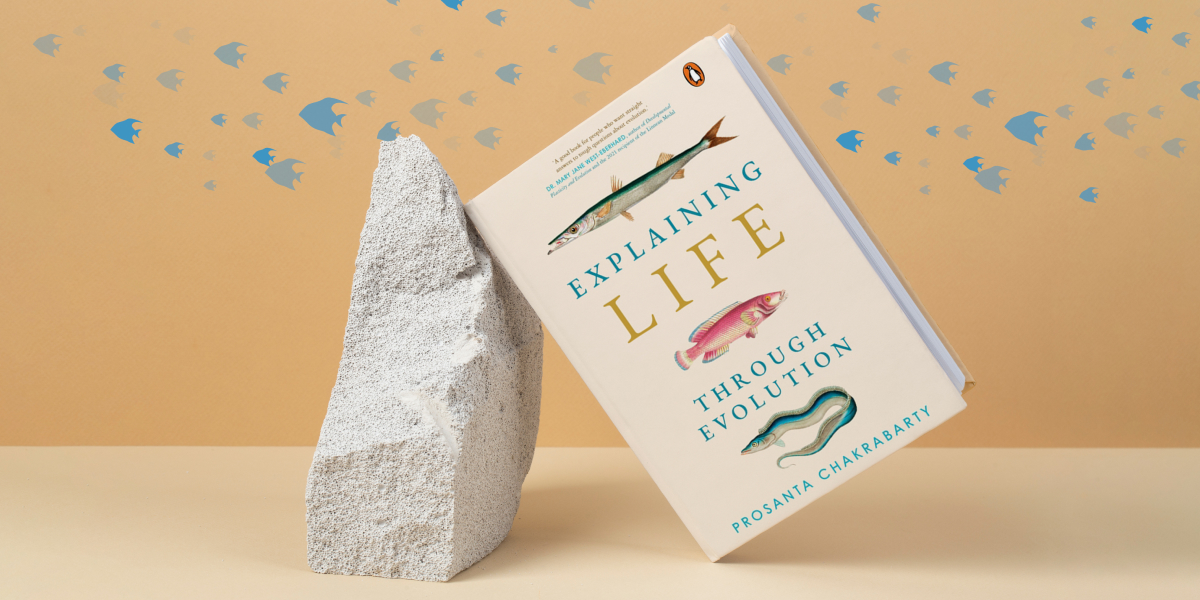
Read this humbling excerpt from Prosanta Chakrabarty’s latest release, Explaining Life Through Evolution to know more about the human origin!

Explaining Life Through Evolution Book Cover
Explaining Life Through Evolution||Prosanta Chakrabarty

“Your body is a disaster. I don’t care if you look like Padma Lakshmi or Michael Jordan. We are all hunks of water-logged flesh, hanging off of sticks of collagen and calcium, made up of teeming pockets of bacteria that are held together by strings of blood all covered in an oily skin bag. We are frail naked apes with giant lollipop heads with exposed and vulnerable dangly bits that are so ill-equipped for life that we get tired after standing up still for ten minutes.  

Why? Again, we are literally fish out of water. 

We are taught to think we humans are perfect: no less than the pinnacle of evolution. Hogwash. The only thing we got going for us are our big brains, and we use those brains just enough to think we are better than everything else and to build things to make us feel important but that will also destroy the planet and ultimately ourselves—time for some humility. 

It isn’t all bad. We do have the advantage of getting more oxygen directly from the air than from water (which has a lot less oxygen), but gas exchange is more difficult through lungs than with gills. But we mess that up too by using the same tubing for breathing as for feeding, and we have just a little piece of flappy tissue (the epiglottis) to keep food from going down the wrong pipe. And that never fails— (choke, choke) right.  I’d rather have the body of a crappie (the fish) than our crappy bodies. 

We can see in our bodies the evolutionary connections we have with more recent ancestors too. We still have the remnants of a tail (which is just an extension of the spine) as the coccyx; and we get goosebumps to raise non-existent fur on our bodies (which we lost in becoming ‘naked’ apes). Yes, we had hairy ancestors with tails, but no, not from monkeys. Unlike a common popular myth, we did not evolve from monkeys. We share a common ancestor with monkeys that led to both tailed monkeys and to the tail-less great apes (of which we are one).” 

Evolution isn’t as linear as we think it to be. If you’re keen to know about the complex history of evolution, and how we came to be, get your copy of Explaining Life Through Evolution now! 

A glimpse into Soli Sorabjee’s life and law practice

How does a Parsi lawyer, deeply influenced by the principles of Roman Catholicism, fall in love with a Bahá’í and go on to become the Attorney General of India for a Hindu nationalist BJP government? How does a boy with a broken leg, who studied in a Gujarati-medium school, and lost his father at the age of nineteen, go on to mount a heroic defense of the Janata government’s decision to dissolve Congress state legislatures (in 1977) in the Supreme Court?  How does a lawyer with a humdrum customs and excise law practice, whose grandfather sold horsedrawn carriages in Bombay, become a U.N. human rights rapporteur, and repeatedly defend the fundamental right to free speech and expression in the Supreme Court of India?


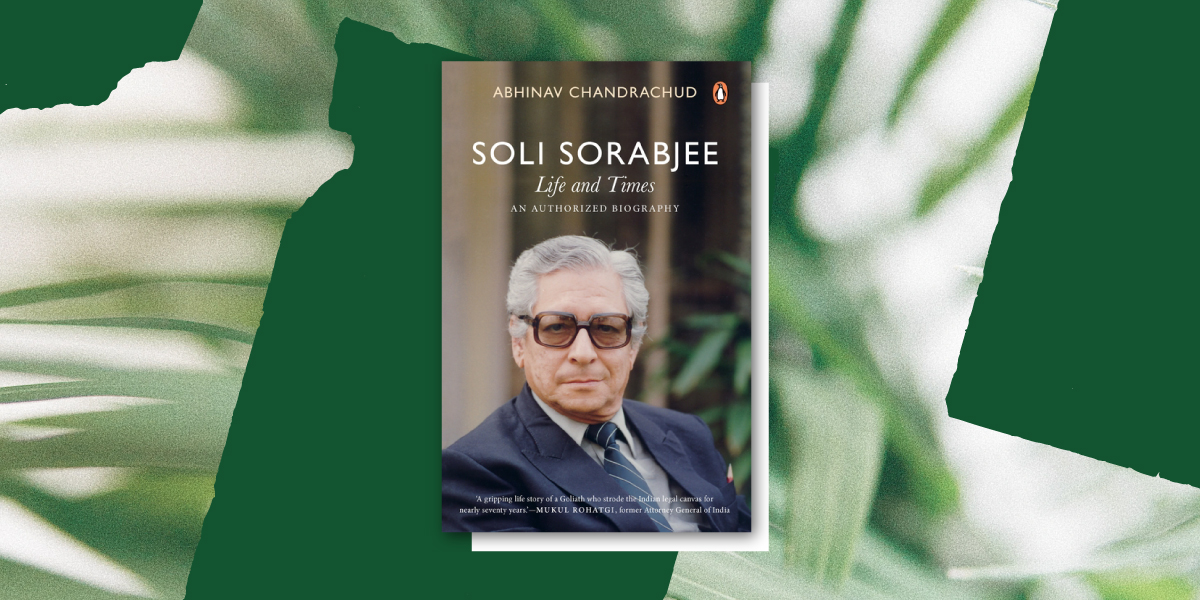
Let’s read an excerpt from Abhinav Chandrachud’s latest book Soli Sorabjee, Life and Times: An Authorized Biography.

*

Soli Sorabjee
Soli Sorabjee || Abhinav Chandrachud

A lawyer’s first brief is always considered to be very memorable. Sorabjee’s first brief was given to him by a Parsi attorney, Naval Vakil, a partner at Little & Company, a firm which used to heavily brief his senior, Kharshedji Bhabha. It was not a very serious brief. Sorabjee just had to ask Justice S.T. Desai for an adjournment in the case. Vakil sent Sorabjee the brief along with a thoughtful note. It said: ‘I hope it leads to more success.’ However, in this, his very first case at the Bombay High Court, Sorabjee failed. The judge refused Sorabjee his adjournment.

Even so, Sorabjee marked a fee of two ‘gold mohurs’ for his appearance in the case, equivalent to thirty rupees. Since the colonial period, Bombay advocates marked their fees in gold mohurs, where one gold mohur was worth fifteen rupees. Even today, it is common to see fees being marked in gold mohurs or ‘gms’ on the Original Side of the Bombay High Court.

Sorabjee’s practice started slowly. Between 1953 and 1955, in the first ten important cases that he appeared in (i.e., cases that were either reported in the law reports or written about in the Times of India), Sorabjee was led by a senior and did not offer any independent arguments in court. Naturally, the senior advocate he was ‘led by’ most often in his cases in the early days was his own senior, Kharshedji. By 1957, however, around 4 years into his practice, Sorabjee started arguing cases on his own in the Bombay High Court. Between 1953 and 1970, before Sorabjee became a senior, he argued 63 per cent of the important cases that he appeared in himself. In other words, even as a junior, the majority of the briefs that Sorabjee received were those in which he had to stand up in a packed courtroom, face the judge, make his arguments, and try to obtain a favourable outcome for his client. This number rose substantially after he became a senior advocate. Between 1971 and 1975, after Sorabjee became a senior and up to the eve of Indira Gandhi’s Emergency, Sorabjee argued 81 per cent of the important cases that he appeared in himself. Like Kharshedji, Sorabjee appeared mostly on the Original Side of the Bombay High Court. Like him, Sorabjee appeared both before a single judge and division bench in equal proportions.

There is no doubt that Parsi connections helped Sorabjee. He grew up in a wealthy, well-connected Parsi family. He was privileged. He did not have to worry about earning money in the early days of his law practice, to pay rent or to support a family. He studied in schools that had a high proportion of Parsi pupils. He got into the chamber of a prominent Parsi advocate, Kharshedji, his cousin’s husband. He got his first brief from a Parsi attorney. However, that is as far as Parsi connections could take him. In order to succeed at the Bombay Bar Association, Sorabjee had to perform well as a lawyer, in the absence of which his benefactors would soon have abandoned him. Most of the judges and clients were non-Parsis. Between 1953 and 1975, for instance, in the 132 reported cases in which Sorabjee appeared, only 22 (16 per cent) had a Parsi judge on the bench.

Sorabjee started getting noticed by the judges of the Bombay High Court a few years into his practice. In 1957, Chief Justice M.C. Chagla, a non-Parsi judge, appointed Sorabjee as an ‘amicus curiae’ or ‘friend of the court’ to assist the court in a divorce case under the Hindu Marriage Act, 1955. Chagla must have seen a spark in Sorabjee and tried to encourage him by appointing him as an amicus. Chagla concluded his short judgment in the case with the following line: ‘We are thankful to Mr Sorabjee who assisted this Court as amicus curiae.’ In many cases, Sorabjee did things that might have helped him gain the trust of the court. He cited judgments against himself—informing the court about cases that were decided against the point that he was making. Judges therefore knew that Sorabjee was not the kind of lawyer who would obtain favourable orders by hiding things from them. He made concessions in court, giving up legal points that he felt were not worth arguing. In a case in 1969, for instance, the additional judicial commissioner in Goa noted in his judgment: ‘Shri Sorabjee, appearing for the petitioner, candidly conceded, and I think very appropriately, that the petitioner had not been able to substantiate the allegation of mala fides.’  In important cases, he went to the court prepared to argue a series of well-articulated propositions. All this earned him praise from the bench. In one case in 1965, which he argued against the rising star of the Kharshedji chamber, Fali Nariman, Justice V.D. Tulzapurkar remarked: ‘[B]oth Mr Nariman and Mr Sorabjee submitted arguments with great ability’. Nariman and Sorabjee appeared against each other often, each one getting the better of the other in nearly equal proportions.

Between 1953 and 1975 Sorabjee had a large customs and excise practice (an ‘excise’ tax was a tax on goods produced or manufactured in India—it was replaced by the ‘goods and services tax’ or GST in 2017). About 26 per cent of his work at this time was in that branch of law. However, his other large practice areas included labour cases, company cases, landlord-tenant disputes, tax cases, commercial suits, cases involving evacuee property or land requisition and cases concerning foreigners or passports.

**

Read this first authorized biography of Soli Sorabjee by getting your copy from your nearest bookstore or online.

An Oxford Summer And Bipolarity

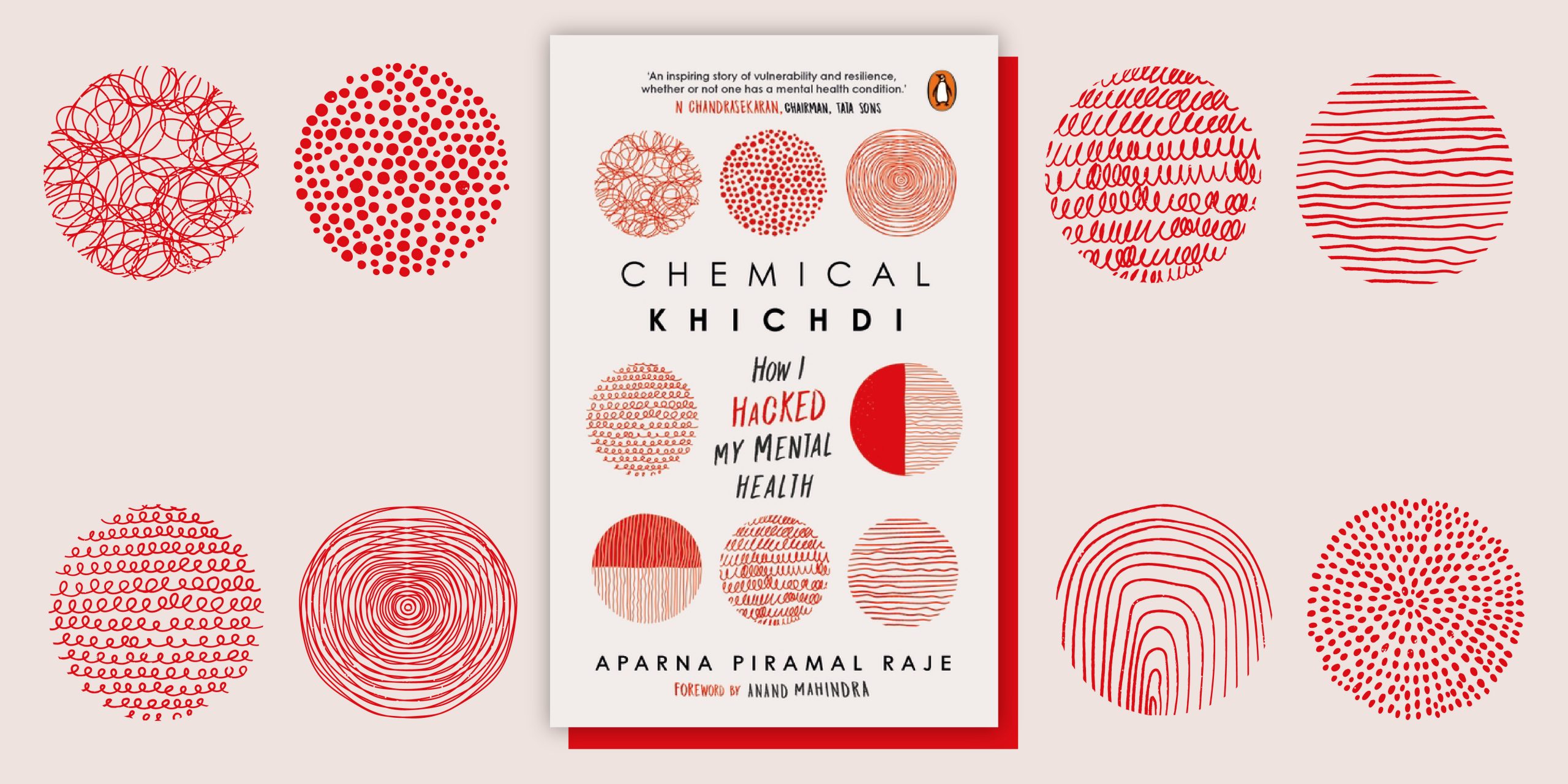
With a strong faith in the anecdotal as well as the scientific, Aparna Piramal Raje’s Chemical Khichdi is a unique entry to the Indian self-help canon. Mental health awareness still has a long way to go, but a greater scholarly understanding of bipolarity creates a stable foundation of destigmatization and support.

Below is an excerpt from the memoir.

Chemical Khichdi||Aparna Piramal Raje

*


Summer 1997, Brasenose College, University of Oxford

‘Who would like to volunteer?’ asks the knife-thrower.

It is the annual end-of-year college ball, a night-long party that is as much part of university tradition as its historic libraries. This year the ball is circus-themed and Brasenose students are ready to celebrate. I have just finished a three-year undergraduate course in politics, philosophy and economics, and am looking forward to the ball. After all, the strenuous final examinations are over.

Now, in the middle of the night, I am taking a break from dancing and am seated in the college dining hall with friends when a professional knife-thrower asks for a volunteer to face his daggers. The daggers would put a set of kitchen knives to shame.

One of my friends raises my arm. ‘Aparna would like to do it!’

I turn to him and say, ‘Are you crazy?’

He says, ‘Go on, I know you can.’

The knife-thrower is a professional. All I need to do is stay still, I think to myself as I walk up to the target and position myself in the allotted spot. I am wearing a lime-green kurta, last worn at my cousin’s wedding six months ago. I wrap it tightly around me, making sure that none of the fabric is sticking out. I thank God for the UK’s National Health Service, hold my breath and wait. The spacious, wood-panelled dining hall, normally lined with dozens of chattering students, is equally silent.

A few seconds later, there is loud applause. The daggers were accurate and I was unflinching. My friends are very proud of me.

Crazy? Impulsive? Risky? I think this incident illustrates something more nuanced—my ability to stay calm and collected when needed, while pursuing ‘safe thrills’.

Oxford is known for its weekly ‘essay crises’, where students often stay up all night trying to complete their assignments. Final examinations at Oxford are known for their rigour. Despite these stressors, I was able to maintain my composure during the three-year undergraduate programme. A close circle of friends, a serious college relationship, lack of interpersonal conflict and a genuine interest in my chosen subjects were cornerstones of my emotional and mental equilibrium. The college relationship in particular was transformational on all counts; a wonderful way to grow and flourish as a young adult.

When it ended, a year after we left college, I could not sleep properly for days and I could not stop talking. It was obvious that I was not fully myself, with many racing and conflicting thoughts and emotions running through my head. Break-ups are significant life events for any young person. So perhaps it made sense to view my reaction, while out of character, as part of growing up and not a mental health issue. In other words, there was little to suggest then of the highs and lows to come—until the summer of 2000, before going to the Harvard Business School (HBS).

I was twenty-four then and had been working in sales and marketing with VIP luggage for three years. Midway through the year, I was accepted into HBS. The programme started in September. In the interim, I planned to take time off from the business to pursue a different sort of adventure: to intern with Randeep Sudan, a senior bureaucrat in the Andhra Pradesh government at the time. Mr Sudan worked closely with N. Chandrababu Naidu, then the chief minister of one of India’s most technologically progressive states. The internship was facilitated by a family friend and I was keen on learning about state-level governance, a completely unfamiliar subject.

Come July 2000, I found myself in Hyderabad, then the capital of Andhra Pradesh, staying as a paying guest in the home of Lakshmi Devi Raj. Over the next four weeks, I acquired two role models—my innovative and approachable boss, Mr Sudan, and my host, the sixty-eight-year-old joyful and independent Lakshmi Aunty. During the day, Mr Sudan ensured I worked on stimulating projects, such as how the state could attract more external investment.

At night, Lakshmi Aunty took me on a cultural and gastronomic tour of Hyderabad’s unique attraction: its larger-than-life parties. Musical evenings went on all night—I could not keep up with Lakshmi Aunty and her friends.

So it was a successful internship on all counts. My work was appreciated, so much so that Mr Sudan arranged for me to make a presentation to the chief minister and a large team at the end of my four-week internship. And two decades later, Lakshmi Aunty continues to remain a sprightly role model and a friend.

Yet inside, there was turmoil. I was consumed with anxiety and insecurity about my parents’ deteriorating marriage. By then it was clear there was a major estrangement, something that I had trouble accepting. I was also deeply unhappy about another relationship break-up; someone I had been seeing for nearly two years. And I was riveted by excitement about the success of my internship.

These emotions triggered the perfect storm.

My mounting excitement—the internship, Harvard—and my raw insecurities made me impetuous, restless and hypomanic. With all the idealism of a twenty-four-year-old, I was convinced I could change the world. Blurry as the past can be, I can still remember some of the half-baked thoughts and ideas that overtook my mind in the weeks before I was due to leave for Boston. I knew I could catalyse an omnipotent coalition of Indian companies and the government to rule global markets in the prevailing dot-com era, and started drawing up grandiose plans, scribbling away on bits of paper. Sleep disappeared as I felt invincible, restless and impetuous, going to bed late and rising early.

Kay Redfield Jamison, a renowned psychotherapist, bipolar patient and author of the classic An Unquiet Mind, says it best in her memoir. ‘My mind was beginning to have to scramble a bit to keep up with itself, as ideas were coming so fast that they intersected one another at every inconceivable angle. There was a neuronal pileup on the highways of my brain, and the more I tried to slow down my thinking the more I became aware that I couldn’t.’

My family was shocked at my behavioural change. ‘I know you so well. I’ve grown up with you. We shared a room for years. So to watch your face change, your eyes change, your mind change, in front of my eyes, was a terrifying experience. You behaved your whole life one way and then suddenly you started behaving another way, and you maintained that the new way is the real you, but Mom and I were saying, “No, something’s wrong, something’s different”. But you were holding on to your mood as the authentic truth. It created a friction like no other. Because we were saying something’s wrong. And you were saying nothing is wrong. That was the biggest clash. We didn’t know what it was, we were totally in the dark,’ recalls my sister Radhika.

Welcome to bipolarity.

*

Chemical Khichdi is available at your nearest bookstore and Amazon. Get your copy here!

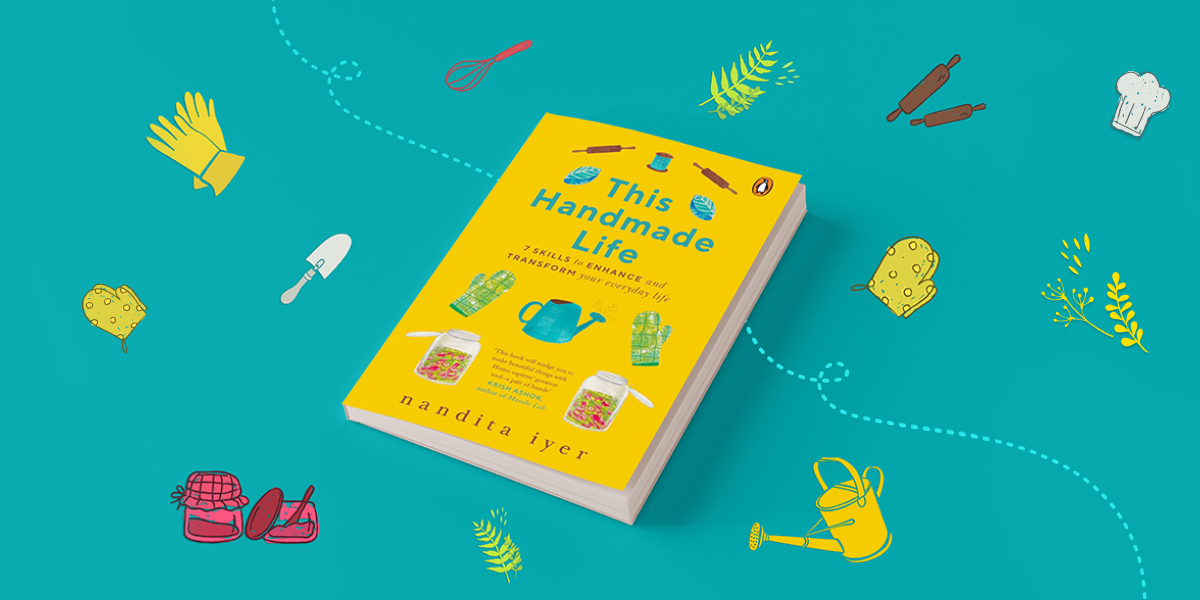
Have Fun with Fermentation with This Handmade Life!

‘Fermentation and civilization are inseparable.’ 

—John Ciardi 

If you’re curious about how fermentation works, or what it is, read an excerpt from This Handmade Life by Nandita Iyer! 

“Where there is life, there is fermentation. 

This Handmade Life Blog
This Handmade Life||Nandita Iyer

Microorganisms are intimately related to human life. Unlike the womb, the birth canal is teeming with bacteria. The journey of a baby from the womb to the outside world through the birth canal gives it the first dose of microbes. The baby’s microbiome continues to be nurtured by the mother’s milk, which was earlier thought to be sterile. Breast milk also feeds the existing gut bacteria in the baby, kickstarting the baby’s fledgling immune and digestive systems. Our first brush with bacteria continues into the rest of our life, until death and beyond. A study was published in the Proceedings of the National Academy of Sciences on a fascinating census sorting all the life on earth by weight. The weight of bacteria on the planet is 1200 times more than the weight of all the humans on the planet. They are omnipresent, on our skin, inside our bodies and on the surface of all vegetables and fruits. When humans channelize the power of bacteria and fungi to benefit us, to add flavor to food and to modify food in a way we seek, it is called fermentation.  

It is fairly simple, and you don’t need a degree in biochemistry to figure out how to ferment foods. By fermentation, we are harnessing the bacteria and yeast to do the cooking for us, pre-digesting food, creating flavors in a way we cannot do ourselves in the kitchen and providing more bioavailable nutrients.  

Fermented foods are less prone to spoilage because harmful pathogens cannot survive in the acidic environment. It was used as a method to preserve food for longer when there was no access to refrigeration and other food preserving technology. 

Using fermentation, we can make a variety of fermented beverages like whey sodas and ginger ales at home, reducing our dependence on artificially flavored and highly sugary drinks. These are not only low in sugar but have no artificial colors, preservatives or additives. Seasonal fruits, herbs, spices and pretty much any other natural produce can be used in these beverages. Homemade fermented beverages are also low in alcohol content, making a good replacement for alcoholic drinks for those who are keen to cut down on alcohol.  

 Eating fermented food regularly helps maintain a good gut microbiome. Gut bacteria play an important role in immunity, mental health, digestion, regulating blood sugar and cholesterol levels, and more. The majority of commercial ‘probiotic’ supplements don’t survive stomach acid. A thriving gut microbiome requires a regular intake of fermented foods and foods containing resistant starch (for example, raw papaya, plantain, beans and legumes, cooked and cooled rice or potatoes) that feed the good bacteria in the large intestine. Regular consumption of fermented foods also helps ease gut-related problems like acidity, bloating and poor digestion.  

Homemade ferments have a microbial diversity that commercially made bottled fermented drinks lack, as they are inoculated with a set quantity of known strains. This is understandable as a fixed quantity of known microbes will give a predictable result and the standardization that commercial brands need.  Fermentation makes vegetables fun. Raw carrots that are tooth-breakingly hard do very well with three days of lacto-fermentation. It is a great way to snack on carrots with hummus, or you can simply dice these and add them to salads for a beautiful flavor profile.  

The brine can also be drunk diluted in water as a digestive beverage as it is full of beneficial bacteria. Fermentation is a step towards zero waste where excess produce can be preserved for longer or kitchen waste such as peels, pith and seeds of fruits like pineapple, mango, apples, etc. can be used to make sodas and vinegar.” 

This Handmade Life is all about finding a passion and becoming really good at it. Divided into seven sections-baking, fermenting, self-care, kitchen gardening, soap-making, spices, and stitching-this book tells us it is all right to slow down and take up simple projects that bring us unadulterated joy. Get your copy of This Handmade Life today! 

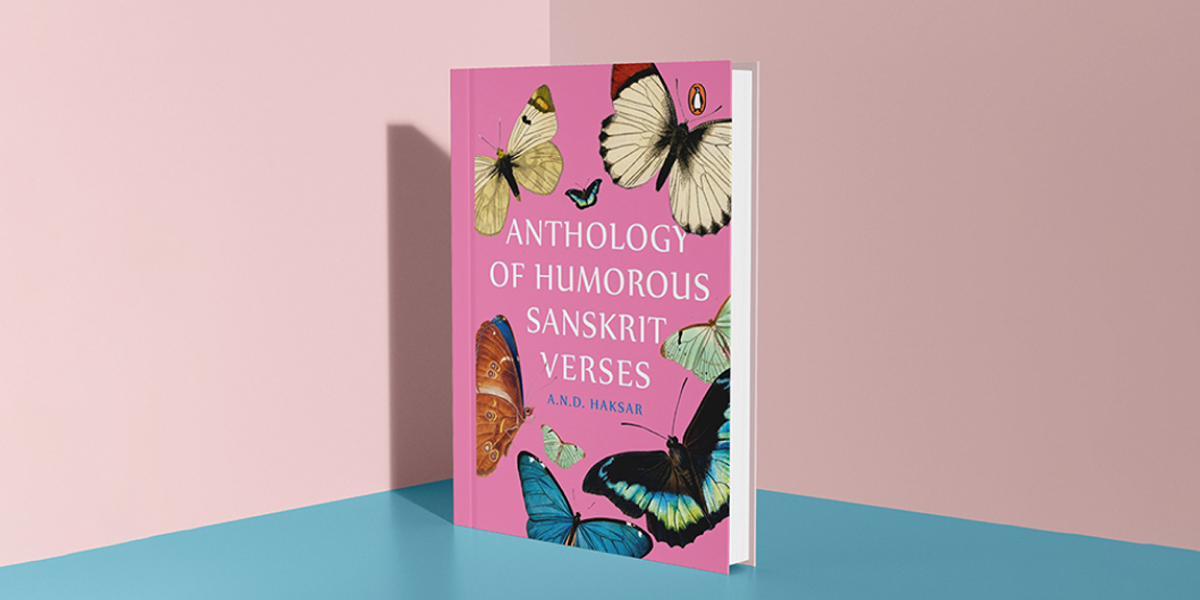
Verses to tickle your funnybone

In recent times, whenever ancient Sanskrit works are discussed or translated into English, the focus is usually on the lofty, religious and dramatic works. Due to the interest created by Western audiences, the Kama Sutra and love poetry have also been in the limelight. But, even though the Hasya Rasa, or the humorous sentiment has always been an integral part of our ancient Sanskrit literature, it is little known today.

Anthology of Humorous Sanskrit Verses is a collection of about 200 verse translations drawn from various Sanskrit works or anthologies compiled more than 500 years ago. Several such anthologies are well-known although none of them focus exclusively on humor. A.N.D. Haksar’s translation of these verses is full of wit, earthy humor and cynical satire, and an excellent addition of the canon of Sanskrit literature.


Let’s read these excerpts from the book.

*


Anthology of Humorous Sanskrit Verses
Anthology of Humorous Sanskrit Verses || A.N.D. Haksar

When his garb is simple space,

why does he need garments?

If he is covered in ashes,

what for any woman?

And if he does have a woman,

why hate Kama, God of Love?

Seeing all these contradictions

in the ways of his master Shiva,

the body of his servant Bhringi

is just a skeletal bag of bones.

1/2 v. 2399


He cannot read what others write,

his own script no one can read:

the curious thing about him is

that he himself cannot decipher

that of which he is the writer.

1/4 v. 2334


Cleverness in weighing goods

in purchase or sale

and tricks for confiscating deposits:

thus do they, these day-time robbers,

the traders steal from people.

2/14 SP v. 4035


Lakshmi sleeps on a lotus blossom,

Shiva on a hill of snow,

and Vishnu sleeps on a sea of milk.

I think this is because they are all worried

about the bed bugs where they lie.

4/1 SRB Hasya


Make love, lover, while you may,

for your youth is passing away.

When you are dead, who will give you,

with the funeral, a sweet cunt too?

4/8 v. 2366


With no meat or liquor,

nor robbery from others,

or causing them injury,

that official weeps all day.

4/10 SRB Hasya


The goddess of the state’s prosperity

sadly weeps, tears darkened by

ink drops trickling from the pen

of that clerk who plundered her.

4/14 SRB Hasya


No learning or eloquence,

not even any craftiness;

how can you then have, minister

the feeling of not being rewarded?

5/3 SM (HP v. 13)


‘What is it, mother, on top of his head?’

‘Son, it is the crescent moon.’

‘And what is that upon his forehead?’

‘That is his flaming eye.’

‘What’s in his throat?’

‘It’s a poison.’

‘And that thing below his navel?’

Hearing from her son this last,

Parvati covers his eyes

and puts her hand upon his mouth.

May she protect us always.

6/1 SMHP v. 1

**

Get a copy of this book of humourses verses from your nearest bookstore or online.

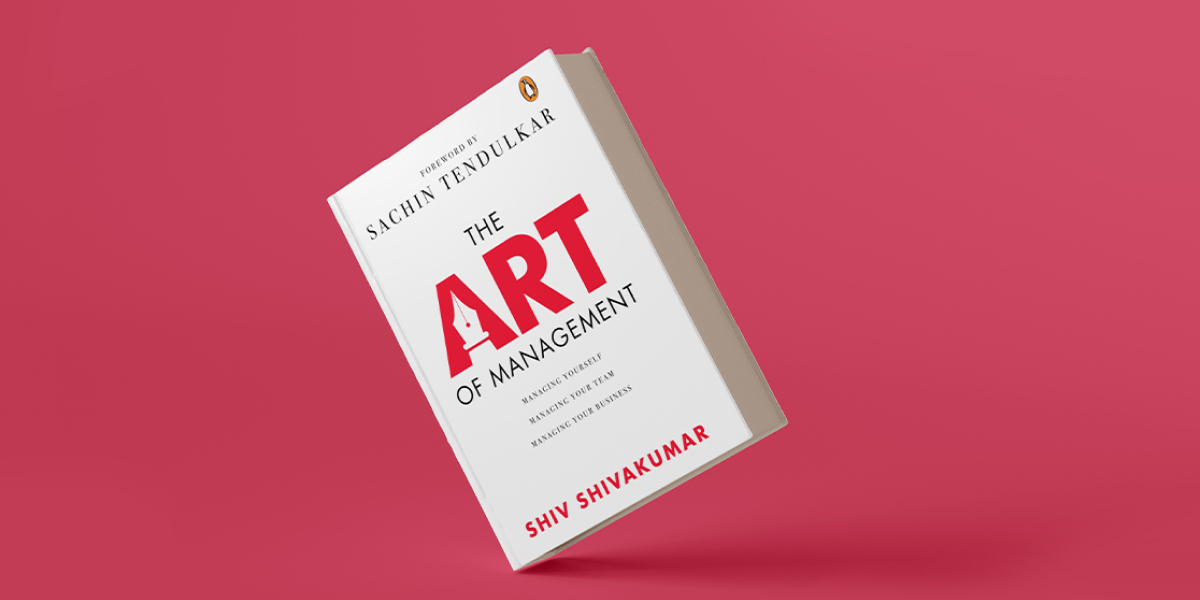
Think T20: ‘The Art of Management’

When it comes to business and management, a book written by one of India’s longest-running CEOs is as good as learning from the best. In The Art of Management, Shiv Shivakumar—formerly CEO of PepsiCo and current executive president of AdityaBirla—interviews 21 leaders from different Indian industries. By keeping an open mind and never saying no to learning, Shivakumar leans towards a more philosophical stroke of management. His sage advice on the transforming landscape borrows symbols and icons from popular culture for better comprehension.

The following excerpt talks about his view on management from the lens of the T20 model of cricket.


*

The Art of Management||Shiv Shivakumar


T20 has revolutionized cricket, and a number of innovations/practices from T20 cricket have now crept into Test cricket as well. Examples include the reverse sweep, slower bouncer, boundary relay catch, high fielding standards, running between the wickets, fitness of the players and, most important of all, the data and the insights from the data.

T20 is a brutal game. Yesterday’s captain is tomorrow’s twelfth man. Things are never so severe in the corporate world. You need a thick skin when you are a cricketer of the stature of Paul Stirling or Hashim Amla or Joe Root or Steve Smith or Adil Rashid, and you are not picked by any team. Even when picked, you are playing second fiddle. Life can turn out like that when you are on top of it on one day and down in the dumps the next day. Actors go through that in Bollywood and Hollywood.

The captain of a national team could be in the reserves in the Indian Premier League (IPL) team. M.S. Dhoni was dropped from the captaincy of the Pune team. No fans protested. I am sure people would have protested if Dhoni were dropped as captain of India. Captains are changed midway through the IPL. A captain has to make way and become a substitute player if the combination doesn’t work, as happened with a great like Ricky Ponting at Mumbai Indians.

This simple lesson in multiple capabilities is something we can apply in life and the corporate world. A single-skill cricketer does not have a role in the IPL team, however good he is at the international level. The best Test batsmen who cannot adapt to T20 don’t get picked, but the best bowler still has a chance. Teams tend to pick players with multiple skills—batting, bowling, fielding, wicket-keeping, captaincy. So these days, we need to have more capabilities in life and at the workplace as compared to the past.

Equally, one needs to adapt to a new world. One cannot play Test cricket and expect to succeed in a fast-changing world. This is a challenge for many managers past their prime. They are all digital immigrants and just don’t have a sense of how to work in a digital world. Rahane and Pujara in cricket are examples.

One has to constantly re-evaluate the capability set and be future-ready in life.

*

The Art of Management is now available at all major bookstores near you. Get your copy now!

Why does losing someone hurt so much?

All of us, at some point in our lives have gone through the loss of a loved one. Most of all, we never quite know how to deal with these experiences and that’s where The Millennial Yogi steps in.


Here is an excerpt from the incredible book written by Deepam Chatterjee, where he explores the idea of death and loss.


~

TMY cover
The Millennial Yogi||DeepamChatterjee

‘Speak to us of loss. Why does losing someone hurt so much?’ a man at the majlis asked Vini.

‘Loss isn’t such a bad thing. When we are attached to things, we don’t want them to change. But the reality is, deep in our hearts we already know that nothing will last forever, and we hope against hope that things won’t change. When someone we really love is taken from us, we are saddened. Although we know that we cannot bring back the past, we ache and hurt because we want their comforting presence in our lives forever. It is very important to grieve when we lose someone. Grieving makes us tender and brings us close to our heart. Different people grieve differently.’


‘Some people think that grieving makes them weak. They suppress their pain and become hardened,’ someone at the majlis observed.


Vini nodded in agreement. ‘Sometimes loss can make us hateful and bitter. We can either grow into beautiful people through loss, or we can become bitter and angry. It is a choice we have to make ourselves,’


Vini explained gently. ‘Ash had gone through so much loss in his life, and it changed him. But as time passed, old patterns began surfacing. Ash was at a crucial juncture of his life . . .’


There were subtle signs that only an awakened soul could read. The old man knew that time was short. Ash was at a crucial juncture of his life. He was on the verge of falling back into the vagaries of the material world. But, if pushed in the right direction, he could attain great spiritual heights.


The old man knew that the push wasn’t going to be pleasant for Ash.


The next time the man came for his beedis, Ash told him that he was ready to work for him, as he wanted to save some money and begin a business. The old man nodded slowly and told him to head back to the forest with him that evening.


‘But remember, Ashwini, you will have to do exactly what I tell you.’


‘I am sure I will manage, Babaji. Your work can’t be too tough. Let me go and collect my things,’ Ash said.


The man smiled gently and left for the gathering. When he finished, Ash was waiting with a duffle bag in his hand. He was quite proud of the fact that he had been able to fit all his worldly possessions into one bag. Mangal stood slightly behind him with folded hands. He was happy for Ash. The old man saw them and nodded. He gave his ektara to Ash to carry and began shuffling back towards the forest.


Ash slung his bag over his shoulder and followed him. They walked quietly for some time, and all Ash could hear was the sound of their feet and the old man’s laboured breathing.


‘May I know your name?’ Ash asked the man.


‘Eh?’ The man stopped and turned his head to hear better. Ash realized that he was probably a bit hard of hearing.


‘Your name. I mean, it cannot be Baba. You must have a name,’ Ash said.


‘Oh,’ the man wheezed. ‘Call me anything you want to. It hardly matters what you call me.’


‘But I am sure you have a name, Baba,’ Ash persisted.


The old man sighed and said, ‘Ajaat. Call me Ajaat. That is a good name.’ His face crinkled into a smile.


‘Ajaat. That’s an unusual name. What does it mean?’


‘It means “the Unborn”. We all are Ajaat, beta. No one’s ever born, no one ever dies,’ he said as he sat down on a rock to catch his breath.

~

To know more about life and death and all that plays out in between and gather the energy to deal with all of it, get your copy of The Millennial Yogi now.


error: Content is protected !!