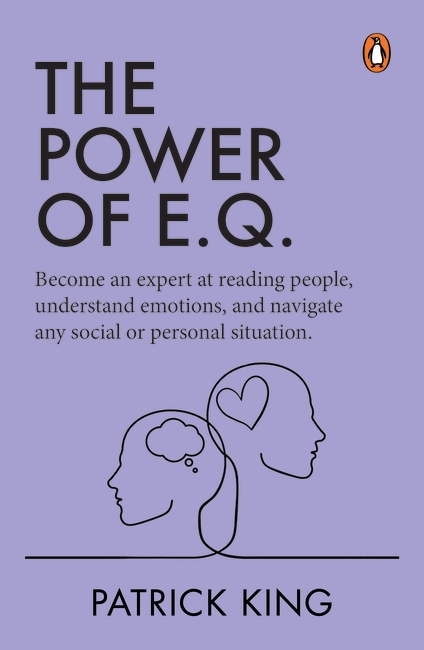
An important key to success is assessing people’s non-verbal expectations, read the mood in a room, and understand if your words or actions are causing an upset even that is not expressed.
Make a smashing first impression and make people crave your presence.
These skills will make you intuitive, better suited to adapt your environment and create the perfect setting for smooth communication.
All of this is a trainable skill – and this book is an amazing start. The Power of E. Q. is as practical as a book can be. You will get techniques to use immediately on the people around you, and you will suddenly realize how much you have been missing! Gain a deep understanding of emotional intelligence and the small signs behind what people are thinking and feeling. Imagine how much more easily you could make friends or befriend business partners if you could analyse them better.
Learn ways to connect with people in record time:
- conversational intelligence and how to empathize in 4 steps
- how to step outside of your own perspective and read the emotions of others
- cold reading and being an expert at finding “clues” about people
- understanding emotions and how to label yourself and others
- how high-quality questions will make you seem like a mjnd reader

People are not that complex – once you know how they function at their most basic levels of motivation, they are like reading a book!
The Science of Reading People isn’t a book that tells you about crossed aims, eye contact, and eyerolls. This is about deep behavioural psychology, how to recognise signs of what people are thinking and feeling, and how it affects all our actions and behaviours.
Is it possible to understand someone from observing them? Yes, if you know what you are looking at and what you are looking for.
Learn the telltale signs of a person’s emotions, even if they want to hide them:
- 1O factors that prevent us from perceiving someone, and how to prevent them
- Actionable exercises for taking people’s perspectives and stepping outside of your own head
- Four personality types and how to categorize people in quick and easy ways
- Understanding the four functions of behaviour and how to spot them
- Listening for specific word and linguistic choices
Elite American admissions systems seem shrouded in mystery. Plummeting acceptance rates suggest that even the most stellar academic record no longer suffices to differentiate a candidate from the rest of the applicant pool.
The personal essay is an exercise in self-marketing, in underscoring your authentic value-add to a college campus. Without the right frameworks and insights on how to approach this task, many applicants miss the opportunity to convey something profound about themselves.
After a decade of studying what works for the world’s most selective admissions committees, we’ve crystalized the elements that distinguish winning essays from those cast upon the dreaded “rejected” pile.
Through in-depth analyses of 25 Common Application Essays that have succeeded at Ivy League and “Ivy+” (Stanford, Caltech, UChicago) universities, you’ll discover the transformative journey of composing an outstanding college essay that leaves a lasting impression. And beyond the samples, you’ll gain actionable tools and concrete exercises in our workbook to compose your very own.
As the first Indian woman diplomat stationed in Islamabad, Ruchi Ghanashyam unveils the intricacies of cross-border relationships and the relentless drumbeat of history as witnessed through the prism of political upheavals. From 1997 to 2000, Ghanashyam and her husband traversed the labyrinthine corridors of Islamabad, bearing witness to seismic events that shook the region to its core. From the thunderous echoes of the India-Pakistan nuclear tests to the harrowing shadows of the Kargil conflict, their tale unfolds against the backdrop of geopolitical upheaval. In a riveting twist, A.R. Ghanashyam, the author’s husband, unveils his first-hand account of the tense moments preceding the Indian Airlines flight IC 814 hijacking, offering a gripping glimpse into the heart of crisis management.
Yet, amidst the tumult, Ambassador Ghanashyam’s narrative delves deeper, unravelling gender dynamics in a society steeped in tradition and inviting us to contemplate not just the challenges facing Pakistan but also the boundless potential for change and understanding. Through her discerning analysis, she exposes the layers of tradition that shape societal norms, offering a compelling examination of the challenges and opportunities inherent in the region’s sociopolitical landscape.?
This timely and compelling work stands as a testament to the enduring power of diplomacy in navigating the currents of global affairs.
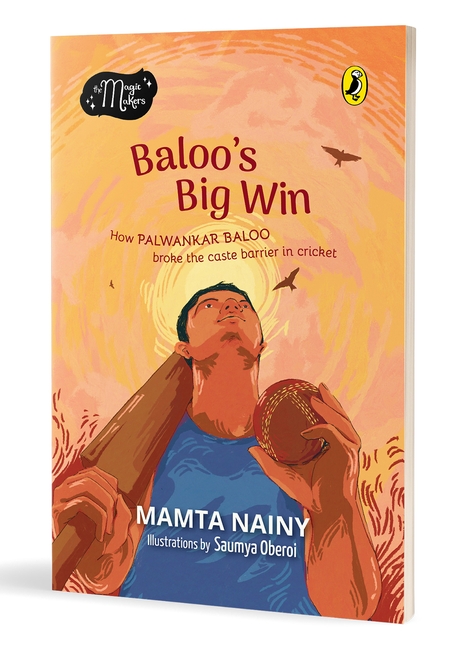
A unique biography that explores and celebrates the life of a Dalit sports icon who fought against social injustice.
‘Does anyone really win when not everyone gets to play?’
Right from his childhood, Baloo loved cricket. But he lived at a time when the rules of the game weren’t fair. Despite being a great bowler, he wasn’t allowed on the team because he was from a lower caste. Not one to give up easily, Baloo worked hard and was eventually picked to play on the team. But even after this, he wasn’t allowed to mix freely with his teammates.
Could Baloo overcome this obstacle and change the game of cricket?

Vijaya and Sree are the daughters of the Deshmukhs of Irumi. Hailing from a lineage of ancestral aristocrats, their family’s social status and power over villagers on their land is absolute. Krishna and Ranga, brothers, are the sons of a widowed servant in the Deshmukh household.
When Vijaya and Krishna meet, they forge an intense bond that is beautiful and dangerous. But after an innocent attempt to hunt down a man-eating tiger in the jungle goes wrong, what happens between the two of them is disastrous, the consequences reverberating through their lives into young adulthood.
Years later, when violent uprisings rip across the countryside and the Marxist, ultra-left Naxalite movement arrives in Irumi, Vijaya and Krishna are forced to navigate the insurmountable differences of land ownership and class warfare in a country that is burning from the inside out—while being irresistibly drawn back to each other, their childhood bond now full of possibilities neither of them are willing to admit.
The Fertile Earth is a vast, ambitious debut that is equal parts historical, political, and human, with the enduring ties of love and family loyalty at its heart. Who can be loved? What are the costs of transgressions? How can justice be measured, and who will be alive to bear witness?
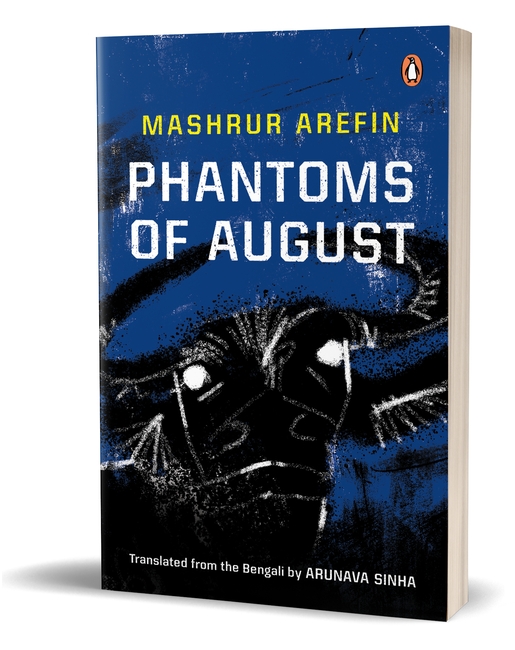
An unnamed narrator takes it upon himself to discover the truth behind the assassination of Sheikh Mujibur Rehman—who led Bangladesh’s independence movement from Pakistan, which was achieved in 1971—and his entire family. With literary greats for company, the narrator negotiates his complicated personal life and his philosophical and literary musings even as he locates a gun to shoot the assassins who are still alive. Hallucinatory, flitting between reality and dreams, and traversing the length and breadth of Dhaka, this is a fever dream of a novel—an individual’s quest while navigating the scarred and traumatized mind of a nation.
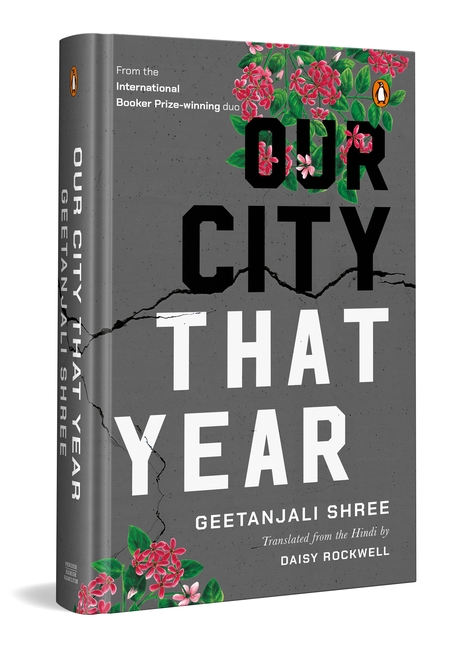
A city teeters on the edge of chaos. A society lies fractured along fault lines of faith and ideology. A playground becomes a battleground. A looming silence grips the public.
Against this backdrop, Shruti, a writer paralyzed by the weight of events, tries to find her words, while Sharad and Hanif, academics whose voices are drowned out by extremism, find themselves caught between clichés and government slogans. And there’s Daddu, Sharad’s father, a beacon of hope in the growing darkness. As they each grapple with thoughts of speaking the unspeakable, an unnamed narrator takes on the urgent task of bearing witness.
First published in Hindi in 1998, Our City That Year is a novel that defies easy categorization—it’s a time capsule, a warning siren and a desperate plea. Geetanjali Shree’s shimmering prose, in Daisy Rockwell’s nuanced and consummate translation, takes us into a fever dream of fragmented thoughts and half-finished sentences, mirroring the disjointed reality of a city under siege. Readers will find themselves haunted long after the final page, grappling with questions that echo far beyond India’s borders.

In the Hindu Trinity, Lord Shiva is a multifaceted deity. Fierce and benevolent, Lord shiva is the symbol of duality of life. Central to Shaivism is the worship of Shivalingam and the twelve sacred Jyotirlingams that have from time immemorial being holy shrines of pilgrimage. Through a series of personal narratives and scholarly research, Amit Kapoor, Bibek Debroy, Vibhav Kapoor and Conor Martin captures Jyotirlingams through a literal and metaphorical journey. Viewed from diverse perspectives, this book is a unique amalgamation of the western, spiritual, artistic and the mythological.