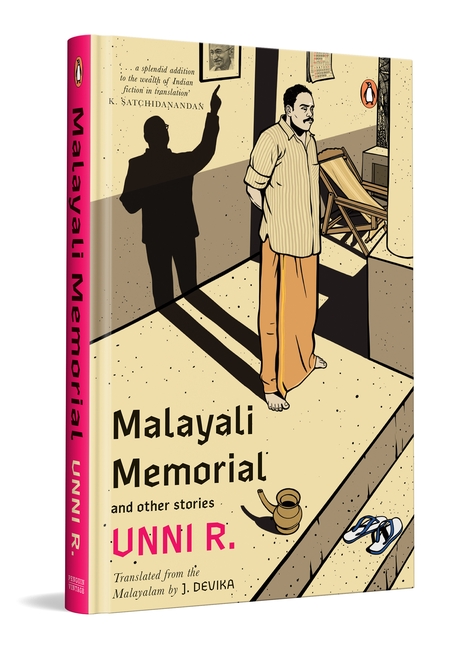
The latest collection of Unni R’s short stories in translation shines with the tone of self-critique so characteristic of his earlier writing, gentle and penetrating at the same time. His world still comprises mostly the rural and peri-urban areas of Kottayam, his birthplace. It emerges through his words as a place with layers of life that lie beyond the merely human—the birds, animals, spirits, Jesus, Satan and even inanimate things have their role and place in it.
The stories feature a whole range of situations and characters, who are forever assailed by an awareness of their own vulnerability. In ‘Malayali Memorial’, the protagonist is a low-lying, wily and seemingly powerless man in a stridently casteist family; the young man in ‘Boy and Girl’ is the weepy sort, yet his powerless tears seem to have the power to soften the resolve of a confident young woman. Further, this collection includes Unni’s experiments with the short story form. Overall, these stories break open the hardened shells of our existence, so that empathy and compassion may find their way out.
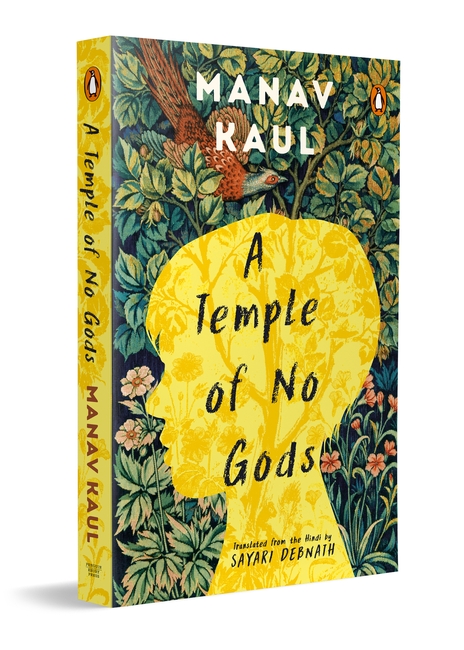
The seemingly simple lives of Rajil and his friends Radhe and Choti begin to change in inexplicable ways after Rajil’s grandmother dies. It is as if a protective cover has been blown and they are all left exposed with their inner lives tumbling out. Rajil is perplexed when he finds out that his mother is not the simple person, he thought her to be, neither is her relationship with her father straightforward. His friend Choti’s dark secret shatters their sense of peace and tests their friendship in ways they had not imagined possible. Caught between constantly changing circumstances, Rajil finds that nothing is under his control and the more he tries to interfere, the more things begin to fall apart. He must accept life as it’s playing out.
Endearingly insightful and alive with childhood stories, this seemingly simple narrative of A Temple of No Gods hides layers of meaning.
Published as Shirt ka Teesra Button in Hindi, this book is amongst the finest works written by Manav Kaul.
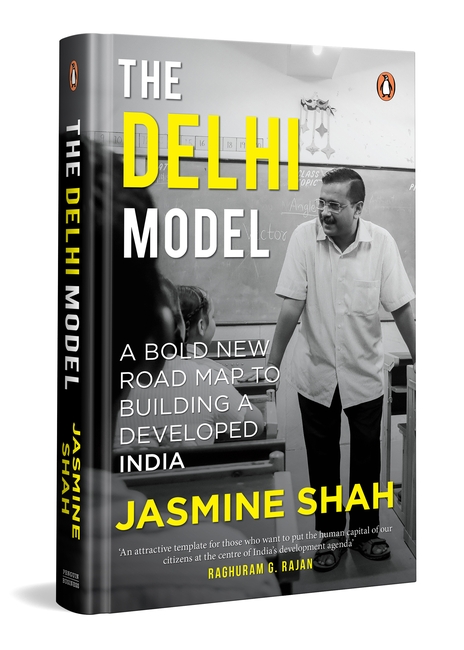
The Delhi Model, for the first time in independent India, brought the issue of transforming public education and healthcare from the margins to the centre of Indian politics. It prioritizes investments in human capital development and better service delivery for all citizens, while ensuring a social safety net for the most vulnerable. This book is the first such account of what the Delhi Model truly is, detailing its economic foundation and how it compares with other governance models in India, especially the Gujarat Model. Jasmine Shah, in this authoritative and research-backed account, unpacks the reforms undertaken by the AAP government in Delhi in six key sectors—education, health, air pollution, transport, electricity and water—and the outcomes they resulted in. Analysing the policies and reforms laid down in the past decade, Jasmine draws out an ambitious road map for building a developed India by leveraging principles of the Delhi Model.

Four friends embark on a transformative journey through India, united by a quest to discover their roots and understand who they truly are. As they traverse diverse landscapes, they delve into the rich tapestry of local art and craft forms, each region offering a unique glimpse into its cultural heritage. Through their travels, the friends realise that the essence of art and craft lies in expression—a mirror reflecting their identities. This adventure becomes not just about exploring art but about widening their horizons and reconnecting with their origins to truly grasp the depth of their selves.
We envision a generation of young readers who not only revel in captivating stories but also develop a profound awareness of their heritage, roots, and the diverse art and craft forms that make our culture truly unique.
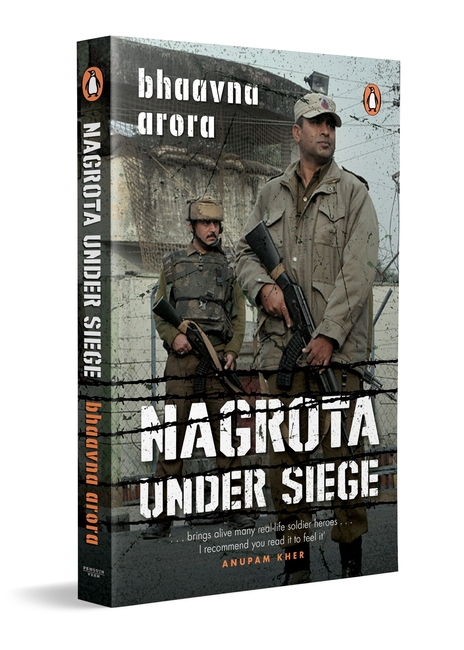
‘[A] searing, heartfelt account’
SHIV AROOR, journalist and bestselling author
‘Impeccable narration and in-depth research are the hallmarks of this book’
MAJOR GAURAV ARYA (RETD), editor-in-chief, Chanakya Forum
‘Turning the pages of Nagrota Under Siege is like reporting on the horrors of the Nagrota terror strike all over again. A must-read’
GAURAV C. SAWANT, managing editor and anchor, India Today TV and Aaj Tak
On 29 November 2016, the Nagrota Army Base in Jammu and Kashmir was attacked by a group of terrorists. The highly trained and heavily armed terrorists had infiltrated from across the LoC and gained entry from the forest behind the camp. Firing mercilessly to cause maximum damage, they were on a revenge mission after the Indian Army’s successful surgical strikes on terror camps just two months earlier. The Indian Army personnel inside the camp played a crucial role in securing the lives of those present in the family accommodations as well as the camp, and many bravely laid down their lives. Nagrota Under Siege is the story of grit, courage and unmatched bravery.
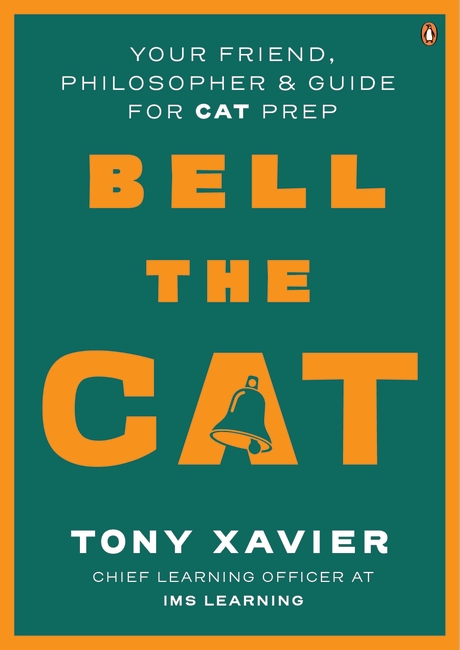
Every year lakhs of students take the Common Admission Test (CAT), arguably the third most-challenging entrance examination in India after the JEE and the UPSC, to secure a seat at one of the prestigious IIMs or other top-tier management institutes. But what are the odds of making it? 1 in 100. It is because most aspirants do not possess one of two things: the tools to develop the immense mental strength that is needed to crack such high-stakes exams or precise strategies to tackle the different challenges the exam throws up. If, however, they possess these two skills, they might miss out on the third part — information. What makes this test different from the JEE or UPSC exams is that selection is not based on the test alone but on the academic and professional profile of the applicants as well. Many aspirants lack this critical information. Most CAT-preparation books are focused on the specific sections of the exam and, therefore, fail to provide a holistic understanding of what the exam really is.
Bell the CAT is one of a kind since, unlike all the other books in the Indian MBA test-prep space, it goes beyond focusing on specific subjects and delves deep into the things that prevent test-takers from making it to an IIM. The book intends to provide aspirants with all the skills beyond math, logic and English—mental conditioning, test-taking strategies, profile-building and interview prep—that are necessary not just to crack CAT and make it to some of the most elite institutions in the country—the IIMs—but also to get recruited by elite employers in different domains.
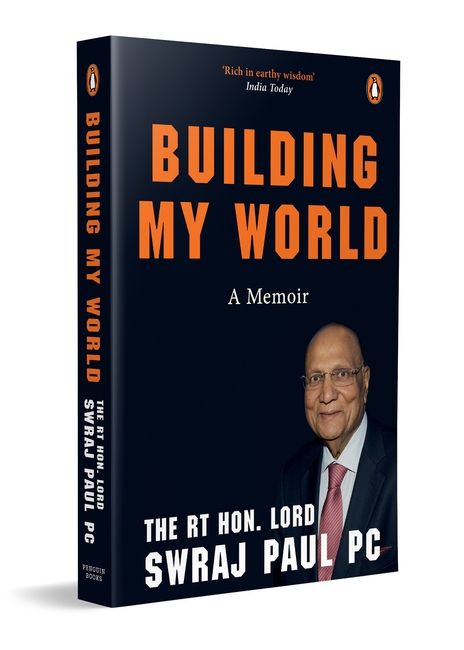
Swraj Paul – The Lord Paul of Marylebone – is Labour peer in the House of Lords, Chairman of the £500 million Caparo Group, a philanthropist best known for saving the London Zoo from closure, and a prominent politician. Unusually for an NRI, he is also recipient of one of India’s highest awards, the Padma Bhushan. By any yardstick his has been a career crammed with incident and achievement. Raised in Jalandhar, Punjab, where his father ran a small foundry making steel buckets and farming equipment, he went to the US to read mechanical engineering at the Massachusetts Institute of Technology. A thriving business career in India, taken up on his return home, was unexpectedly diverted into a heartbreaking battle to save the life of his fourth child, Ambika. The search for a cure led him to London in 1966, and it was there, eventually, as he emerged from the trauma of her death, that he set up Caparo, today the largest family-owned business in Britain.
In his memoir, Building My World, Lord Paul recounts the high points of a life well lived. Here are the details of his business career, including his run-in with DCM and Escorts, his encounters with the famous and the mighty, notably Indira Gandhi, Sanjay and Rajiv; and a distillation of his personal and business philosophy. Written with insight and candour, this memoir provides a glimpse into the making of one of the most outstanding success stories of our time.
- Can working out in the gym be dangerous?
- Are multivitamins and supplements the answer to everything?
- Is intermittent fasting healthy?
- What is the truth behind ‘immunity boosters’, ‘sulphate-free’ shampoo and ‘organic’ food?
- Is it bad to use a microwave to heat food?
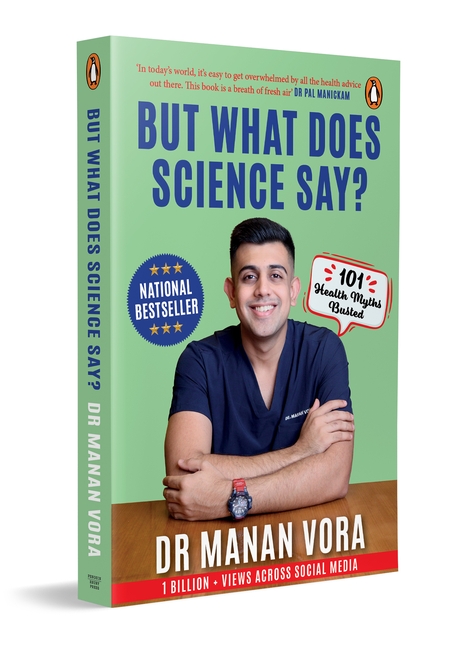
With the prevalence of social media, we see so much misinformation about health being disseminated. From period pains to dark chocolate, from depression to weight loss, everyone has an ‘expert’ opinion, and social media gives them a platform to voice it. How is one to figure out what is true, and what is not?
In But What Does Science Say?, Dr Manan Vora debunks 101 common health myths with science and a healthy dose of humour. His witty, easy-to-follow explanations make the book perfect for curious minds of all ages—kids, teens and adults alike.
Whether you’re navigating health trends or deciphering social media advice, Dr Vora breaks it down in a fun, relatable way that’s sure to engage the whole family. It’s no surprise that his playful yet insightful approach has made him a trusted voice on social media, where he connects with people of all generations.
‘You’ve got to love Dr Vora’s science-based content backed with fun jokes, answering some of the most common health questions we ask on Google!’—DR TANAYA NARENDRA (Dr Cuterus), embryologist, sexual health content creator and author
‘Absolute must-read! With clear explanations and scientific literature, it dismantles myths that have misled us for years’—REVANT HIMATSINGKA (Food Pharmer), health content creator and author
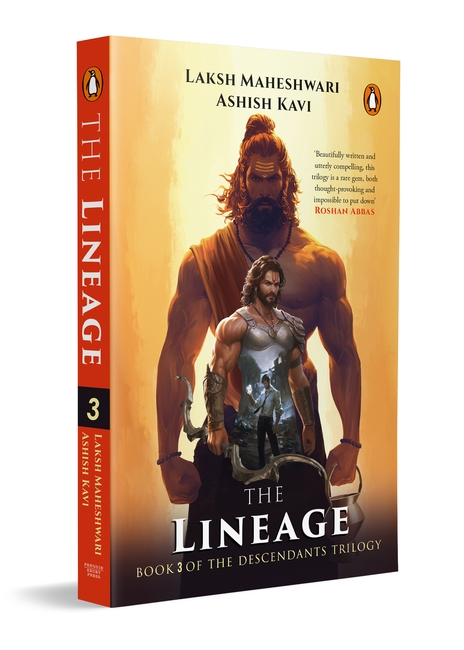
Thirty-two and a half hours: It is all the time this world has left.
Kaka has rung the Dhwansnaad, bringing upon earth an evil that will ruin all. Vyas ji has barely managed to save a chosen few. Karan has lost his father. Antima has lost her courage. And no one knows what has become of Jay.
In the midst of this chaos, Kaka’s nefarious plan has started to take root in a most terrible way and the only forces who can stop him are struggling with battles of their own.
Thirty-two and a half hours: Will this world find its saviour?