

Publish with Us

Follow Penguin

Follow Penguinsters

Follow Penguin Swadesh

This American Woman

Throughout Zarna’s whole childhood in India, everyone called her ‘so American’ just for reading the newspaper, having deep thoughts, and talking back to anyone over the age of thirty. When Zarna’s dad tried to marry her off at age fourteen, Zarna fled—first to the streets of Mumbai and ultimately to the glittering paradise of Akron, Ohio, where she got to become American for real.

On Zarna’s very American quest to find herself and her calling, she threw herself wholeheartedly into roles like dog-bite lawyer, crazy perfectionist stay-at-home mom, Indian matchmaker, prizewinning screenwriter, and more. It wasn’t until a dare led her to a stand-up comedy open mic that Zarna finally found her spiritual home: getting paid cold hard cash for her big fat mouth.

And as Zarna discovered, after surviving the brutal streets of Mumbai, the cutthroat world of stand-up comedy is nothing.

This American Woman is an exuberant story of fighting for your right to determine your own destiny and triumphing beyond what you ever dreamed was possible. Zarna’s mantra becomes a call to action: It’s never too late. If Zarna can do it, you can, too.
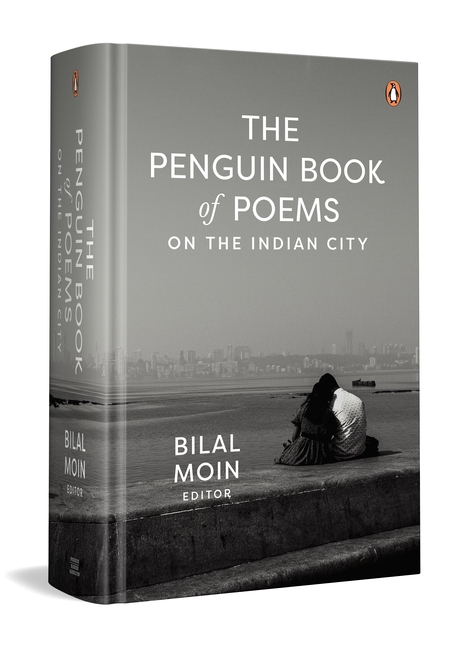
The Penguin Book of Poems on the Indian City

From Ghalib’s Delhi and Nissim Ezekiel’s Bombay to Agha Shahid Ali’s Srinagar and Kamala Das’s Calcutta, from Sarojini Naidu’s Hyderabad to Arundhathi Subramaniam’s Madras to Kynpham Sing Nongkynrih’s Shillong; The Penguin Book of Poems on the Indian City takes you on a spectacular poetic journey across thirty-seven cities in India.

This anthology contains 375 poems, those written in English and those translated from nearly twenty languages. From the classical voices of Valmiki and the Sangam poets to the Bhakti and Sufi strains of Surdas, Kabir and Amir Khusrau, and the early modern figures like Mir Taqi Mir, Narmad, Rudyard Kipling and Rabindranath Tagore, this collection offers an immersive lyrical exploration of India’s urban landscape.

Contemporary poets such as Arvind Krishna Mehrotra, Vikram Seth, Eunice de Souza, Arun Kolatkar, Amrita Pritam, Amit Chaudhuri and Gulzar carry this tradition into the present. Together, they take the reader through depictions of cities as imperial capitals, colonial outposts and dynamic, ever-evolving spaces that serve as the backdrop for postmodern life. At its core, this collection portrays the Indian city as a complex organism and living embodiment of the collective consciences of its many, many residents. A collection for not just those who live in the cities featured in this book but for anyone who is familiar with the chaotic, paradoxical and magical tableau that constitutes life in a city in this part of the world.

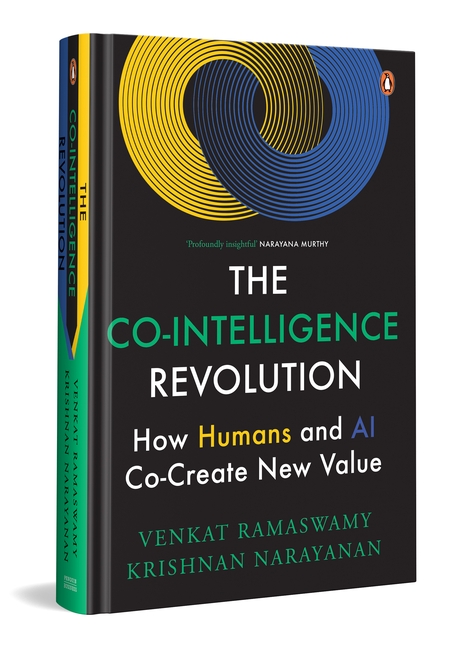
The Co-Intelligence Revolution

We stand at the dawn of a new industrial revolution—not one defined by automation and substitution of human intelligence but by co-intelligence, where human ingenuity and artificial intelligence (AI) (as a different kind of intelligence) collaborate in ways never imagined. The Co-Intelligence Revolution is a visionary road map for this emerging era, which will redefine human experiences, innovations, and economic and social systems—reshaping not just how we work but also how we live.

With over a hundred compelling real-world examples from over twenty-five ecosystems— from L’Oréal’s inclusive beauty platforms, through Siemens’s industrial metaverse, to India’s Digital Public Infrastructures (DPIs) expanding access to finance, citizen-services, and education—the book illustrates co-intelligent enterprises across private, public and plural sectors unlocking new frontiers of value.

The Co-Intelligence Revolution is a call to action to co-create a world where intelligence emerges from the interactive, ever-evolving relationships between humans, AI and ecosystems.

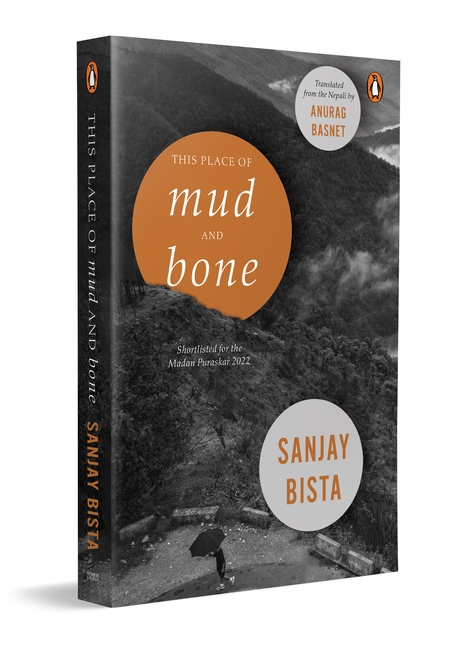
This Place of Mud and Bone

1986. Labda, a rain-washed, sun-soaked village near Darjeeling. Six friends—Karnabahadur, Tshering, Ambar,
Buddha, Rajvir and Sarita—attend school together here. Elsewhere, on the streets of Darjeeling, a struggle is brewing for a separate state of Gorkhaland in India. Soon, the hot winds of that violent Andolan sweep inexorably into Labda and transform the village into a battleground. Students turn on their teachers, villages and families are divided along party lines, and everyone is forced to take sides. Those who don’t are compelled to run away, never to return.

Spanning thirty years, This Place of Mud and Bone follows the lives of these schoolmates as they negotiate a political struggle that continually shapeshifts but never ends. The novel tells the story of how Karnabahadur transformed into Angulimaal and why Buddha was forced to kill him; it describes why Tshering became Tshering the Murderer and, eventually, Mad Tshering; it explores the circumstances that made Ambar hang himself; and describes why Sarita ended up selling eggs in a hospital. Even as it captures the minutiae of individual, yet intertwined, lives, this capacious novel—also a contemporary history of the Darjeeling hills—shows how people learn to absorb violence and live with it, and how a man who has made up his mind can be the strongest force on earth.

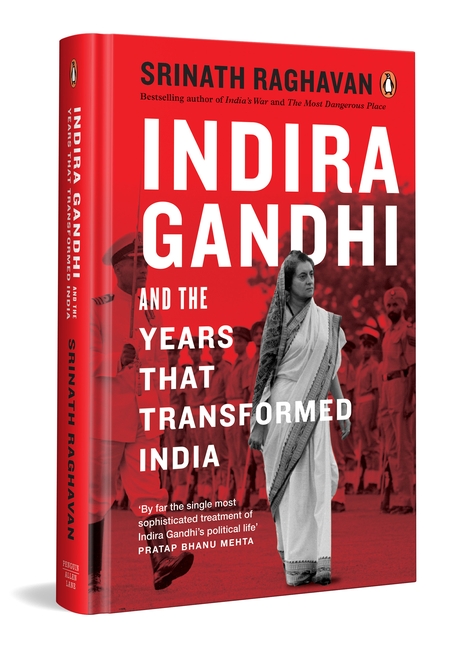
Indira Gandhi and the Years That Transformed India

Indira Gandhi’s ascent as prime minister of India in 1966 was entirely unforeseen. But she soon emerged as one of the most powerful political leaders of her times, who transformed the world’s largest democracy. She served as prime minister for a remarkable fifteen years, leaving behind a complex and deeply controversial legacy.

In this fascinating account, Srinath Raghavan tells the story of Indira Gandhi’s political career and the momentous changes that India experienced under her leadership. From her tentative start in high office to her remarkable electoral victories, the dark days of the Emergency of 1975–77, and her assassination at the hands of her bodyguards in 1984, Raghavan sheds new light on her politics and government, as well as on her adversaries and critics. He shows how the 1970s were the hinge on which the history of the country turned—and how Indira Gandhi transformed the new postcolonial nation into the India of today.

Writer Rebel Soldier Lover

“An outstanding literary biography” AMITAV GHOSH

“Mukul writes beautifully, and brings to life a man who has often been misunderstood” BENJAMIN MOSER

“This book is a remarkable contribution to the world of Indian letters: ANNIE ZAIDI

Sachchidanand Hirananda Vatsyayan ‘Agyeya’ is unarguably one of the most remarkable figures of Indian literature. From his revolutionary youth to acquiring the mantle of a (highly controversial) patron saint of Hindi literature, Agyeya’s turbulent life also tells a history of the Hindi literary world and of a new nation-spanning as it does two world wars, Independence and Partition, and the building and fraying of the Nehruvian state.

Akshaya Mukul’s comprehensive and unflinching biography is a journey into Agyeya’s public, private and secret lives. Based on never-seen-before archival material-including a mammoth trove of private papers, documents of the CIA-funded Congress for Cultural Freedom and colonial records of his years in jail-the book delves deep into the life of the nonconformist poet-novelist. Mukul reveals Agyeya’s revolutionary life and bomb-making skills, his CIA connection, a secret lover, his intense relationship with a first cousin, the trajectory of his political positions, from following M.N. Roy to exploring issues dear to the Hindu right, and much more. Along the way, we get a rare peek into the factionalism and pettiness of the Hindi literary world of the twentieth century, and the wondrous and grand debates which characterized that milieu.

Writer, Rebel, Soldier, Lover features a formidable cast of characters: from writers like Premchand, Phanishwarnath Renu, Raja Rao, Mulk Raj Anand and Josephine Miles to Prime Minister Jawaharlal Nehru, revolutionary Chandra Shekhar Azad and actor Balraj Sahni. And its landscapes stretch from British jails, an intellectually robust Allahabad and modern-day Delhi to monasteries in Europe, the homes of Agyeya’s friends in the Himalayas and universities in
the US. This book is a magnificent examination of Agyeya’s civilizational enterprise.

Ambitious and scholarly, Writer, Rebel, Soldier, Lover is also an unputdownable, whirlwind of a read.

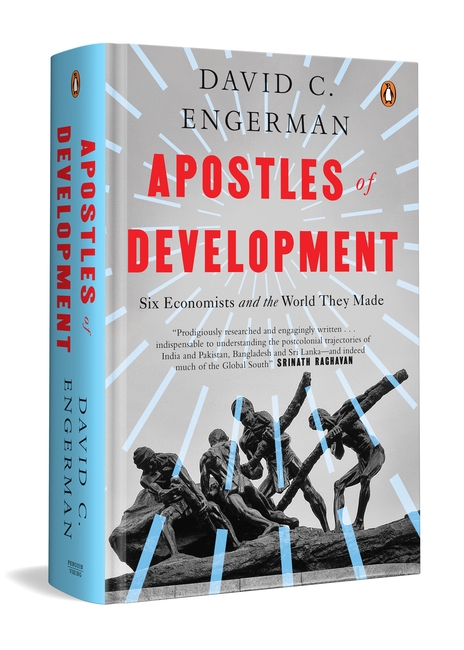
Apostles of Development

The battle against global poverty that began after World War II was a major undertaking engaging economists, engineers, and organizations. Featuring front and centre were six remarkable economists: Amartya Sen, Manmohan Singh, Mahbub ul Haq, Jagdish Bhagwati, Rehman Sobhan, and Lal Jayawardena, all born as colonial subjects in the British Empire and studied at Cambridge University. They represented a new figure on the world scene —­ the Third World development expert­­ — and played a crucial role in global debates about poverty and development.

Apostles of Development examines their different economic doctrines and the ongoing debate surrounding economic theory in poor countries compared to rich ones. The lives of these apostles reveal how development did not begin with textbooks but with real-world attempts to solve very specific and pressing problems. Finally, the book emphasizes that development was a Global South project first and foremost, aiming to improve the conditions of the world’s poorest countries.

It challenges the conventional wisdom that sees development only as a tool of rich countries to dominate, or as proof of their humanitarian spirit. It argues that development succeeds not when it follows ideological prescriptions, but when it looks for what works. The fading of grand visions shaped by ideological concerns has been one of the lasting effects of the end of the Cold War. The book argues that the best way forward is determined modesty, focusing on practical matters, such as addressing gross inequality and insisting that development means more than just economic growth. Given the salience of questions of economic inequality and the constant visibility of the promises and problems of economic development in the world today, this is a timely and important read.

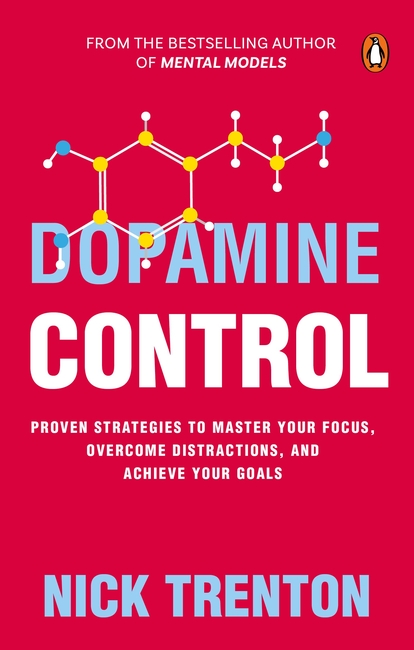
Dopamine Control by Nick Trenton

Unlock Unstoppable Focus and Productivity with Science-Backed Strategies!

Struggling to stay focused? Focus Master reveals proven techniques to help you regain control over your attention, eliminate distractions, and achieve twice as much in less time. By understanding the powerful connection between your psychology and physiology, you can optimise your productivity and transform your daily routine.
Dopamine Control takes a revolutionary approach to focus, combining cutting-edge research with practical strategies to help you master deep work, discipline, and goal achievement. This book doesn’t just teach focus—it redefines it, offering a holistic, science-based blueprint to improve concentration in every aspect of your life.
Inside, you’ll discover how to:

  • Master discipline and willpower to stay on track.
  • Understand the biological triggers behind procrastination—and how to overcome them.
  • Align your energy levels with your circadian rhythm for peak efficiency.
  • Single-task like a pro to maximise results.
  • Prime your mental engine for sustained focus and success.

If you’re ready to take control of your focus and supercharge your productivity, Focus Master is your ultimate guide. Start your journey today!

A Demon in Dandi (Songs of Freedom Series)

Dandi, 1930

All the world’s eyes are on this tiny village by the Arabian Sea, where Mahatma Gandhi will soon break the Salt Law to defy British rule.
Dinu would rather be home in Surat, reading his beloved Sherlock Holmes books. Instead, he finds himself wading through mud, battling angry goats and eating burnt food as the youngest of the student volunteers helping prepare Dandi for Bapu’s arrival.

When a man is found dead and rumours of an angry demon grip the village, Dinu finds himself drawn into the mystery, even as he grapples with dilemmas of his own. But as Dinu and his friends race against time to find the killer, the demon strikes again . . .

The Songs of Freedom series explores the lives of children across India during the struggle for independence.

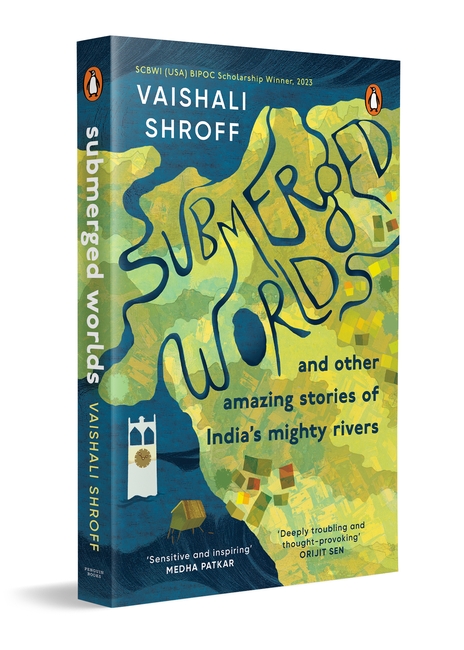
Submerged Worlds and Other Amazing Stories of India’s Mighty Rivers | Ganga, Yamuna, Narmada, Brahmaputra and more | Melting Glaciers, Urban Flooding, Dams, River Rights, Destruction, Revival and more | Ages 13 +

The job of any river is to flow and as it flows, it nurtures everything around it, everything within it. But when human interference affects this natural flow, it brings floods and droughts, displacement and suffering in its wake.

From melting glaciers to urban flooding, sand mining to dammed rivers, river rights to river interlinking projects, dead rivers to river revival, this book is an attempt to understand India’s rivers through their stories and the narratives of those whose lives are interlaced with the life of rivers.

Deeply steeped in the historical, spiritual, cultural, political, ecological, and economic fabric of our society, these stories are highly relevant in today’s world where the climate crisis is a water crisis. Compelling readers to listen to the river’s gentle yet urgent voice, it’s a must read for all non-fiction lovers and students keen on understanding life in the subcontinent we call home.

error: Content is protected !!