



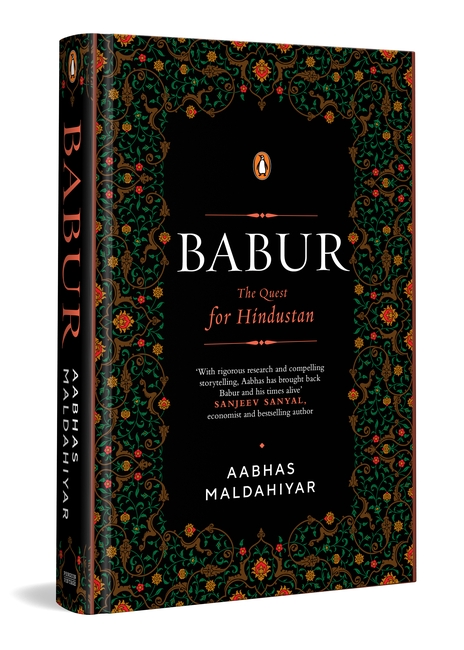
Embark on a captivating journey with Babur: The Quest for Hindustan, where the narrative resumes with Babur’s daring campaign in Bajaur. This meticulously researched biography continues to challenge the conventional portrayal of Babur, offering a nuanced view of his ambitions and complexities. Drawing from the rich Persian manuscript of the Baburnama and other primary sources, this book is a pivotal addition to Babur’s biographical genre, essential for anyone seeking to understand the enigmatic ruler’s legacy. Discover the multifaceted world of Babur, where history and intrigue intertwine.
Archives: Books
God’s Own Empire

In 1750, at the height of his power, Marthanda Varma made a momentous decision. He decided to hand over the kingdom to Lord Ananthapadmanabha, the reigning deity of the kingdom of Travancore. In future, he decreed that he and his heirs would rule over the kingdom as the ‘dasas’ of the deity. It was the culmination of Varma’s illustrious career as a military leader and statesman.
When Marthanda Varma ascended the throne of Travancore in 1729 as a twenty-three-year-old, it was a kingdom embattled on every front—be it feudatories within the kingdom, rival kings outside or European powers beginning their pursuit of colonies in India.
Varma played a pivotal role in consolidating the royal family’s hold on the kingdom, expanding the kingdom’s boundaries by fighting off external rivals and even fending off the Europeans. He defeated the Dutch in the Battle of Colachel in 1750 and ended Dutch colonial aspirations in India.
God’s Own Empire by Raghu and Pushpa Palat, presents the extraordinary story of Marthanda Varma. Well-researched and accessible, it is the remarkable story of a remarkable man.
Bhairavi
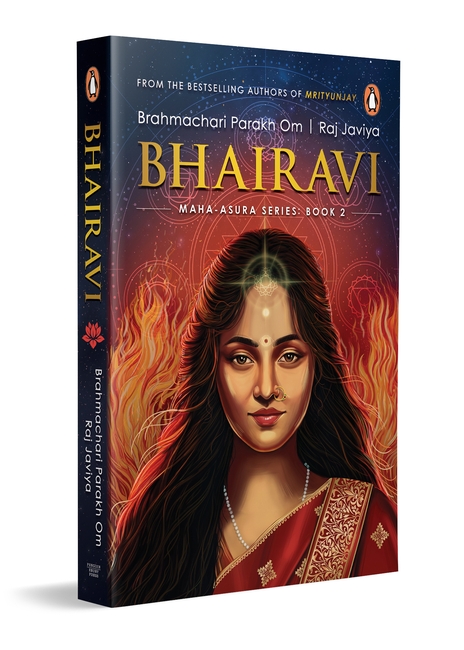
A horrific attack on the Rashtrapati Bhavan has brutally killed hundreds of people. And Riya Chaudhary finds herself in the clutches of a barbarous clan that will go to any extent to realize its plan of Ghazwa-e-Hind.
Ravana has begun the Kaal Yagna to awaken Anishtatri—the ancestral goddess of Asuras. After many bloody offerings, Ravana is preparing to offer the final sacrifice — his beloved queen Mandodari. The completion of this yagna shall yield unthinkable results.
The daitya guru Shukracharya and his daughter Devyani are travelling through the jungle—a region lorded by Dandak, the savage grandson of Ikshvaku. Here, they become victims of an appalling tragedy, the echoes of which shall haunt the universe till the end of time. Even the avatar of Lord Vishnu himself shall not be able to escape Shukracharya’s curse.
What is the Puranic mystery hidden in the ashram of the Maha-Tantaric Bhairavi Maa? What is the lord of all the malevolent energies in the universe Ekaksh Aghori’s diabolical plan that aims to restore Asura supremacy in the world?
Lores of Love and Saint Gorakhnath
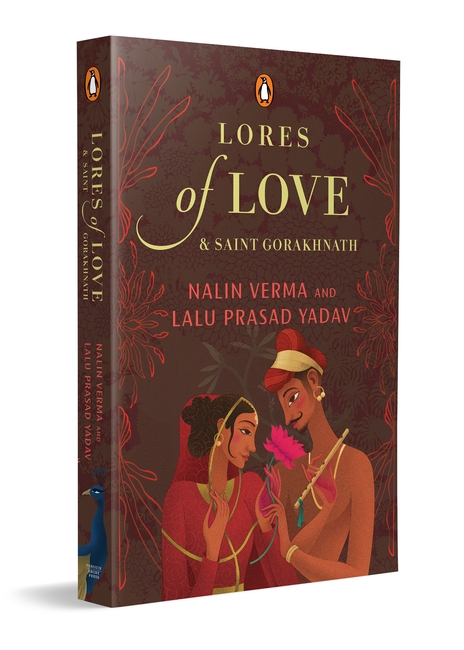
Comprising four folktales, Sorthi-Brijbhar, Bharthari-Pingla, Heer-Ranjha and
Saranga-Sadabrij, the book is an anthology of stories influenced by the life, time and teachings of Yogi Gorakhnath—an eleventh-century saint—who propounded an inclusive religious philosophy that laid the foundation of the Sufi and Bhakti movement in India.
Initially, the yogis (mystics) of the Gorakhnath sect would sing these ballads on the tune of the sarangi and move door to door for alms. Originally, these stories existed in the oral tradition passed down from generation to generation in the form of ballads. The ballads are full of fairies, genies, witches, magic healers, witch doctors and ghosts besides angels in the form of Peer Baba (hermits) and sages. Over the decades and centuries, these stories have inspired folklorists, theatre artists and nautch parties to perform in melas (community fairs), religious events and marriages.
The Step Child
Angaliyat tells the story of oppression and exclusion by transforming the vanquished into the victor, by turning the periphery into the core. The portrayal of Methi and Kanku as ‘pure’ women challenges the age-old perceptions of higher castes which denigrate the practice of remarriage among ‘backward’ communities. The stepchild who follows the mother to a new home holding her finger or angali, remains on the periphery of the stepfather’s family. Significant from several points of view, the novel provides a view of the ‘history from below’. Caught in external and internal forms of colonization, the community of weavers, the Vankars, is subject to oppression from the more powerful upper caste of the Patels.
Caught Yapping
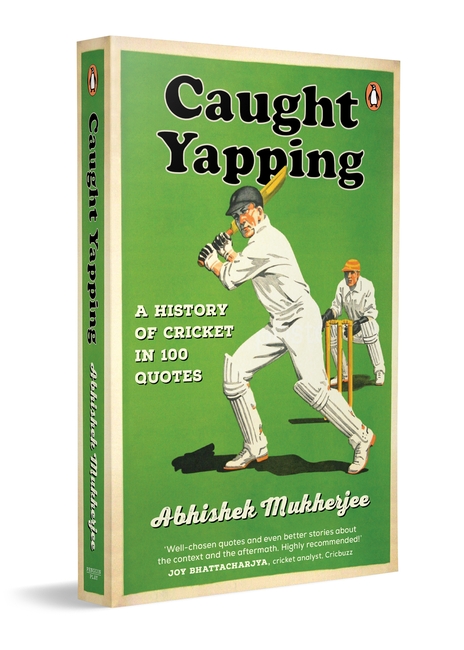
‘I do not want to see you, Mr Warner. There are two teams out there; one is trying to play cricket; and the other is not.’
‘There is a little bit of the whore in all of us, gentlemen. What is your price?’
‘Thank you for making my tournament a success.’
‘Girls don’t play cricket.’
Bodyline, World Series Cricket and IPL—all seminal events in the game’s history and succinctly captured in the quotes above by Bill Woodfull, Kerry Packer and Lalit Modi, respectively. And a casual comment made by a policeman to Rachael Heyhoe, which spurred her on to become a cricketer and eventually organize the World Cup, two years before the men’s!
Caught Yapping takes a never-trodden before route to narrate the history of cricket, using the medium of quotes to do the talking.
Why quotes?
Cricket has inspired considerable literature and continues to do so. Then there are words the people of cricket have spoken on the field, in press conferences, in commentary boxes and elsewhere. These are tales that scorecards do not tell, stories of heroes and villains, rises and falls, temptations and resistance, inclusions and exclusions. This book chronicles the history of cricket, and history means little without the people. And what better way to tell the story of the people than in their own words?
Nehru’s India Hindi / Nehru Ka Bharat / नेहरु का भारत

संप्रभुता, लोकतंत्र, धर्मनिरपेक्षता, गरीब समर्थक दृष्टिकोण और आधुनिक वैज्ञानिक दृष्टिकोण – भारतीय स्वतंत्रता आंदोलन के मूल मूल्यों को संक्षेप में ‘भारत का विचार’ कहा गया है। जवाहरलाल नेहरू ने न केवल स्वतंत्रता संग्राम के दौरान इन मूल्यों के लिए लड़ाई लड़ी, बल्कि स्वतंत्रता के बाद नवजात राष्ट्र में उन्हें लागू करने में भी महत्वपूर्ण भूमिका निभाई। उनका जीवन, दर्शन और कार्य भारत के लिए उनके दृष्टिकोण पर प्रकाश डालते हैं : इसका सभ्यतागत अतीत, स्वतंत्रता के बाद के राष्ट्र के लिए रोड मैप और भविष्य की संभावनाएँ। इतिहास और भारत के सांस्कृतिक अतीत के बारे में नेहरू की समझ पर ध्यान केंद्रित करते हुए, पुस्तक सांप्रदायिकता की उनकी गहरी समझ और धर्मनिरपेक्षता के प्रति उनकी प्रतिबद्धता के लिए एक खिड़की खोलती है। लोकतांत्रिक समाज में उनका पूर्ण विश्वास और भारतीय धरती पर इसके पोषण में उनका अमूल्य योगदान, और वैज्ञानिक सोच से ओतप्रोत समाज के साथ-साथ एक स्वतंत्र और समतावादी अर्थव्यवस्था के निर्माण में उनके प्रयास, हमें बीसवीं सदी के महानतम व्यक्तियों में से एक के जीवन और कार्य के बारे में कई अंतर्दृष्टि प्रदान करते हैं। उनके निधन के छह दशक बाद, क्या नेहरू के सिद्धांत, जो भारत के स्वतंत्रता आंदोलन के मूल्यों को दर्शाते हैं, अभी भी प्रासंगिक हैं?
The Raja, the Rebel and the Monk
In late eighteenth century India, an obscure king who ruled over Huseypur in northwest Bihar, challenged the might of the British. When overpowered by the East India Company forces, he escaped into the jungles of Gorakhpur, raised a people’s army and fought a guerilla war against them for nearly thirty years. Beaten many times, he always bounced back and did not surrender ever.
He was Maharaja Fateh Bahadur Sahi.
A warrior, patriot and innovator, Sahi visualised the dangers of impending imperialism and rose to meet the challenge. He devised new war logistics and resorted to guerilla warfare, including ascetics, destitute and bandits in his unique army. This happened years before the Indian Revolt of 1857 and the revolutions in America and France.
Mainstream history is yet to look at him, but in the middle-Ganga valley, Sahi is remembered as a folk hero and a people’s king.
This work is an effort to unravel Sahi’s unusual life. How did he operate and survive for so long? Could he be considered the progenitor of India’s first war of independence? The Raja, the Rebel and the Monk attempts to answer.
The Dead Know Nothing

Atta Galatta Bangalore Literature Festival Book Prize Fiction 2025 Shortlist
Godrej Literature Live! Fiction Best First Book 2025 Shortlist
Are doors to the past ever really shut? Are some crimes more understandable than others?
Disgraced after failing the university exams, Thankachan has returned to his old life. On Fathima Island in the Ashtamudi archipelago, his days are clouded over by the fear of never making anything of himself, but soon, strange events begin to happen on the island. A dead body surfaces one day, then another. Soon, a murder case considered solved years ago is suddenly once again wide open. Is his evasive brother involved in something sinister? Is the fate of a fisherman’s son really sealed at birth?
Packed with intrigue, compelling characters draw the reader into their lives and the heart of the dark secrets that have long lay dormant. Once revealed, they threaten to shake the foundations of community life and wreck Thankachan’s hopes for the future.
A small island community, a murder mystery and whispers of a new romance—The Dead Know Nothing is ripe with the energy of everyday life and deeply perceptive of its social tensions. A riveting story of deceit, perseverance and the wild realms of possibility, it will engross readers with its simple charm and beguiling turns.
The Turning Point
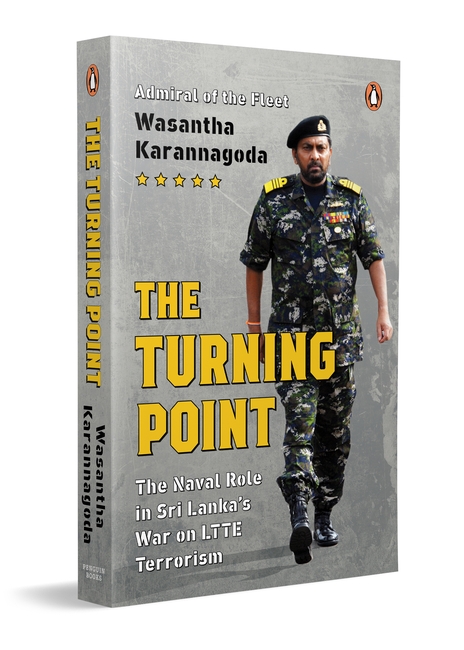
Admiral of the Fleet Wasantha Karannagoda became the Commander of the Sri Lanka Navy on 1 September 2005 and led the navy during the fourth Eelam war, which resulted in the comprehensive defeat of the Liberation Tigers of Tamil Eelam (LTTE) in Sri Lanka.
Admiral Karannagoda’s tenure was marked by important changes in the strategy of the Sri Lanka Navy. Among other things, on several occasions, naval task forces were despatched more than 3200 km away from Sri Lanka to areas close to Indonesian and Australian waters, to destroy LTTE ‘floating warehouse ships’, thereby cutting off all supplies to the LTTE and depriving them of vital arms and ammunition to continue the war. His ‘small boat concept’ revolutionized coastal warfare and destroyed the LTTE Sea Tiger wing completely.
During Karannagoda’s tenure as Commander, the Sri Lanka Navy graduated from being a ‘brown water’ navy, operating largely in inland and shallow sea waters to a ‘blue water’ navy capable of operating on the high seas.
The Turning Point is Admiral Karannagoda’s account of the crucial years of the war from 2006 to 2009 when he was at the helm of the navy. It offers a ringside view of the war and acts as an instructive document about leadership and military strategy.