




Sleep Journeys, is counted as one the finest of Urdu’s contemporary poets, Azra Abbas’s collection of verse. She is also among the first Urdu poets to contribute to the growing popularity of experimental, free verse poetry in the late twentieth century. Divided into three cantos that took the Urdu poetic world by storm when it first appeared in 1981, it is one of Azra’s most dense and complex works, a dream-like rumination that explores faith, female desire, and the subconscious mind.
Archives: Books
The Maker of Filmmakers
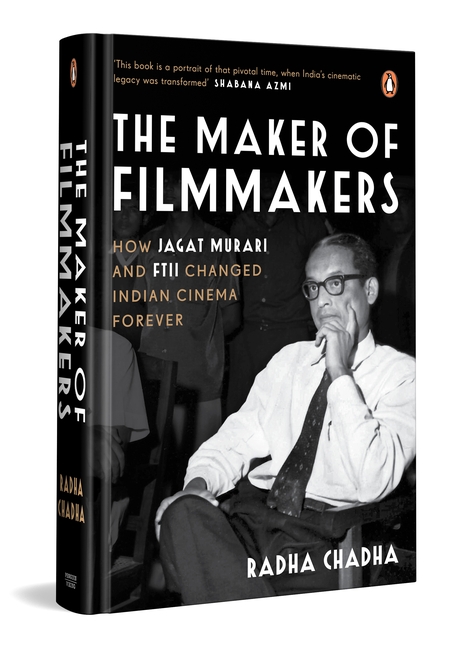
When Jagat Murari, a young film student in post-war America, finds himself at the feet of one of cinema’s true giants – Orson Welles – during the making of Macbeth in 1947, the lessons he absorbs on that set will shape not only his future, but also the future of Indian cinema. Returning to a newly independent India, Jagat goes on to build the Film and Television Institute of India (FTII) from the ground up.
In The Maker of Filmmakers, Radha Chadha offers an intimate and meticulously researched portrait of her father – a celebrated documentary filmmaker – and the iconic film school he built. With uncanny consistency, FTII turned out top talent – the likes of Shabana Azmi and Jaya Bachchan, Adoor Gopalakrishnan and Subhash Ghai, and other cinema legends. His alumni became the leading actors, directors, cinematographers, sound designers and editors of Bollywood and beyond. They spearheaded the Indian New Wave, kickstarted regional language cinema, and helped usher television into the country.
How did Jagat go about ‘making’ such extraordinary filmmakers? What was his secret formula? With unprecedented access to Jagat’s diaries, letters, personal papers and over 100 interviews with alumni and colleagues, Radha Chadha leads us behind the scenes, and into the mind of a visionary who reshaped Indian cinema, even as he grappled with its many challenges.
A gripping tale of ambition, adversity, and artistic brilliance – richly illustrated with rare photographs – The Maker of Filmmakers paints a vivid picture of one man’s unwavering belief in the transformative power of cinema, and how his determination helped turn Indian cinema into the global powerhouse it is today.
Set against the backdrop of some of the landmark events and characters of the last century, this is biography and cinematic history at its best.
Waiting in the Wings
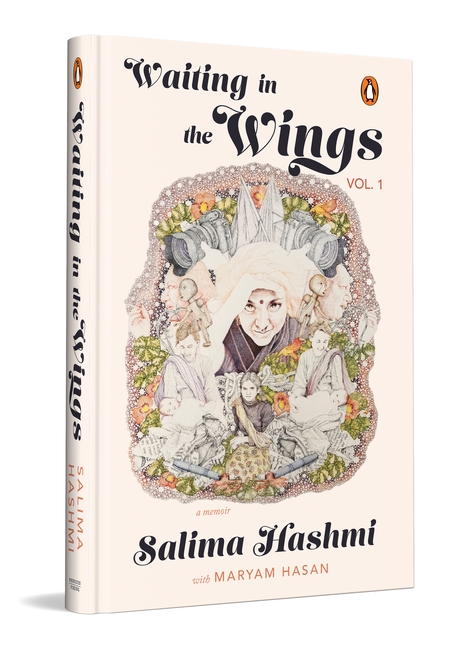
March 1947.
A four-year-old Salima Hashmi is witness to the Sikh leader, Master Tara Singh and his many followers denouncing the demand for Pakistan.
Soon, the sub-continent is partitioned and Salima, her sister Moneeza, her English mother Alys, and her father, the renowned Urdu poet and leftist intellectual, Faiz Ahmed Faiz, are citizens of the nascent Pakistan.
Life in the newly formed nation is full of ups and downs, the lowest points being Faiz’s imprisonment in 1951 on charges of sedition and his subsequent self-exile from Pakistan in 1960. Even as the family struggles to cope, life is not without its highpoints. There are picnics and outings with her cousins, Salma, Mariam and Billoo. The family home is frequented by writers, artistes and political figures and Salima is privy to their conversations and arguments. And through it all, Salima finds her footing in art which becomes her life’s calling.
Waiting in the Wings, the first part of her two-volume memoir, is the account of the first two-and-a-half decades of Salima’s life. It is as much a portrait of a young nation as it is the account of the author’s own life.
Ponniyin Selvan 5
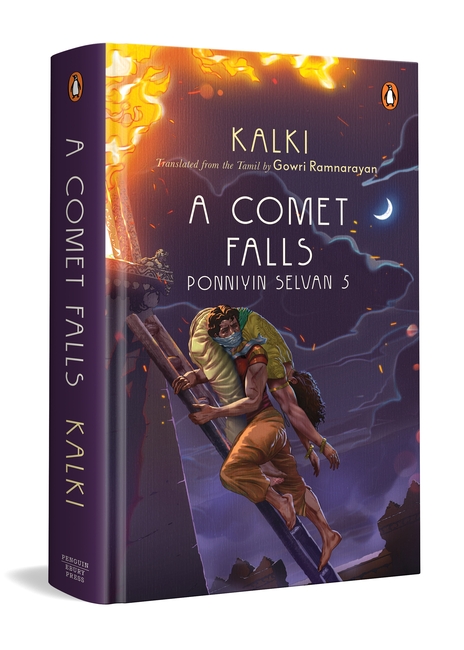
In this gripping penultimate volume of the Ponniyin Selvan series, Kalki masterfully draws the threads of intrigue, love, and vengeance towards a breathtaking crescendo.
The Chozha empire reels from the shock of an assassination and finds itself on the brink of chaos. Even as rumours swirl, and conspirators move in the shadows, the question of rightful succession grows ever more urgent.
Fearless and quick-witted, Vandiyatevan navigates treacherous waters as he uncovers secrets that could shatter the royal line. Arulmozhi Varman—torn between personal convictions and imperial duty—must confront the weight of destiny as he stands poised to shape the future of the kingdom.
Meanwhile, Nandini’s tragic past and her thirst for revenge arrive at a critical juncture, pushing key players into making impossible choices.
As destinies converge and sacrifices are made, the stage is set for a climactic resolution that will determine the future of the Chozha dynasty.
Ponniyin Selvan 6
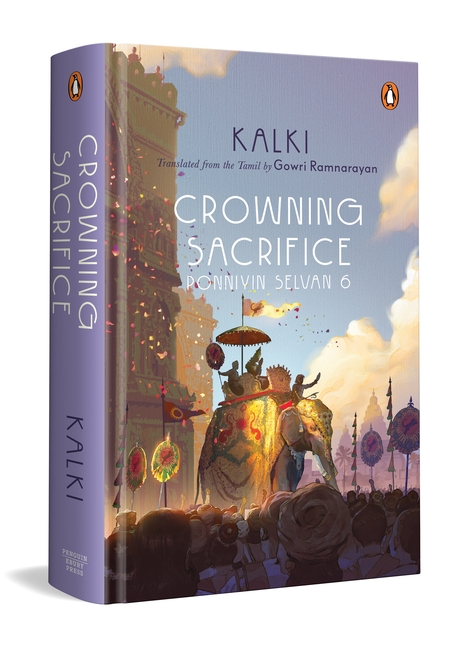
In the concluding part of Ponniyin Selvan, the fates of beloved characters and the Chozha empire reach their dramatic fulfilment. Secrets long buried come to light, revealing the true motivations behind Aditya Karikalan’s death and the tragic complexities of Nandini’s life. As Arulmozhi Varman prepares to embrace his destiny, the intricate political and emotional tapestry woven throughout the saga finds powerful resolution.
Vandiyatevan’s courage, Kundavai’s unwavering wisdom, and sacrifices by unsung heroes, converge in a stirring finale marked by love, loss, and redemption. With justice, duty, and fate in tense balance, Kalki delivers an unforgettable climax to a historic epic, an epic mirroring the values, aspirations and achievements he visualised as a writer and liberal humanist, for the future of his own country, and for the world.
Murarirao Ghorpade

So many of our country’s heroes from the past remain unsung. Murarirao Ghorpade is one such. He was a valiant warrior, an articulate statesman and a descendant of the Maratha clan, committed to Hindavi Swaraj.
Murarirao independently built a strong and highly efficient military force. He established his reputation on being able to break the dreaded war tactic employed by the French Army—the French Hollow Square. His support was sought by the Peshwas, neighbouring kingdoms, the French and the British. In fact, it so happened that he came to save Robert Clive from a crushing defeat at the hands of the French at Arcot. This war was a turning point in India’s history. That he has been denied attention could well be because much of documented Maratha history faces north. Murarirao’s story faces south. And it was his actions on behalf of the Marathas that drew the ire of his nemesis, Haider Ali Khan.
This is an exciting tale of military conquests, espionage, forbidden love and loyalty in eighteenth-century Deccan, and a record of how, in an era marred by treachery and expediency, Murarirao Ghorpade survived seventy-plus years by instinct, bravery, statesmanship, valour and loyalty.
The Complete Book of Hindu Names
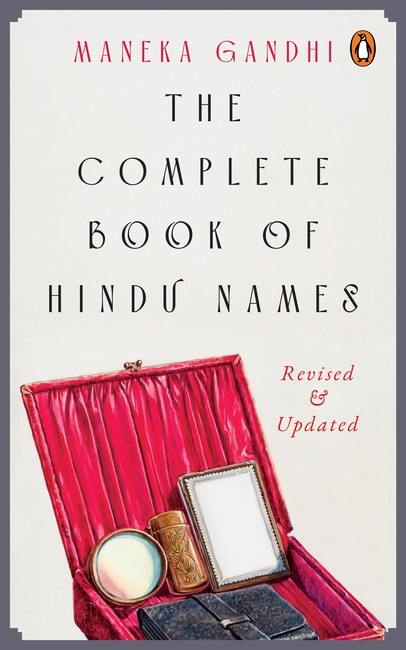
A product of many years of research, this is a comprehensive compilation of Hindu names in current use. The meaning of over 20,000 names in the volume is extensively discussed and information on sources and usage also provided. The book is cross-referenced to make it easier to use. This is a completely revised and updated edition with new names, and will appeal to a wide range of readers.
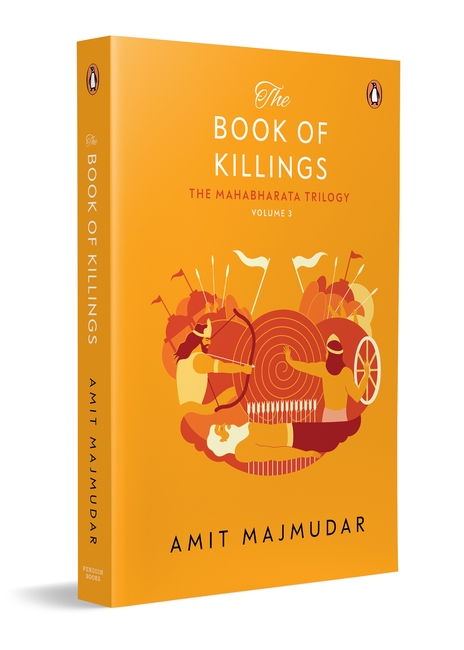
The Book of Killings
Arjuna versus Karna
Duryodhan versus Bheem
Shikandin versus Bheeshma
Dhritarashtra versus himself
The war between the two sets of cousins is ready to blow up. Krishna has just finished singing the Gita to Arjuna. The war is about to start….and this is a war like no other with boons, curses, tricks, strategies and games deployed to maximise each side’s chances of victory.
The Book of Killings is the eagerly awaited third instalment of the Mahabharata trilogy, which began explosively with The Book of Vows and was then followed by The Book of Discoveries. Imagined afresh and composed in a style that captures the power, charm and ambiguity of Vyasa’s Mahabharata, this book dramatizes the 18-day epic war and its aftermath in the Mahabharata.
Grounding his telling in the original Sanskrit version, Majmudar has recreated the ancient epic for a contemporary audience. His finest work yet, this is one of the most accessible, magical and unputdownable retellings of the Mahabharata.
Happiness Happens
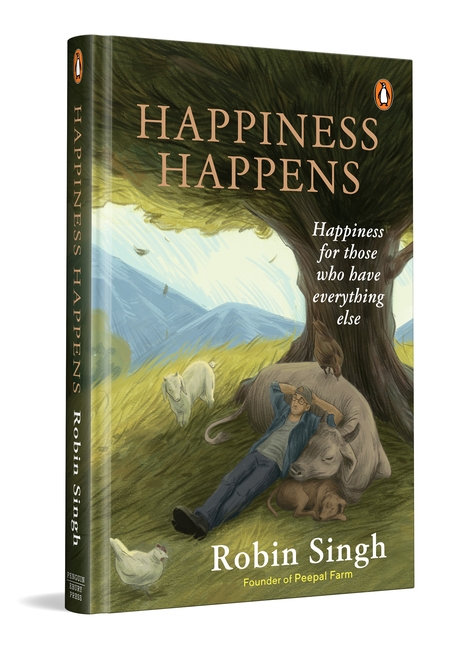
Robin Singh had everything he wanted and more—well-settled in the US, financial freedom, married to the love of his life—except he was not happy. It was in his pursuit of happiness that he stumbled across purpose. It eventually took giving up on happiness and pursuing purpose before he realised that he had finally found what he had been looking for.
This is a book about what happened between him exiting his tech company and starting Peepal Farm—an animal rescue centre. It is a compilation of all the answers he got along the way and the questions he asked to get those answers. He still can’t tell you what is life or why is life . . . but he can answer why to live and how to live.
Happiness Happens is ultimately an exploration of what really makes us happy. It is Robin’s journey told simply, with the hope that it will reach people who are dissatisfied with how they have been living but haven’t yet been able to answer how else to live.
Echoes of Her Embrace
‘Aphrodite! The name has always struck me as perfectly fitting for my wonderful mother.’
Aphrodite Krishnamurti’s life is a testament to resilience, love, and transformation. From the sun-drenched days of Doxato, Greece, to the bustling high streets of Kavala, her childhood was filled with laughter and imagination. Despite the upheavals of the Second World War that engulfed Greece during this period, Aphrodite faced every challenge with unwavering dignity.
Love found her in the form of a young Indian medical officer, P. V. Krishnamurti, whose arrival on Greek shores marked the beginning of a new chapter. Her life spanned three continents, and she navigated each with composure and confidence. Her deep bond with her daughter, rooted in unwavering support and encouragement, is the heart of this story. This book delves into the enduring power of a mother’s love, and a unique mother-daughter relationship that has only deepened over time.