




Cyber risk isn’t an IT problem; it’s a leadership problem.
And if you’re a Company Director, member of an Audit and Risk Committee, the Chief Executive Officer, or the Business Owner of a small to medium-sized business, this book is your wake-up call.
With regulators expecting Directors to meet their fiduciary duties under the Corporations Act (Cth), and cyber threats escalating in both frequency and impact, your oversight is no longer optional. It’s essential.
Dr Kiran Kewalramani, an experienced Chief Information Officer/Chief Information Security Officer, Cybersecurity Expert and Board-Level Advisor, cuts through the noise to give you what you really need—plain-English insights, sharp questions, and a clear roadmap to cyber resilience.
This book isn’t about making you a technical expert. It’s about empowering you to ask the right questions, setting the right tone, and fulfilling your duty to govern one of the most critical risks of our time.
Just the strategic clarity every boardroom needs. Get the book and own the risk. Ask the right questions with confidence. Lead like it matters. Because it does!
Get the book and own the risk.
Ask the right questions with confidence.
Lead like it matters.
Because it does!
Archives: Books
The Ultimate Healing Code

In this, the sequel to her bestselling book, Heal Your Gut, Mind and Body, Dimple Jangda:
- Unpacks the five Ds of mental health and shows you how to Disconnect, Destress, Detox, Decompress, and Decode your internal software.
- Unwraps five powerful healing tools—Time, Space, Nature, Sound, and Energy.
- Shares dietary protocols to tap into the boundless human potential to heal itself and perform daily miracles.
In sharing these codes and powerful game-changers, Dimple brings you closer to the source of healing, so you can become the master of your body, health and destiny. Accessible and comprehensive, this book will help you unlearn old habits, learn new health protocols and become the healthiest, happiest version of yourself, so you can live a more powerful now.
The Heartfulness Way, Book 2: Contemplating Life’s Great Questions on the Nature of Reality | Daaji & Elizabeth Denley on the Purpose of Life, Happiness, and Balance

In The Heartfulness Way, Volume 2, Daaji continues with the conversational format that he used so effectively in the previous volume, this time with Elizabeth Denley. Daaji takes us through the journey of expanding consciousness to the ultimate realization of the purpose of human life.
Essentially, The Heartfulness Way, Volume 2 is a guidebook for any of us wishing to transform from our current state, with all our beliefs, limitations, fears and weaknesses, in order to realize happiness, balance and our full potential in this very lifetime.
Daaji outlines the approach required, which is clear and practical, maps out the journey and provides the practices and tools needed. He sheds light on the obstacles and the solutions to help us overcome them. His approach is simple and experiential and can be practised by anyone with interest and willingness while working and living a normal family life.
Spectres of Vengeance
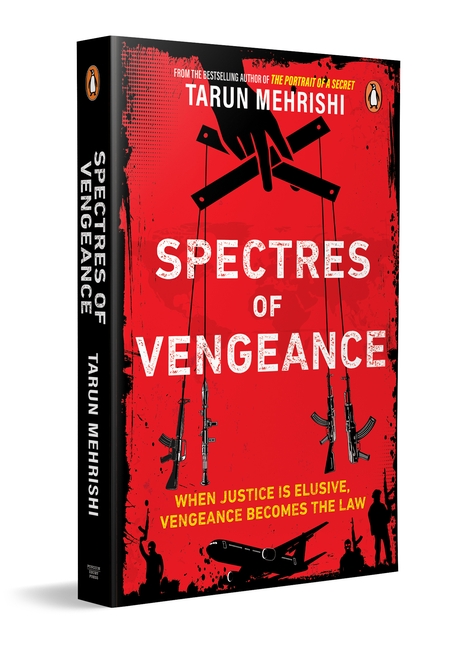
In a world where shadows conceal the truth and power is the ultimate prize, Amitabh Mehta, India’s resolute chief of intelligence, stands firm against corruption and terror.
Haunted by the legacy of the IC 814 hijacking, Amitabh has tirelessly safeguarded his nation through decades of combating terrorism, from the Khalistan movement to the serial bombings in Bombay and relentless attacks in Kashmir. Frustrated by indecisive politicians, he finds hope in a new prime minister—a charismatic strongman from Maharashtra with unprecedented public support.
As an Indian Air Force base is attacked, Amitabh proposes a bold solution: kill India’s enemies wherever they are. With the prime minister’s sanction, Amitabh spearheads a covert assassination programme, targeting high-priority enemies across the globe. However, a failed attempt on one of India’s most wanted terrorists reveals a mole within the government, leading to a frantic operation to capture the elusive terrorist. In their pursuit, they uncover a hidden power undermining India from within. Can this clandestine force be dismantled?
Philosophies On Self-Discipline
What if you could stop procrastinating—not by trying harder, but by thinking smarter?
Philosophies on Self-Discipline is your guide to getting things done, no matter what life throws your way. It’s not about hustle culture—it’s about using centuries of timeless wisdom to build habits that stick.
Through 8 concise meditations, you’ll learn how to rewire your mindset with insights from history’s greatest thinkers—Plato, Nietzsche, Freud, and more. Break patterns, build momentum, and make discipline second nature.
Whether you’re a chronic procrastinator or just seeking more consistency, this book reminds you: you don’t have to figure it all out alone.
Written by bestselling author and human performance expert Peter Hollins, this is a no-fluff guide to getting things done—calmly, consistently, and confidently
AI Snake Oil: What Artificial Intelligence Can Do, What It Can’t, and How to Tell the Difference
From two of TIME’s 100 Most Influential People in AI, what you need to know about AI—and how to defend yourself against bogus AI claims and products
Confused about AI and worried about what it means for your future and the future of the world? You’re not alone. AI is everywhere—and few things are surrounded by so much hype, misinformation, and misunderstanding. In AI Snake Oil, computer scientists Arvind Narayanan and Sayash Kapoor cut through the confusion to give you an essential understanding of how AI works and why it often doesn’t, where it might be useful or harmful, and when you should suspect that companies are using AI hype to sell AI snake oil—products that don’t work, and probably never will.
While acknowledging the potential of some AI, such as ChatGPT, AI Snake Oil uncovers rampant misleading claims about the capabilities of AI and describes the serious harms AI is already causing in how it’s being built, marketed, and used in areas such as education, medicine, hiring, banking, insurance, and criminal justice. The book explains the crucial differences between types of AI, why organizations are falling for AI snake oil, why AI can’t fix social media, why AI isn’t an existential risk, and why we should be far more worried about what people will do with AI than about anything AI will do on its own. The book also warns of the dangers of a world where AI continues to be controlled by largely unaccountable big tech companies.
By revealing AI’s limits and real risks, AI Snake Oil will help you make better decisions about whether and how to use AI at work and home.
From Myths To Science
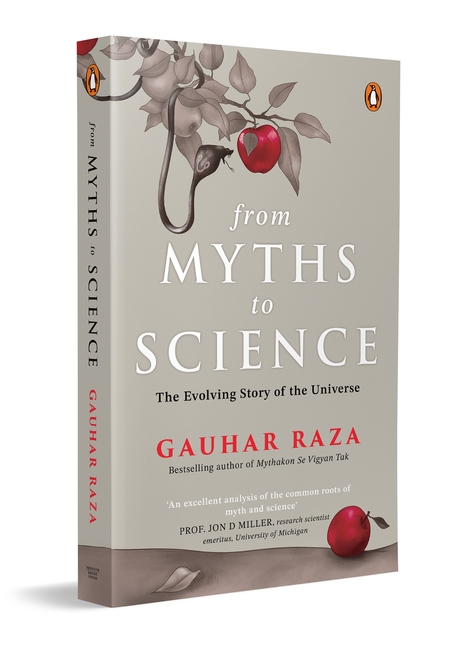
From superstition to science—an inspiring call to reclaim reason and the spirit of inquiry.
From Myths to Science by Gauhar Raza is a powerful exploration of humanity’s journey from inherited myths to rational thought, from blind faith to scientific inquiry. With clarity and conviction, Raza examines how societies construct myths, how superstition and dogma take root, and why the cultivation of a scientific temper is essential for democracy, social progress, and human dignity.
Drawing on history, philosophy, and contemporary debates, the book dismantles pseudoscience and superstition while celebrating the human spirit of curiosity. Blending his unique voice as a scientist, poet, and activist, Raza offers both analytical depth and lyrical sensitivity, making complex ideas accessible to students, thinkers, and general readers alike.
For anyone interested in the intersection of science, culture, and society, this book provides a timely and inspiring roadmap to reclaiming reason in an age of misinformation.
Kalkatta

Jami is the Gigolo King of Kalkatta. Smuggled into India from Bangladesh and given refuge by his uncle, a leader of the ruling Communist Party, he grows up in Zakaria Street—a Little Baghdad of the old—dreaming of becoming a pukka Kalkatta-wallah. When friendship with a local gang disqualifies him from school, he ends up as assistant to a passport forger, and then a masseur. Soon enough, innocent massage leads to ‘plus plus treatments’, and Kalkatta opens its doors, drawing Jami into the world of the rich and famous, housewives, tourists and travelling executives, and occasionally to high-paying and dangerous ‘parties’. Danger looms, too, from rivals and the police, and the ever-present risk of losing his cover. Jami’s shadowy double life takes a turn for the unexpected when he meets Pablo, a young boy who suffers from leukemia, and his single mother Mandira. Made to oscillate between his refugee family, the neighbourhood gang, his massage-parlour clients, even the cultured world of Bengali intellectuals inhabited by Mandira, he succeeds in becoming a true Kalkatta-wallah, but a stranger to himself. Until his love for Pablo threatens to destroy everything, and drive him away even from his beloved Kalkatta.
The Japanese Wife
‘It’s an improbable and hauntingly beautiful love story, almost surreal in its innocence. And I immediately knew that this was the film I had to make.’ – Aparna Sen
An Indian man writes to a Japanese woman. She writes back. The pen-friends fall in love and exchange their vows over letters, then live as man and wife without ever setting eyes on each other – their intimacy of words tested finally by life’s miraculous upheavals.The twelve stories in this collection are about the unexpected. An American professor visits India with the purpose of committing suicide, and goes on a desert journey with the daughter of a snakecharmer. A honeymooning Indian couple is caught up in the Tiananmen Square unrest. A Russian prostitute discovers her roots in the company of Calcutta revolutionaries. A holocaust victim stands tall among strangers in a landscape of hate. These are chronicles of memory and dreams born at the crossroads of civilizations. They parade a cast of angels and demons rubbing shoulders with those whose lives are never quite as ordinary as they seem
Badshah, Bandar, Bazaar
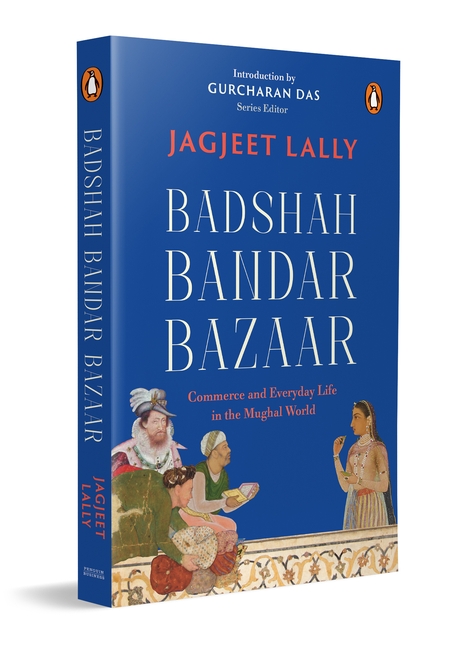
The impact of Mughal rule on India remains a hotly contested topic of debate. Some see the regime as a benign entity, others as one harmful to India’s long-term development. But by fixating on the king’s actions rather than those of his subjects, have we been looking at the issue the wrong way round?
Badshah, Bandar, Bazaar turns conventional wisdom on its head to examine what has long been taken for granted. Through the eyes of numerous real-life characters, it demonstrates the power of bankers, moneylenders, merchants, middlemen, artisans and all manner of ordinary folk in making – and eventually breaking – the might of the Mughal Empire.
Globalisation and the spread of market relations was intensifying meanwhile, transforming everyday life in ways that were often subtle, and sometimes dramatic. With exotic and enticing goods for purchase, and ever more artful ways to make money, came a new ethos – and a new set of anxieties – towards business which was so potent that it shaped preaching by Sikh gurus and Sufi sayyids alike.
Breathing new life and a fresh perspective into the history of the Mughal Empire, Badshah, Bandar, Bazaar takes us on a fabulous journey from the empire’s rich and fertile countryside, to the hustle and bustle of its great cities and ports; and from religious debates in Delhi’s fairgrounds and public squares and legal battles over property in Surat, to princely wars of succession and the dynasty’s tumultuous yet protracted overthrow.