The perfect bedtime board book for toddlers!
Join Maisy and Panda as they get ready for bed in this fun, engaging bedtime story for little ones. Follow Maisy through her bedtime routine — brushing teeth, putting on cozy pajamas, and reading a favorite story — all designed to help children wind down and feel calm before sleep.
Just when the lights go out, Maisy remembers one last important step: a quick trip to the loo! Now she’s truly ready to say, Good night! This charming and relatable story encourages healthy bedtime habits and makes bedtime a joyful experience for kids and parents alike.
Perfect for:
• Toddlers and preschoolers ages 1-5
• Early bedtime routines and sleep training
• Parents looking for calming bedtime stories
• Fans of Maisy and Panda’s adventures
Make bedtime easy and fun with this delightful board book — a must-have addition to your child’s bedtime reading collection!
Razia Sajjad Zaheer’s stories are gentle and unassuming tales that describe the lives of ordinary women—a homemaker, a teacher, a writer, a sex worker—whose struggles simply to be themselves, or to make sense of the realities they see around them, mark them as extraordinary. A low caste woman shows up society’s hypocrisy in dealing with caste and, in doing so, turns the mirror on her own tendency to do the same. A working woman, a mother and writer, grapples with how to deal with her over-helpful house help, a man, who thinks he knows that when she asks for tea, he must instead serve her milk. A writer travels alone on a train at night, fearful that she may be attacked by the sinister-seeming men around her, only to find that they are fans of her writing. Every story offers a situation that readers may easily recognise and relate to, and each then suggests a complex twist or an ambivalence that is sometimes elusive and sometimes illuminating. Saba Mahmood Bashir’s competent and accessible translation brings the work of this important writer—which has thus far received little attention—to life for readers of today.
Zubaan
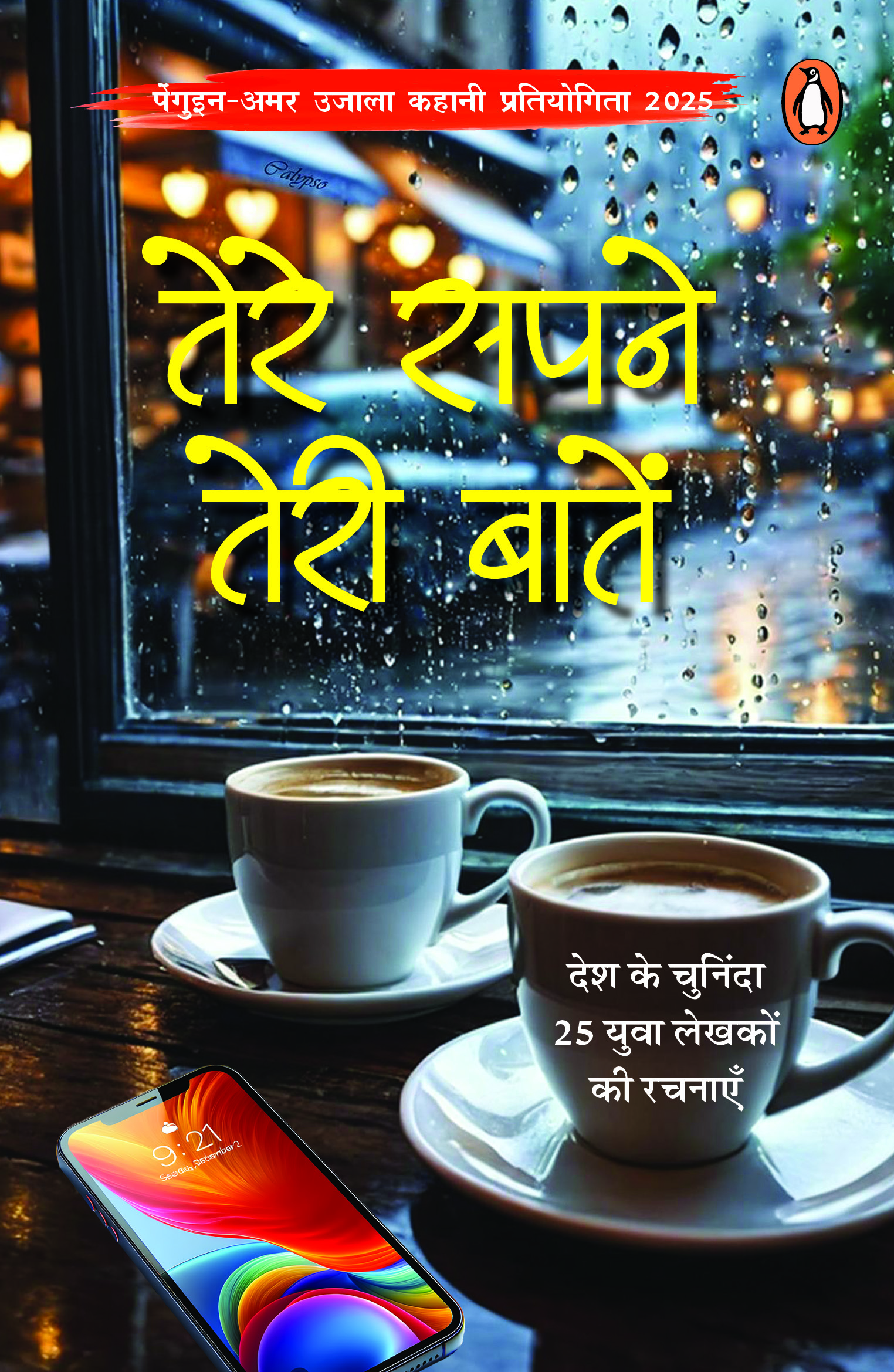
तेरे सपने, तेरी बातें संग्रह ने देश भर के कोनों से आए नए रचनाकारों को एक मंच दिया है। उनमें से चुनी गईं कहानियों में जहाँ युवा जज़्बात हैं, वही जिजीविषा और वही सवाल भी, जिनसे आज का नौजवान रोज़ गुज़रता है। ये कहानियाँ सिर्फ किस्से नहीं, बल्कि हमारे समय की दास्तान हैं―कभी शहर की भागदौड़, कभी गाँव की मिट्टी, कभी रिश्तों की पेचीदगी, तो कभी भीतर छिपे अकेलेपन और उम्मीद की सच्ची झलक।
तेरे सपने, तेरी बातें : हर कहानी एक आईना, हर किरदार एक सवालयह पुस्तक केवल पढ़ने के लिए नहीं, महसूस करने के लिए है—क्योंकि हर कहानी में कहीं न कहीं आपकी कहानी छिपी है।यह संग्रह उन कहानियों का दस्तावेज़ है, जहाँ रिश्ते सिर्फ़ निभाए नहीं जाते, बल्कि महसूस किए जाते हैं।तेरे सपने, तेरी बातें : जीवन के उन्हीं पलों की कहानियाँ है, जिन्हें हम जीते तो हैं, पर समझ नहीं पाते।तेरे सपने, तेरी बातें : सपने सिर्फ़ देखने की चीज़ नहीं, उन्हें जीने की हिम्मत चाहिए।तेरे सपने, तेरी बातें : जीवन के उन्हीं पलों की कहानियाँ है, जिन्हें हम जीते तो हैं, पर समझ नहीं पाते।
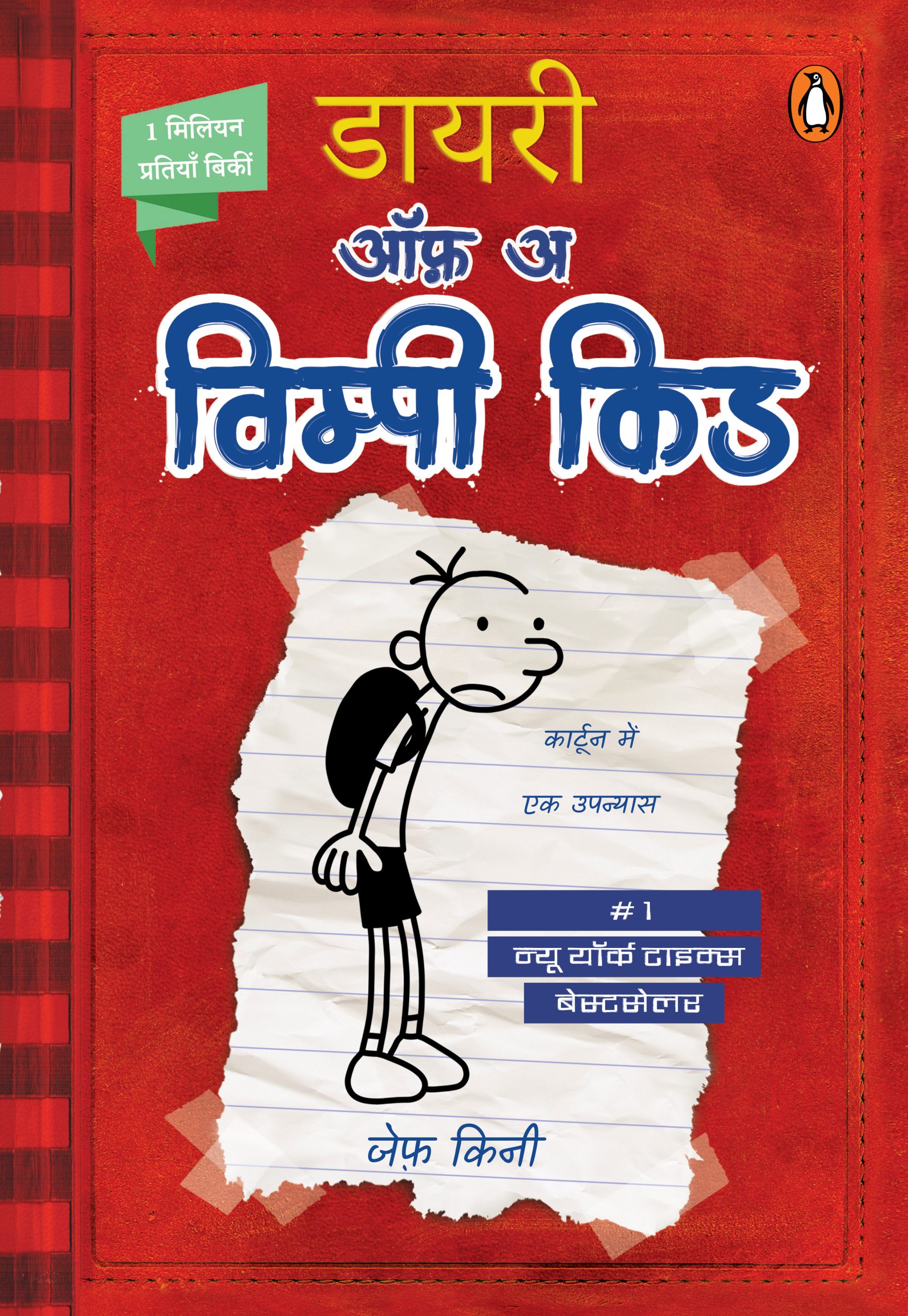
डायरी ऑफ़ अ विम्पी किड एक लोकप्रिय बच्चों की पुस्तक शृंखला है, जिसे जेफ किन्नी ने लिखा है। यह किताब ग्रेग हेफ़्ली नामक एक किशोर लड़के की डायरी के रूप में लिखी गई है, जो स्कूल और घर में अपनी दैनिक चुनौतियों का सामना करता है। सरल भाषा, हास्यपूर्ण घटनाएँ और चित्रों के साथ, यह किताब बच्चों और किशोरों के बीच बेहद लोकप्रिय है। यह न केवल मनोरंजन करती है, बल्कि जीवन के कुछ महत्त्वपूर्ण सबक भी सिखाती है।
Every person wants success, which is why they continually search for ways and struggle in life. “You are successful” is more than just a sentence; it serves as proof that you have read Way to Success. After reading this book, you will be surprised to discover that what you were trying to get from others is actually within you. You were asking others for it, but no one could give it to you. If you are reading this book with the inspiration to achieve your life’s goal in the hustle and bustle of this fast-paced life, then no one can stop you from reaching the heights of success. My best wishes and my faith are with you.
What if the perfect wife was also the perfect weapon? When Raghav Kapoor, a celebrated writer and beloved influencer, is found dead in his bathtub, the world mourns a tragedy. But his wife, Aarti, knows better. For years, he mined her pain for internet fame, turning her private grief into viral punchlines. Now, in the wake of his death, Aarti emerges as a poised widow with perfect grief and a quiet, unnerving calm. But suspicion brews beneath the surface. A retired homicide officer starts asking questions. A grieving mother refuses to accept the truth, and as public opinion wavers, Aarti must navigate a world that punishes women for not grieving the “correct way”. The Perfect Widow is a twisted, addictive descent into revenge, reputation, and the buried stories women are never allowed to tell. Until they write their own ending.
Life is absurd, sometimes in the most beautiful of ways. But to be able to laugh at the things life throws at us, we need to be empowered enough; otherwise, we run the risk of becoming too serious. When the author’s life took a really weird turn by stepping into a magical portal at Lake Carter (you never know the truth with this one), she stole this from just a show; the author is not sure what happened that triggered her gifts. But people started flocking to her for advice, especially relationship advice, and most of them were women. She noticed that 95 percent of these women were not even trying to find their purpose; they were all running after the so-called “the one”. They are not exploring their talents and gifts, and it was a really big issue. Having said that, this book is equally for men who want their self-worth to stem from the right places; they are too obsessed with the wrong things in life, too, it is just not relationships.

Despite over 1500 ascents, the mystique of the Everest remains. An obsession for some, a business for the others, an inspiration for many, a siren song for most and for a few, simply a curse. One is never indifferent to Everest. It makes you or breaks you.
India’s 1984 Expedition to Mount Everest, organized by the Indian Mountaineering Foundation (IMF), succeeded in placing Bachendri Pal, the first Indian woman and the fifth in the world, and four others, on the summit. It was a spectacular achievement etched in history, but one which does not tell the behind-the-scenes stories of this expedition.
Noted film-maker and television presenter Siddharth Kak and his crew of four cameramen followed this expedition from day one and recorded each moment of loss and triumph, instances of glory and distress. They captured struggles and jealousies that didn’t show up on camera. And you will learn much about this mountain—of how it deigns who will climb it, the challenges it will throw at you, the smallness you will feel confronted by its enormousness. It is also a mountain that is environmentally extremely stressed today.
A Fire on Mount Everest springs from an understanding of an incredible moment etched in the memory of the author—a moment very few live to tell about.
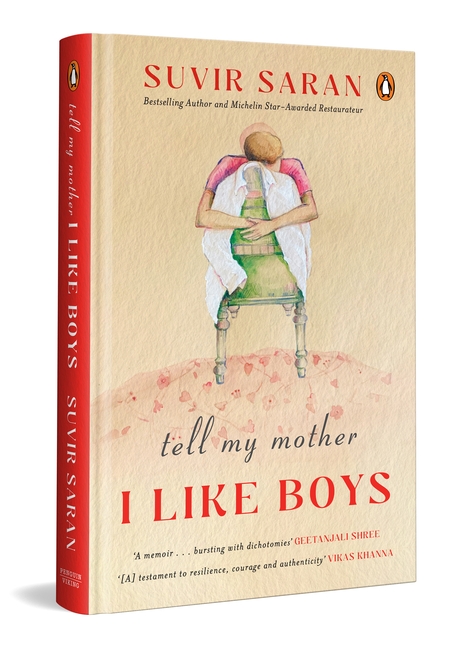
Tell My Mother I Like Boys is a memoir of appetite—for food, for love, for belonging. Suvir Saran,
one of India’s most celebrated chefs, traces a life lived between continents and cultures, where the kitchen becomes both a sanctuary and a crucible. From the spice-laden streets of New Delhi to the pressure-cooked world of Michelin-starred New York dining, he reveals how cooking is never just about taste but about memory, survival and the making of the self.
Saran writes of the exhilaration of opening Devi, the first Indian restaurant in North America to earn a Michelin star, and of the loneliness that trailed even the brightest success. In his hands, food becomes a vocabulary: the slow patience of a biryani, the intricate layering of a galouti kebab, the quiet comfort of dal simmered at home. Each dish carries a memory and meaning, stitching together the fragments of exile, grief, desire and return.
At once an intimate kitchen story and a reckoning with identity, Tell My Mother I Like Boys is about the hungers that shape us and the meals—lavish and humble—that teach us how to live.
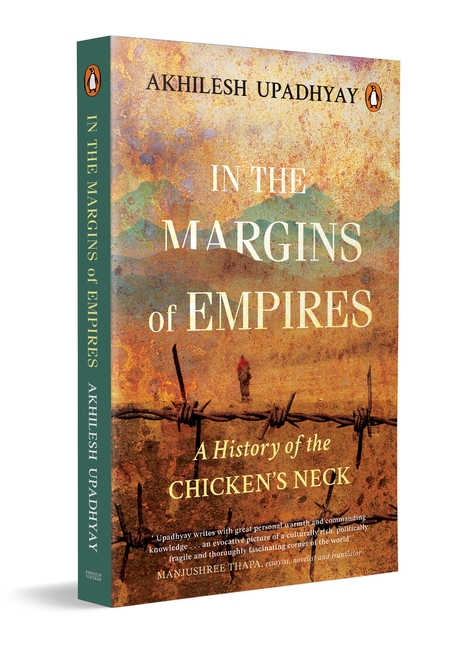
The prevailing narrative and knowledge ecosystem, and most certainly newspaper and TV reporting, on the Himalaya is dominated by colonial and postcolonial situational exposés that are informed by the Centres’ perspectives. Hence, many writings suffer from the imperial gaze, on the one hand, and a recency bias on the other, while approaching the peripheries as either exotic destinations or military hotspots with red lines drawn on snow-capped peaks, crests and arid plateaus.
The Himalaya has always been a contested region and has gained even more political salience after the 1962 Sino-Indian border war and, more so in recent times, with the rise of India and China.
What gets lost are the voices and lives of the people who actually call the Himalaya home.
In the Margins of Empires documents the lives and livelihoods of the borderlands in the Eastern Himalayan region—Nepal, Bhutan, pre-1950 Tibet and the post-1950 Tibetan Autonomous Region, Sikkim, Darjeeling, and India’s North-East. The book is an effort to look at the region as an organic whole, from within the region, connected through centuries of transboundary traders, travellers, scholars, monastic exchanges, but also by missionaries, monks, and moles.
As border infrastructure across the Himalaya in TAR and India is being constantly upgraded, and as India and China play a cat-and-mouse game, smaller states and communities in the borderlands, including the Chicken’s Neck, find themselves caught up in the larger geopolitical arena. With fresh analysis, great insight, and on-the-ground reportage, Akhilesh Upadhyay tells the story of the region and of communities that remain wedged between giants, yet are also shaping their own futures in the shadow of the Himalaya’s peaks.
What does the future of the region look like? Perhaps it will follow the mystique of the Himalaya.