Publish with Us

Follow Penguin

Follow Penguinsters

Follow Penguin Swadesh

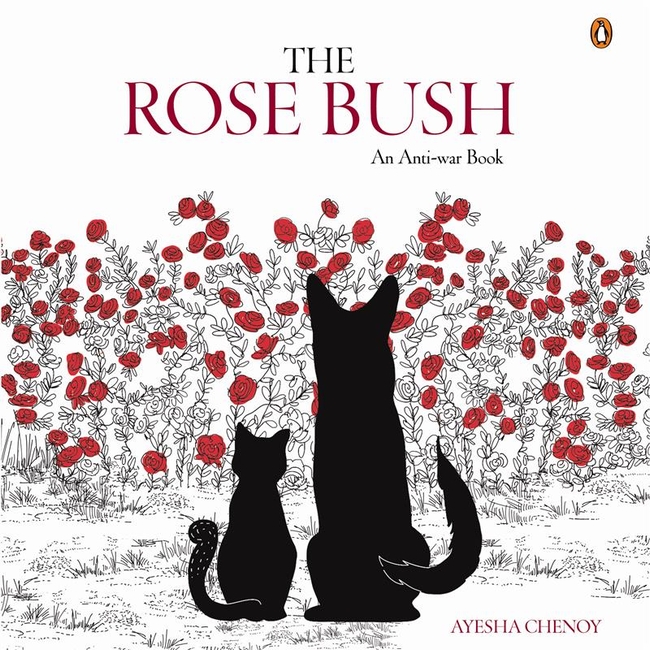
The Rose Bush

Two families. One shared garden.
And a rose bush growing right in the middle.
They played together, laughed, argued,
and made up—life was wonderful.
Until the parents had a fight. The garden was divided.
Can the children, with a little help from their pets,
bring back the peace?

A beautifully illustrated tale with a timeless message, The Rose Bush gently shows children that even when disagreements pull people apart, kindness and cooperation can bring them back together. With warmth and hope, this story helps young readers understand conflict, reconciliation, and the power of friendship, reminding us all that peace can bloom again, just like a rose.

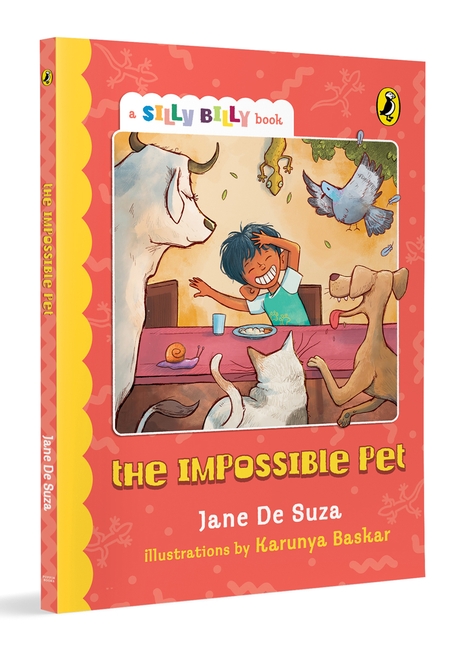
The Impossible Pet (Silly Billy series) | Funny, easy-to-read, full colour short books | Perfect to encourage reading | Ages 7 and up

Tarun wants a pet. Desperately. Especially since his best friend Joey has a brand-new puppy. But Papa says no, Mummy says no-no , and Daadi says achoo! So Tarun sets off on a pet hunt, trying to charm everything from birds to baby crocodiles—and even Aunty C.

Just when Tarun is about to give up, a fat cat brings news. Is there hope yet for the petless boy? Or just more
mosquito bites, pigeon poop and trouble?

Slam Dunk! (Silly Billy series) | Funny, Easy-to-Read, Full Colour Short Books | Perfect to Encourage Reading | Ages 7 and Up

Everything is perfect. Faizya and Kalpesh are smashing it at their basketball sessions—until one teeny, tiny (okay, massive, monstrous, mega) mistake. And then . . . boom! Disaster strikes!

The BFFs pull out all the stops to win over Coach Dollar, but he has a game plan of his own.

Can Faizya and Kalpesh make a comeback on the court? Or is this the final whistle for their basketball dreams?

Leaf People (Silly Billy series) | Funny, Easy-to-Read, Full Colour Short Books | Perfect to Encourage Reading | Ages 7 and Up

While spending the summer vacation at their grandmother’s home in the hills, Nikoo and her younger brother Zubin spot a fantastical leaf creature and decide to get to the bottom of it.

But a mystery is hard to solve when you’re too busy quarrelling over a goat!

The plot thickens when Zubin suddenly disappears. Has the leaf creature whisked him away? And is there more to a goat than meets the eye?

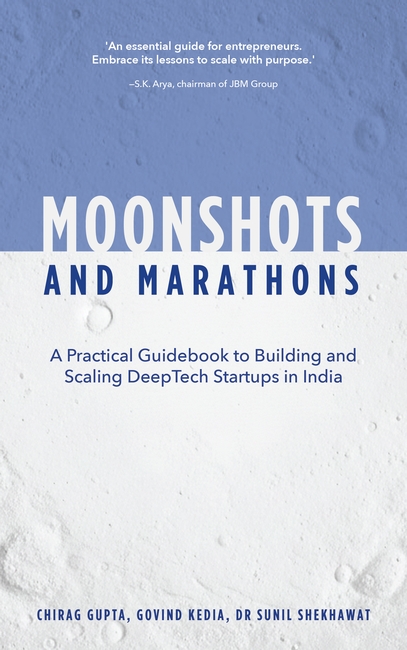
Moonshots and Marathons | An Unfiltered Playbook for Founders Building the Impossible

They told you to hustle. They forgot to tell you how to survive.

DeepTech isn’t a sprint. It’s years in the lab before a single sale. It’s moonshot ambition colliding with marathon endurance. It’s investors who want speed and a mission that can’t be rushed.
Moonshots and Marathons is the unfiltered playbook for founders building the impossible—satellites, AI breakthroughs, climate solutions, life-saving biotech.

Three insiders who’ve invested in, scaled, and advised hundreds of DeepTech companies reveal the real rules: how to choose battles, protect your IP, survive the ‘valleys of death’, and exit without selling your soul.

If your ideas could change the world, this is the book that shows you how to last long enough to make it happen.

Hostage: The first memoir by an Israeli hostage

A taut, immersive chronicle of endurance’ Time Magazine
‘One of the most compelling and unflinching books you will ever read’ Daily Telegraph

On October 7th, 2023, Hamas terrorists stormed Kibbutz Be’eri, shattering the peaceful life Eli Sharabi had built with his British wife, Lianne, and their teenage daughters, Noiya and Yahel. Dragged barefoot out of his front door while his family watched in horror, Sharabi was plunged into the suffocating darkness of Gaza’s tunnels. In total he endured a gruelling 491 days in captivity – all the while holding onto the hope that he would one day be reunited with his loved ones. In the first memoir by a released Israeli hostage, and the fastest-selling book in Israel’s history, Sharabi offers a searing firsthand account of survival under unimaginable conditions – starvation, isolation, physical beatings, and psychological abuse at the hands of his captors.

Eli Sharabi’s story is one of hunger and heartache, of physical pain, longing, loneliness and a helplessness that threatens to destroy the soul. But it is also a story of strength, of resilience, and of the human spirit’s refusal to surrender. It is about the camaraderie forged in captivity, the quiet power of faith, and one man’s unrelenting decision to choose life, time and time again.

Reminiscent of Elie Wiesel’s Night, Hostage is a profound witness to history, so that it shall be neither forgotten nor erased.

India’s Forests

India’s Forests aims to explore the history of Indian forests in a new way. It is a result of several years of deliberations on how to think about the Indian forests from a historical perspective. It revisits more than the question of the role of forests in India’s long history. It seeks to bring to light new insights on how changes in society, culture, and polity have reshaped forests and continue to do so.
Forests mean not one but many things to different people. While seen as ecologically crucial in many ways, they are also a storehouse of resources in more than one way. They have also been the arena and subject of critical social movements, among whom Chipko gained special prominence in India almost half a century ago. They are also sites of social, political, scientific and cultural contestation.
Forests are battlegrounds for more than just timber and land. Forests are contested not only as a resource but also in ideational terms. What constitutes a forest, for whom, when, and where can it be, is often a contentious issue.

The Nine Lives of Annie Besant

On Thursday, 5 April 1877, thirty-year-old Annie Besant stood trial in London for daring to sell a small book on birth control—an act that shocked Victorian society and made her a household name. This was only the beginning of a lifetime spent defying authority.

Besant began as a devout Christian wife, only to renounce her faith and embrace atheism. She became a fiery socialist voice in the strikes and protests of the 1880s, then turned to Theosophy in search of spiritual truths. But it was in India that she found her greatest cause. Moving beyond religion and reform, she became a leader in the Indian movement for self-rule, edited nationalist newspapers, campaigned for self-rule and was even interned by the British government for her influence. To many Indians she was a heroine; to the colonial State, a dangerous agitator.

Annie Besant’s life was extraordinary and full of contradictions: from politics to mysticism, from the London suburbs to the heart of India’s freedom struggle, from Christian piety to Theosophical priestesshood. The Nine Lives of Annie Besant tells the complete story of a woman who broke all the rules.

General Brasstacks

In 1986, as Indian and Chinese troops faced off at Sumdorong Chu in Arunachal Pradesh, a standoff ensued. An Indian general airlifted a brigade to occupy difficult heights, putting the pressure on the Chinese who were on the lower heights. The audacious General Krishnaswamy Sundarji had swung the momentum decisively in India’s favour, forcing the Chinese to backpedal in the Himalayas.

The next year, the same army chief planned Operation Brasstacks, one of the largest military exercises in the world after World War II. The move threatened Pakistan’s nuclear ambitions which unnerved General Zia, and he reached out to New Delhi for a rapprochement.

No other decade has matched the 1980s for its headlined procession of grand events, turns of history, tragic events that includes the assassinations of two Indian Prime Ministers. Besides Brasstacks, General Sundarji oversaw two of the most controversial events: Operation Bluestar, against Sikh militants inside the Golden Temple Complex, and Operation Pawan, the Indian Peacekeeping Force against Tamil militants in Sri Lanka. Sundarji was involved in the acquisition of Bofors and the controversy that followed, leading to the fall of the government.

The Indian army was called in to fight militants inside a religious complex, fought on Siachen for the first time; in the deserts of Rajasthan, the plains of Punjab, hills of Arunachal, the swamps of the northeast, jungles of Jaffna and the island country of Maldives. All of these campaigns had the imprint and bore the legacy of Sundarji.

But who was Krishnaswamy Sundarji? How did his predilection for bold decisions, often termed as brash, arise? Was he too ambitious? Was he ahead of his time in dreaming of advanced technology in wars or was he behind time as the decade witnessed insurgencies that warranted a bootstrapped approach? This definitive biography by bestselling author Probal Dasgupta will detail the life and times of one of India’s most charismatic, yet forgotten, army chiefs.

Sundarji straddled the timeline of the first six decades of a free India, his career often echoing the trajectory of India’s political choices in these years. He is the only military general who influenced the political dispensation and policy choices within India’s democracy. His brisk 820-day stint got the country battles, wars, standoffs, a modern fighting machine, victories, setbacks, controversies, praises and criticism alike – and by the end of it all, prompted two kinds of views about him. Either people loved him or hated him.

This biography seeks to highlight Sundarji’s role in building the modern Indian Army and explores his key role in the turbulent political decade of eighties in India. Krishnaswamy Sundarji is arguably the most important military leader in India’s history. A towering presence, his legacy remains profound, disputed and unresolved because of the seminal impact, political volatility, controversies and his own unrivalled ambition.

error: Content is protected !!